


This article was automatically translated from the original Turkish version.
+1 More
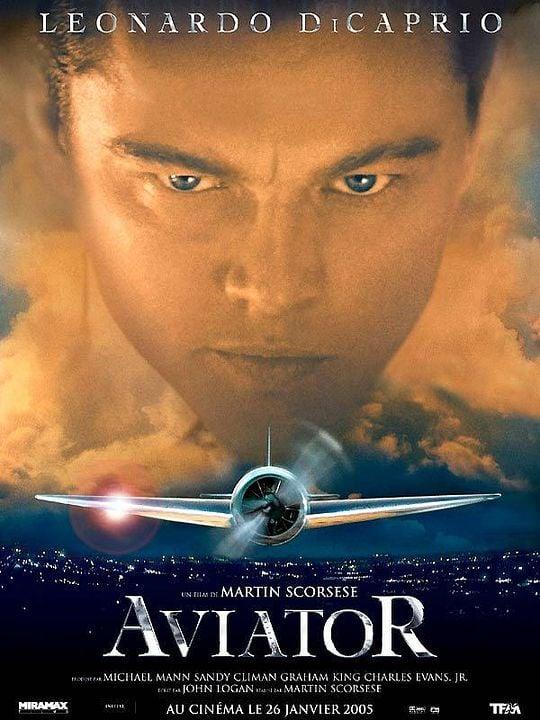
The Aviator
Director(s) | Martin Scorsese | ||||||||
|---|---|---|---|---|---|---|---|---|---|
Lead Actor | Leonardo DiCaprio | ||||||||
Genre | Biographical Historical Drama | ||||||||
Duration | 165 minutes | ||||||||
Language(s) | English | ||||||||
Adaptation Source | The life story of Howard Hughes | ||||||||
The Aviator (Original Title: The Aviator) is a 2004 biographical drama and historical film directed by Martin Scorsese. The film portrays the life of businessman and film producer Howard Hughes, who made a significant mark in aviation and cinema while battling obsessive-compulsive disorder (OCD). Produced with a screenplay by John Logan, the film has received acclaim for its period atmosphere, acting performances, and technical achievements. Leonardo DiCaprio stars in the lead role, with notable performances by Cate Blanchett and John C. Reilly among others.
The Aviator Trailer (Rotten Tomatoes Classic Trailers)
The film centers on Howard Hughes’ early entry into the film industry and his passion for aviation, tracing his rise to prominence. While making blockbuster productions that stirred Hollywood, Hughes also broke speed and altitude records with aircraft he designed himself. During World War II, his relationships with the U.S. government and his revolutionary impact on TWA and American commercial aviation made him a public icon. Yet behind these achievements lies a fragile mind increasingly isolated by obsessive-compulsive disorder. The film meticulously explores both Hughes’ ascent to the pinnacle of success and his psychological decline.
Relationship Between Creativity and Mental Instability: The film examines the contrast between Hughes’ creative and innovative endeavors and the mental health challenges that developed over time. This dynamic reveals the fragile balance between productivity and psychological well-being.
Modernization and Technological Progress: The technological advancements in aviation and cinema during the early 20th century are depicted through the lens of individual entrepreneurship. Hughes’ activities are closely tied to the industrial and technological dynamics of his era.
Social Pressure and Media Interaction: The film illustrates how Hughes, as a public figure, confronted media attention and societal expectations. This highlights the blurring boundaries between personal life and public identity.
Mental Disorder and Behavioral Traits: Obsessive-compulsive disorder is a central element shaping the character’s behavior. Symptoms such as personal rituals, hygiene obsessions, and social withdrawal form a vital part of the narrative.
The film was released in the United States in 2004 and premiered in Türkiye on 18 February 2005. It received 11 nominations at the 77th Academy Awards and won the Oscar for Best Supporting Actress for Cate Blanchett. It also won awards for Best Cinematography, Art Direction, Costume Design, and Editing.
Produced as a large-scale biographical drama with a production budget of $110 million, the film was distributed by Miramax. It opened in limited release in the United States on 17 December 2004 in 40 theaters, earning $858,021. The wide release began on 25 December 2004, reaching a maximum of 2,530 theaters. The film remained in theaters for a total of 380 days, or 54 weeks, and was rated “PG-13” by the MPAA. Its worldwide gross totaled $215 million. The film’s runtime is 2 hours and 50 minutes.
Directed by Martin Scorsese, the film garnered significant attention during the 2005 awards season and won numerous prestigious accolades. Below are its major awards and nominations:
The film has won a total of 89 awards and received 131 nominations.
Beyazperde. "Göklerin Hakimi." Beyazperde, 2004. Accessed May 6, 2025. https://www.beyazperde.com/filmler/film-48371/.
Box Office Mojo. *The Aviator*. Box Office Mojo, 2004. Accessed May 6, 2025. https://www.boxofficemojo.com/release/rl742753793/.
IMDb. "The Aviator – Awards." IMDb, 2004. Accessed May 6, 2025. https://www.imdb.com/title/tt0338751/awards/?ref_=tt_awd.
IMDb. *The Aviator.* IMDb, 2004. Accessed May 6, 2025. https://www.imdb.com/title/tt0338751/.
Roger Ebert. “The Aviator Movie Review (2004).” RogerEbert.com, December 24, 2004. Accessed May 6, 2025. https://www.rogerebert.com/reviews/the-aviator-2004.
Sinemalar.com. *Göklerin Hakimi (The Aviator)*. Sinemalar, 2004. Accessed May 6, 2025. https://www.sinemalar.com/film/583/goklerin-hakimi.
YouTube. "The Aviator – Official Trailer." YouTube, 2004. Accessed May 6, 2025. https://youtu.be/FebPJlmgldE.

The Aviator
Director(s) | Martin Scorsese | ||||||||
|---|---|---|---|---|---|---|---|---|---|
Lead Actor | Leonardo DiCaprio | ||||||||
Genre | Biographical Historical Drama | ||||||||
Duration | 165 minutes | ||||||||
Language(s) | English | ||||||||
Adaptation Source | The life story of Howard Hughes | ||||||||
No Discussion Added Yet
Start discussion for "Lord of the Heavens (Film)" article
Plot
Thematic Structure
Cast
Release and Exhibition
Awards and Nominations
Academy Awards (Oscars)
Golden Globe Awards
BAFTA Awards
Other Awards
Screen Actors Guild (SAG) Awards
Producers Guild of America (PGA) Award
Writers Guild of America (WGA) Award
Visual Effects Society (VES) Awards
Critics’ Choice Awards