


This article was automatically translated from the original Turkish version.
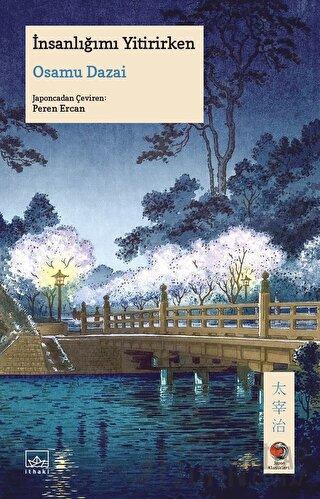
"No Longer Human" (Ningen Shikkaku) is one of the most renowned works by Japanese author Osamu Dazai. Published in 1948, this novel is regarded as one of the greatest works in Japanese literature. In this book, Dazai explores profound themes such as existential loneliness, identity crisis, and alienation from society. Work also mirrors the author’s own personal thoughts and suicidal inclinations.
THE PLOT
"No Longer Human" centers on the inner world of the protagonist, Oba Yozo, and his struggles to fit into society. From a young age, Yozo finds it difficult to form connections with those around him and deeply feels a sense of alienation from people. His inability to conform to societal norms accelerates his psychological conflicts and emotional collapse. Yozo’s life is shaped not only by his estrangement from the external world but also by a persistent inner void and identity crisis.
The novel unfolds as an internal monologue recounting Yozo’s life. The author provides a profound insight into Yozo’s thoughts and inner world. While Yozo struggles to understand the people around him, he also questions the meaning of his own existence. This introspection takes the form of both a personal search for identity and a confrontation with societal values.
MAJOR THEMES
Loneliness and Social Conflict
Yozo’s most defining trait is his constant confrontation with identity crisis and loneliness. The novel examines his struggle to maintain ties with society and to find his own identity. Yozo finds it difficult to comprehend normal human behavior and societal values, and he battles the resulting feelings of isolation and alienation. His alienation leads to both physical and spiritual isolation, reflecting both a rejection of social norms and an inner quest for self-definition.
Existential Crisis and Decline
"No Longer Human" intensifies its focus on existential crisis. Yozo cannot make sense of his life and questions the purpose of his existence. This crisis drives him into a deep psychological collapse. The novel effectively portrays the character’s existential despair and his sense of helplessness in the face of it. Consequently, themes of suicide and self-destruction frequently emerge. The emotional emptiness and social alienation Yozo experiences make the thought of death an integral part of his life. The book offers a profound examination of the psychological and emotional state of a person inclined toward suicide.
CHARACTERS
Oba Yozo: He is the novel’s main character. Though he appears cheerful and charismatic on the surface, his inner world is marked by profound emptiness and loneliness. Yozo is a character who cannot establish meaningful connections with those around him, constantly suffers from identity crisis, and struggles to understand other people. Throughout the novel, a deep perspective on Yozo’s inner world is presented.
Other Characters: The characters surrounding Yozo serve to reinforce his isolation and inner void. His relationships with family, friends, and lovers highlight his nonconformity to social norms and his alienation from people.
THE AUTHOR’S STYLE
Osamu Dazai employs a realistic style in his work, yet the narrative is marked by intense emotional density and psychological depth. The author offers a highly intimate perspective into Yozo’s inner world. Dazai’s style conveys, in literary terms, Yozo’s mental state, identity crisis, and existential questioning. Moreover, the simple yet powerful use of language directly and forcefully reflects Yozo’s internal conflicts.
CRITICISM AND EVALUATION
Positive
The psychological depth and character analyses were highly impressive.
The themes of existential despair and loneliness were handled with great sensitivity.
The relationship between Society and individual was powerfully emphasized.
Negative
Due to its dark subject matter, the novel may feel overwhelming to some readers.
Yozo’s internal conflicts and sense of loneliness are sometimes rendered with such intensity that they may exhaust the reader.
In conclusion, "No Longer Human" is a powerful literary and psychological novel that deeply explores universal themes such as loneliness, identity crisis, existential despair, and social alienation. As Osamu Dazai meticulously portrays Yozo as a man lost within his own inner world, he guides the reader on a philosophical and psychological journey.

No Discussion Added Yet
Start discussion for "Losing My Humanity (Book)" article