


This article was automatically translated from the original Turkish version.
Magnifica Humanitas (Latin: magnificent humanity) is the first encyclical letter of Pope XIV Leo. The document bears the full title On Safeguarding the Human Person in the Time of Artificial Intelligence and addresses the preservation of human dignity within the framework of Catholic social teaching in light of the rapid rise of artificial intelligence. Comprising approximately 42,000 words and divided into five sections, the document was signed by Pope XIV Leo on 15 May 2026 and publicly released by the Vatican on 25 May 2026.【1】 The letter addresses Catholics, Christians and the general public, affirming that technology must serve humanity and that machines cannot replace human dignity.
Magnifica Humanitas is a contemporary adaptation of the accumulated tradition of Catholic social teaching. The document defines this tradition as providing principles for thought, criteria for discernment and evaluation, and concrete guidelines for action. It emphasizes that this body of teaching is grounded in sacred scripture and tradition, while also evolving through dialogue with the sciences. It is stated that this teaching possesses a structure capable of addressing the pressing questions of each era.
Magnifica Humanitas deliberately selects 15 May 2026 as its signing date, coinciding with the 135th anniversary of Pope XIII Leo’s 1891 encyclical Rerum novarum. 【2】Rerum novarum is recognized as one of the foundational texts of Catholic social teaching and is regarded as the founding document of modern Catholic social thought due to its engagement with the challenges faced by the working class during the Industrial Revolution. In the introduction to Magnifica Humanitas, Pope XIV Leo references this text to affirm the document’s historical continuity.

Pope XIV Leo Greeting the People (AA)
Two days after his election, on 10 May 2025, Pope XIV Leo referenced Pope XIII Leo’s Rerum novarum in an address to the College of Cardinals. This speech contained the first indications of the new pontificate’s approach to the issue of artificial intelligence. The text notes that prior to the preparation of Magnifica Humanitas, the pontificate had already placed human crisis, the rise of artificial intelligence and multilateralism on its agenda.
Magnifica Humanitas was formally approved in early May 2026 by Pope XIV Leo through the establishment of the Interdicasterial Commission on Artificial Intelligence. The commission comprises representatives from seven units of the Roman Curia: the Dicastery for Promoting Integral Human Development, the Dicastery for the Doctrine of the Faith, the Dicastery for Culture and Education, the Dicastery for Communication, the Pontifical Academy for Life, the Pontifical Academy of Sciences and the Pontifical Academy of Social Sciences. It is stated that the commission’s role is to facilitate the exchange of information on activities and projects among its members.
Official Presentation Ceremony (AA)
The official presentation of Magnifica Humanitas took place on 25 May 2026 at 11:30 in the Vatican Synod Hall. Pope XIV Leo assumed the responsibility of presenting the document, a practice that differs from the norm, as most other popes have delegated this task to cardinals. Alongside Pope XIV Leo, the presentation included Anthropic co-founder Christopher Olah, Professor Anna Rowlands, Cardinal Victor Manuel Fernández, Cardinal Michael Czerny and Professor Leocadie Lushombo.【3】
Magnifica Humanitas is the first encyclical letter issued by the Vatican after its recent regulatory reforms to be published without an official Latin text. This change stems from a new Vatican regulation permitting such documents to be composed directly in other languages.
Magnifica Humanitas is composed in the form of an encyclical letter (littera encyclica), one of the most comprehensive expressions of the ordinary papal teaching. According to the Catechism of the Catholic Church, Catholics are obliged to give religious assent to the pope’s ordinary teaching.
As stated in the introduction, Magnifica Humanitas addresses Catholics, Christians and the general public. This mode of address reflects the document’s purpose of conveying a universal message beyond the confines of the Church.
The document consists of approximately 42,000 words and is divided into five main sections, along with an introduction and a conclusion: 【4】

Representative Visual of the Tower of Babel and the Reconstruction of the Walls of Jerusalem (Generated by Artificial Intelligence)
In the introduction, Pope XIV Leo employs two scenes from Sacred Scripture as a framing device: the construction of the Tower of Babel (Genesis 11:1–9) and the rebuilding of the walls of Jerusalem (Nehemiah 2–6). By juxtaposing these two images, the document defines humanity’s fundamental choice regarding artificial intelligence through these metaphors: to build Babel or to rebuild Jerusalem. Babel is portrayed as a project constructed without reference to God, rejecting diversity and founded on pride; Nehemiah’s Jerusalem, by contrast, is presented as a model grounded in communal responsibility, centered on God and preserving plurality. The document calls for avoiding the Babel syndrome and embracing the path of Nehemiah.【5】
In the first section, Pope XIV Leo traces the origins and historical development of Catholic social teaching. In this context, Pope XIII Leo’s 1891 encyclical Rerum novarum is identified as the starting point of modern Catholic social teaching. The document then outlines how this teaching evolved through subsequent events, particularly the Second Vatican Council (especially its 1965 constitution Gaudium et spes) and later papal documents. 【6】 The document commemorates the sixtieth anniversary of Gaudium et spes on 7 December 2025, quoting its assertion that worldly realities possess their own autonomous order.
The second section systematically presents the foundational elements of Catholic social teaching. Human dignity, the equal worth of all persons and the supreme value of human rights form the core arguments of this section. The document also examines the five fundamental principles of social teaching: the principle of the common good, the universal destination of goods, the principle of subsidiarity, the principle of solidarity and the principle of social justice. It affirms that these principles, rooted in the theological understanding that human beings are created in the image of the Triune God, support a holistic vision of human development.【7】
This section of the document examines the opportunities and risks presented by artificial intelligence in a multidimensional manner. The letter asserts that technology, at its core, is an integral part of human existence and is neither inherently a solution nor an inherently negative force. It observes that most of today’s technological power has shifted from states to private and transnational actors, whose capacity to mobilize resources and exert influence now surpasses that of many governments. The document critiques transhumanist and posthumanist currents, arguing that human limitations—such as illness, aging, suffering and vulnerability—are not flaws to be corrected but conditions within which human beings grow, acquire wisdom and form bonds with others and with faith. In this framework, artificial intelligence should support a structure defined by shared life rather than promise to eliminate human limitations entirely. The document also lists concerns such as job insecurity, manipulation of information, violations of privacy, ideological bias and autonomous weapons. Another risk identified is the growing tendency of individuals to evaluate themselves and others in terms of data and performance.【8】
The fourth section addresses three essential areas requiring protection in an age of transformation. In the context of truth and democracy, the document emphasizes that disinformation has been amplified by artificial intelligence: disinformation did not begin with artificial intelligence, but today it has found a powerful amplifier in it. Subtopics include the communication ecosystem, the alliance for education in the digital age and the central role of schools. Regarding the dignity of work, the document examines unemployment during the digital transition, the need to re-prioritize economic values and the social conditions faced by families and younger generations.【9】
The fifth section addresses political and international issues. The document critiques prevailing political realism in relation to the normalization of war, the unregulated use of force, artificial intelligence and weapons, and the crisis of multilateralism. Within this framework, the document finds that the just war theory has lost its validity, having been used to legitimize war rather than constrain it. It also calls for the prevention of an arms race in artificial intelligence and condemns deepfakes in politics. Another perspective of the section focuses on the construction of a civilization of love: the disarmament of language, the establishment of peace through justice, the adoption of the perspective of victims, the revitalization of dialogue, and the necessity of diplomacy and multilateralism form the core components of this approach.【10】
At the Vatican Synod Hall on 25 May 2026, Christopher Olah, co-founder of Anthropic, highlighted three fundamental ethical issues raised by artificial intelligence. He emphasized that questions surrounding artificial intelligence extend beyond the research community and cannot be left solely to scientists or technology companies.
Olah identified as his first ethical concern the realistic possibility that artificial intelligence could displace human labor on a massive scale, noting that supporting affected workers would become a moral imperative of historical proportions. As his second concern, he pointed to the unequal global distribution of the benefits of artificial intelligence, reminding audiences that AI development is concentrated in only a handful of wealthy nations. Regarding his third concern, he brought attention to the inner workings of AI models, revealing that his own research team had encountered findings suggesting internal states resembling emotions within these models.
Olah judged Pope XIV Leo’s forward-looking approach in this document to be insightful, stating that the Church could serve as an institution capable of providing the informed critique and moral guidance necessary for AI developers, independent of external pressures.
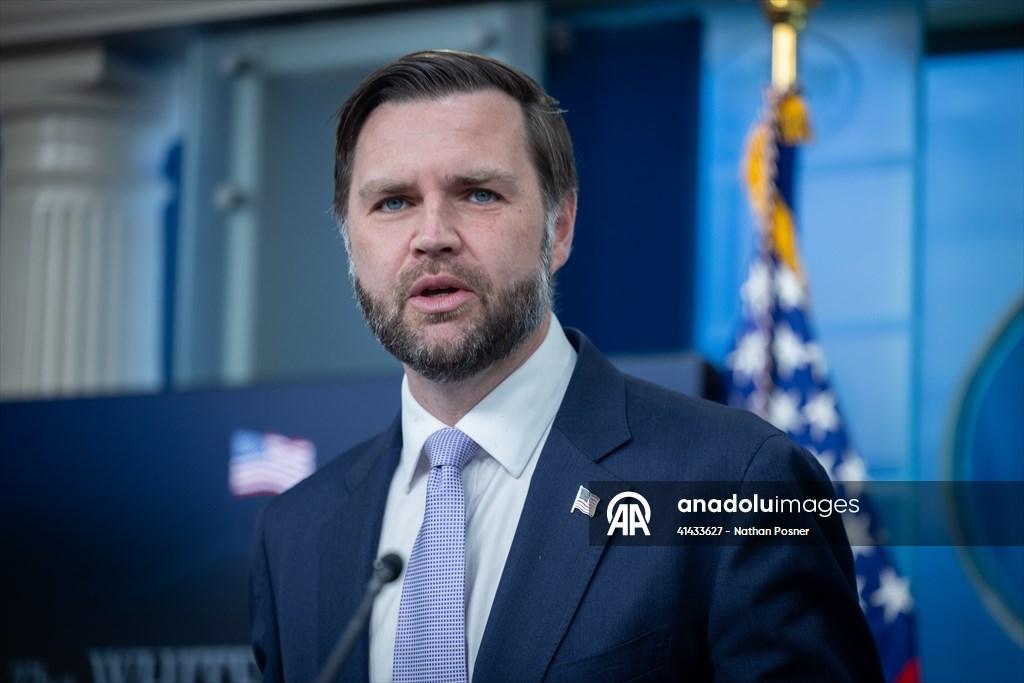
U.S. Vice President JD Vance (AA)
U.S. Vice President and Catholic JD Vance described the document as “profound” in an interview with NBC News on 26 May 2026. While acknowledging he had not read the entire document, he stated that the portions he had read were deeply thoughtful and exactly the kind of text one would expect and hope for from a leader of the Church. Vance’s remarks were made one day after the document’s official release.
On 25 May 2026, Archbishop Paul S. Coakley, President of the United States Conference of Catholic Bishops (USCCB), welcomed Magnifica Humanitas with gratitude and praise. In his statement, Coakley affirmed that no technology can replace the dignity of a child of God and that all technology must be oriented toward serving human development.
Archbishop Coakley emphasized that, just as Pope XIII Leo addressed the challenges of the Industrial Revolution in Rerum novarum 135 years ago, today’s pope has directed the light of the Gospel and the tradition of the Church toward the new opportunities and challenges brought by the rise of artificial intelligence. He also noted that all bishops plan to prayerfully study the document in depth and invited all people of good will to reflect on this rich papal teaching and apply it to their lives.
Cardinal Fernando Chomali, Archbishop of Santiago, published a ten-point guide to help understand the central message of Magnifica Humanitas. Chomali stated that the document calls both society and those designing artificial intelligence technologies to adhere to stricter ethical constraints in the name of human dignity and the sanctity of life.
Magnifica Humanitas received strong reactions from various sectors following its release. The Guardian assessed the document as a human-centered message accessible to the secular world, highlighting its dimensions of democratic accountability and human development. Forbes focused on its moral and societal warnings, foregrounding the Babel metaphor.
These diverse interpretations revealed the document’s capacity to transcend ideological boundaries. Some commentators argued that by positioning artificial intelligence not merely as a phenomenon to be regulated or commercialized, but as a development directly affecting uniquely human capacities—such as reason, language, creativity, judgment and relationship-building—the document points to a profound issue that many political and technological elites have yet to fully grasp.
Anadolu Images. "Vance WH Press Briefing." Accessed June 3, 2026. https://www.anadoluimages.com/p/vance-wh-press-briefing/31768765
Anadolu Images. “Kardinaller Meclisi Vatikan'da Toplandı.” Accessed June 3, 2026. https://www.anadoluimages.com/p/kardinaller-meclisi-vatikanda-toplandi/29808008
Anadolu Images. “Papa 14. Leo'nun Vatikan'da Haftalık Genel Kabulü.” Accessed June 3, 2026. https://www.anadoluimages.com/p/papa-14-leonun-vatikanda-haftalik-genel-kabulu/31808288
Anadolu Images. “Rerum Novarum” Arama Sonuçları. Accessed June 3, 2026. https://www.anadoluimages.com/Search?contenttype=photo-video&phrase=Rerum+Novarum
Leo XIV. *Magnifica Humanitas: On Safeguarding the Human Person in the Time of Artificial Intelligence*. Vatican: The Holy See, May 15, 2026. Accessed June 2, 2026. https://www.vatican.va/content/leo-xiv/en/encyclicals/documents/20260515-magnifica-humanitas.html
Ochoa Rojas, Luis Francisco. *Interpretación de la Encíclica Magnifica Humanitas*. ResearchGate, 2026. Accessed June 2, 2026. https://www.researchgate.net/profile/Luis-Francisco-Ochoa-Rojas/publication/405404767_Interpretacion_de_la_Enciclica_Magnifica_Humanitas/links/6a18871b1d2edf444ddb94e5/Interpretacion-de-la-Enciclica-
[1]
Ochoa Rojas, Luis Francisco. Interpretación de la Encíclica Magnifica Humanitas. ResearchGate, 2026. Access date: 2 June 2026. https://www.researchgate.net/profile/Luis-Francisco-Ochoa-Rojas/publication/405404767_Interpretacion_de_la_Enciclica_Magnifica_Humanitas/links/6a18871b1d2edf444ddb94e5/Interpretacion-de-la-Enciclica-
[2]
Ochoa Rojas, Luis Francisco. Interpretación de la Encíclica Magnifica Humanitas. ResearchGate, 2026. Access date: 2 June 2026. https://www.researchgate.net/profile/Luis-Francisco-Ochoa-Rojas/publication/405404767_Interpretacion_de_la_Enciclica_Magnifica_Humanitas/links/6a18871b1d2edf444ddb94e5/Interpretacion-de-la-Enciclica-
[3]
Ochoa Rojas, Luis Francisco. Interpretación de la Encíclica Magnifica Humanitas. ResearchGate, 2026. Access date: 2 June 2026. https://www.researchgate.net/profile/Luis-Francisco-Ochoa-Rojas/publication/405404767_Interpretacion_de_la_Enciclica_Magnifica_Humanitas/links/6a18871b1d2edf444ddb94e5/Interpretacion-de-la-Enciclica-
[4]
Ochoa Rojas, Luis Francisco. Interpretación de la Encíclica Magnifica Humanitas. ResearchGate, 2026. Access date: 2 June 2026. https://www.researchgate.net/profile/Luis-Francisco-Ochoa-Rojas/publication/405404767_Interpretacion_de_la_Enciclica_Magnifica_Humanitas/links/6a18871b1d2edf444ddb94e5/Interpretacion-de-la-Enciclica-
[5]
Leo XIV, Magnifica Humanitas: On Safeguarding the Human Person in the Time of Artificial Intelligence (Vatican: The Holy See, 15 May 2026), Introduction, access date: 2 June 2026,https://www.vatican.va/content/leo-xiv/en/encyclicals/documents/20260515-magnifica-humanitas.html
[6]
Ochoa Rojas, Luis Francisco. Interpretación de la Encíclica Magnifica Humanitas. ResearchGate, 2026. Access date: 2 June 2026.https://www.researchgate.net/profile/Luis-Francisco-Ochoa-Rojas/publication/405404767_Interpretacion_de_la_Enciclica_Magnifica_Humanitas/links/6a18871b1d2edf444ddb94e5/Interpretacion-de-la-Enciclica-
[7]
Leo XIV, Magnifica Humanitas: On Safeguarding the Human Person in the Time of Artificial Intelligence (Vatican: The Holy See, 15 May 2026), Second Section, access date: 2 June 2026,https://www.vatican.va/content/leo-xiv/en/encyclicals/documents/20260515-magnifica-humanitas.html
[8]
Leo XIV, Magnifica Humanitas: On Safeguarding the Human Person in the Time of Artificial Intelligence (Vatican: The Holy See, 15 May 2026), Third Section, access date: 2 June 2026,https://www.vatican.va/content/leo-xiv/en/encyclicals/documents/20260515-magnifica-humanitas.html
[9]
Leo XIV, Magnifica Humanitas: On Safeguarding the Human Person in the Time of Artificial Intelligence (Vatican: The Holy See, 15 May 2026), Fourth Section, access date: 2 June 2026,https://www.vatican.va/content/leo-xiv/en/encyclicals/documents/20260515-magnifica-humanitas.html
[10]
Leo XIV, Magnifica Humanitas: On Safeguarding the Human Person in the Time of Artificial Intelligence (Vatican: The Holy See, 15 May 2026), Fifth Section, access date: 2 June 2026,https://www.vatican.va/content/leo-xiv/en/encyclicals/documents/20260515-magnifica-humanitas.html


No Discussion Added Yet
Start discussion for "Magnifica Humanitas" article
Historical Background and Context
Tradition of Catholic Social Teaching
Connection with the 135th Anniversary of Rerum Novarum
Pope XIV Leo’s Pontificate and Previous Stance
Origin of the Document
Interdicasterial Commission on Artificial Intelligence
Official Presentation Ceremony
Originality in Language and Form
Nature and Character of the Document
Legal-Theological Status
Intended Audience
Volume and Structural Features
Content and Key Themes
Two Biblical Images
Historical Development of Catholic Social Teaching
Foundations and Principles of Catholic Social Teaching
Technology and Sovereignty
Truth, Labor and Freedom
The Culture of Power and the Civilization of Love
Interpretations and Reactions
Christopher Olah, Co-founder of Anthropic
U.S. Vice President JD Vance’s Statement
Archbishop Paul S. Coakley, President of the USCCB
Cardinal Fernando Chomali, Archbishop of Santiago
Media and Public Reactions