

This article was automatically translated from the original Turkish version.
+1 More
Regions of Cultivation | Manisa Province | ||||||||
|---|---|---|---|---|---|---|---|---|---|
Taxonomy | Vitis vinifera L | ||||||||
Type(s) | Grape variety | ||||||||
Application Date | 07.11.2017 | ||||||||
Application Number | C2017/172 | ||||||||
Registration Date | 18.02.2019 | ||||||||
Registration Number | 418 | ||||||||
Seed Condition | Completely seedless | ||||||||
Fruit Characteristics | Thin-skinned, oval-long shaped, high sugar content | ||||||||
Protection Status | Geographical Indication Registered | ||||||||
Applicant | Manisa Chamber of Commerce | ||||||||
Applicant’s Address | Ege Mah. Borsa Cad. No:20 Şehzadeler / MANİSA | ||||||||
Manisa Sultani seedless grape is a table grape variety (Vitis vinifera L.) cultivated in the Aegean Region of Türkiye, specifically in the Alaşehir district and surrounding areas of Manisa. It is distinguished by its characteristic thin skin, high sugar content, and completely seedless structure. It holds significant importance in the regional economy due to its suitability for drying and strong export potential.
Manisa Sultani seedless grape requires moderate climatic conditions and a long, hot, dry growing season. The fertile soils of the Alaşehir basin, combined with large daily temperature fluctuations and sufficient sunlight, promote sugar accumulation in the grapes and contribute to the development of its distinctive flavor profile. These microclimatic conditions optimize the ripening process and play a decisive role in determining grape quality.
The variety performs best in deep, well-drained, and nutrient-rich soils. In modern viticulture, drip irrigation systems are employed to control water stress and maximize fruit quality.
Traditionally, the region used ground-lying training systems. However, there is a growing shift toward trellis systems to enhance both yield and quality.
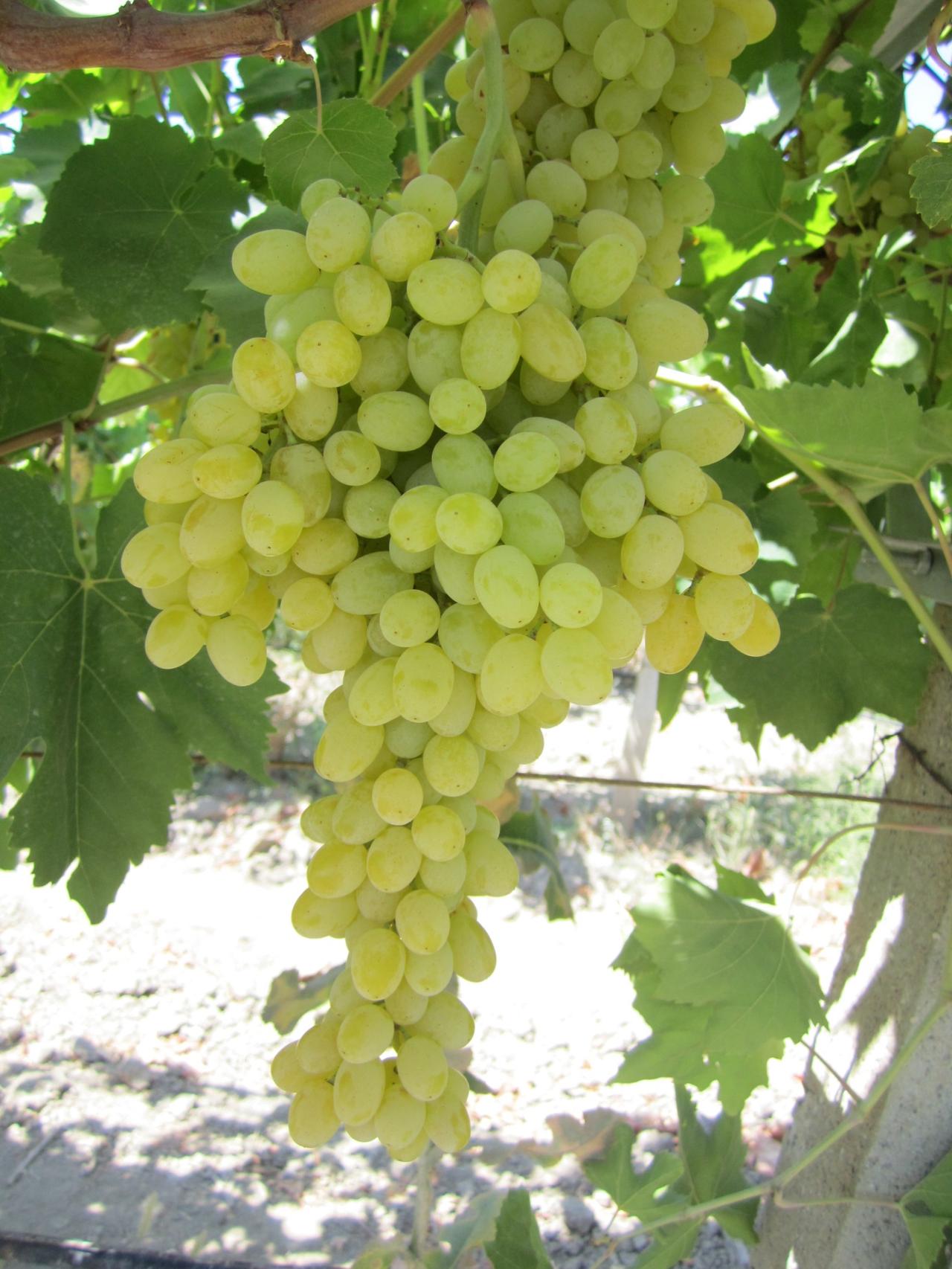
Manisa Sultani seedless grape is distinguished from other varieties by its notable physical and chemical traits. The berries are medium-sized and oval to elongated in shape. Clusters are medium-dense and conical. Its most distinctive feature is the extremely thin skin, which is imperceptible when chewed, significantly enhancing eating quality. Chemically, it has a high level of soluble solids (sugars), making it ideal for both fresh consumption and drying.
Harvesting typically takes place at the end of August to mid-September, when the grapes reach full maturity. Post-harvest processing directly affects the final product quality. In traditional drying methods, grapes are spread on white surfaces under direct sunlight. This method preserves the fruit’s color and prevents enzymatic browning. In modern processing facilities, methods such as sulfur dioxide (SO₂) treatment are used to extend shelf life and maintain color. Manisa Sultani seedless grape is marketed both domestically as fresh and dried fruit, and exported to European countries, Russia, and the Middle East.

Manisa Sultani Seedless Grape (Ministry of Agriculture and Forestry of the Republic of Türkiye, Manisa Provincial Directorate of Agriculture and Forestry)
Manisa Sultani seedless grape forms the backbone of the region’s agricultural economy. Viticulture provides livelihoods for thousands of families and stimulates activity in packaging, logistics, and export sectors. To preserve the product’s authenticity, quality, and origin, a geographical indication has been registered under the name "Manisa Sultani Seedless Grape". This registration guarantees that the product is grown within a defined geographical area using traditional methods, thereby enhancing its market value and consumer trust.
The distinctive characteristics of Manisa Sultani seedless grape are shaped by the climate, soil structure, and traditional cultivation practices of the Alaşehir basin. The region’s hot, dry summers and large daily temperature variations directly influence sugar accumulation and the formation of the thin skin. Viticulture in Alaşehir represents a centuries-old agricultural tradition, and the name "Manisa Sultani Seedless Grape" has become firmly established as a symbol of the region’s agricultural identity.
Anadolu Ajansı. "Manisa'da Sofralık Çekirdeksiz Üzümde Hasat Başladı." Accessed October 1, 2025. https://www.aa.com.tr/tr/yasam/manisada-sofralik-cekirdeksiz-uzumde-hasat-basladi/2969586.
Ministry of Agriculture and Forestry of the Republic of Turkey. "Manisa Sultani Çekirdeksiz Üzümü." Manisa sultani çekirdeksiz üzümü. *Manisa Directorate of Agriculture and Forestry.* Accessed October 2, 2025. https://manisa.tarimorman.gov.tr/Menu/32/Manisa-Sultani-Cekirdeksiz-Uzumu
Turk Patent and Trademark Office. "Manisa Sultani Çekirdeksiz Üzümü Tescil Belgesi." *Coğrafi İşaretler Portalı*. Accessed October 5, 2025. https://ci.turkpatent.gov.tr/Files/GeographicalSigns/ebd8f25a-18be-496f-be21-1fb24eb2686b.pdf

Regions of Cultivation | Manisa Province | ||||||||
|---|---|---|---|---|---|---|---|---|---|
Taxonomy | Vitis vinifera L | ||||||||
Type(s) | Grape variety | ||||||||
Application Date | 07.11.2017 | ||||||||
Application Number | C2017/172 | ||||||||
Registration Date | 18.02.2019 | ||||||||
Registration Number | 418 | ||||||||
Seed Condition | Completely seedless | ||||||||
Fruit Characteristics | Thin-skinned, oval-long shaped, high sugar content | ||||||||
Protection Status | Geographical Indication Registered | ||||||||
Applicant | Manisa Chamber of Commerce | ||||||||
Applicant’s Address | Ege Mah. Borsa Cad. No:20 Şehzadeler / MANİSA | ||||||||
No Discussion Added Yet
Start discussion for "Manisa Sultani Seedless Grape" article
Growing Conditions and Geographic Features
Soil and Irrigation
Training Systems
Physical and Chemical Characteristics
Harvesting, Drying, and Marketing
Economic Importance and Geographical Indication
Link Between Product and Origin