


This article was automatically translated from the original Turkish version.
+1 More
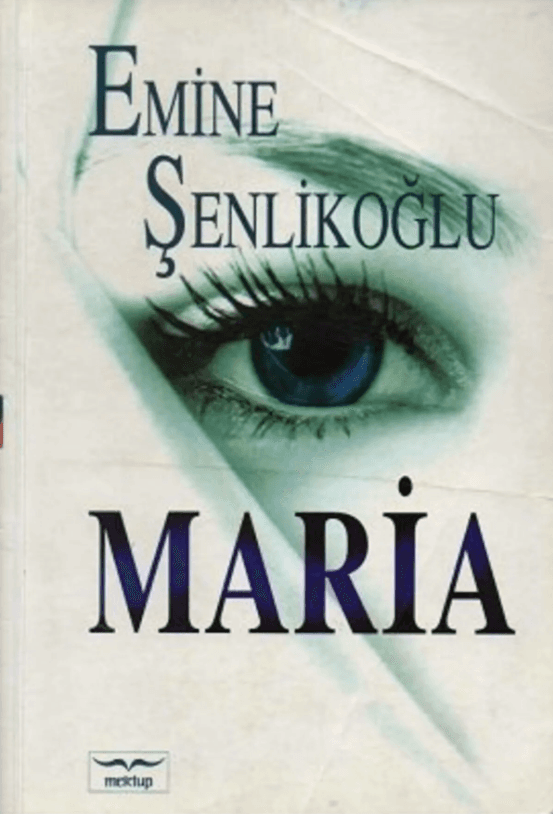
Maria (Book)
Author(s) | Emine Şenlikoğlu | ||||||||
|---|---|---|---|---|---|---|---|---|---|
Publisher(s) | Mektup Yayınları | ||||||||
First Edition Year | 2012 | ||||||||
Number of Pages | 224 | ||||||||
Maria is a novel by Emine Şenlikoğlu that explores the process of individual transformation within the context of religious and cultural differences. The work focuses on the journey of a young Christian woman as she encounters Islam and undergoes profound inner changes. The narrative centers on personal spiritual inquiry, social pressures, and cultural conflicts, examining the impact of transitioning between different belief systems on the individual.
The protagonist, Maria, is a young woman raised in a Christian family and living in Europe. She possesses an educated, inquisitive, and open-minded personality. Certain events in her life and her dialogues with Muslim individuals spark her desire to learn more about Islam. During this process, Maria begins reading the Qur’an, studies the fundamental principles of Islam, and gradually develops a deeper interest in the faith. This internal transformation also affects her relationships with her social circle and family. While narrating Maria’s transition from Christianity to Islam, the novel examines the journey of faith through its cultural and psychological dimensions.
The novel addresses the journey of faith that begins with personal questioning. Maria’s transformation is portrayed as the result of introspective inquiry and a conscious process of choice.
Maria’s decision to embrace Islam elicits various reactions from her family and the society in which she lives. This dynamic reflects the tension between individual choice and societal norms.
The central role of a female character offers an opportunity to explore women’s relationships with belief systems. Maria’s inquiries focus on the conscious process by which a woman determines her own faith.
The novel provides space for empathy between different belief systems and for interfaith dialogue. Maria’s adoption of Islam is presented within a context that highlights the shared dimensions of human values.
The novel is written in third-person narration. A simple and clear language is employed, with attention given to the characters’ emotions and thoughts. Dialogues are structured to advance the narrative. Key information about Islam is integrated into the story through explanatory passages.
The protagonist of the novel. A young woman raised in a Christian environment with an inquisitive nature. Her inner transformation as she explores Islam forms the central axis of the narrative.
Maria’s family represents traditional perspectives and opposes her new religious choice. Her mother, in particular, perceives her daughter’s interest in Islam as a threat.
The Muslim individuals who influence Maria’s understanding of Islam are typically portrayed as knowledgeable, patient, and explanatory. These figures serve as sources of religious knowledge and respond to Maria’s questions and doubts.
Şenlikoğlu, Emine. Maria. Mektup Yayınları, 2012.

Maria (Book)
Author(s) | Emine Şenlikoğlu | ||||||||
|---|---|---|---|---|---|---|---|---|---|
Publisher(s) | Mektup Yayınları | ||||||||
First Edition Year | 2012 | ||||||||
Number of Pages | 224 | ||||||||
Subject
Themes
Quest for Faith and Transformation
Cultural Conflict and Social Pressures
Female Identity and Faith
Universal Values and Religious Tolerance
Style
Characters
Maria
Maria’s Family
Muslim Characters