

This article was automatically translated from the original Turkish version.
+1 More
Information Card
Classification | Idiophone Struck instrument Ceremonial instrument | ||||||||
|---|---|---|---|---|---|---|---|---|---|
Material | Wood Plastic | ||||||||
Components | Handle Gear wheel Flexible wooden piece | ||||||||
Sound Profile | Rhythmic click Continuous noise High volume (matraqueo) | ||||||||
Application Areas | Sports Religious Civil/historical | ||||||||
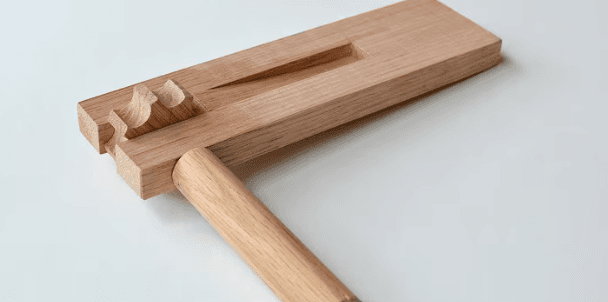
Matraka (or its Spanish spelling, matraca) is a traditional percussive instrument and noisemaker belonging to the idiophone family. Typically made of wood, it produces sound through the mechanical interaction of a toothed wheel mounted at the end of a handle and one or more wooden hammers or flexible elements that strike the wheel as it rotates. When spun manually in a circular motion, the matraka generates a high-pitched, clattering, and continuous noise. Historically, it has been used in religious rituals and civil warning systems, and today it has become an iconic symbol of Mexican sports and fan culture.
Mexico vs Uruguay Match and Matraka (tonacopa)
The word matraka derives from the Arabic root "T-R-Q," which signifies the action of striking. From this root, the verb "taraqa" came to mean to hit, knock on a door, ring a bell, or hammer. Additionally, the Arabic word "tariq," meaning "path," and the name "Jabal al-Tariq" (Gibraltar), meaning "visitor" or "one who knocks at night," also originate from the same etymological root. Over time, as the word spread across different regions, it entered English via Latin America with meanings such as "a wooden rattle spinning on a stick" and "a chatterbox." Similarly, in Brazilian Portuguese, it persists as an argot term describing people who talk excessively and never stop speaking【1】.
According to Spanish-English dictionary sources, the word "matraca" is primarily defined as "rattle." In informal usage, it can also mean "nuisance," "pain," "banter," or "teasing." The Spanish phrase "dar la matraca a alguien" is used to describe the act of annoying or teasing someone. Other regional and slang meanings associated with the word across different geographies include "drug" in the Andes region, "mathematics" in school jargon, and "machine gun" in Mexico【2】
The matraka is designed with a simple yet effective mechanical structure. It is generally manufactured entirely from wood or plastic materials. The main body of the instrument consists of a handle for gripping, a toothed wheel mounted at the end of the handle, and one or more flexible wooden pieces or small hammers that strike the wheel during rotation. As a member of the idiophone family, matrakas may feature one, two, or three small hammers depending on the model.
How to Make a Matraka (Eric Hart)
The instrument operates through manual force. When spun rapidly in a circular motion using a wrist movement, it activates mechanically. During this rotation, the flexible wooden or plastic teeth strike each other rapidly, producing a continuous, rhythmic, and high-volume clattering noise. This sound resembles that produced when two pieces of wood are forcefully struck together. As the physical size of the matraka increases, the volume of the noise it produces increases proportionally. This continuous and rhythmic sound wave generated by the matraka is culturally referred to as "matraqueo."
The use of the matraka is not limited to sporting events; historically, it has been integrated into the religious and civil rituals of various cultures. In Mexico, it is an indispensable part of traditional street festivals. In the U.S. state of New Mexico, it has also served a religious function. The "Penitentes," a local religious group, produced specialized matrakas used actively in their devotional services. During the Holy Week observance known as "Tinieblas," which connects Holy Thursday to Good Friday, all lights are extinguished at midnight in prayer houses called "Moradas," and matrakas are played. The primary purpose of this practice is to simulate the sound of a violent earthquake and to drive away evil spirits from the space.
At the Museum of International Folk Art, a historically significant and signed matraka crafted between 1920 and 1930 by the artist José Dolores López (1868–1937), a pioneer of the Córdova wood carving tradition in New Mexico, is on display. Examining the instrument’s historical civil applications, it was used in the United Kingdom during World War I and World War II to alert the public of impending air raids. In earlier periods, police officers employed the instrument to announce curfews. A similar form and function can be found in the Jewish Purim celebration, where the noisemaker known as the "grogger" is used.
Over time, the matraka has attained the status of one of the most enduring and symbolic instruments in Mexican sports culture and football fandom. For generations, Mexican football supporters have used it to dominate stadium atmospheres, apply psychological pressure on opposing players, and amplify excitement. It is an inseparable component of Mexican fan culture, which transforms stands into massive concert or dance halls through the combined use of plastic horns (cornetas), drums, and music.
Matraka Usage. (BANE126)
The use of the matraka drew global attention during the opening match of the 2026 FIFA World Cup, the match between Mexico and South Africa. The rhythmic, ear-piercing clatter emanating from the Mexican stands throughout the match stunned millions of television viewers. Initially, spectators could not identify the source of the sound; speculation ranged from camera shutters, broadcast microphone malfunctions, commentator earpieces, technical frequency shifts, to poor broadcast quality. Soon after, videos circulating on social media revealed that the sound originated from the spinning matrakas used by Mexican fans. Following this revelation, the instrument was dubbed "Mexico’s new vuvuzela" or "2026 model vuvuzela," referencing South Africa’s famous instrument, and entered tournament history. The presence and cultural significance of the matraka extended beyond Mexico’s borders, becoming visible during viewing events in the United States, such as at the FIFA Fan Fest in Dallas Fair Park or among fans in Minneapolis seen wearing masks and wielding matrakas.
On the other hand, to prevent excessive noise pollution and eliminate the risk of the instrument being weaponized by unruly fans, Mexican authorities banned matrakas—sometimes large wooden objects designed in the shape of flags—as well as plastic horns from stadiums during the 2026 World Cup. Nevertheless, despite these restrictions within stadiums, the instrument continued to be used with the same enthusiasm in streets and local bar and restaurant gatherings known as "partidos en cantina" for match viewings.
Bueno Spanish. "Matraca." Accessed June 12, 2026. https://buenospanish.com/dictionary/matraca/etymology
CNN. "From ‘The Wave’ to ‘Ole, Ole, Ole’: Mexico’s World Cup soccer traditions explained." Accessed June 12, 2026. https://edition.cnn.com/2026/06/07/americas/world-cup-mexican-wave-soccer-traditions-latam-intl
Collins Dictionary. "Matraca'" Accessed June 12, 2026. https://www.collinsdictionary.com/dictionary/spanish-english/matraca
Eric Hart. "Wooden Ratchet Noisemaker" YouTube. Accessed June 12, 2026. https://www.youtube.com/watch?v=HKuRT1qEJWE
GZT. "Dünya Kupası'nda yeni Vuvuzela: Meksika tribünlerinden gelen Matraca sesi." Accessed June 12, 2026. https://www.gzt.com/spor/dunya-kupasinin-yeni-vuvuzelasi-matraca-nedir-meksika-macinda-tribunden-gelen-ses-spor-haberleri-4231580
Yahoo Sports. "'Viva Mexico': Fans revel at FIFA Fan Fest at Dallas' Fair Park." Accessed June 12, 2026. https://sports.yahoo.com/articles/viva-mexico-fans-revel-fifa-230345621.html
tonacopa. "México x Uruguai - Matraca Gigante." YouTube. Accessed June 12, 2026. https://www.youtube.com/watch?v=bbeYM1zrhsk
[1]
Bueno Spanish. "Matraca" Access date: 12 June 2026. https://buenospanish.com/dictionary/matraca/etymology
[2]
Collins Dictionary. "Matraca" Access date: 12 June 2026. https://www.collinsdictionary.com/dictionary/spanish-english/matraca

Information Card
Classification | Idiophone Struck instrument Ceremonial instrument | ||||||||
|---|---|---|---|---|---|---|---|---|---|
Material | Wood Plastic | ||||||||
Components | Handle Gear wheel Flexible wooden piece | ||||||||
Sound Profile | Rhythmic click Continuous noise High volume (matraqueo) | ||||||||
Application Areas | Sports Religious Civil/historical | ||||||||
Etymology and Lexical Meaning
Structural Features and Mechanism of Operation
Cultural and Religious Uses
Role in Sports and Fan Culture