This article was automatically translated from the original Turkish version.
+1 More
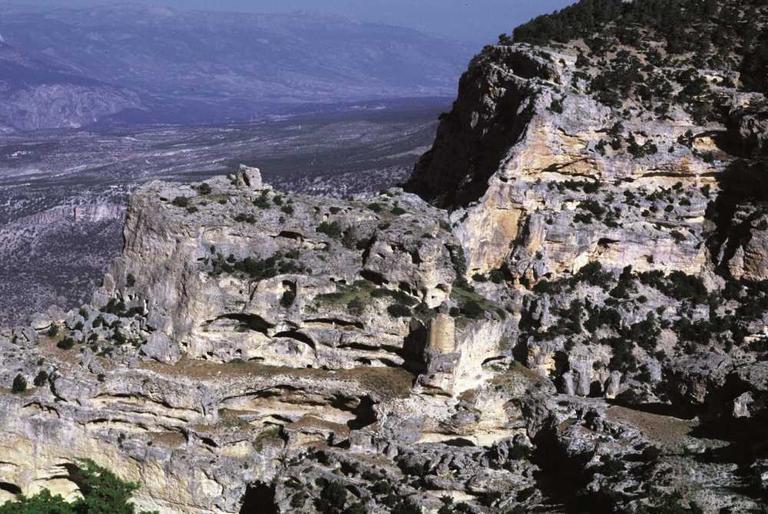
Mavga Castle is located within the boundaries of the Mut district of Mersin Province, near the Kozlar Plateau. Situated approximately 16 kilometers from the district center, the castle is built upon steep and vertical cliffs, granting it a dominant, elevated, and strategic position due to the natural topography of the terrain. The structure rises about 150 meters above sea level.
The castle was constructed in 1230 under the orders of Sultan I. Alaeddin Keykubat of the Anatolian Seljuks. This information is derived from an Arabic inscription housed in a rectangular niche on the northeast tower of the castle. Mavga Castle, notable for its historical and strategic significance, played an important role in the defense of the region.

Mavga Castle (Türkiye Culture Portal)
Mavga Castle has been largely shaped by carving directly into natural rock formations, giving it a distinctive architectural character. Rooms, stables, food preparation areas, irrigation channels, and water cisterns within the castle were all carved directly into the rock. The interior surfaces of the cisterns were plastered with Horasan mortar. These elements demonstrate that the structure was planned to serve both military and daily living needs.
The inscription located in the tower at the northeast end of the castle provides direct information about its history. The niche housing the inscription is rectangular in form. Much of the castle’s outer walls have been damaged over time. However, the remaining towers and structures continue to reflect the castle’s original design.

Mavga Castle (Türkiye Culture Portal)
Natural caves surrounding the castle have been modified for habitation. In addition, among these caves are small rock-cut tombs with square or rectangular plans and narrow entrances. These tombs indicate that the castle and its surroundings served not only military functions but also civilian and cultural purposes.

Architectural Features
Inscription and Structural Remains
Caves and Burial Structures