


This article was automatically translated from the original Turkish version.
+2 More
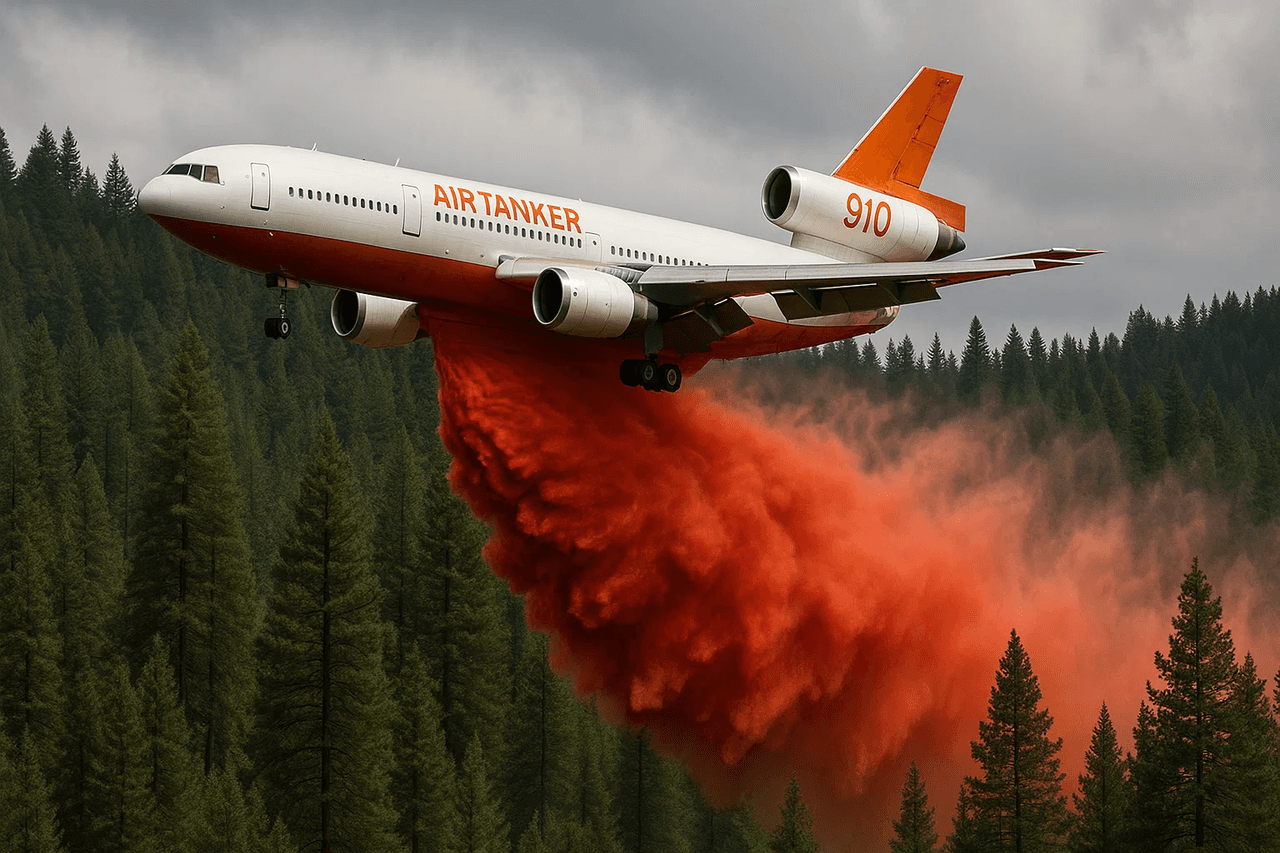
DC-10 Air Tanker
Producer(s) | McDonnell Douglas (USA) | ||||||||
|---|---|---|---|---|---|---|---|---|---|
First Flight(s) | 29 August 1970 (original DC-10) First Air Tanker conversion: 2006 | ||||||||
Entry into Service | 2006 (in fire suppression missions) | ||||||||
Aircraft Type(s) | Three-engine wide-body fire suppression aircraft | ||||||||
Models | 10 Tanker (specially converted fire suppression version) DC-10-30 Air Tanker DC-10-10 Air Tanker | ||||||||
The McDonnell Douglas DC-10 is a three-engine, wide-body passenger aircraft that entered service in the early 1970s. Developed by American aviation company McDonnell Douglas as a competitor to the Boeing 747, the DC-10 was designed for medium- and long-haul flights. Recognized by its distinctive third engine mounted in the tail section, this iconic aircraft holds a significant place in commercial aviation history and has been used not only for passenger transport but also as a cargo aircraft and for specialized missions.

DC-10 (Generated by Artificial Intelligence.)
The development of the DC-10 arose in the late 1960s from the need of airlines for a new generation of wide-body aircraft capable of meeting growing passenger demand while offering a more flexible and economical alternative to existing four-engine jumbo jets. McDonnell Douglas responded to this need by launching the DC-10 project. The aircraft’s first flight took place on 29 August 1970, and it entered service with American Airlines in 1971. Although designed for intercontinental routes, the DC-10 also gained popularity on medium-haul, high-density routes.
DC-10 Very Large Air Tanker (MechDesignTV)
The most distinctive design feature of the DC-10 is its three turbofan engines: two mounted under the wings and one integrated into the vertical tail stabilizer. This three-engine configuration provided sufficient thrust while enhancing safety for flights over the Atlantic and Pacific Oceans. Its wide fuselage offered airlines flexible cabin configurations and a more comfortable travel experience for passengers. The cockpit was equipped with modern avionics systems of the era, providing pilots with high situational awareness.
In addition to passenger transport, the DC-10 was heavily utilized as a cargo aircraft. Particularly, versions converted into air tankers by 10 Tanker Air Carrier hold a unique position in aviation history. These modified DC-10s are equipped with massive water or fire retardant tanks and play a critical role in combating wildfires. Beyond firefighting missions, DC-10s have also been employed in various specialized roles including military transport and aerial refueling.
Kupietzky, Joshua. "Modified McDonnell Douglas DC-10: A Look At 10 Tanker's Aerial Firefighting Airplane." Simple Flying. Accessed May 22, 2025. https://simpleflying.com/10-tanker-modified-dc-10-firefighting-plane-guide/.
MechDesignTV. "DC-10 Very Large Air Tanker ‘Nancy Bird’ & C-130 Air Tanker 'Thor' - Royal Australian Air Force." YouTube. Accessed May 22, 2025.
Skybrary. "Mcdonnell Douglas Dc-10." Skybrary. Accessed May 22, 2025. https://skybrary.aero/aircraft/dc10.
Şimşek, Alaeddin. "DC-10 Air Tanker." *Kokpitteyiz*. Accessed May 22, 2025. https://www.kokpitteyiz.com/dc-10-air-tanker/.

DC-10 Air Tanker
Producer(s) | McDonnell Douglas (USA) | ||||||||
|---|---|---|---|---|---|---|---|---|---|
First Flight(s) | 29 August 1970 (original DC-10) First Air Tanker conversion: 2006 | ||||||||
Entry into Service | 2006 (in fire suppression missions) | ||||||||
Aircraft Type(s) | Three-engine wide-body fire suppression aircraft | ||||||||
Models | 10 Tanker (specially converted fire suppression version) DC-10-30 Air Tanker DC-10-10 Air Tanker | ||||||||
No Discussion Added Yet
Start discussion for "McDonnell Douglas DC-10 Air Tanker" article
Development Purpose and History
Design Features
Technical Specifications
Notable Variants and Applications