This article was automatically translated from the original Turkish version.
+1 More
Origin(s) | Late 18th century France | ||||||||
|---|---|---|---|---|---|---|---|---|---|
Important Examples | Cinema: Bir Demet Menekşe (1971) Theater: Gülnihal (Namık Kemal) | ||||||||
Melodrama is a theatrical and cinematic genre in which music plays a significant role, and the plot typically revolves around clearly defined moral characters of good and evil. It has served as a transitional form in establishing the fundamental elements of classical dramatic structure. The melodrama genre aims to affect the audience emotionally through the use of exaggerated emotions and dramatic coincidences.
The term melodrama derives from the Greek words mélos, meaning "song" or "music," and "drama." The origins of the genre are linked to social changes in the late 18th century, particularly following the French Revolution. During this period, popular theaters that emerged in opposition to aristocratic theater played a crucial role in popularizing melodrama. Music, accompanying dialogue, strengthened the emotional intensity and tension on stage, becoming one of the genre’s defining features. In the 19th century, melodrama spread rapidly throughout Europe and America. Melodramas aimed at the working-class audience frequently explored moral conflicts, themes of crime and punishment, sacrifice, and the triumph of virtue. In contrast to mechanical materialism, they emphasized individual moral struggles and choices. Exaggerated characters—innocent heroes, unscrupulous villains, and self-sacrificing women—alongside visual spectacle, sudden plot twists, and "tableaux," or frozen stage compositions, became indispensable elements of the genre. Following its widespread popularity on the theatrical stage, melodrama maintained its appeal during the silent film era, finding new expressive possibilities in cinema.
Melodrama played a significant role in Turkish theater’s encounter with Western theater. During the Tanzimat period, a melodramatic and realist current dominated Turkish theater, a trend that persisted and evolved for approximately 170 years. Works such as Namık Kemal’s Gülnihal introduced Turkish audiences to the dramatic and moral conflict structures of melodrama. Turkish melodrama became an important instrument in reinforcing social gender roles and moral values. Female characters were typically constructed through stereotypical archetypes: the "ideal woman" (self-sacrificing mother or virtuous wife) or the "bad woman" (a woman who defied moral norms and was driven by desire). Women who failed to exhibit ideal behavior were often punished, excluded, or abandoned within the narrative.
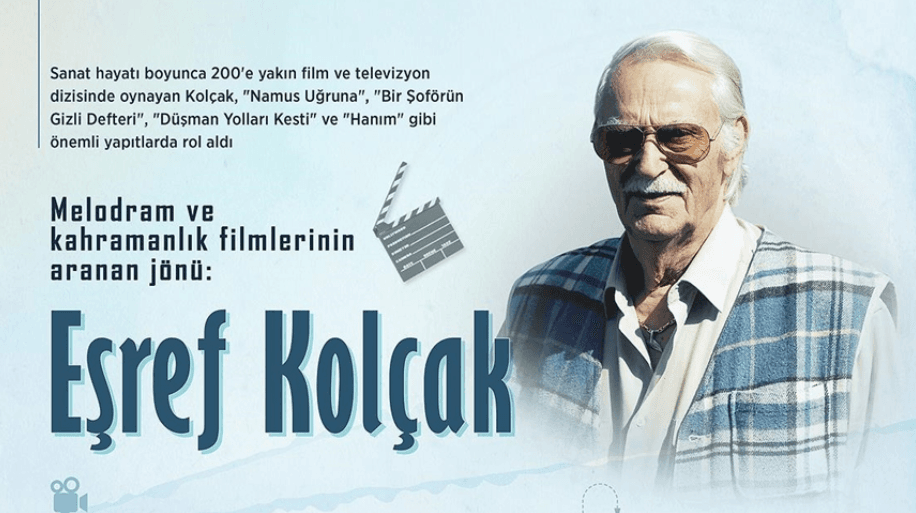
In Turkish cinema, melodrama experienced its golden age particularly between the 1950s and 1970s, during the period known as "Yeşilçam." These films commonly dealt with the hardships imposed by feudal structures, class differences, obstacles to love, family conflicts, and sacrifice. Music carried the emotional weight of the films and was used to heighten tension in scenes. The melodramas of this era produced works that easily resonated with audiences, appealed to their emotions, and became part of popular culture. Figures such as Eşref Kolçak, one of the genre’s prominent actors, entered the pantheon of iconic figures in Turkish cinema through the characters they portrayed in melodramas and heroic films.
The influence of melodrama in contemporary Turkish cinema continues. Films are still being produced that blend the classical features of the genre with modern narrative techniques, addressing social issues and emotionally engaging audiences. This ongoing presence demonstrates that melodrama has left a deep imprint on Turkish culture and continues to play a powerful role in shaping social narratives.
Anadolu Ajansı. "Melodram ve kahramanlık filmlerinin aranan jönü Eşref Kolçak." Anadolu Ajansı, May 25, 2021. https://www.aa.com.tr/tr/kultur-sanat/melodram-ve-kahramanlik-filmlerinin-aranan-jonu-esref-kolcak/2253250.
Baş, Elif. "Türk Melodram Filmlerinde İdeal/Kötü Kadın İmgesi: Bir Demet Menekşe Film Örneği." Uluslararası Sosyal Araştırmalar Dergisi 12, no. 65 (2019). https://www.academia.edu/download/61915582/kotu_kadin20200127-79177-1ratc9k.pdf.
Güçbilmez, Beliz. "Melodram, Beden ve Gülnihal." Tiyatro Araştırmaları Dergisi 1, no. 9 (2000): 1-25. https://dergipark.org.tr/en/pub/tad/article/136850.

Origin(s) | Late 18th century France | ||||||||
|---|---|---|---|---|---|---|---|---|---|
Important Examples | Cinema: Bir Demet Menekşe (1971) Theater: Gülnihal (Namık Kemal) | ||||||||
Historical Development of Melodrama
Melodrama in Turkish Theater and Cinema