


This article was automatically translated from the original Turkish version.
+1 More
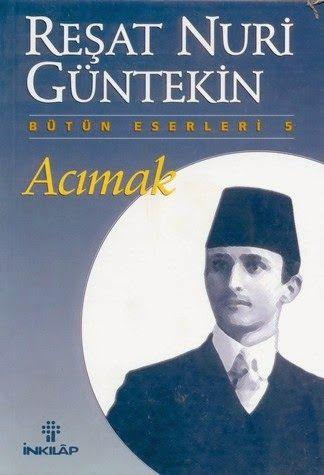
Acmak, a novel by Reşat Nuri Güntekin, was first published in 1928. The story recounts how a teacher, who has lost the capacity for compassion due to hardships he endured in his youth, rediscovers the truth of his past after reading his father’s diary following the latter’s death. The novel explores themes of Novel, individual-environment relationships, familial communication breakdown, and emotional transformation such as.
At the center of the novel is place district teacher character Zehra, a disciplined, dedicated, and rigid educator who has lost all sense of mercy. She treats her students harshly and discriminates against them based on their socioeconomic conditions. Traumas from her early years have shaped her into a hardened personality. One day, she learns that her father, Spiritual guide Efendi, is lying on his deathbed; however, due to long-standing resentment, she remains indifferent and dismisses the news with the words, “My father is none” and shows no reaction.
Zehra later changes her mind and travels to Istanbul. During the journey, she reflects on her past and her family. She recalls the death of her sister Feriha from tuberculosis, her mother’s illness and passing, her father’s imprisonment, her grandmother Makbule Hanım’s stroke, and her own placement in a boarding school. Her anger toward her father and anger have prevented her from forming emotional bonds for years.
Upon arriving in Istanbul, she learns that her father died the day before. She is handed a ballot box belonging to him. As she reads the diary inside, Zehra realizes that her understanding of the past was incomplete and wrong. She comes to understand that her father, Mürşit Efendi, struggled under difficult circumstances to support his family, that her mother Meveddet Hanım and grandmother Makbule Hanım’s attitudes created unresolved tensions within the household, and that sending her to boarding school was an act of sacrifice. This realization triggers an internal transformation in Zehra, and ultimately, she learns compassion.
Zehra: The protagonist of the novel. A dedicated, idealistic teacher who is emotionally cold and uncompassionate. After reading her father’s diary, she undergoes an internal transformation.
Mürşit Efendi: Zehra’s father. A sensitive, honest, hardworking, and pure character. Throughout his life, he remained devoted to his family and tried to protect his daughter.
Meveddet Hanım: Zehra’s mother. She died at a young age. She had an authoritarian and discontented disposition.
Makbule Hanım: Zehra’s grandmother. She is portrayed as cunning and self-serving.
Feriha: Zehra’s older sister. She died young from tuberculosis.
Mebus Şerif Hayri Bey: The region’s member of parliament. He provides Zehra with information about her father’s condition.
Tevfik Hayri Bey: Zehra’s work hours friend. He criticizes her attitude toward her father but behaves with understanding.
Necip Bey and Ruhsar: Other characters in Zehra’s social circle.
Vehbi Bey: An old neighbor who meets Zehra in Istanbul. He describes to her the circumstances surrounding her father’s death.
Work dramatically portrays how events experienced in childhood shape an individual’s personality. Themes such as compassion, forgiveness, familial responsibility, communication deficits, misunderstandings, and belated awareness form the foundation of the novel. Author treats these themes in simple language, employing internal monologues and flashbacks.

Summary of the Plot
Main Characters
Themes and Structural Features