
This article was automatically translated from the original Turkish version.
+1 More
Establishment Date | 1968 | ||||||||
|---|---|---|---|---|---|---|---|---|---|
Group Members | Özkan Uğur Fuat Güner Mazhar Alanson | ||||||||
Achievements | 2019: Presidency Culture and Arts Grand Award 2003: MFÖ - Kral TV Best Group Award 2020 Eurovision Again - 4th 1988: Eurovision - 15th 1985: Eurovision - 14th | ||||||||
Albums | Kendi Kendine (2017) Ve MFÖ (2011) AGU (2006) Mazeretim Var Asabiyim Ben (1995) Geldiler (1990) Vak The Rock (1986) Peki Peki Anladık (1985) Dönmem Yolumdan (1992) Agannaga Rüşvet (1992) Ele Güne Karşı Yapayalnız (1984) | ||||||||
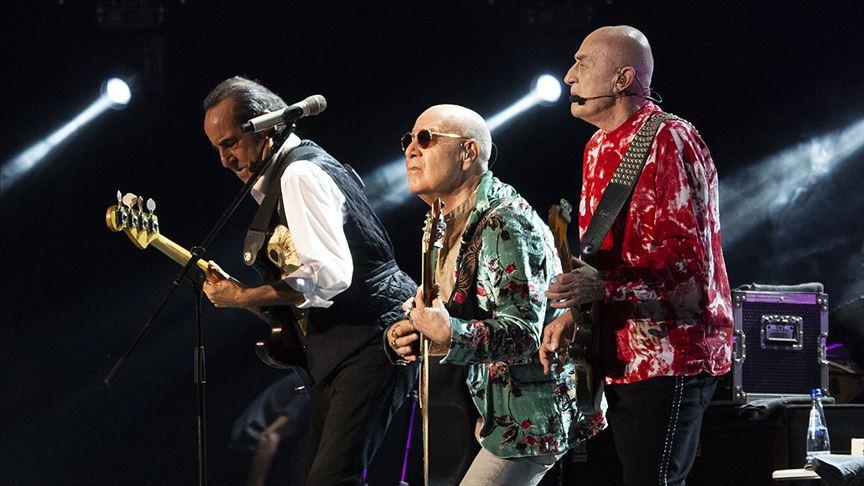
MFÖ, whose name stands for MazharFuatÖzkan, is a Turkish pop and rock music group. The group has left a lasting mark on Türkiye’s music scene through its original albums, concerts both within and outside the country, numerous awards, and innovative contributions. MFÖ has become an icon of Turkish music history not only for its musical achievements but also for its cultural impact and enduring career.
MFÖ officially began performing as a group under the name “Mazhar Fuat Özkan” in 1980 and achieved major breakthrough success with their 1984 album “Ele Güne Karşı Yapayalnız.” This success was not merely a commercial milestone but a turning point that reshaped the direction of pop-rock music in Türkiye. The group created a unique sound by blending Western musical influences with the traditional tonalities of Anatolia.
The group consists of Mazhar Alanson, Fuat Güner, and Özkan Uğur. All three members have pursued individual careers in music, theater, cinema, and television beyond their work with MFÖ. Due to this multidimensional character, MFÖ is also regarded as a layered cultural phenomenon.
MFÖ’s music draws attention through lyrics that sometimes contain political and social criticism, sometimes humorous and witty expressions drawn from everyday life, and sometimes spiritual and Sufi themes. Throughout their career spanning from the 1980s to the present, the group has experimented with different styles in various periods while remaining faithful to their core musical identity.
MFÖ, combining Mazhar Alanson’s lyricism, Fuat Güner’s compositions, and Özkan Uğur’s stage energy, has become a cultural and social phenomenon in Türkiye.
MFÖ - Ele Güne Karşı (Poll Production)
The foundations of MFÖ were laid when Mazhar AlansonMazhar Alanson and Fuat Güner met in 1965. This meeting began when Mazhar Alanson, seeing Fuat Güner carrying a Beatles record, invited him to listen to it together. This encounter gradually deepened into a close friendship and eventually became the first step toward what would become one of Türkiye’s most enduring music groups, MFÖ.
The duo first began making music together in the group Kaygısızlar. During this period, they performed songs by foreign groups such as The Beatles, Crosby, Stills & Nash, and The Rolling Stones, while also beginning to write their own lyrics and music. The Kaygısızlar lineup included prominent figures of the era such as Ali Serdar, Semih Oksay, and Fikret Kızılok. This group emerged during a time when Western influences were becoming more prominent in Türkiye’s musical landscape and played a significant role in the transition toward modern music.
Özkan Uğur met Mazhar and Fuat in 1971. After briefly performing with Kaygısızlar, he joined other artists such as Barış Manço’s Kurtalan Ekspres, Erkin Koray and Ersen ve Dadaşlar following the group’s dissolution. The experience Özkan Uğur gained during this period laid the foundation for his later significant contributions to MFÖ’s musical structure. This 1971 meeting marked the beginning of what would become a partnership lasting over 36 years.
After Kaygısızlar, Mazhar and Fuat continued their musical endeavors and released a single album in 1973 titled “Türküz Türkü Çağırırız.” However, this album failed to attract the expected attention. During this time, the members continued working on separate projects. In 1976, Mazhar and Fuat, along with Özkan Uğur, Ayhan Sicimoğlu, and Galip Boransu, formed a new group called İpucu Beşlisi. This group produced a video for their song “Heyecanlı,” which is considered Türkiye’s first music video. The video was directed by the well-known figure of the era, İzzet Öz.
After the dissolution of İpucu Beşlisi, the members continued their musical careers individually. During this period, Özkan Uğur, together with Galip Boransu and Cengiz Teoman, formed a new group called Grup Karma between 1978 and 1979. Grup Karma participated in the 1978 Eurovision Song Contest Türkiye Final with the song “İmkansız” and finished in fourth place.
Following all these separate phases, Özkan Uğur reunited with Mazhar and Fuat, leading to the final formation of MFÖ. In 1980, the group officially launched under the name “Mazhar Fuat Özkan.” This period marked the convergence of the three artists, each having matured through diverse experiences and finding a shared musical vision. The success and lasting influence MFÖ would later achieve were a direct reflection of this lengthy preparatory phase.
After their individual musical journeys, Mazhar Alanson, Fuat Güner, and Özkan Uğur reunited and officially formed the group MFÖ under the name “Mazhar Fuat Özkan” in 1980. The adoption of this name reflected the culmination of their previous individual and group experiences under a unified banner. Their first project under the MFÖ name was the musical “Merhaba Müzik,” performed in the summer of 1980.
The group worked to represent Türkiye in the Eurovision Song Contest in 1981 and 1982. These efforts did not yield sufficient success in the national selections and failed to secure their place on the Eurovision stage. However, this period was crucial for MFÖ as it enhanced their stage experience and helped them refine their musical identity.
MFÖ’s true breakthrough came with the release of their 1984 album “Ele Güne Karşı Yapayalnız.” This album did not merely achieve commercial success; it became a landmark work that reshaped the direction of pop and rock music in Türkiye. The title track “Ele Güne Karşı” was named “Song of the Year” in 1984 and remained on the national charts for 26 weeks, achieving major success. Other tracks on the album, including “Güllerin İçinden,” “Bu Sabah Yağmur Var İstanbul’da,” and “Yalnızlık Ömür Boyu,” became foundational pieces of MFÖ’s enduring repertoire.
It is known that several songs on this album were originally composed for Ferhan Şensoy’s theater play “Şahları da Vururlar,” but the lyrics were later rewritten by Mazhar Alanson. This highlights the close relationship between the group’s theatrical background and their music production. In particular, Mazhar Alanson’s lyricism gained significant attention with this album, and his poetic language became one of the defining elements of MFÖ’s style.
The fact that MFÖ performed “Ele Güne Karşı” is also the result of an interesting process. The song was originally offered to Seyyal Taner in 1981, but due to a boycott by TRT, her album was never released. As a result, the song became available to MFÖ and, when released with the group in 1984, achieved massive success. This event is regarded as one of the most pivotal moments in MFÖ’s career. The group established a musical identity previously unseen in Türkiye, combining a distinctive musical foundation with compelling stage performances and reaching a broad audience.
MFÖ - Didai Didai Dai (Eurovision Song Contest
Throughout their musical career, MFÖ had the honor of representing Türkiye twice at the Eurovision Song Contest. These participations increased the group’s international recognition and left significant marks on Türkiye’s Eurovision history.
MFÖ first participated in the Eurovision Song Contest in 1985 with the song “Didai Didai Dai.” The song’s original title was “Aşık Oldum.” The national final took place on March 1, 1985, at TRT studios, where MFÖ won first place and earned the right to represent Türkiye.
The contest was held in Gothenburg, Sweden. MFÖ attracted attention with their energetic stage performance and the rhythmic structure of the song, earning 36 points and placing 14th. The song received great popularity in Türkiye after the contest and further elevated MFÖ’s fame.
Another notable detail from this contest was the host Lill Lindfors introducing the group simply as “MFÖ.” This abbreviation later became the group’s permanent name. Additionally, the host’s dance during the performance generated great excitement among Turkish viewers and amplified the contest’s impact in Türkiye. Despite the passage of years, this performance has not been forgotten; in the 2020 online voting event “Eurovision Again 1985,” MFÖ received 6,373 votes and placed fourth, demonstrating that the group still maintains a large fan base and that its musical legacy endures.
MFÖ represented Türkiye for the second time in 1988 with the song “Sufi.” This song is a significant example of the group’s effort to blend mystical and traditional themes with Western musical structures. At the contest held in Dublin, Ireland, MFÖ received 37 points and placed 15th. Although “Sufi” had a mystical character, its stage arrangement and melodic structure were considered capable of appealing to diverse cultures. However, it did not achieve a higher ranking in the scoring.
MFÖ also participated in the 1989 Eurovision Türkiye selections with the song “Adı Naim,” written about Naim Süleymanoğlu. However, this song failed to qualify for the contest, and the group did not appear on the Eurovision stage. This work was never included in any MFÖ album.
The Eurovision experiences contributed significantly to MFÖ’s recognition not only in Türkiye but also on the international music scene. These contests solidified the group’s experience in both song production and stage performance, further strengthening their career.
Mazhar Alanson ile (TRTMÜZİK)
Throughout their musical career, MFÖ has released many unforgettable albums and secured a permanent place in Türkiye’s music history. The group has released a total of 11 studio albums, many of whose songs stand out as reflections of their era’s spirit, carrying social messages and distinguished by their originality. MFÖ has reached thousands through concerts, touched millions through albums, and successfully connected with audiences across generations.
Peki Peki Anladık (1985): Released after their Eurovision participation, this album demonstrates the group’s shift toward a more experimental musical direction. The arrangements were produced by Dutch musician Peter Schön, and the group embraced the new wave style that was influential worldwide in the 1980s. The track “Buselik Makamına” stands out as Mazhar Alanson’s first composition with Sufi themes. The second side of the album consists entirely of English-language songs. However, this English-language section did not fulfill MFÖ’s ambition to break into international markets.
Vak The Rock (1986): Recorded in the Netherlands, this album represents a first in Turkish music history. The animated music video produced for the album’s songs employed a visual storytelling technique previously untested in Türkiye. In this regard, “Vak The Rock” demonstrates that MFÖ was not only musically innovative but also visually pioneering.
Geldiler (1990): This album marks a period of significant stylistic change for MFÖ. As rap music began gaining popularity worldwide, MFÖ led pioneering efforts in introducing this genre to Türkiye. Songs such as “Ali Desidero” and “Anında Görüntü” are among the earliest examples of Turkish-language rap. Additionally, tracks like “Sude” and “İk Ben,” featuring nonsensical lyrics performed by Özkan Uğur, attracted attention. The song “Ateş-i Aşka” is structured as a hymn and reflects MFÖ’s mystical approach. The album also features Edip Cansever’s poem “Geçiniz,” adapted into a song, illustrating one of MFÖ’s many connections with literature.
Agannaga Rüşvet (1992): This album draws attention through its critical and humorous songs. Tracks such as “Belediye Nerede,” “Rüşvet,” and “Patlamalar” offer examples of political and social satire. The song “Deneylere Doğru” is a politically charged piece expressing the group’s concerns about the consequences of their own artistic experiments. This album is one of the rare examples where MFÖ directly reflected their sensitivity to social events and their critical stance.
Dönmem Yolumdan (1992): Released in the same year, this second album is one of MFÖ’s collaborations with Fahir Atakoğlu. It includes a cover of “Don’t Wanna See It,” performed with Peter Murphy, the vocalist of the goth rock band Bauhaus. However, both this album and “Agannaga Rüşvet” fell short of the commercial success of their earlier releases.
Mazeretim Var Asabiyim Ben (1995): On this album, MFÖ moved more distinctly toward a rock music style. The production was done in collaboration with Erdal Kızılçay. The songs “Mazeretim Var Asabiyim Ben” and “Sakın Gelme,” both accompanied by music videos, helped the group reconnect with a new generation of listeners; in particular, “Sakın Gelme” attracted attention for its lyrics written by their old friend Fikret Kızılok.
AGU (2006): This album includes previously released solo tracks such as “Ne Bileyim Ben” and “Olduramadım.” The music videos for “Sarı Laleler” and “Vurgun Yedim” ranked highly on the music charts of the time, with “Sarı Laleler” receiving particular acclaim. Written by Mazhar Alanson, this song became one of the most beloved works of the year.
Ve MFÖ (2011): This album marked the group’s return to music after a five-year hiatus. While maintaining their classic MFÖ style, it also demonstrates how the group adapted to contemporary music trends.
Kendi Kendine (2017): This album consists of 12 acoustic songs and represents the group’s return to the music scene after a long period of silence. Prepared with a more minimalist approach compared to previous albums, MFÖ returned to the essence of music, offering listeners an intimate atmosphere accompanied by acoustic instruments.
Ele Güne Karşı (GAİN)
Throughout their career, MFÖ has received numerous awards. One of the most significant is the “Best Group” award they won at the 2003 Kral TV Video Music Awards. This award is seen as a result of the group’s long-standing productivity and the strong bond they established with their audience.
Blue Jean Magazine, in its list identifying landmark moments in Turkish rock music, included MFÖ’s songs “Mazeretim Var Asabiyim Ben” and “Ele Güne Karşı.” In the same magazine’s list of “The 5 Best Classic Rock Albums of All Time,” the album “Ele Güne Karşı Yapayalnız” ranked first.
In 2017, Hürriyet Newspaper’s list of “Türkiye’s 100 Best Albums” produced similar results: “Ele Güne Karşı Yapayalnız” ranked first, “Mazeretim Var Asabiyim Ben” ranked 64th, and “Peki Peki Anladık” ranked 74th. In 2019, MFÖ was honored with the “Music” award under the Presidency’s Culture and Arts Grand Awards.
Özkan Uğur, MFÖ’s bass guitarist and renowned musician, passed away on July 8, 2023 at the age of 69. The artist, who had been battling lymphoma for many years, was receiving treatment at a private hospital in Istanbul and had experienced a third recurrence of the illness. He ultimately lost his life after this prolonged and difficult struggle.
Anadolu Ajansı. “MFÖ Gaziantep’te Hayranlarıyla Buluştu.” Accessed August 1, 2025. https://www.aa.com.tr/tr/kultur-sanat/mfo-gaziantepte-hayranlariyla-bulustu/1504685
Biography. "MFÖ (Mazhar Fuat Özkan)." Accessed August 1, 2025. https://www.biyografya.com/tr/biographies/mfo-58beed75
Eurovision Song Contest YouTube Channel. "MFÖ - Didai Didai Dai - Türkiye 🇹🇷 - Grand Final - Eurovision 1985." Accessed July 30, 2025. https://www.youtube.com/watch?v=6tlDYMZWSzU
Eurovisionary. "Eurovision 1985: Turkey’s MFÖ in Focus." Eurovisionary, August 1, 2025. Accessed July 30, 2025. https://eurovisionary.com/eurovision-1985-turkeys-mfo-in-focus
Gain YouTube Channel. "Ele Güne Karşı - Bir MFÖ Belgeseli | 1. Bölüm." Accessed July 30, 2025. https://www.youtube.com/watch?v=-D086o5jJOM
Kral Müzik. "MFÖ Biyografisi." Kralmuzik.com.tr. Accessed August 1, 2025. https://www.kralmuzik.com.tr/biyografisi/mfo
Poll Production YouTube Channel. "MFÖ - Ele Güne Karşı - (Harbiye Açık Hava Konseri)." Accessed July 30, 2025. https://www.youtube.com/watch?v=oIO90O4b8VQ
TRT Müzik YouTube Channel. "Mazhar Alanson ile | 35. Bölüm (Konuk: Fuat Güner & Özkan Uğur)." Accessed July 30, 2025. https://www.youtube.com/watch?v=B8Fi99OWO30

Establishment Date | 1968 | ||||||||
|---|---|---|---|---|---|---|---|---|---|
Group Members | Özkan Uğur Fuat Güner Mazhar Alanson | ||||||||
Achievements | 2019: Presidency Culture and Arts Grand Award 2003: MFÖ - Kral TV Best Group Award 2020 Eurovision Again - 4th 1988: Eurovision - 15th 1985: Eurovision - 14th | ||||||||
Albums | Kendi Kendine (2017) Ve MFÖ (2011) AGU (2006) Mazeretim Var Asabiyim Ben (1995) Geldiler (1990) Vak The Rock (1986) Peki Peki Anladık (1985) Dönmem Yolumdan (1992) Agannaga Rüşvet (1992) Ele Güne Karşı Yapayalnız (1984) | ||||||||
Formation and Early Years
MFÖ’s Debut and Breakthrough Album
Eurovision and Representation
Important Albums and Achievements in Their Career
Awards
Death of Özkan Uğur