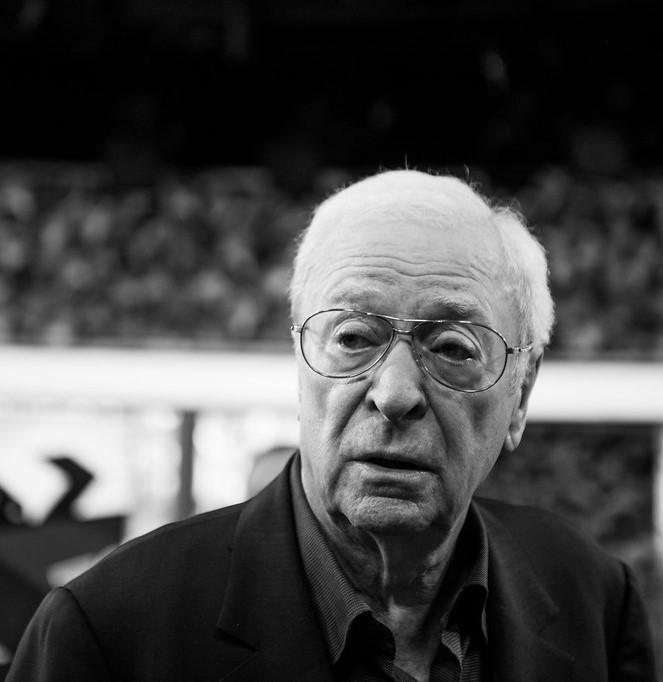


+1 More

Yaş | 92 | ||||||||
|---|---|---|---|---|---|---|---|---|---|
Doğum tarihi | 1933-03-14 | ||||||||
Nationality | English | ||||||||
Profession(s) | Actor Writer | ||||||||
Active Years | 1950 – 2023 (Retired) | ||||||||
Role Types | Drama, Crime, Thriller, Action, Science Fiction | ||||||||
Michael Caine, born Maurice Joseph Micklewhite Jr, was born on 14 March 1933 in the Rotherhithe district of London, England. His father, Maurice Joseph Micklewhite Sr, worked as a fish market laborer, while his mother, Ellen Frances Marie, was a cleaner. His family can be regarded as a typical example of England’s working-class economic structure. With the outbreak of the Second World War, his family, like many other British families, was forced to evacuate their children to rural areas. This rural experience during his childhood influenced his later perception of spatial belonging.

Scene from the film The Dark Knight Rises. (flickr)
Caine completed his primary education at local state schools. He then attended Wilson’s Grammar School and later John Cass Technical School. Although no formal record of academic excellence exists, his redirection toward technical education reflects the encouragement of his professional and practical abilities.
After completing his education, he joined the British Army in 1952 and served actively during the Korean War. Throughout his military service, he interacted with diverse social environments and developed skills in discipline, observation, and character analysis. His experience in the Korean War provided a foundational background for roles requiring psychological analysis of male characters.
After his military service, he worked in various day jobs, during which his interest in theatre became pronounced. He gained his first stage experience in repertory theatre. During this period, he sought a stage name suitable for his career and adopted the name “Michael Caine,” inspired by the 1954 film The Caine Mutiny. This change can be viewed as part of a common professional identity construction among British actors.
In the 1950s and 1960s, he primarily worked in television series, commercials, and minor roles. During this time, he adapted to the competitive conditions of the industry and consistently took on small parts.
Michael Caine’s first major cinematic visibility came with the 1964 film Zulu. The officer character he portrayed was one of the typical representations found in British colonial military narratives of the era. In 1965, he took his first leading role in The Ipcress File; together with its sequels featuring the same character, he became one of the alternative figures in British spy cinema.
The 1966 film Alfie, in which he played the lead, brought him international recognition. The film presents a narrative centered on the social gender roles of the time. Caine’s performance reflected a model of acting grounded in cool detachment and emotional distance. With this film, he was nominated for the Academy Awards (Oscars) for the first time.
Throughout the 1970s, Caine appeared in numerous films with diverse thematic contexts. He starred in the crime thriller Get Carter (1971), a film now regarded as one of the most frequently referenced works in British crime cinema. The 1972 film Sleuth, an adaptation of a stage play, allowed him to focus on character portrayal. He was nominated for an Oscar for the second time for this film.
During the same period, he also appeared in large-budget international productions such as The Man Who Would Be King (1975) and A Bridge Too Far (1977). In these films, he demonstrated his acting through cinematic representations of historical and military themes. Caine’s career during this era stood out for its parallel progression in both mainstream and niche audience films.
The 1980s marked a period in which Caine shifted toward older character roles and gained critical acclaim. In the 1983 film Educating Rita, he portrayed a university academic. The film explores the class and cultural structures of the education system. In 1986, he appeared as a supporting male character in Woody Allen’s Hannah and Her Sisters and won his first Oscar for Best Supporting Actor.
During this period, he also occasionally appeared in television productions and miniseries, maintaining his productivity.
In the 1990s, Caine accepted fewer projects but favored character-driven dramatic films. In 1998, he played a supporting role in Little Voice. In the 1999 film The Cider House Rules, his performance earned him his second Oscar. The film addresses moral dilemmas and individual attitudes toward social norms.
In the 2000s, Caine collaborated with director Christopher Nolan and connected with a new generation of audiences. In the trilogy Batman Begins (2005), The Dark Knight (2008), and The Dark Knight Rises (2012), he portrayed Alfred Pennyworth, the loyal butler and mentor to Bruce Wayne. This role marked his transition into supporting and guiding figures in his career.

Scene from The Dark Knight Rises. (flickr)
He also appeared in high-budget science fiction and psychological thriller films such as The Prestige (2006), Inception (2010), Interstellar (2014), and Tenet (2020). In these films, he adopted an acting style synchronized with the technical dimensions of the narratives.
In 1987, Caine was awarded the Commander of the Order of the British Empire (CBE). In 2000, he was knighted as a Knight Bachelor, thereby gaining the official right to use the title Sir Michael Caine. These titles confer symbolic and ceremonial status upon individuals or artists who have served the British Empire.
Caine has been married to Shakira Baksh since 1973. They have one child together. Previously, he was married to Patricia Haines from 1955 to 1962, and they had one child. He maintains a private life largely removed from the media.
In 2023, he announced his retirement from acting. This decision reflects a conscious withdrawal from active film production and the deliberate conclusion of his career due to age.
Academy of Achievement. "Sir Michael Caine." Accessed August 6, 2025. https://achievement.org/achiever/sir-michael-caine/.
AllMovie. "People search results for 'michael-caine-.'" Accessed August 6, 2025. https://www.allmovie.com/search/people/michael-caine-.
Flickr, photographer 14721802@N06. "7566470536." Accessed August 6, 2025. https://www.flickr.com/photos/14721802@N06/7566470536.
Flickr, photographer 14721802@N06. "7566473684." Accessed August 6, 2025. https://www.flickr.com/photos/14721802@N06/7566473684.
IMDb. "Michael Caine." Accessed August 6, 2025. https://www.imdb.com/name/nm0000323/.
Rotten Tomatoes. "Michael Caine Movies & TV Shows List." Accessed August 6, 2025. https://www.rottentomatoes.com/celebrity/michael_caine.

Yaş | 92 | ||||||||
|---|---|---|---|---|---|---|---|---|---|
Doğum tarihi | 1933-03-14 | ||||||||
Nationality | English | ||||||||
Profession(s) | Actor Writer | ||||||||
Active Years | 1950 – 2023 (Retired) | ||||||||
Role Types | Drama, Crime, Thriller, Action, Science Fiction | ||||||||
Education and Military Service
Transition to Theatre and Acting
Rise to Film Fame and First Leading Roles (1960–1970)
The 1970s: Productivity and Thematic Diversity
The 1980s: Academic Recognition and Awards
The 1990s: Selective Roles and Second Oscar
Post-2000 Era: Resurgence and Collaboration with Nolan
Honors and Official Titles
Personal Life and Later Years