

This article was automatically translated from the original Turkish version.
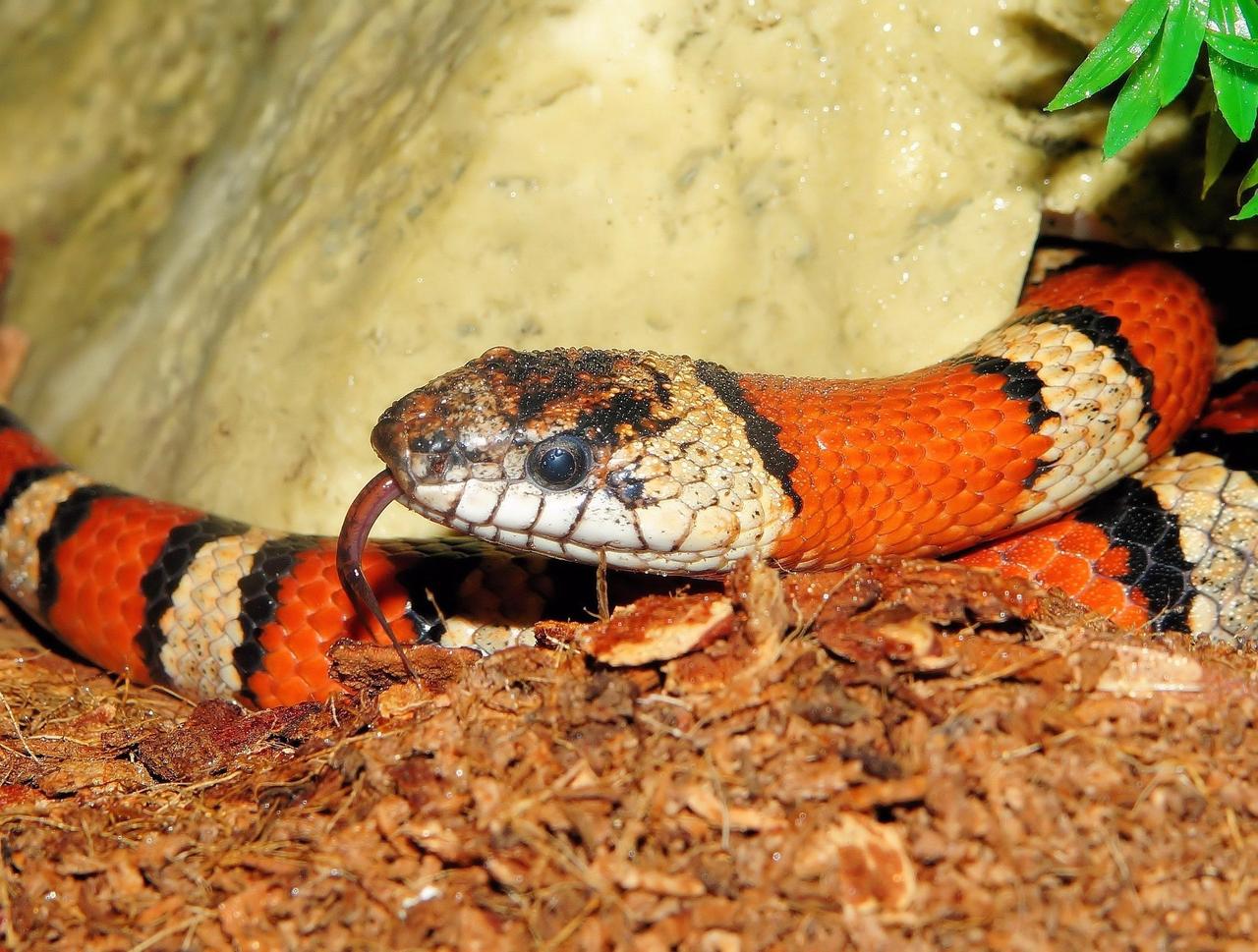
Lampropeltis triangulum is a snake species classified within the kingdom Animalia, phylum Chordata, class Reptilia, and the family Colubridae. Commonly known as the milk snake or scarlet kingsnake, this species serves as an important model organism in herpetological studies due to its wide geographic distribution and significant morphological variation. Twenty-five distinct subspecies have been identified, differing in color and pattern according to geographic region.
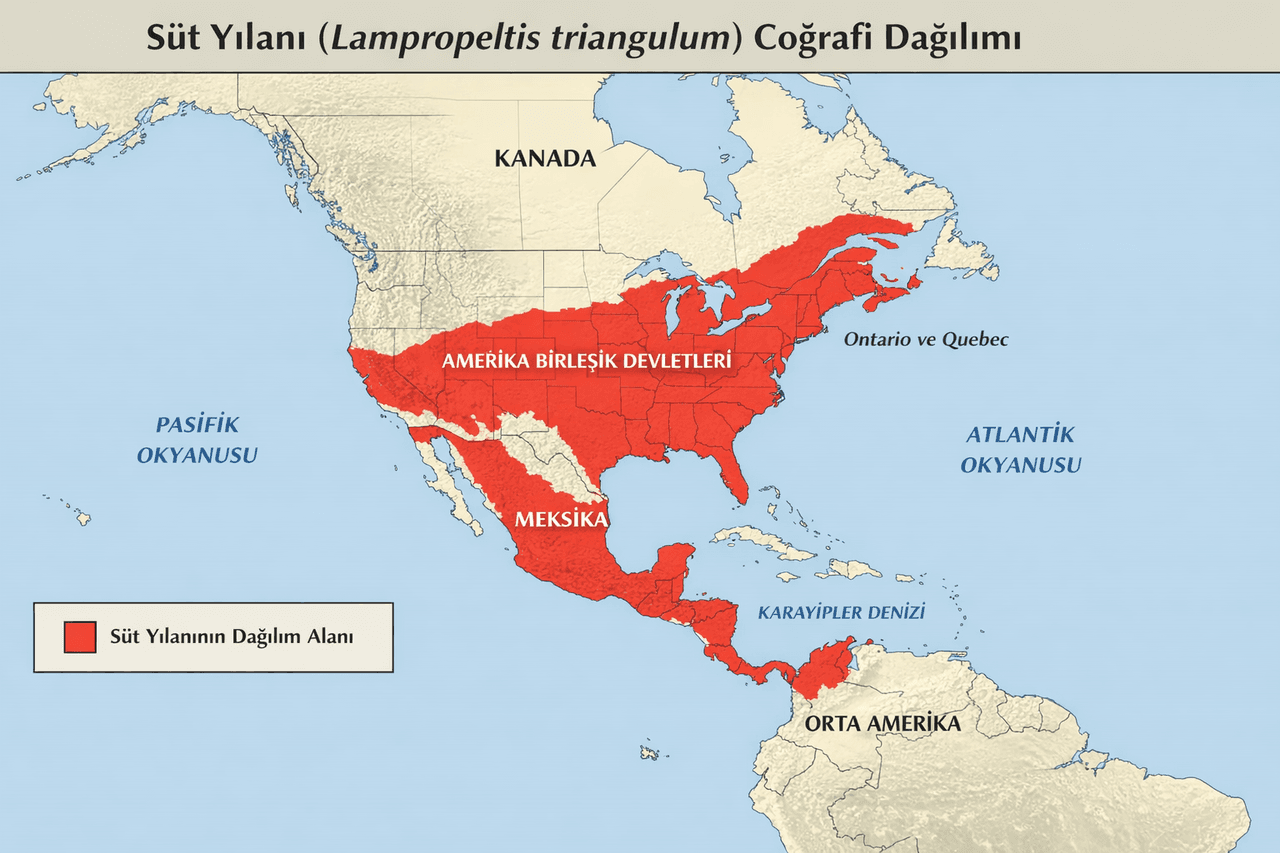
Geographic Distribution of the Milk Snake (Image Generated by Artificial Intelligence)
L. triangulum has a broader geographic range than most snake species, extending from southern Ontario and Quebec in Canada through nearly all regions east of the Rocky Mountains in the United States, and further into the non-arid areas of Mexico and Central America. The species is ecologically flexible and can survive at elevations up to approximately 2600 meters above sea level. Its preferred habitats include edges of coniferous and deciduous forests, tropical dry forests, open woodlands, dry or wet grasslands, savannas, rocky slopes, and swamps. It is also frequently observed in agricultural areas and suburban zones with high human activity.
Body length varies between 35 and 175 centimeters depending on the population, with individuals in Neotropical regions reported to reach the largest sizes. The body pattern consists of red, orange, yellow, or white blotches with black borders arranged on a gray or tan background. A light-colored "Y" or "V" shaped mark is typically present on the nape. Body scales are smooth, arranged in 19 to 23 rows at midbody, and the anal plate is single. Sexual dimorphism is not pronounced in coloration; however, some populations show males with longer body and tail lengths than females, while no significant difference in body mass between sexes has been detected.
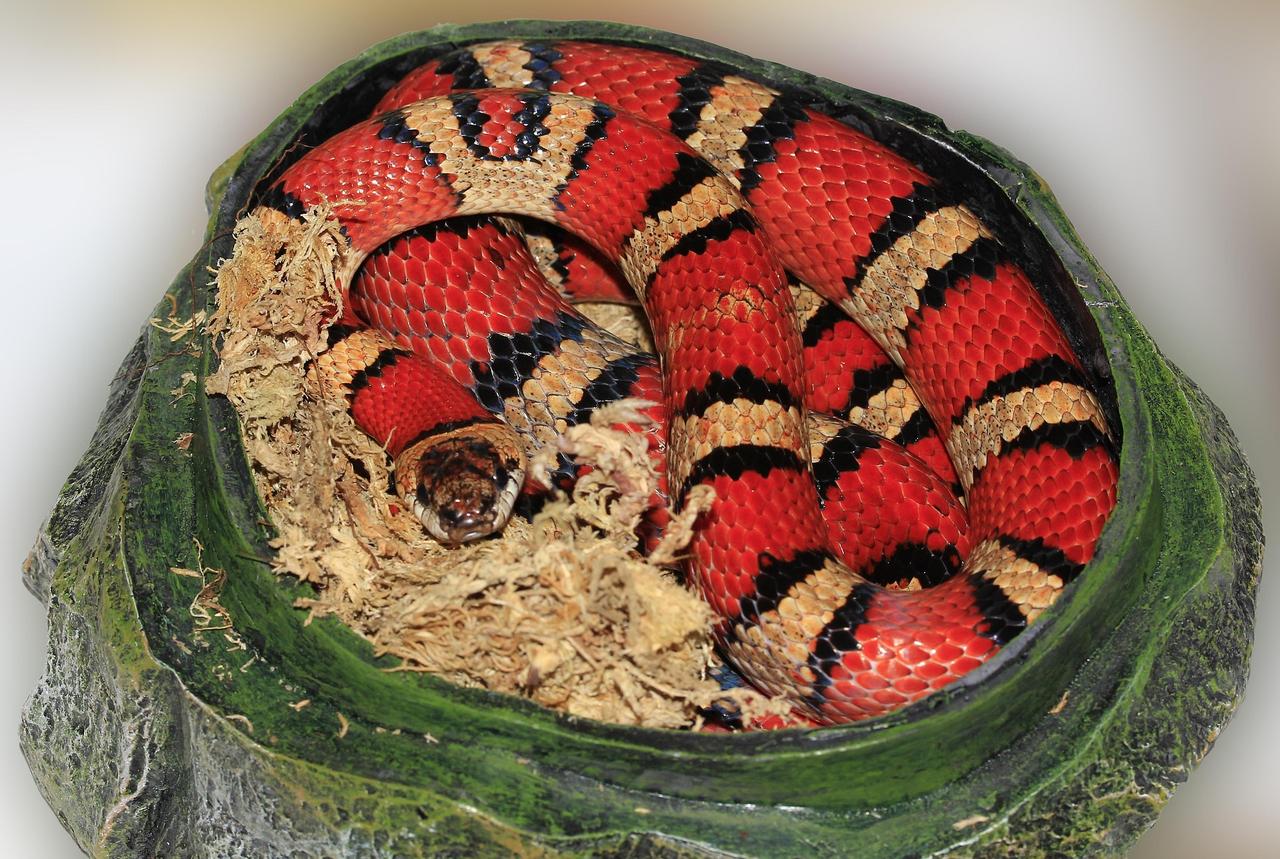
Milk Snake (Pixabay)
Reproductive activity typically occurs after emergence from hibernation, during spring and early summer between April and June. Females select warm, moist environments such as decaying logs or humus-rich soil for egg-laying. A clutch usually consists of 2 to 17 elliptical eggs. Incubation duration ranges from 28 to 39 days, though in some populations it may extend up to 61 days. Hatchlings measure 14 to 28 centimeters in length and exhibit brighter coloration than adults. Sexual maturity is reached between 3 and 4 years of age, and no parental care is observed after egg-laying.【1】
L. triangulum is strictly carnivorous and subdues prey by constriction. Feeding habits show clear age-related variation: juveniles primarily consume lizards and small snakes, while adults feed mainly on small mammals such as field mice, rats, and voles. Other prey include birds, bird eggs, coral snakes, and rattlesnakes. Prey is typically swallowed headfirst to maximize energy efficiency. Geographically, populations in higher latitudes show a higher proportion of mammalian prey in their diet.
The species is solitary and secretive, spending most daylight hours hidden, though it remains active even under high temperatures. Due to its nocturnal tendencies, it is often encountered on roads. It exhibits Batesian mimicry, adopting color patterns that imitate venomous coral snakes or copperheads to deter predators. When threatened, it may vibrate its tail to produce a sound resembling that of a rattlesnake. During winter, individuals gather in groups to hibernate. Natural predators include raccoons, foxes, coyotes, and jackals.
Economically, the species is considered beneficial to humans due to its role in controlling pest rodent populations in agricultural fields and barns. The name "milk snake" stems from a scientifically unfounded folk belief that these snakes suck milk from cows; anatomically, it is impossible for a snake to consume milk. Despite frequent killing by humans due to confusion with venomous species, the species remains widespread and abundant. It currently has no special conservation status on the IUCN Red List or any federal listings. The maximum recorded lifespan in captivity is approximately 21 to 22 years.
Dyrkacz, Stanley. "The Natural History of the Eastern Milk Snake (Reptilia, Serpentes, Colubridae) in a Disturbed Environment." *Journal of Herpetology* 11, no. 2 (1977): 155–59. https://doi.org/10.2307/1563136
Fitch, Henry S. and Robert R. Fleet. "Natural History of the Milk Snake (Lampropeltis triangulum) in Northeastern Kansas." Herpetologica 26, no. 4 (1970): 387–96. http://www.jstor.org/stable/3890759
Hamilton, Bryan Tyler, Rachel Hart, and Jack W. Sites. "Feeding Ecology of the Milksnake (Lampropeltis triangulum, Colubridae) in the Western United States." Journal of Herpetology 46, no. 4 (2012): 515–22. http://www.jstor.org/stable/23327168
Isberg, T. "Lampropeltis triangulum." *Animal Diversity Web*. 2002. Accessed March 27, 2026. https://animaldiversity.org/accounts/Lampropeltis_triangulum/
Pixabay. "astar kral yılan çizgili kırmızı." Accessed March 27, 2026. https://pixabay.com/tr/photos/astar-kral-y%c4%b1lan-%c3%a7izgili-k%c4%b1rm%c4%b1z%c4%b1-456976/
Pixabay. "kral yılan astar bantlı kırmızı." Accessed March 27, 2026. https://pixabay.com/tr/photos/kral-y%c4%b1lan-astar-bantl%c4%b1-k%c4%b1rm%c4%b1z%c4%b1-833788/
Silvia. "kral yılan astar bantlı kırmızı." *Pixabay*. Accessed March 27, 2026. https://pixabay.com/tr/photos/kral-y%c4%b1lan-astar-bantl%c4%b1-k%c4%b1rm%c4%b1z%c4%b1-753440/
[1]
T. Isberg, "Lampropeltis triangulum," Animal Diversity Web, 2002, accessed 27 March 2026, https://animaldiversity.org/accounts/Lampropeltis_triangulum/

No Discussion Added Yet
Start discussion for "Milk Snake (Lampropeltis triangulum)" article
Geographic Distribution and Habitat Preferences
Morphological Structure and Physical Characteristics
Reproductive Biology and Ontogenetic Development
Feeding Ecology and Hunting Strategies
Behavioral Traits and Defense Mechanisms
Human Interactions and Conservation Status