


This article was automatically translated from the original Turkish version.
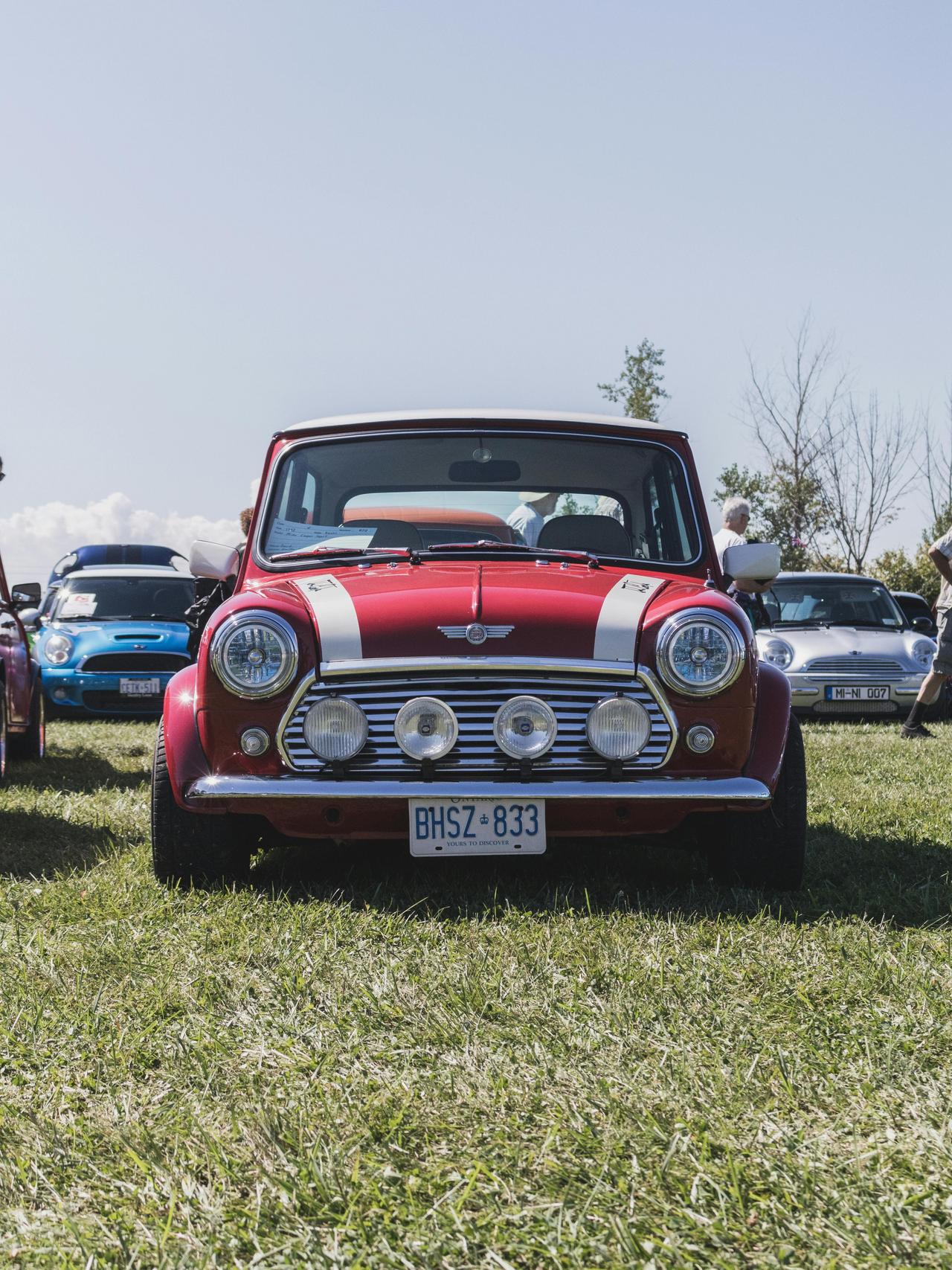
Mini Cooper
First Production Year | 1959 (by British Motor Corporation - BMC) | ||||||||
|---|---|---|---|---|---|---|---|---|---|
Modern MINI Production Start | 2001 (under the BMW umbrella) | ||||||||
Body Styles | Hatchback, Cabrio, Clubman, Countryman, Electric (SE) | ||||||||
Engine Option(s) | 3- and 4-cylinder petrol hybrid and fully electric models diesel | ||||||||
Latest Generation Launch | MINI Cooper 2024 (J01 - on a fully electric platform) | ||||||||
Production Facilities | United Kingdom (Oxford), Netherlands (NedCar), Germany | ||||||||
Ownership | BMW Group (since 2000) | ||||||||
Mini Cooper is a model that has attracted attention in the automotive world since 1959 with its compact structure and distinctive design. Over time, the Mini Cooper has undergone numerous technical and design changes, offering various configurations to meet different user needs.
1959: The Mini was introduced by the British Motor Corporation (BMC) under the names Austin Seven and Morris Mini-Minor. This front-wheel-drive compact vehicle provided a practical solution for urban use.
1961: With contributions from John Cooper, the Mini Cooper 997 was launched. It offered higher performance than previous models thanks to a more powerful engine and an improved braking system.
1963: The Mini Cooper S model was introduced to the market. This model achieved racing success by winning the Monte Carlo Rally in 1964, 1965 and 1967.
1967–1970: The Mark II Mini was introduced. It featured design changes such as a larger rear window and a redesigned front grille.
1969–1976: The Mark III Mini was produced. During this period, door hinges were integrated into the body and windows transitioned from sliding to rotary systems.
1990–2000: The Mini Cooper was reissued by Rover Special Products (RSP). During this era, fuel-injected engines were used and some safety features were improved.

1964 Model Red Mini Cooper (generated by artificial intelligence.)
2001: BMW relaunched the Mini brand. The first-generation Mini Cooper, coded R50, was produced with a 1.6-litre engine.
2007–2013: The second-generation R56 Mini Cooper was produced with more efficient engine options and updated interior features compared to its predecessor.
2014–2021: The third-generation F56 Mini Cooper was larger in size and equipped with new technological features compared to the previous generation. This model was approximately 98 mm longer and 44 mm wider.
2020: The Mini Cooper SE was introduced as the brand’s first fully electric model. This model features a motor output of 160 kW and a range of approximately 250 km.
2024: The new-generation electric Mini Cooper SE was produced with a design offering lower aerodynamic drag than its predecessor and provides a range exceeding 400 km. It is currently manufactured in China, with plans to begin production in the United Kingdom by 2026.

Mini Cooper Family (generated by artificial intelligence.)
Mini Cooper offers models that meet diverse user needs through various engine options. For example, the Mini Cooper C model produces 156 horsepower with its 1.5-litre three-cylinder engine and accelerates from 0 to 100 km/h in 7.7 seconds. Its average fuel consumption ranges between 5.9 and 6.5 litres per 100 km.
The Mini Cooper S model, which offers higher engine power, produces 204 horsepower with its 2.0-litre four-cylinder engine and accelerates from 0 to 100 km/h in 6.6 seconds. Its average fuel consumption ranges between 6.1 and 6.7 litres per 100 km.
Mini Cooper models come standard with various safety features, including lane departure warning, front collision warning and automatic emergency braking systems.
Electric Mini Cooper models have achieved a five-star rating in crash tests conducted by Euro NCAP. These models also include advanced safety technologies as standard equipment, such as adaptive cruise control, lane-keeping assist and integrated pedestrian detection systems.
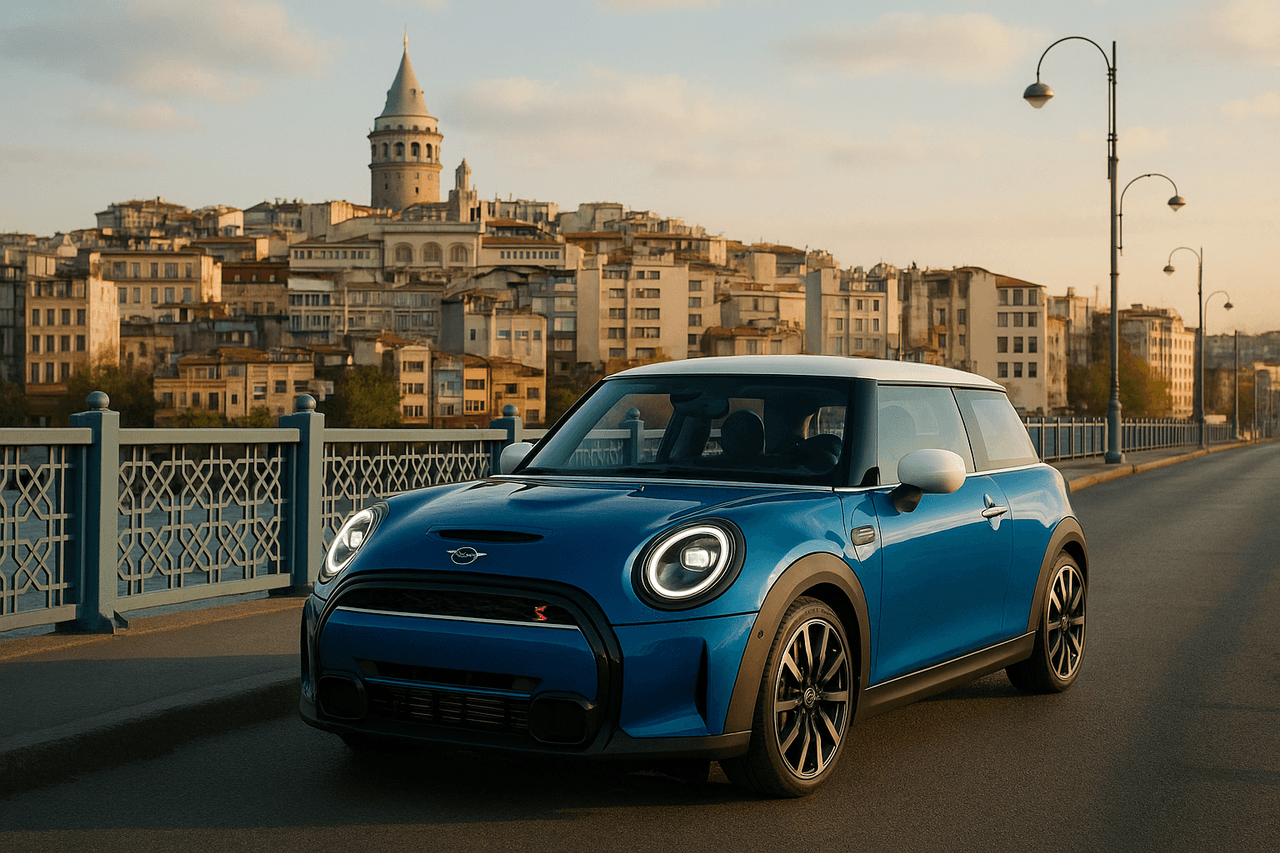
2024 Mini Cooper SE (generated by artificial intelligence.)
Fuel consumption of Mini Cooper models varies depending on engine type and driving conditions. Models equipped with a 1.5-litre petrol engine consume an average of 6.5 litres per 100 km in city driving and approximately 4.6 litres per 100 km in extra-urban driving.
The Mini Cooper S model, with its larger engine displacement, has average fuel consumption figures of 7.3 litres per 100 km in city driving and 5.0 litres per 100 km in extra-urban driving.
Carey, John. “Mini Goes Electric with Major Change.” *News.com.au*. Date Published May 22, 2024. Accessed May 7, 2025. https://www.news.com.au/technology/motoring/new-cars/mini-goes-electric-with-major-change/news-story/2eecdb8e55fcd05033e39cd28b88203c
Giovanna. “Mini Cooper Generations Guide.” SMPS 2012. December 9, 2024. Accessed May 7, 2025. https://www.smps2012.com/post/mini-cooper-generations-guide
“History of MINI.” MINI USA. Accessed May 7, 2025. https://www.miniusa.com/why-mini/history.html
“Know Your Car: MINI Cooper Models Explained.” Lohen. Accessed May 7, 2025. https://www.lohen.co.uk/blogs/blog/know-your-car-mini-cooper-models-explained
“Mini Cooper Generations.” The Mini Specialist. Accessed May 7, 2025. https://www.theminispecialist.com/mini-cooper-generations
“Mini Cooper SE Review: Zippy, Fun, and Electric.” *Wired*. Date Published July 21, 2024. Accessed May 7, 2025. https://www.wired.com/review/review-mini-cooper-se
“The History of MINI.” Irish Examiner. Date Published September 7, 2023. Accessed May 7, 2025. https://www.irishexaminer.com/motoring/arid-41221531.html

Mini Cooper
First Production Year | 1959 (by British Motor Corporation - BMC) | ||||||||
|---|---|---|---|---|---|---|---|---|---|
Modern MINI Production Start | 2001 (under the BMW umbrella) | ||||||||
Body Styles | Hatchback, Cabrio, Clubman, Countryman, Electric (SE) | ||||||||
Engine Option(s) | 3- and 4-cylinder petrol hybrid and fully electric models diesel | ||||||||
Latest Generation Launch | MINI Cooper 2024 (J01 - on a fully electric platform) | ||||||||
Production Facilities | United Kingdom (Oxford), Netherlands (NedCar), Germany | ||||||||
Ownership | BMW Group (since 2000) | ||||||||
History and Model Evolution of the Mini Cooper
Classic Era (1959–2000)
BMW Era and Modernization (2001–Present)
Technical Specifications and Performance
Safety Features
Fuel Consumption