


 Recently Added:
This article was automatically translated from the original Turkish version.
Minneapolis Protests (2026) are nationwide demonstrations that began in Minneapolis, Minnesota, United States, following the killings of two U.S. citizens during federal immigration operations. The “Operation Metro Surge” large-scale immigration operation, conducted by the Immigration and Customs Enforcement (ICE) and the Department of Homeland Security (DHS), resulted in the death of Renee Nicole Macklin Good, a U.S. citizen, on January 7, 2026, and Alex Jeffrey Pretti, another U.S. citizen, on January 24, 2026, both shot and killed by federal agents during ICE operations in Minneapolis.
These two incidents triggered widespread public backlash against federal enforcement methods and led to protests spreading from Minneapolis to cities across the country. The presence of federal agents in the city raised allegations of lack of coordination with local authorities. The protests centered on federal immigration raids in urban centers and the deaths occurring during these operations.
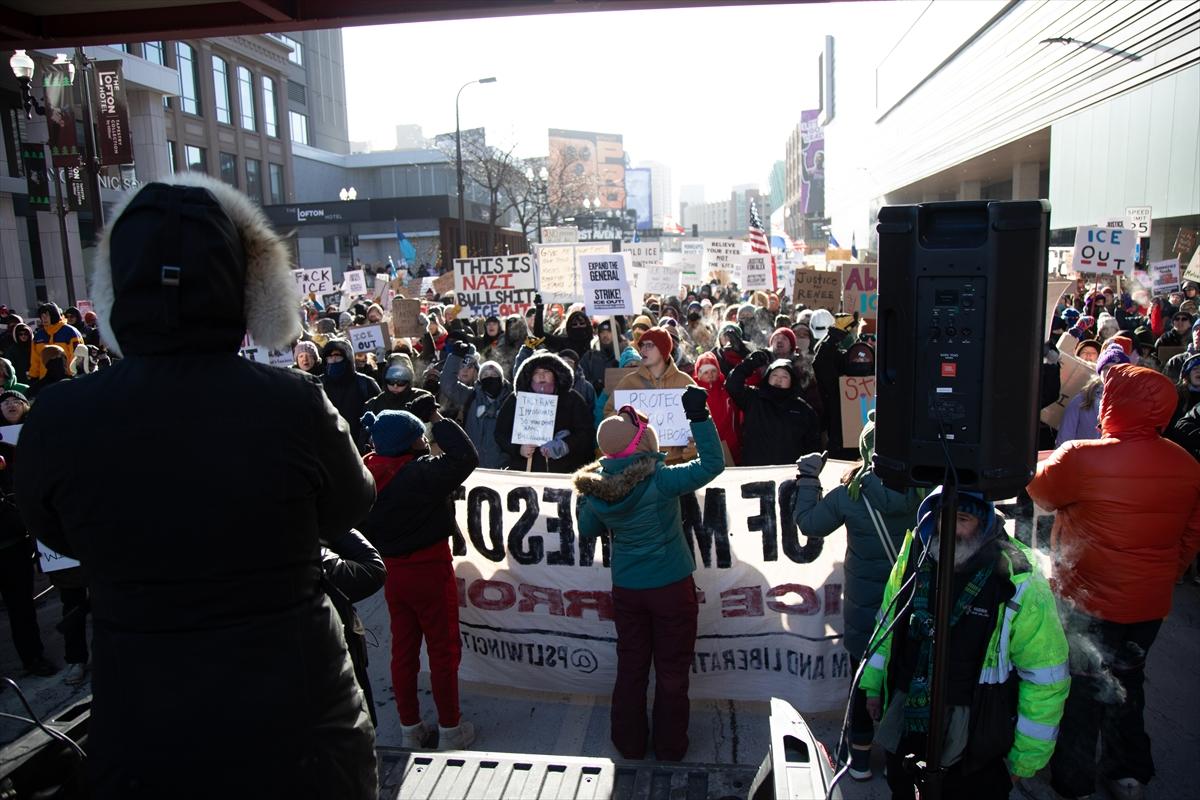
Protests against ICE in Minnesota, United States, January 26, 2026 – (Anadolu Ajansı)
Operation Metro Surge is a large-scale federal immigration operation launched in the final week of December 2025 by the U.S. Department of Homeland Security (DHS). The operation aimed to identify, detain, and deport undocumented immigrants and quickly concentrated its efforts in the Minneapolis–St. Paul region of Minnesota.
Under the operation, teams from Immigration and Customs Enforcement (ICE) and the Customs and Border Protection (CBP) were deployed, with thousands of federal agents stationed in city centers, suburbs, and highway entrances.
On January 17, 2026, ICE Director Todd M. Lyons stated that 2,500 individuals had been detained during the first two weeks of the operation. On January 19, DHS reported that the total number of detentions had exceeded 10,000.
During the operation, civilian injuries and fatalities occurred. On January 7, 2026, U.S. citizen Renee Nicole Good and on January 24, 2026, U.S. citizen Alex Jeffrey Pretti were shot and killed by federal agents during ICE operations in Minneapolis. These two incidents sparked widespread social backlash and nationwide protest movements.

Immigration operations in Minneapolis, Minnesota, United States, January 13, 2026 – (Anadolu Ajansı)
On January 7, 2026, during a federal immigration operation in Minneapolis, 37-year-old U.S. citizen Renee Nicole Macklin Good was shot and killed by an ICE agent while she was inside her vehicle.
Following the incident, DHS spokesperson Tricia McLaughlin claimed that Good had “attempted to run over an ICE officer.” DHS Secretary Kristi Noem asserted that Good had “struck ICE agents with her vehicle” and that the shooting occurred “when the officer acted in self-defense.”
Minnesota Governor Tim Walz rejected the federal authorities’ claims in his initial assessment, stating that “ICE agents operated without any coordination with local law enforcement.” Walz described the incident as “completely preventable” and called for an immediate halt to federal operations.
Minneapolis Mayor Jacob Frey, in a press conference, stated that “ICE forces were not present to ensure public safety” and that federal operations had created “chaos and insecurity” in the city. Minneapolis Police Chief Brian O’Hara confirmed that investigations at the scene revealed Good was unarmed, had no criminal record, and was shot while inside her vehicle.

Mourning site for Renee Good, killed by ICE agents, Minneapolis, January 19, 2026 – (Anadolu Ajansı)
It was reported that Renee Nicole Good, originally from Colorado, was a mother of three and had recently moved to Minnesota. Local authorities stated that Good was a civilian “observing” the federal operation and was not targeted for detention. The day after her death, hundreds gathered at the scene in Minneapolis to hold a memorial. Participants lit candles, left flowers, and protested Good’s killing. Demonstrators carried signs reading “ICE OUT” and “Justice for Renee.”
U.S. Representative Robin Kelly, in a written statement, accused DHS Secretary Kristi Noem of “incompetent leadership” and called for her removal from office. Minnesota Governor Walz stated that the lack of coordination between federal forces and local law enforcement “raised constitutional authority concerns.”
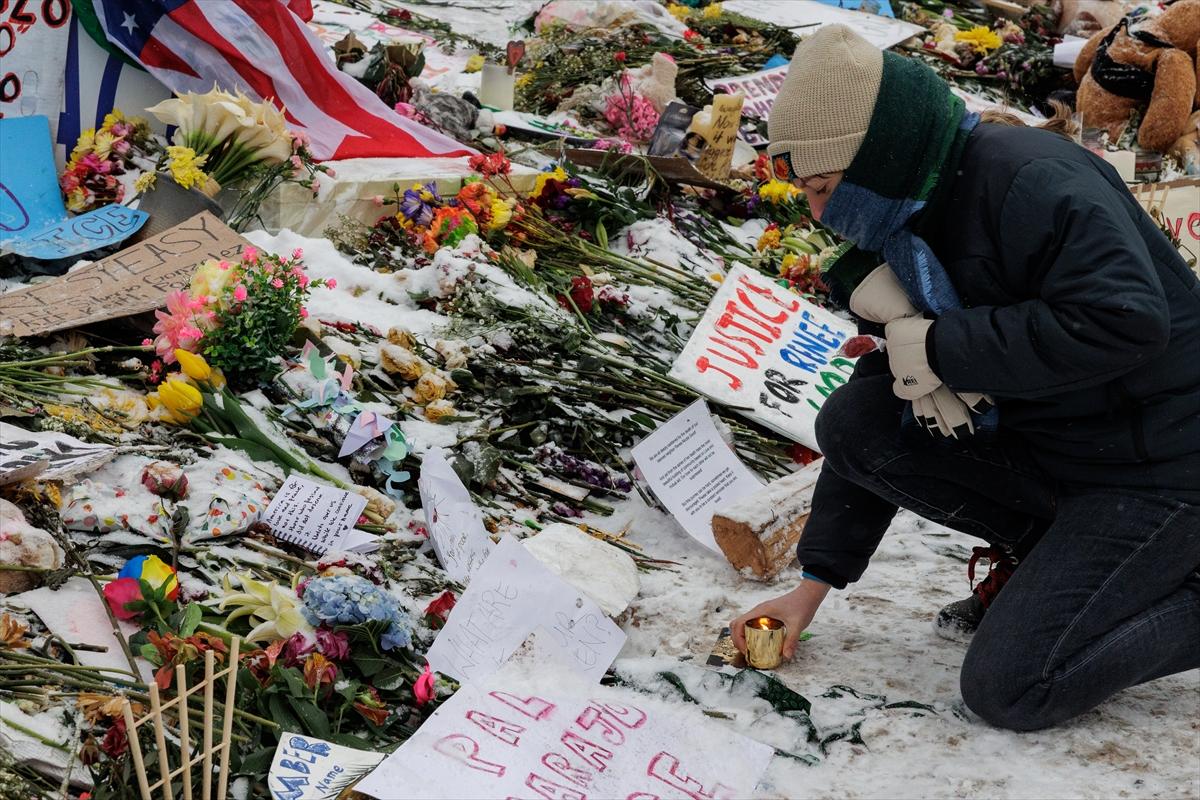
Mourning site for Renee Good, killed by ICE agents, Minneapolis, January 19, 2026 – (Anadolu Ajansı)
Following the incident, the Minneapolis Police Department launched a joint investigation with the Federal Bureau of Investigation (FBI) and the Minnesota Bureau of Criminal Apprehension (BCA). The investigation was classified under “deadly force” and placed under federal oversight. The official status of the incident in federal records was labeled as “internal review.”
Videos shared by CBS News and NBC News showed Good’s vehicle stopped in the middle of the road, followed by an ICE agent opening fire. The footage indicated Good was shot without exiting her vehicle, the car windows were shattered, and a crowd gathered at the scene afterward. This incident became the catalyst for protests in Minneapolis.
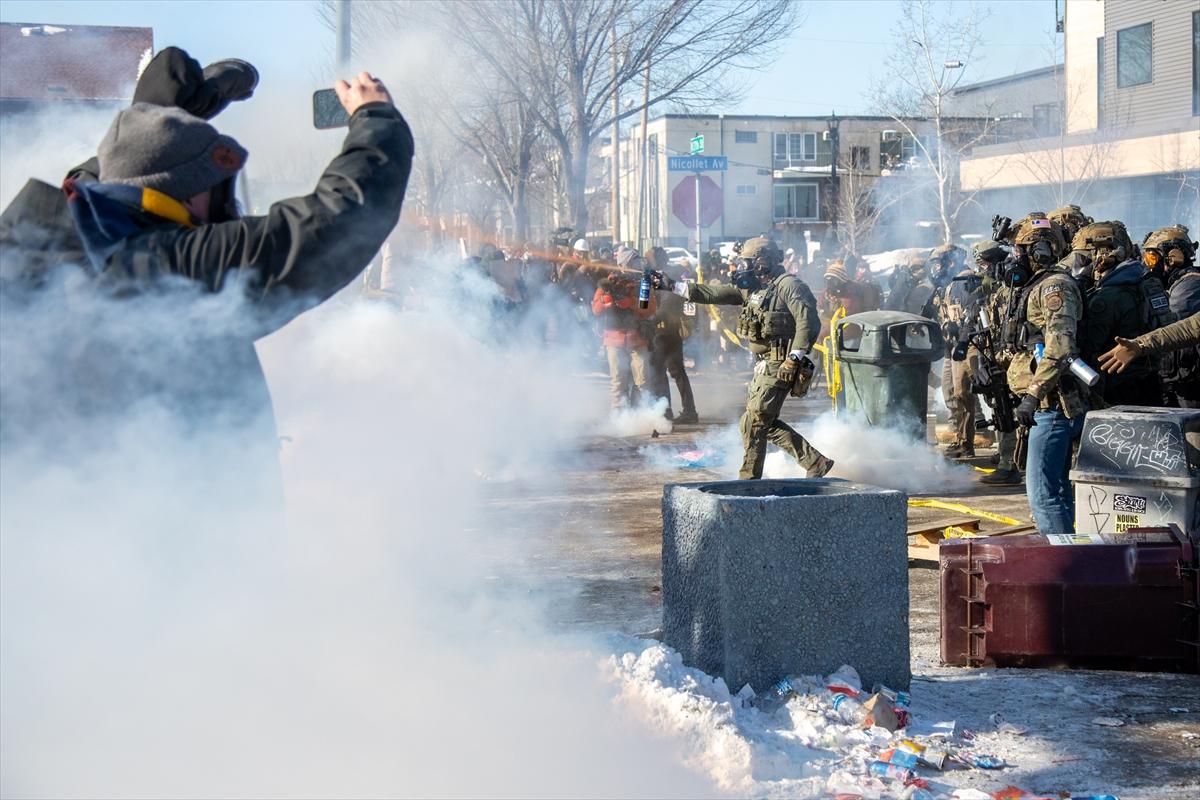
Protests against ICE in Minnesota, United States, January 25, 2026 – (Anadolu Ajansı)
Following the killing of Renee Nicole Good, the first protests began in Minneapolis. Demonstrations were organized by local communities, civil organizations, unions, and immigrant rights advocates protesting immigration policies and ICE’s presence in the city. The protests started near a park close to where Good was killed and later continued with a march toward the city center.
Demonstrators carried signs reading “Justice for Renee,” “ICE Out Minneapolis,” and “Abolish ICE,” demanding ICE’s removal from the city. Participants included immigrant families, religious leaders, students, and teachers. The national civil movement Indivisible’s Minnesota chapter was among the primary organizers of the protests.

Protests against immigration policies in Minneapolis, January 15, 2026 – (Anadolu Ajansı)
On January 10, 2026, protests spread beyond Minneapolis, with solidarity actions held in hundreds of cities across the country. According to PBS NewsHour, thousands took to the streets in Minneapolis that day. Protests also occurred in major cities including Portland (Oregon), Chicago, New York, Austin, Los Angeles, San Francisco, and Miami.
On the night of January 11, a brief clash occurred between police and demonstrators during a protest outside a hotel in Minneapolis. Minneapolis Police Chief Brian O’Hara told reporters that “protesters threw ice, snow, and rocks at officers.” One officer sustained minor injuries after being struck by a piece of ice. Twenty-nine people were detained but released after identity verification. Mayor Jacob Frey stated the next day: “Most protests were peaceful, but those who damaged property or endangered others will be arrested.” Frey added: “Trump wants exactly this. We must not fall into his trap.”
Minnesota Governor Tim Walz criticized the deployment of federal forces to the state on social media. Walz wrote: “Trump sent thousands of armed federal agents to our state, and within a single day they killed one person.” The governor urged the public: “Now his only goal is to create chaos to distract from this horrific act. Do not give him what he wants.”
Participants included local community leaders, teachers, church representatives, nurses, immigrant organizations, and labor unions. Participant Meghan Moore said: “We are all living in fear right now. ICE has created an environment where no one feels safe, and this is unacceptable.” Steven Eubanks, who joined a solidarity protest in Durham, North Carolina, stated: “We cannot allow this. We must rise up.”
On January 10, Minneapolis Police Chief Brian O’Hara confirmed that ICE operations continued across the city. The police department reported receiving numerous calls regarding vehicles abandoned after ICE raids.
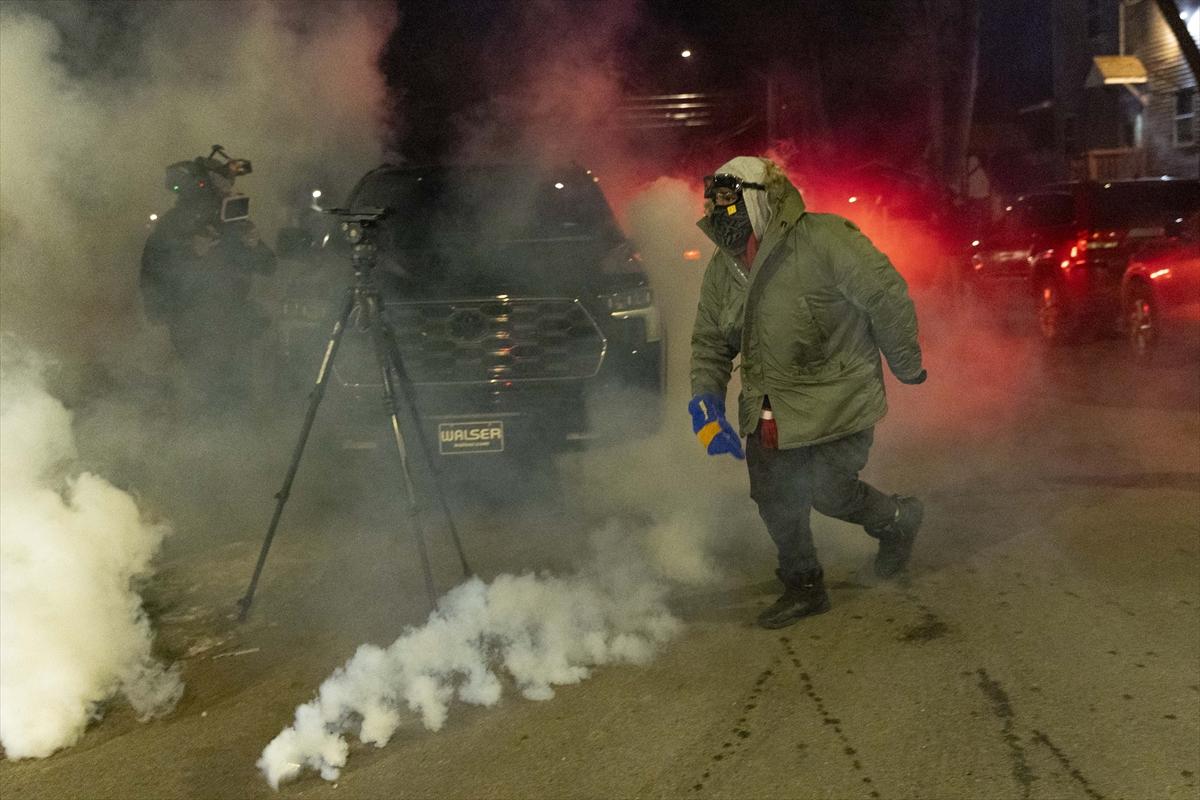
Protests against immigration policies in Minneapolis, January 15, 2026 – (Anadolu Ajansı)
On January 14, 2026, in Minneapolis, Minnesota, a Venezuelan immigrant was shot in the leg by a federal immigration officer. The incident occurred exactly one week after the killing of Renee Nicole Good. It began when federal agents attempted to stop a vehicle in the evening.
The U.S. Department of Homeland Security (DHS), in a post on X, stated the incident occurred at 18:50 local time (00:50 GMT): “Federal law enforcement officers were attempting to stop a Venezuelan undocumented immigrant who was admitted to the country under former President Joe Biden in 2022.”
The DHS statement claimed the agent believed his life was in danger: “While being ambushed and attacked by three individuals, the agent fired in self-defense. The first individual was shot in the leg.”
On January 15, 2026, U.S. President Donald Trump, amid ongoing protests in Minneapolis, announced he could invoke the Insurrection Act. Trump posted on social media: “If Minnesota’s corrupt politicians refuse to uphold the law and stop the professional agitators and insurgents attacking patriotic ICE agents who are simply doing their jobs, I will invoke the Insurrection Act, as many presidents before me have done, and swiftly end this disgrace in what was once a great state.”
Trump made this statement one day after a federal agent shot a Venezuelan man. Federal officials defended the agent, claiming the shooting occurred in response to an attack.
On January 18, 2026, U.S. Federal Judge Katherine Menendez issued a ruling imposing restrictions on ICE agents’ conduct during protests in Minneapolis. Judge Menendez prohibited ICE agents from detaining peaceful protesters or using pepper spray.
The ruling followed a lawsuit filed in December by a group of protesters. The court stated that federal agents “do not have the authority to stop vehicles or detain occupants absent reasonable and articulable suspicion.” It added: “Merely following ICE agents at a safe distance does not constitute reasonable suspicion to stop a vehicle.”
The DHS responded to the ruling with a statement: “The agency is taking appropriate and constitutional measures to uphold the rule of law and protect our agents and the public from dangerous insurgents.”
White House Press Secretary Abigail Jackson criticized the ruling: “This absurd decision embraces a dishonest left-wing narrative. The truth is: federal agents acted lawfully to protect themselves and ensure the integrity of their operations when individuals attempted to interfere.” The U.S. Department of Justice also launched an investigation against Minnesota Governor Tim Walz and Minneapolis Mayor Jacob Frey, accusing them of obstructing federal immigration operations.
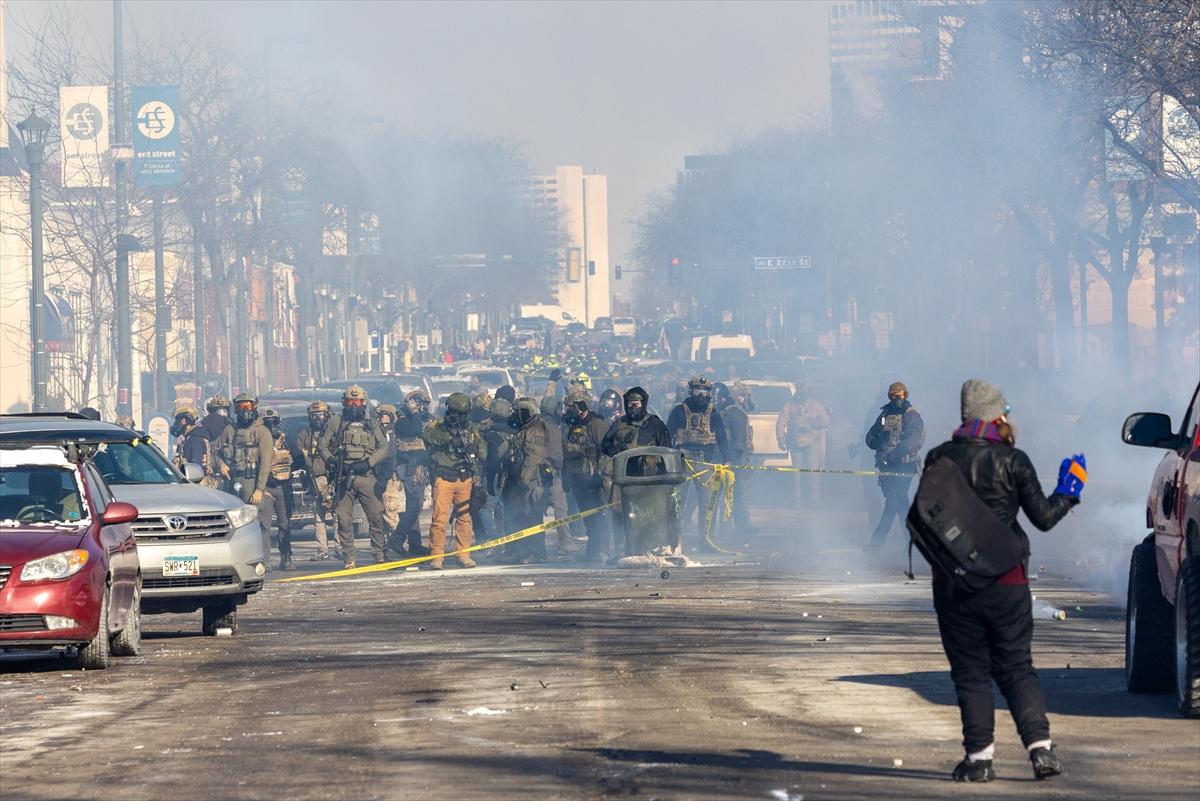
Protests against ICE in Minnesota, United States, January 25, 2026 – (Anadolu Ajansı)
On January 19, 2026, the U.S. Department of Defense (Pentagon) issued orders to prepare 1,500 soldiers from the 11th Airborne Division in Alaska for deployment to Minnesota.
Two officials speaking to Reuters confirmed that two infantry battalions of the 11th Airborne Division had been ordered to deploy to Minneapolis and St. Paul. Pentagon spokesperson Sean Parnell, in a statement to the Associated Press, affirmed: “The military is always ready to execute the Commander-in-Chief’s orders when needed.”
It was reported that the Department of Homeland Security was expanding Operation Metro Surge beyond Minnesota to a nationwide scale. The Minneapolis Fire Department reported that two children, including a six-month-old infant, were injured by tear gas used by ICE agents.
ICE Director Todd M. Lyons stated that since the start of the federal operation in Minnesota, 2,500 individuals had been detained. During the same period, Nicaraguan national Victor Manuel Díaz died under ICE custody 12 days after his detention. On the same dates, DHS Secretary Kristi Noem declared that operations would continue until all dangerous individuals were apprehended, prosecuted, and deported.
On January 24, 2026, in Minneapolis, Minnesota, U.S. citizen Alex Jeffrey Pretti was shot and killed by federal immigration officials during an operation.
Pretti’s death, the second killing of a U.S. citizen by federal agents within the same month, triggered widespread public outrage. Local authorities identified the 37-year-old Pretti as a U.S. citizen and nurse living in Minneapolis.
Verified video footage showed the incident occurred at 09:05 local time (15:05 GMT) at the intersection of Nicollet Avenue and 26th Street. The footage captured Pretti filming with his cell phone in the area where federal agents were present, with audible whistles and shouts from bystanders.
In one angle of the video, an ICE agent shoves a woman, after which Pretti steps behind her and extends his hand in what appears to be a protective gesture. The agent then sprays a substance at Pretti’s face. Pretti turns his head and raises one hand, while still holding his cell phone in the other. In another angle, agents are seen forcing Pretti to the ground, with at least six ICE agents standing over him, during which one agent strikes Pretti’s head.

Mourning ceremony for Alex Pretti, Minneapolis, January 26, 2026 – (Anadolu Ajansı)
In another sequence, one agent draws his weapon and steps back, shortly after which another agent opens fire, with at least ten gunshots recorded. The U.S. Department of Homeland Security (DHS) stated afterward that agents fired “in lawful self-defense.” The department claimed Pretti was carrying a 9mm semi-automatic pistol and two loaded magazines, and that no identification was found on his person. DHS also shared a photo of a firearm on its social media accounts, asserting it belonged to Pretti. However, local authorities stated these claims were unverified and that evidence collected at the scene was under review.
Minneapolis Police Chief Brian O’Hara confirmed that Pretti held a legal firearms permit and had no prior criminal record. O’Hara noted that Pretti’s only known interaction with law enforcement had been “administrative parking violations.”
DHS Secretary Kristi Noem claimed in her statement that Pretti “displayed a weapon” and was shot while “among individuals attacking agents.” Noem added: “I do not recognize a peaceful protester carrying a banner as someone who arrives with a gun and ammunition.” U.S. President Donald Trump, in an interview with the Wall Street Journal on January 26, said: “We are reviewing everything and will issue an assessment.”
Pretti’s parents, Michael and Susan Pretti, condemned the administration’s statements about their son: “The nauseating lies spread by the administration about our son are disgusting and unacceptable.” The family emphasized that videos clearly showed Pretti holding a cell phone, not a weapon, and that he was attempting to protect a woman at the time. They also stated that Pretti worked as an intensive care nurse at the Minneapolis VA Hospital and was a dedicated community member. The statement concluded: “Please uncover the truth about our son. He was a good man.”
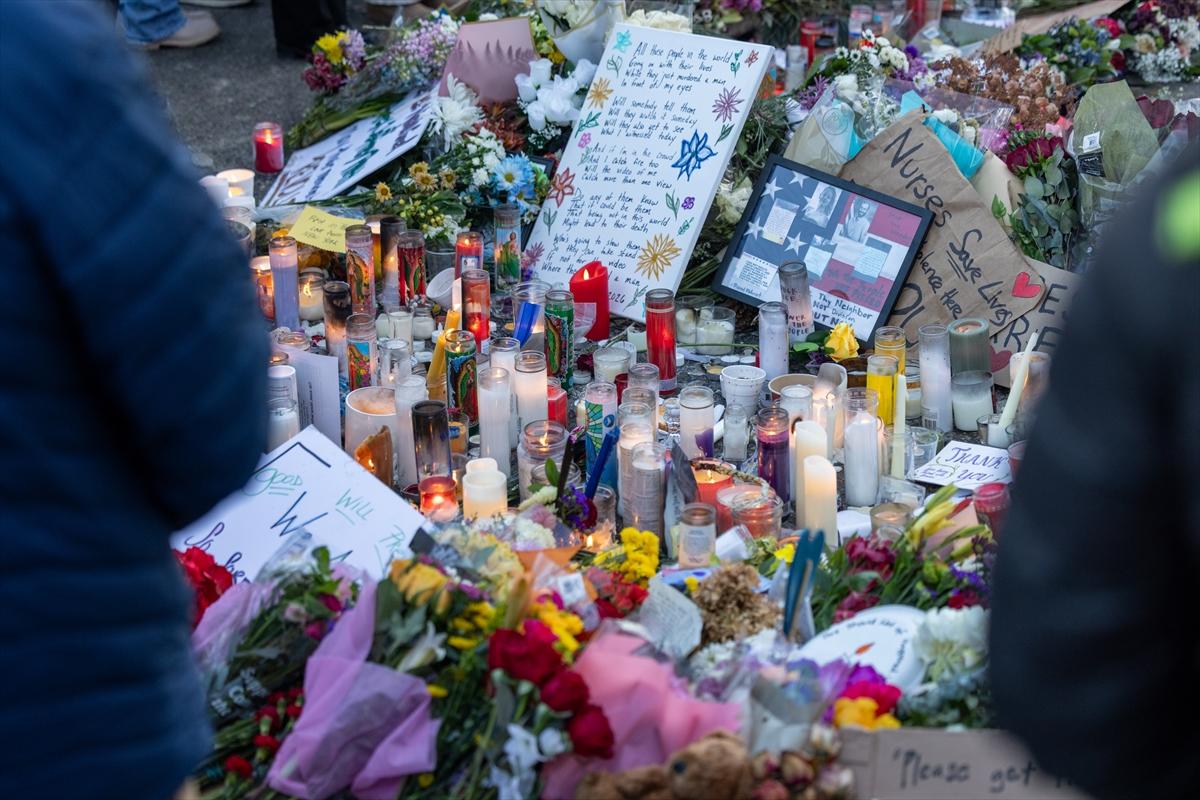
Mourning ceremony for Alex Pretti, Minneapolis, January 26, 2026 – (Anadolu Ajansı)
On January 26, Governor Tim Walz, following the incident, stated there were significant discrepancies between the federal government’s narrative and the footage from the scene. Walz said: “The most powerful names in the federal government are fabricating stories, publishing photos of unrelated individuals and a gun, trying to construct a false narrative.”
Walz confirmed he had contacted the White House, asserting that federal agents had operated without state approval and that an independent state investigation was necessary. Walz emphasized that the videos “contradicted federal claims” and reflected the truth.

Protests against ICE in Minnesota, United States, January 25, 2026 – (Anadolu Ajansı)
In a press conference on January 26, Governor Walz accused the Trump administration of “obstructing the crime scene and destroying evidence.”
Walz stated: “The most powerful people in the world and in this country—the U.S. President (Trump), the Vice President (JD Vance), the Commissioner of Customs and Border Protection (Gregory Bovino), and the Secretary of Homeland Security (Kristi Noem)—immediately launched smear campaigns against Pretti. They sealed the crime scene, destroyed evidence, defied court rulings, and refused to allow any independent investigation.”
In the same statement, Walz reminded the public that Pretti was “a beloved, successful intensive care nurse with no criminal record.” He addressed the American people: “America is at a turning point.”
Walz continued: “We believe Donald Trump must withdraw these 3,000 untrained agents before they kill another person.” In response to a letter from U.S. Attorney General Pam Bondi urging him to “uphold the rule of law,” Walz replied: “I would offer the Attorney General professional advice: there are still two million Epstein files pending. Go work on those.”
On January 25, 2026, following the killing of Alex Jeffrey Pretti, large-scale protests erupted across Minneapolis. Thousands gathered in the city center demanding the withdrawal of federal forces. Demonstrators carried signs reading “Justice for Alex,” “ICE Out,” and “Abolish ICE.” The crowd marched toward a hotel believed to house ICE agents, prompting heightened security measures.

Protests against ICE in Minnesota, United States, January 26, 2026 – (Anadolu Ajansı)
Some individuals broke the hotel’s windows and painted “ICE Kills” on building walls. The Minnesota Department of Public Safety reported two arrests and one ICE agent injured during the protests. Authorities stated federal officers used pepper spray and tear gas to disperse the crowd.
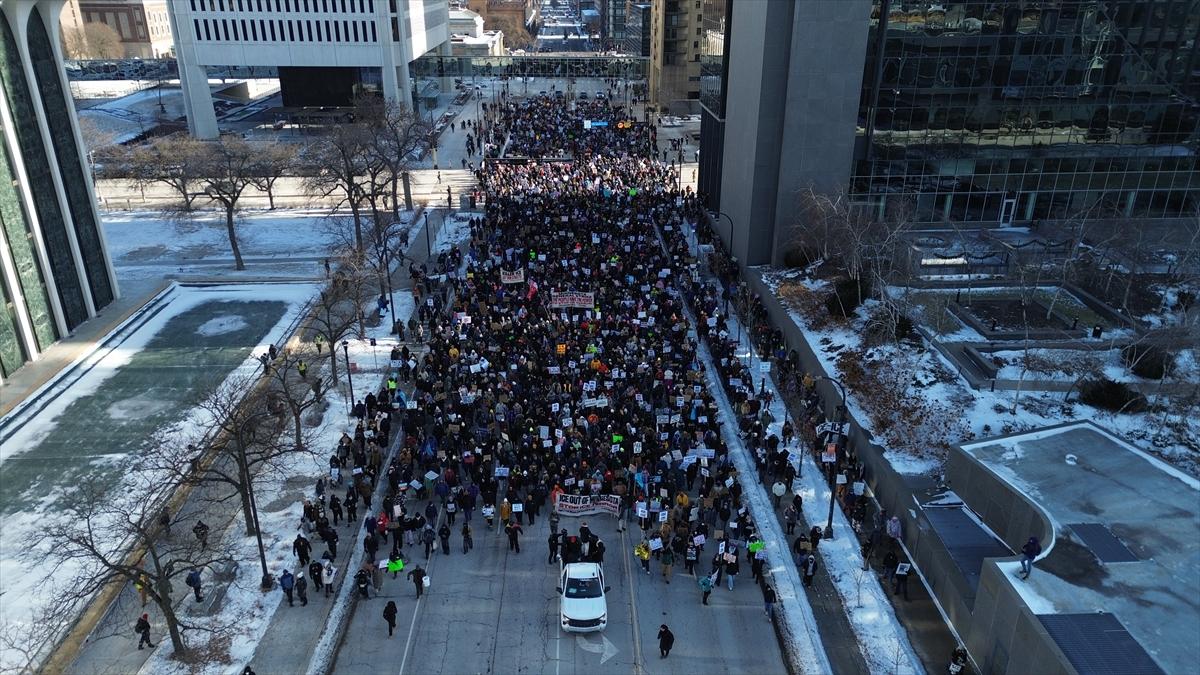
Protests against ICE in Minnesota, United States, January 26, 2026 – (Anadolu Ajansı)
In the days following Pretti’s death, the Minneapolis Institute of Art temporarily closed. A Minnesota Timberwolves basketball game was postponed, and several universities in the city switched to remote learning. International human rights organizations including Human Rights Watch, ACLU, and Amnesty International USA called for an independent investigation. Local civil movements such as Faith in Minnesota and Twin Cities for Justice organized candlelight vigils in the city center.
Al Jazeera. "Trump threatens to use Insurrection Act to end Minneapolis protests." Al Jazeera, January 15, 2026. Accessed January 26, 2026. https://www.aljazeera.com/news/2026/1/15/trump-threatens-to-use-insurrection-act-to-end-minneapolis
Al Jazeera. “Anti-ICE Rally Chases Off US Far-Right Influencer Jake Lang in Minneapolis.” Al Jazeera, January 18, 2026. Accessed January 26, 2026. https://www.aljazeera.com/news/2026/1/18/anti-ice-rally-chases-off-us-far-right-influencer-jake-lang-in-minneapolis
Al Jazeera. “Federal agents in Minneapolis shoot dead US citizen Alex Pretti.” Al Jazeera, January 24, 2026. Accessed January 26, 2026. https://www.aljazeera.com/news/2026/1/24/us-federal-agents-shoot-another-person-in-minneapolis-governor
Al Jazeera. “ICE Officer Shoots Venezuelan Immigrant in Minneapolis: What We Know.” Al Jazeera, January 15, 2026. Accessed January 26, 2026. https://www.aljazeera.com/news/2026/1/15/ice-officer-shoots-venezuelan-immigrant-in-minneapolis-what-we-know
Al Jazeera. “Thousands in Minneapolis Brave Bitter Cold to Protest ICE Crackdown.” Al Jazeera, January 24, 2026. Accessed January 26, 2026. https://www.aljazeera.com/news/2026/1/24/thousands-in-minneapolis-brave-bitter-cold-to-protest-ice-crackdown
Al Jazeera. “Who Is Alex Pretti, the Nurse Shot Dead by Federal Agents in Minneapolis?” Al Jazeera, January 25, 2026. Accessed January 26, 2026. https://www.aljazeera.com/news/2026/1/25/who-was-alex-pretti-the-nurse-shot-dead-by-federal-agents-in-minneapolis
Al Jazeera. “Who Is Renee Nicole Good, the Woman Killed in the ICE Minneapolis Shooting?” Al Jazeera, January 8, 2026. Accessed January 26, 2026. https://www.aljazeera.com/news/2026/1/8/who-is-renee-nicole-good-the-woman-killed-in-the-ice-minneapolis-shooting
Al Jazeera. “‘Abolish ICE’: Tens of thousands in Minneapolis, across US, protest killing.” Al Jazeera, January 10, 2026. Accessed January 26, 2026. https://www.aljazeera.com/news/2026/1/10/we-have-to-stand-up-ice-killing-in-minneapolis-sparks-protests-across-us
Anadolu Ajansı. "ABD İç Güvenlik Bakanı: Minneapolis’te 10 Binden Fazla Düzensiz Göçmen Gözaltına Alındı." Accessed January 26, 2026. https://www.aa.com.tr/tr/dunya/abd-ic-guvenlik-bakani-minneapoliste-10-binden-fazla-duzensiz-gocmenin-gozaltina-alindigini-acikladi/3804648
Anadolu Ajansı. "ABD’de Minnesota Valisi Walz’dan Trump’a Bölgedeki 3 Bin Federal Görevliyi Geri Çekmesi Çağrısı." Accessed January 26, 2026. https://www.aa.com.tr/tr/dunya/abdde-minnesota-valisi-walzden-trumpa-bolgedeki-3-bin-federal-gorevliyi-geri-cekmesi-cagrisi/3810704
Anadolu Ajansı. “ABD’de ICE Polisleri Göçmen Operasyonlarını İzleyen ABD Vatandaşını Silahla Vurdu.” Accessed January 26, 2026. https://www.aa.com.tr/tr/dunya/abdde-ice-polisleri-gocmen-operasyonlarini-izleyen-abd-vatandasini-silahla-vurdu/3792888
Anadolu Ajansı. “ABD’de Minnesota Valisi Walz’dan ICE’nin Bir Kişiyi Daha Vurduğu Olayla İlgili Trump Yönetimine Tepki.” Accessed January 26, 2026. https://www.aa.com.tr/tr/dunya/abdde-minnesota-valisi-walzdan-icenin-bir-kisiyi-daha-vurdugu-olayla-ilgili-trump-yonetimine-tepki/3810176
Anadolu Ajansı. “ABD’nin Minnesota Eyaletinde Binlerce Kişi Göçmenlik Uygulamalarına Karşı Protesto Düzenledi.” Accessed January 26, 2026. https://www.aa.com.tr/tr/dunya/abdnin-minnesota-eyaletinde-binlerce-kisi-gocmenlik-uygulamalarina-karsi-protesto-duzenledi/3809516
Anadolu Ajansı. “Explainer: What Happened in Minneapolis? Inside Fatal Shooting That Split Official Claims and Public Evidence.” Accessed January 26, 2026. https://www.aa.com.tr/en/americas/-explainer-what-happened-in-minneapolis-inside-fatal-shooting-that-split-official-claims-and-public-evidence/3810934
Anadolu Ajansı. “Protest at Hotel Suspectedly Occupied by ICE Officers After Pretti’s Death in Minnesota.” Accessed January 26, 2026. https://www.aa.com.tr/tr/dunya/minnesotada-prettinin-olumunun-ardindan-ice-gorevlilerinin-kaldigi-dusunulen-otelin-onunde-protesto/3810863
Anadolu Ajansı. “Trump, Sert Müdahaleleriyle Gündeme Gelen ICE Polislerinin Zaman Zaman Hata Yapabileceğini Savundu.” Accessed January 26, 2026. https://www.aa.com.tr/tr/dunya/trump-sert-mudahaleleriyle-gundeme-gelen-ice-polislerinin-zaman-zaman-hata-yapabilecegini-savundu/3806058
BBC News. “Trump says administration 'reviewing everything' after fatal shooting of Minneapolis nurse.” Accessed January 26, 2026. https://www.bbc.com/news/articles/cr571qg4m61o
BBC News. “US judge restricts ICE response to Minneapolis protesters.” BBC News. Accessed January 26, 2026. https://www.bbc.com/news/articles/cvgprwlplqwo
NBC News. “Pentagon Orders Troops to Prepare for Possible Minnesota Deployment.” NBC News. Accessed January 26, 2026. https://www.nbcnews.com/news/us-news/pentagon-orders-troops-prepare-possible-minnesota-deployment-rcna254767
NDTV. “2 Shootings, 10,000 Arrests: How Minnesota Became Epicentre of Immigration Crackdown.” NDTV. Accessed January 26, 2026. https://www.ndtv.com/world-news/2-shootings-10-000-arrests-how-minnesota-became-epicentre-of-immigration-crackdown-operation-metro-surge-renee-good-alex-jeffrey-pretti-us-10882090
PBS NewsHour. “Protests Against ICE Spread Across U.S. After Shootings in Minneapolis and Portland.” Accessed January 26, 2026. https://www.pbs.org/newshour/nation/protests-against-ice-spread-across-u-s-after-shootings-in-minneapolis-and-portland
Reuters. “Federal immigration agents kill another US citizen in Minneapolis, sparking protests.” Reuters, January 24, 2026. Accessed January 26, 2026. https://www.reuters.com/world/us/minnesota-governor-says-federal-agents-involved-shooting-minneapolis-2026-01-24/
On January 26, 2026, U.S. President Donald Trump announced on his Truth Social account that he had held a phone conversation with Minnesota Governor Tim Walz. Trump described the call by saying, “It was a very good conversation and we found that we actually share similar views.”
In his statement, Trump indicated that he and Governor Walz would work together to reduce crime rates in Minnesota and bring the current situation under control. He also announced that “border czar” Tom Homan, the official responsible for border security, would travel to the state to conduct on-site assessments. Trump added, “Crime rates have dropped significantly even in Minnesota, but both Governor Walz and I want to improve this further.”

Protests against U.S. Customs and Border Protection in Minnesota, January 27, 2026 – (Anadolu Agency)
On January 26, 2026, White House Press Secretary Karoline Leavitt described the conversation between President Donald Trump and Minnesota Governor Tim Walz as “constructive” during a press briefing. Leavitt stated that Trump’s goal was “the end of resistance and chaos in Minnesota today.” She added, “The president’s hope, desire, and demand is that resistance and chaos end today.”
Leavitt noted that Trump had requested clear cooperation from the Democratic governor on three points: “First, Governor Walz must surrender all undocumented immigrants currently held in state prisons and jails, as well as all undocumented immigrants with active warrants or known criminal histories, to federal authorities. Second, he must agree to hand over all undocumented immigrants arrested by state and local law enforcement. Third, local police must assist federal law enforcement in apprehending and detaining undocumented immigrants wanted for violent crimes.”
Leavitt stated she would refrain from extensive commentary on the investigation into the killing of Alex Pretti by ICE agents until it was completed, but expressed sorrow over the death of the American nurse and extended condolences to her family.
When pressed repeatedly about President Trump’s feelings regarding the killing of the American nurse, Leavitt responded, “President Trump wants the investigation to continue and for the facts to emerge swiftly.”
Leavitt emphasized that no one in the administration, including President Donald Trump, “wants to see Americans killed on the streets of America,” and expressed sorrow over the second killing of an American by security forces in Minnesota.
In response to questions regarding Trump’s Policy and Domestic Security Advisor Stephen Miller’s characterization of slain American nurse Alex Pretti as a “domestic terrorist,” Leavitt stressed that President Trump had never used such language.
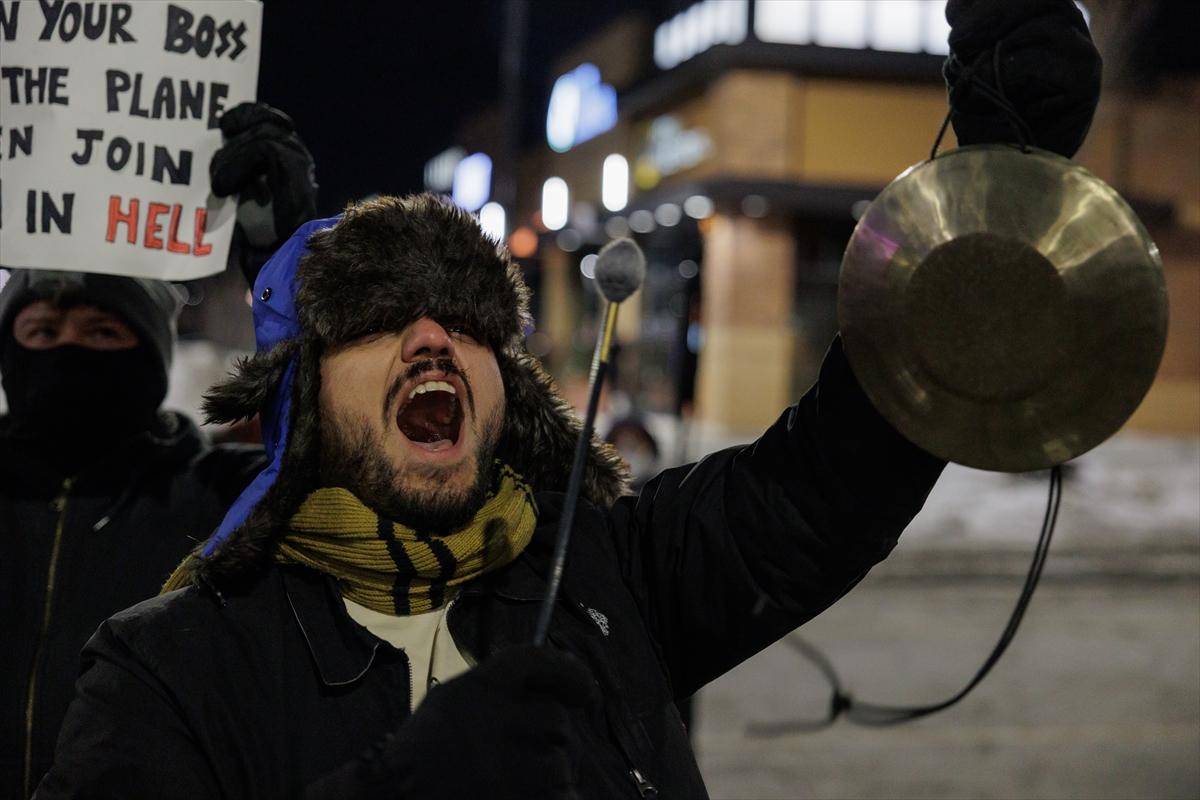
Protests against U.S. Customs and Border Protection in Minnesota, January 27, 2026 – (Anadolu Agency)
On January 26, 2026, U.S. President Donald Trump issued a new statement regarding escalating events in Minnesota following the killings of two Americans by agents of U.S. Customs and Border Protection. Trump announced his decision to send Tom Homan, the official known as the “border czar” and responsible for border security, to the state.
Trump stated that Homan would travel to the region to examine the incidents on-site and report directly to him, describing Homan as “a firm but fair individual.” The president also added to his message the claim that Minnesota was experiencing $2 billion in “social welfare fraud,” which he said would also be investigated by judicial authorities.
According to a report published by the Associated Press on January 27, 2026, U.S. Border Patrol Chief Greg Bovino and several federal agents were expected to leave Minneapolis. The report cited an unnamed source stating, “A senior Border Patrol commander and some agents are expected to depart Minneapolis as early as Tuesday.”
The departure of Bovino is said to follow public backlash against federal security forces’ immigration operations in Minneapolis and growing criticism over the death of Alex Pretti. Bovino, who has been at the center of the Trump administration’s aggressive nationwide immigration operations, has faced intensified scrutiny due to rising anger over the killing of 37-year-old intensive care nurse Alex Pretti by Border Patrol agents. The report noted that Bovino had also been involved in federal operations in Los Angeles, Chicago, Charlotte, and Minneapolis, all of which had triggered various protests.
According to the Associated Press report, Minneapolis Mayor Jacob Frey, during a phone call with President Trump, demanded an end to immigration operations in the city and stated that “some federal officials are beginning to leave.” Following these developments, federal sources confirmed that if Bovino’s departure is officially confirmed, Tom Homan will assume responsibility for ICE operations in Minnesota.

Protests against U.S. Customs and Border Protection in Minnesota, January 26, 2026 – (Anadolu Agency)
Secretary of Homeland Security Kristi Noem has been summoned to testify before the Senate Judiciary Committee in March 2026. The committee meeting is expected to focus on federal statements regarding the death of Alex Jeffrey Pretti and the use of force by security forces.
Sources close to the committee confirmed that Noem’s testimony will be conducted publicly in March. The hearing is also expected to examine the broader framework of the Department of Homeland Security’s immigration operations under the name “Operation Metro Surge.”
Following the killing of 37-year-old nurse Alex Jeffrey Pretti by ICE agents in Minneapolis, Minnesota, on January 26, 2026, a group in Berlin held a demonstration at Pariser Platz in front of the Brandenburg Gate. The group carried banners and signs reading “Wrong ICE” and “No to ICE,” voicing opposition to ICE’s practices.
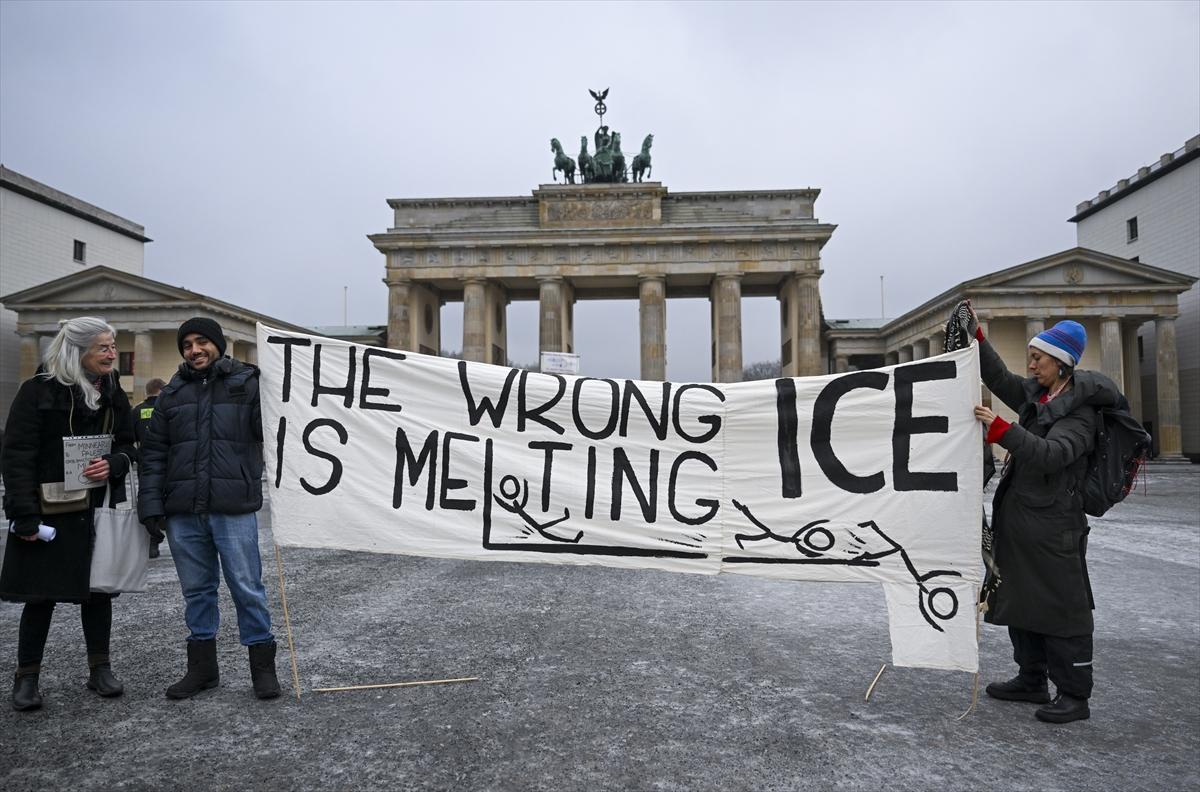
Protest against ICE in Berlin, January 26, 2026 – (Anadolu Agency)
German Chancellor Friedrich Merz made statements regarding police violence in the United States. Speaking at a press conference in Hamburg, Merz said, “The news coming from the United States in recent days is truly alarming. And each time, a different region or city is affected. I hope American officials will now clearly clarify whether the use of gunfire was truly necessary.”
When asked whether the officers who killed American citizen Alex Pretti were genuinely under threat, Merz added, “In any case, I must say I find the level of violence employed in the United States deeply concerning.”
Many prominent figures from the entertainment industry in Hollywood have shared their reactions to the events in Minnesota. Pedro Pascal, in social media posts, called for justice for Alex Jeffrey Pretti and Renee Nicole Macklin Good. In his posts, Pascal referenced an article published in the New York Times, stating, “The American public deserves to know the truth.”
Singer Billie Eilish described Pretti as a “true American hero” and criticized “the silence of many celebrities.” Eilish urged her peers to speak out publicly. Katy Perry called on her followers to write letters to senators and oppose funding for ICE. Actress Jamie Lee Curtis shared anti-ICE imagery on social media, while actor Edward Norton called for a general strike during his speech at the Sundance Film Festival.
At Sundance, actress Natalie Portman criticized the government’s stance, saying, “I am proud of the American people’s conduct but deeply saddened by the government’s position.” Actress Olivia Wilde stated she was “horrified” by the deaths. Actors Mark Ruffalo and Glenn Close also criticized the Trump administration via social media.
Singer Olivia Rodrigo, in an Instagram post, wrote, “ICE’s actions are unacceptable, but we are not powerless. Our actions matter. I stand with Minnesota.”

Protests against ICE in Chicago, Illinois, January 26, 2026 – (Anadolu Agency)
The killing of nurse Alex Pretti in Minneapolis by U.S. Immigration and Customs Enforcement (ICE) agents, reportedly because she was armed, has drawn criticism from gun rights advocates. Taylor Rhodes, spokesperson for the National Rifle Association’s Greenville, South Carolina chapter, responded to remarks by Federal Bureau of Investigation Director Kash Patel, who stated that Pretti’s bringing a firearm and spare magazine to a protest was inappropriate.
Rhodes countered, “Carrying a spare magazine alone does not imply criminal intent. Thousands of law-abiding Americans do this every day. It is standard practice, not extremism. To claim otherwise creates a dangerous precedent for rights protected under the Second Amendment of the U.S. Constitution.”
A statement by the Minnesota Gun Owners Association also declared Patel’s remarks “completely incorrect under Minnesota state law.” The National Rifle Association (NRA), one of the leading U.S. organizations on gun rights, distanced itself from remarks by California Assistant Attorney General Bill Essayli, who stated, “If you approach law enforcement with a firearm, the legal likelihood that they will shoot you is very high.”
In its statement, NRA officials called Essayli’s comments “dangerous and false,” adding, “A responsible public should wait for the findings of a comprehensive investigation rather than make generalizations and demonize law-abiding citizens.”
Another organization, the American Gun Owners Association, criticized Essayli’s remarks, stating, “The Second Amendment of the Constitution protects Americans’ right to carry firearms while protesting. The federal government must not interfere with this right.”
On January 26, Republican politician Chris Madel announced his withdrawal from the race for Minnesota governor, criticizing the immigration enforcement practices of ICE agents in Minneapolis.
Madel, who argued that ICE’s operations in Minneapolis had deviated from their intended purpose, stated, “I cannot support the Republican Party’s rhetoric of retaliation against the state’s population, nor can I consider myself a member of a party that engages in such actions.”
Madel specifically highlighted that ethnic communities were living in fear, saying, “American citizens carry documents to prove their citizenship. This is wrong.” He condemned federal agents conducting home raids based on civil authorization rather than judicial warrants, labeling both actions “unconstitutional” and “wrong.”
Following protests by demonstrators outside a hotel in Minneapolis believed to house ICE officers, protesters also gathered outside a hotel in Maple Grove believed to be where Bovino, who was allegedly removed from duty, was staying. According to videos circulating on social media, demonstrators struck the hotel sign with shovels, banged on road signs with wooden sticks, clanged pots and pans to make noise, and threw snowballs at police. Police responded by urging the crowd to disperse, and after warnings were ignored, began arresting demonstrators by forcing them to the ground.
In a written statement from the Maple Grove Police Department, authorities acknowledged the protesters’ right to peaceful assembly and freedom of expression but noted that tensions escalated during the demonstrations. The statement specified that protesters had engaged in “illegal conduct, damaged property, and thrown objects at police,” adding, “At that point, the activity was no longer peaceful. Individuals involved in criminal acts were not protected under the First Amendment and were taken into custody.”
Anadolu Ajansı. “ABD’de Cumhuriyetçi Silah Savunucuları, Bir Göstericinin Silah Taşıdığı İçin Öldürülmesini Eleştirdi.” Accessed January 27, 2026. https://www.aa.com.tr/tr/dunya/abdde-cumhuriyetci-silah-savunuculari-bir-gostericinin-silah-tasidigi-icin-oldurulmesini-elestirdi/3811473
Anadolu Ajansı. “ABD’de Cumhuriyetçi Siyasetçi, Hükümetin Göç Politikaları Nedeniyle Minnesota Valiliği Adaylığından Çekildi.” Accessed January 27, 2026. https://www.aa.com.tr/tr/dunya/abdde-cumhuriyetci-siyasetci-hukumetin-goc-politikalari-nedeniyle-minnesota-valiligi-adayligindan-cekildi/3811510
Anadolu Ajansı. “Almanya Başbakanı Merz, ABD’deki Polis Şiddeti Uygulamasını Endişe Verici Buldu.” Accessed January 27, 2026. https://www.aa.com.tr/tr/dunya/almanya-basbakani-merz-abddeki-polis-siddeti-uygulamasini-endise-verici-buldu/3811441
Anadolu Ajansı. “Berlin’de ABD’nin Minnesota Eyaletindeki Göçmenlik Uygulamaları Protesto Edildi.” Accessed January 27, 2026. https://www.aa.com.tr/tr/dunya/berlin-de-abdnin-minnesota-eyaletindeki-gocmenlik-uygulamalari-protesto-edildi/3811459
Anadolu Ajansı. “Beyaz Saray: Trump, Minnesota’daki Kaos ve Direnişin Bugün Bitmesini İstiyor.” Accessed January 27, 2026. https://www.aa.com.tr/tr/dunya/beyaz-saray-trump-minnesotadaki-kaos-ve-direnisin-bugun-bitmesini-istiyor/3811522
Anadolu Ajansı. “Protest at the Hotel Believed to Be Where Border Guard Commander Bovin Was Staying After the Events in Minnesota.” Accessed January 27, 2026. https://www.aa.com.tr/tr/dunya/minnesotadaki-olaylarin-ardindan-sinir-muhafaza-komutani-bovinonun-kaldigi-dusunulen-otelin-onunde-protesto/3811711
Anadolu Ajansı. “Trump, Minnesota Valisi Walz ile İşbirliği İçinde Çalışacağız Mesajı Verdi.” Accessed January 27, 2026. https://www.aa.com.tr/tr/dunya/trump-minnesota-valisi-walz-ile-isbirligi-icinde-calisacagiz-mesaji-verdi/3811415
Anadolu Ajansı. “Trump, Olayların Sürdüğü Minnesota’ya ‘Sınır Çarı’ Tom Homan’ı Gönderiyor.” Accessed January 27, 2026. https://www.aa.com.tr/tr/dunya/trump-olaylarin-surdugu-minnesotaya-sinir-cari-tom-homani-gonderiyor/3811255
Associated Press. “Border Patrol commander Greg Bovino and some agents expected to leave Minneapolis, AP source says.” Associated Press. Accessed January 27, 2026. https://apnews.com/live/minneapolis-shooting-immigration-updates-1-26-2026
BBC News. "Immigration chief at centre of Trump's crackdown set to leave Minneapolis." BBC News. Accessed January 27, 2026. https://www.bbc.com/news/articles/cgrdlr70qg4o
BBC News. “Minneapolis Shooting and Immigration Protests – Live.” BBC News. Accessed January 27, 2026. https://www.bbc.com/news/live/c3ve67195gyt
BBC News. “Trump abandons attack mode as Minneapolis shooting backlash grows.” BBC News. Accessed January 27, 2026. https://www.bbc.com/news/articles/ckgn9q1wp0yo
CNN. "Minneapolis Shooting and ICE Protests – Live Updates." CNN. Accessed January 27, 2026. https://edition.cnn.com/us/live-news/minneapolis-shooting-ice-protests-01-26-26
NPR. “Amid lawsuits and protests, Trump sends border czar to Minnesota.” Accessed January 27, 2026. https://www.npr.org/transcripts/nx-s1-5688835
Reuters. “In possible thaw, Trump and Minnesota governor talk after fatal shooting.” Reuters, January 26, 2026. Accessed January 27, 2026. https://www.reuters.com/world/us/trump-send-border-czar-homan-minnesota-2026-01-26/
Immigration and Customs Enforcement (ICE) operations in the U.S. state of Minnesota continued on January 28, 2026. Reports indicate that ICE teams maintained their activities around Minneapolis and Saint Paul, with increased operations in areas with high concentrations of Latin American populations.
Following the deaths of two protesters in 17 days, allegations emerged that ICE Commander Gregory Bovino had been removed from his post. White House sources denied these claims, but public debate persisted.
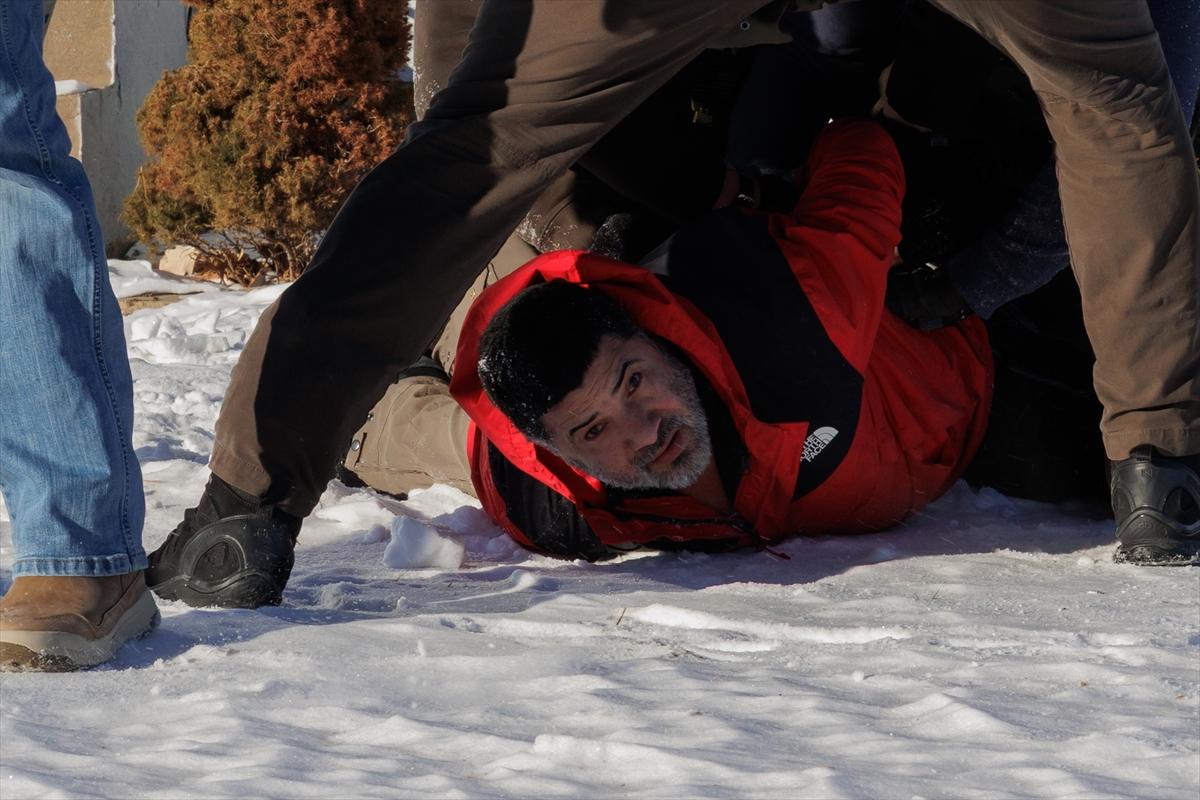
ICE detentions continue under federal enforcement operations in Minnesota, January 28, 2026 – (Anadolu Agency)
U.S. President Donald Trump, in a press statement made before traveling to Iowa on January 27, 2026, stated he was awaiting the outcome of the investigation into the killing of nurse Alex Jeffrey Pretti by ICE agents in Minnesota.
Trump said, “I want to see the results of the investigation. I will follow the process. I want a dignified and honest investigation, and I want to see the outcome myself.” He also noted that he had sent a message to Pretti’s family, adding, “I am reviewing the entire situation. I love our people. I love her family, and this is a very sad situation.”
In the same statement, President Trump denied rumors of Interior Security Secretary Kristi Noem’s resignation. He affirmed her continued tenure, stating, “She is doing an excellent job. The borders are currently completely secure.”
According to an internal audit report from the Customs and Border Protection (CBP) unit under the Department of Homeland Security, obtained by the New York Times, the preliminary report on Pretti’s death confirmed that two federal law enforcement officers fired their weapons. The report, based on body camera footage, stated that Pretti resisted arrest. However, the report did not support Interior Security Secretary Noem’s claim that Pretti had “wielded a weapon.”
Protests against Immigration and Customs Enforcement (ICE) operations continued in the city of Minneapolis, Minnesota, on January 27–28, 2026. Demonstrations were organized by residents and volunteers near Saint Paul, particularly around Frost Lake Elementary School, in response to the presence of ICE officers. Protesters alleged that ICE agents targeted parents who had come to pick up their children from school. During demonstrations involving anti-immigration groups, chases occurred between ICE vehicles and protesters, and ICE officers used diversion tactics to apprehend two suspects.
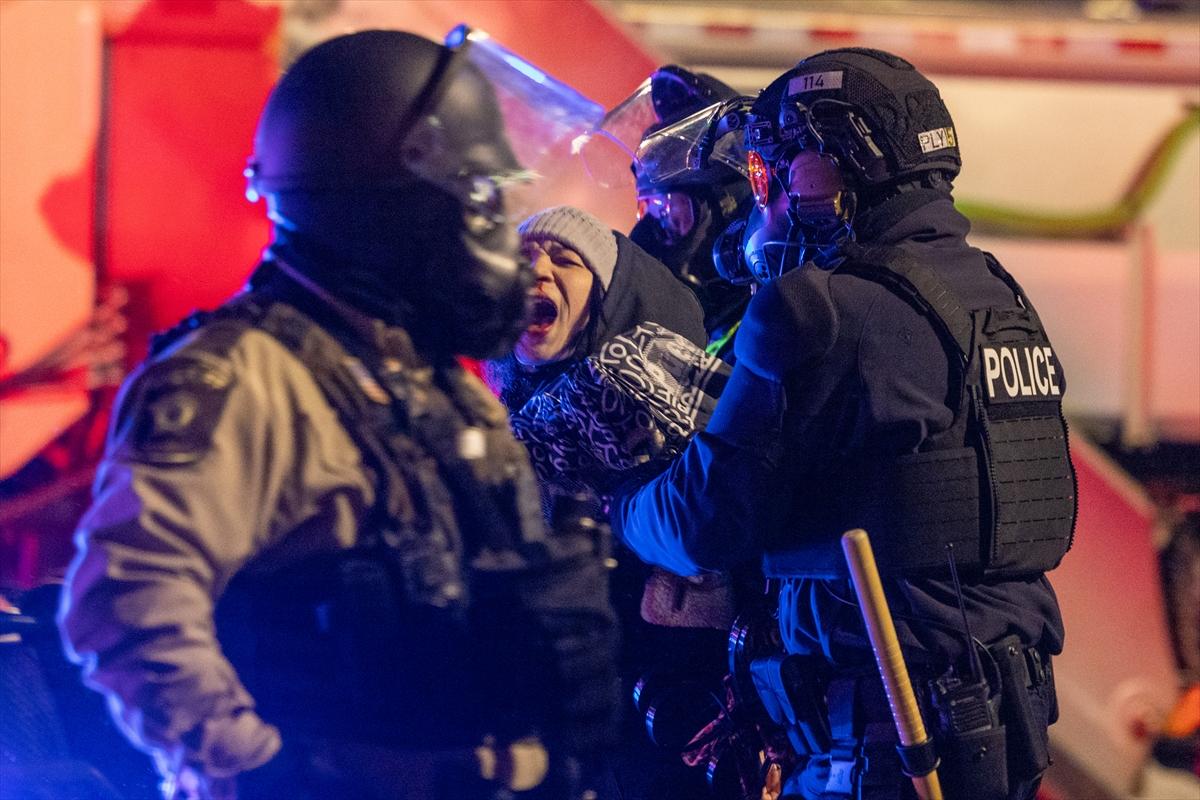
Protests continue against the Customs and Border Protection agency in Minnesota, January 27, 2026 – (Anadolu Agency)
Public reactions in the state expanded following calls from the Council on American-Islamic Relations (CAIR) and local civil society organizations. CAIR Minnesota Director Jaylani Hussein stated, “ICE is violating both federal and state laws.” Hussein further added, “I believe ICE has lost all mental and operational control. After witnessing its failures in Minnesota and the high cost to the public, I do not think ICE will move on to another community.”
The events in Minnesota triggered solidarity protests in other cities, including New York and Chicago. Demonstrators gathered in the lobby of a hotel believed to house ICE agents. In later hours of the protest, some participants began damaging the building, prompting federal agents to intervene with tear gas.
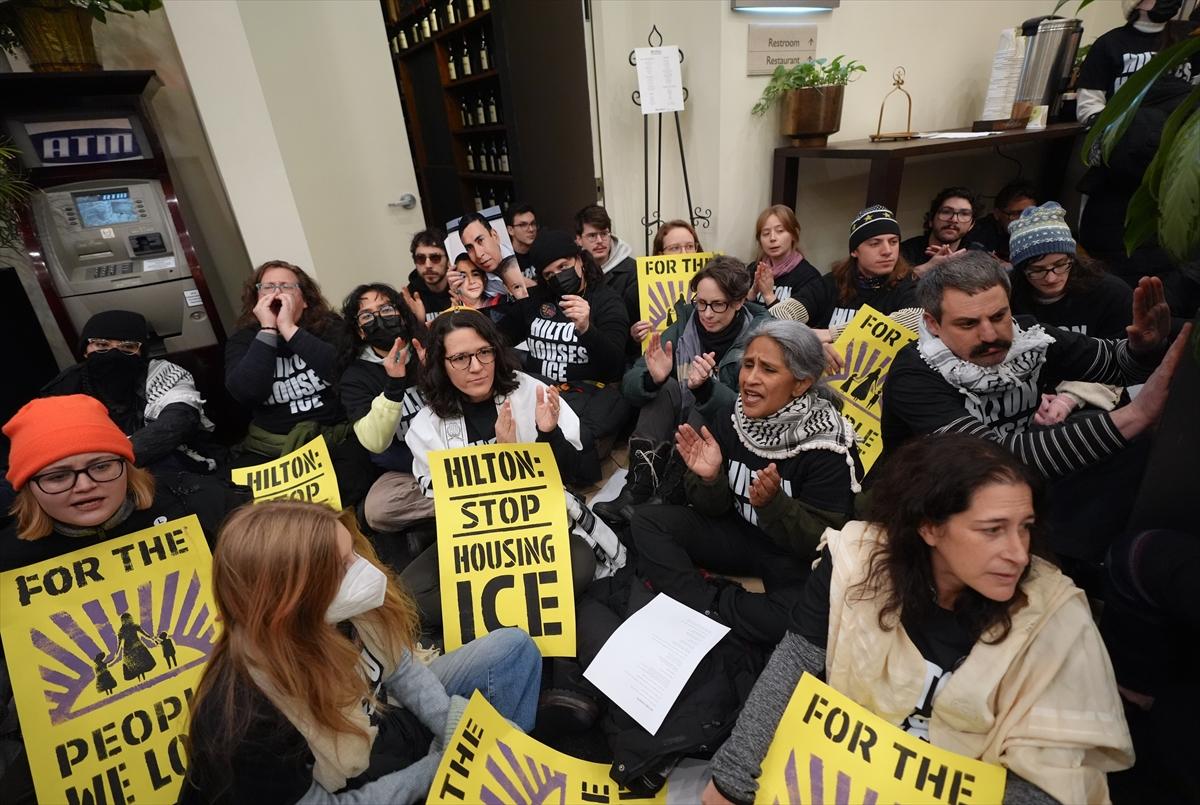
Protest at the hotel believed to house ICE agents in New York, January 28, 2026 – (Anadolu Agency)
Security officials warned demonstrators in the hotel lobby to leave the building. Despite the warning, numerous protesters who remained inside were arrested, though no official figures on the number of arrests were released. In addition to the New York demonstrations, solidarity actions against ICE also took place in the city of Chicago. It was reported that the protests in New York and Chicago occurred simultaneously with those centered in Minnesota.

Protests against ICE in Chicago, January 28, 2026 – (Anadolu Agency)
U.S. President Donald Trump, in his assessment of ongoing events as of January 28, 2026, stated that his administration aimed to reduce tensions in Minnesota. In an interview with Fox News, he said, “We will ease the tension somewhat.”
Trump said he had spoken with Minnesota Governor Tim Walz and Minneapolis Mayor Jacob Frey, both of whom, he claimed, also wanted the issue resolved. Describing the deaths of two Americans in Minnesota as “terrible,” Trump added, “I did not like the fact that [Alex Pretti] was carrying a gun loaded with bullets. She had two magazines with her, which is unusual, but no one knows exactly when or how the weapon was seen — nobody has all the facts.”
Regarding Pretti’s killing, Trump said, “She should not have been carrying a weapon.” When asked whether Pretti was an “internal terrorist,” he replied, “I have not heard that.”
On January 28, 2026, the Minnesota Governor’s Office announced that Governor Tim Walz had met with “border czar” Tom Homan. The statement indicated that Walz urged Homan to ensure an impartial investigation into armed incidents involving federal agents and to reduce the number of ICE agents operating in the state.
Minneapolis Mayor Jacob Frey, in a social media post, said his meeting with Homan “went productively,” adding, “Public safety works best when it is based on community trust, not fear or division.”

Protest at the hotel believed to house ICE agents in New York, January 28, 2026 – (Anadolu Agency)
On January 28, 2026, in the city of Minneapolis, Minnesota, Somali-American Democratic Congresswoman Ilhan Omar was targeted in an attack while addressing the public. The incident occurred during a protest speech in which Omar criticized U.S. President Donald Trump’s anti-immigrant policies.
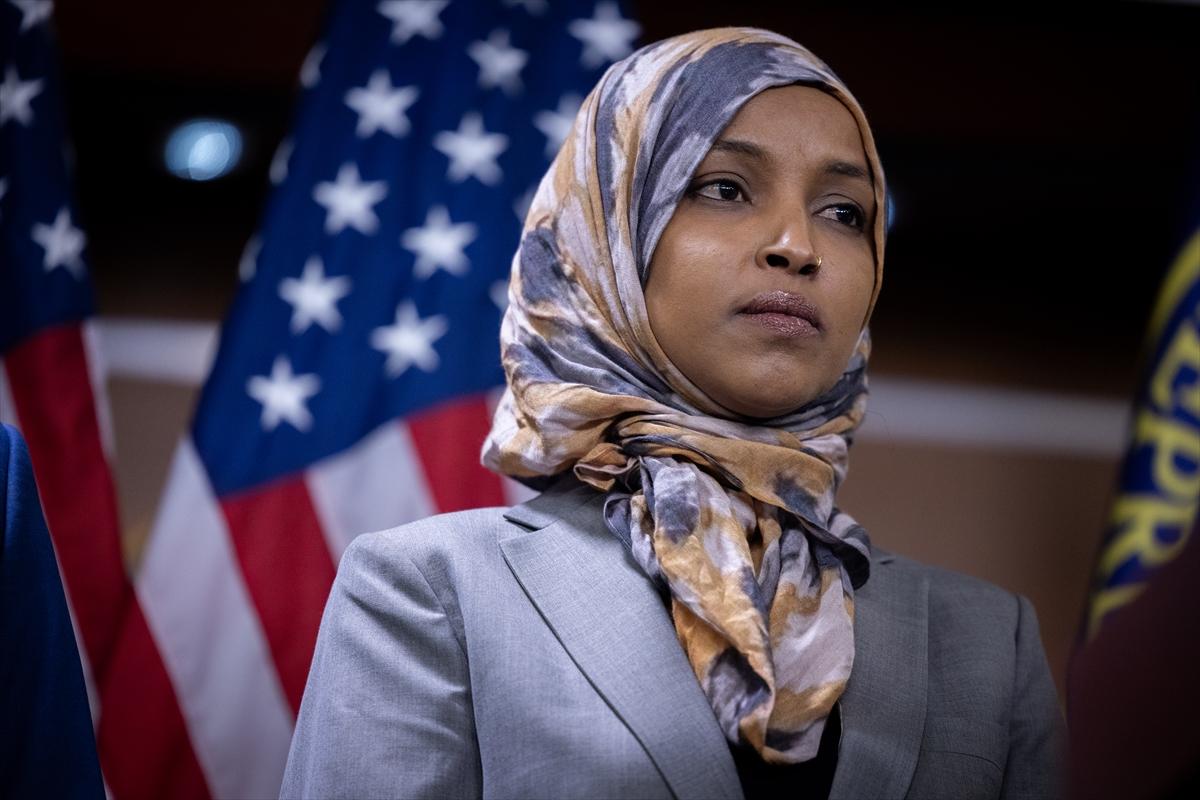
American Democratic Congresswoman Ilhan Omar, January 14, 2026 – (Anadolu Agency)
According to reports by The Hill, the attacker carried out a spray attack on Omar. Minneapolis Police Department spokesperson confirmed the incident to the press, stating, “Omar was not injured and continued her speech. Minneapolis Forensic Science units arrived at the scene to investigate.” The police later identified the suspect as 55-year-old Anthony Kazmierczak. An investigation was launched following his arrest.
Immediately after the attack, Omar continued her speech, saying, “This is the truth that people like this ugly man do not understand: We in Minnesota are strong, and no matter what they throw at us, we will remain resilient.”
In a subsequent social media post, Omar wrote, “I am fine. I survived. This small provocateur cannot stop me from doing my job. I will not let bullies win. I am grateful to my incredible constituents. Minnesota is strong.” The attack occurred amid ongoing protests in Minnesota. In response, federal security agencies implemented additional precautions in Minneapolis.
On January 19, 2026, President Donald Trump labeled Omar on social media as “incompetent, terrible, and garbage,” and claimed that Somali immigrants in the United States had “destroyed” Minnesota.
Ilhan Omar responded to Trump’s remarks via social media, writing, “My message to Trump: hateful rhetoric will not work. Somali Americans are staying here.”
Al Jazeera. “Minnesota Representative Ilhan Omar Attacked During Town Hall Meeting.” Al Jazeera, January 28, 2026. Accessed January 28, 2026. https://www.aljazeera.com/news/2026/1/28/minnesota-representative-ilhan-omar-attacked-during-town-hall-meeting
Anadolu Ajansı. "ABD’nin New York Kentinde Trump’ın Göçmen Politikalarına Karşı Protestolarda Çok Sayıda Kişi Gözaltına Alındı." Accessed January 28, 2026. https://www.aa.com.tr/tr/dunya/abdnin-new-york-kentinde-trumpin-gocmen-politikalarina-karsi-protestolarda-cok-sayida-kisi-gozaltina-alindi/3812749
Anadolu Ajansı. "Trump: Minnesota’da Öldürülen Alex Pretti’nin Soruşturma Sonucunu Beklediğini Belirtti." Accessed January 28, 2026. https://www.aa.com.tr/tr/dunya/trump-minnesotada-oldurulen-alex-prettinin-sorusturma-sonucunu-bekledigini-belirtti-/3812539
Anadolu Ajansı. “Minnesota Eyaletinde ICE Komutanı Bovino’ya Dair Tartışmalar Sürerken, Kurumun Operasyonları Hız Kesmiyor.” Accessed January 28, 2026. https://www.aa.com.tr/tr/dunya/minnesota-eyaletinde-ice-komutani-bovinoya-dair-tartismalar-surerken-kurumun-operasyonlari-hiz-kesmiyor/3812908
Anadolu Ajansı. “Somali Descent Council Member Omar Attacked in Minneapolis.” Accessed January 28, 2026. https://www.aa.com.tr/tr/dunya/somali-asilli-temsilciler-meclisi-uyesi-omara-minneapoliste-saldiri/3812761
BBC News. "Trump says government will 'de-escalate' in Minnesota following Pretti shooting." Accessed January 28, 2026. https://www.bbc.com/news/articles/c0q425vg4qzo
CNN. "January 27, 2026 - Minnesota immigration updates." CNN. Accessed January 28, 2026.
On January 29, 2026, federal immigration agents involved in the death of Alex Pretti were placed on administrative leave. A federal official confirmed the statement: “Federal agents involved in the fatal shooting of Alex Pretti in Minneapolis on Saturday have been placed on administrative leave.”
This development contradicted remarks made over the weekend by Customs and Border Protection Commissioner Gregory Bovino. In a press statement on January 24, Bovino had said: “All agents present at the scene are still on duty, but not in Minneapolis—they are in other cities. This is for their safety. There is such a thing as doxxing, and the safety of our personnel is of utmost importance. We will keep these employees safe.” However, federal sources later reported that Bovino had been removed from his post in Minnesota and reassigned to the El Centro Sector in California.
In response to these developments, President Donald Trump dispatched Tom Homan, known as the “border czar,” to Minnesota. A White House spokesperson stated that Homan had been assigned to assess the situation in the state and coordinate with local authorities. Minnesota Governor Tim Walz and Minneapolis Mayor Jacob Frey met with Homan and agreed on the need for “an ongoing dialogue” regarding federal operations.
On January 29, 2026, protests against ICE continued in Minnesota. Attorney General Pam Bondi stated on the social media platform X: “Sixteen demonstrators were arrested during ICE protests in Minnesota.”
Bondi said those arrested were detained for “attacking, resisting, and obstructing federal law enforcement officers.” She added: “We expect more arrests. I have said this before and I will say it again: Nothing will prevent President Donald Trump and the Department of Justice from enforcing the law.” In her post, Bondi also published the names and photographs of those arrested. On the same day, two individuals in Texas were arrested for protesting ICE policies.
Following the arrests in Minnesota, MPR News reported that the federal prosecutor’s office had formally charged 12 individuals arrested during the protests as of January 29. They are facing charges of “assaulting, resisting, or obstructing federal officers.” U.S. District Judge Dulce Foster announced that the charges had been made public and that each defendant had appeared for their initial court hearing.

Memorial service for Alex Pretti, January 29, 2026 – (Anadolu Agency)
On the evening of January 28, 2026, a memorial service for Alex Pretti was held in Minneapolis, Minnesota. According to MPR News, the service took place at the intersection of 26th Street and Nicollet Avenue, with road traffic in the area temporarily closed. It was reported that Pretti had worked as a critical care nurse at the Minneapolis VA Hospital and that the memorial was organized by the National Nurses United (RN). Pharmacists Diane and Tim Boonstra, who traveled from St. Paul to show support for the nursing community, spoke at the event.
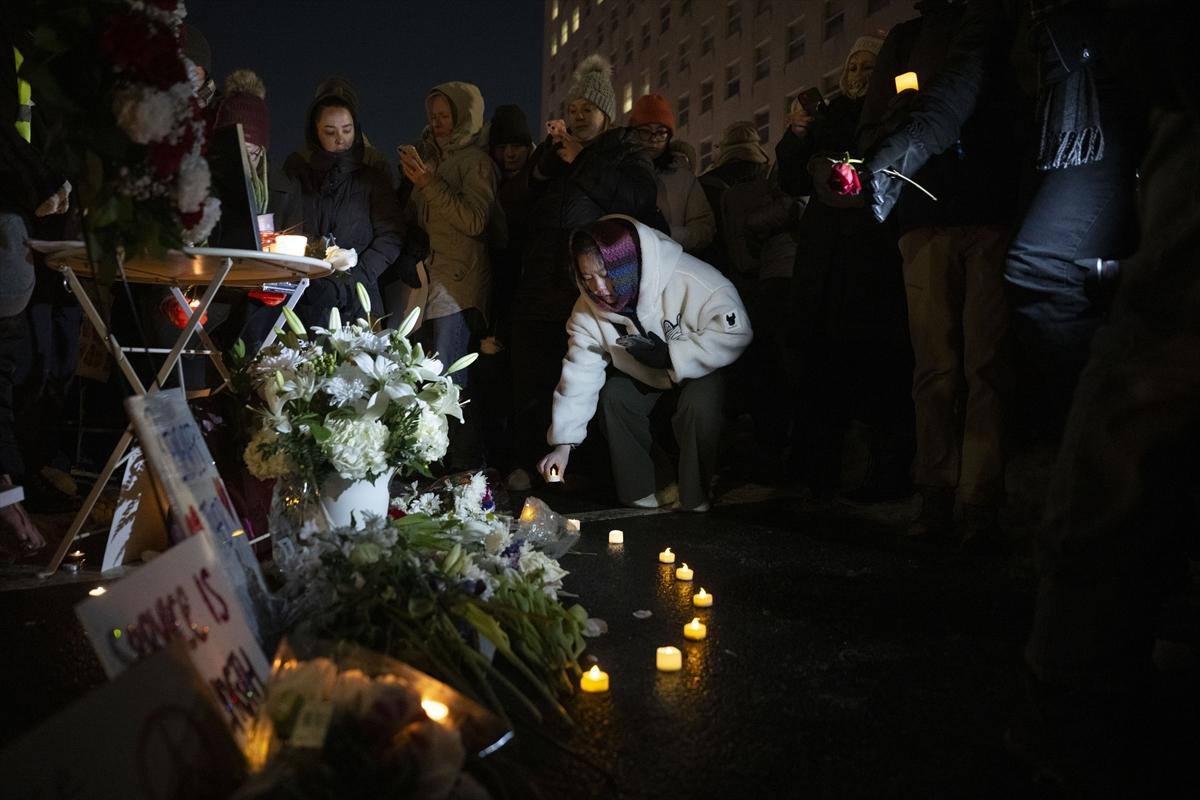
Memorial service for Alex Pretti, January 29, 2026 – (Anadolu Agency)
At the service, Regions Hospital nurse Nour Tamimi urged attendees to take deep breaths together. Tamimi said: “We are standing where Alex took his last breath. Let us take a few deep breaths together in his memory. Wherever you are, stand up. We all held our breath.” The event also featured speeches accompanied by the musical group Brass Solidarity.
As of January 29, 2026, judicial proceedings against federal immigration units in Minnesota have expanded. According to The New York Times, Chief Judge Patrick J. Schiltz announced in January that the Immigration and Customs Enforcement (ICE) agency had violated approximately 100 court orders within the month. Schiltz stated: “The agency violated more judicial directives in one month than any other federal agency has done over its entire existence.”
Judge Schiltz’s remarks coincided with lawsuits filed by state officials seeking to restrict federal immigration operations. The report noted that attorneys for the Trump administration had characterized the high concentration of federal agents in Minnesota as “a legitimate exercise of federal authority.” Meanwhile, as part of the federal judicial process in Minnesota, the Ramsey County Attorney’s Office has initiated criminal investigations into the conduct of federal agents. The office has issued new directives granting local police departments the authority to receive and investigate complaints regarding federal agents. MPR News also reported that the Ramsey County Sheriff’s Office is currently conducting one active investigation and two preliminary inquiries.
Anadolu Ajansı. "ABD’de ICE Karşıtı Protestolarda Gözaltılar Sürüyor." Accessed January 29, 2026.
BBC News. "Trump says government will 'de-escalate' in Minnesota following Pretti shooting." Accessed January 29, 2026. https://www.bbc.com/news/articles/c0q425vg4qzo
CBS News. “Federal agents involved in Minneapolis shooting placed on administrative leave, source says.” CBS News. Accessed January 29, 2026. https://www.cbsnews.com/news/minneapolis-shooting-alex-pretti-immigration-agents-on-leave/
MPR News. “The latest on ICE in Minnesota.” MPR News. Accessed January 29, 2026. https://www.mprnews.org/live-updates
New York Times. “Minnesota Judge Says ICE Violated Nearly 100 Court Orders.” The New York Times. Accessed January 29, 2026. https://www.nytimes.com/live/2026/01/28/us/minneapolis-shooting-ice-minnesota
Protests that erupted after the shooting deaths of Renee Nicole Good and Alex Jeffrey Pretti spread across the United States. Demonstrations, organized under the banner of “ICE Out”, took place on January 30 and 31 in all 50 states. Participants, mobilized by students, unions, and various civil society groups, were called to “Stay home from work, stay home from school, stay home from shopping”.
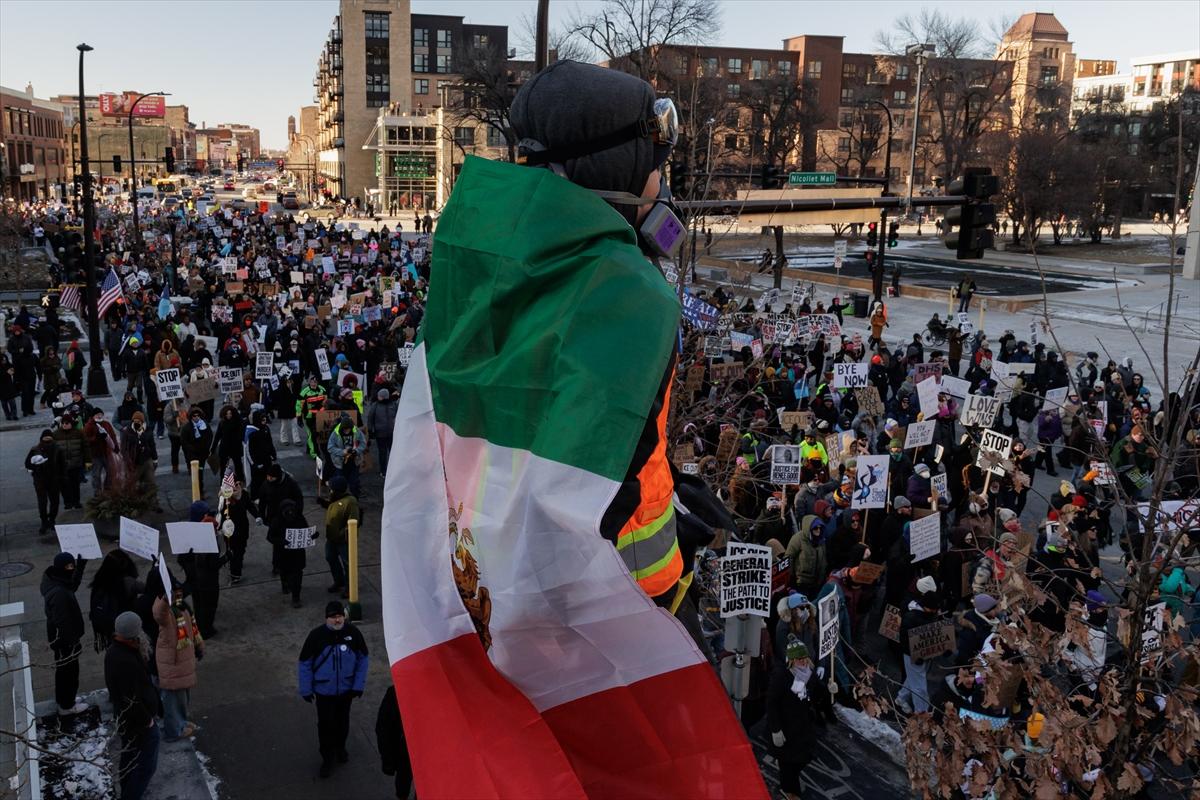
Protests against ICE in Minneapolis, January 31, 2025 – (Anadolu Agency)
Organizers stated that the purpose of the actions was to halt ICE operations and increase public pressure on federal immigration policies. Approximately 250 separate protests occurred nationwide.
The city of Minneapolis, in the state of Minnesota, became the epicenter of nationwide ICE opposition actions on January 30–31, 2026. Thousands gathered in the city center demanding the complete withdrawal of federal immigration agents from the state.

Protests against ICE in Minneapolis, January 31, 2025 – (Anadolu Agency)
Minneapolis Government Building Park was recorded as the main protest site, where hundreds gathered. Despite temperatures dropping to minus 14 degrees Celsius, demonstrations continued. Protesters carried signs with slogans such as “ICE Out of Minnesota” and “No justice, no peace”. Minnesota Governor Tim Walz wrote on his social media account: “Actions matter more than words. Minnesotans still have not seen meaningful change.”
Assistant Attorney General Todd Blanche announced on January 30 that a federal civil rights investigation into the death of Alex Jeffrey Pretti had been launched. Blanche stated, “This should not be perceived as a large-scale human rights investigation. This is a standard inquiry conducted by the FBI.” The Federal Bureau of Investigation (FBI) has taken charge of the investigation, and the head of the Minneapolis field office, Jarrad Smith, was removed from his position and reassigned to headquarters in Washington.
Tom Homan, speaking at a press conference in Minnesota, stated that reducing ICE personnel depended on “cooperation with state authorities”. Homan added, “If hateful rhetoric and obstructive interventions cease, the withdrawal of officials from here can be accelerated.”
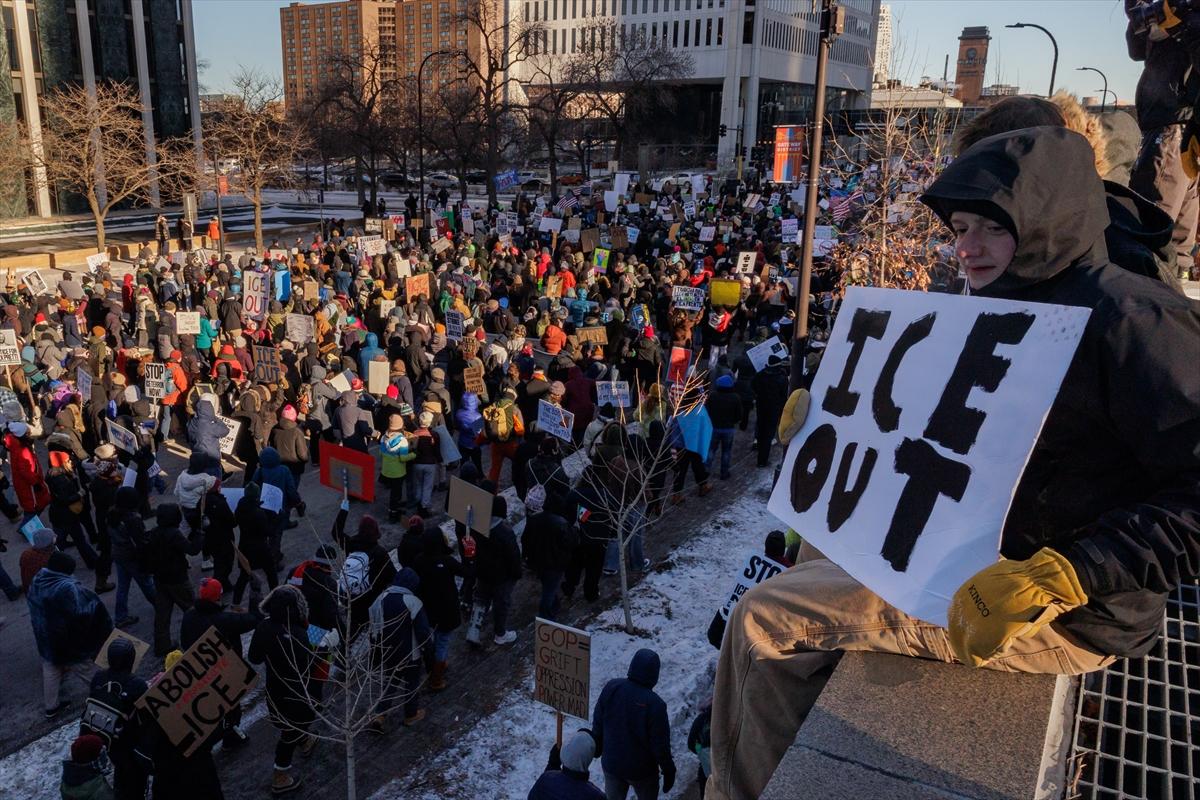
Protests against ICE in Minneapolis, January 31, 2025 – (Anadolu Agency)
Protests under the banner of “ICE Out” on January 30–31, 2026, expanded nationwide following the Minneapolis demonstrations. Actions were organized under the call for a “National Shutdown”. Participants decided to engage in two days of civil disobedience with the slogan “Stay home from work, stay home from school, stay home from shopping”.
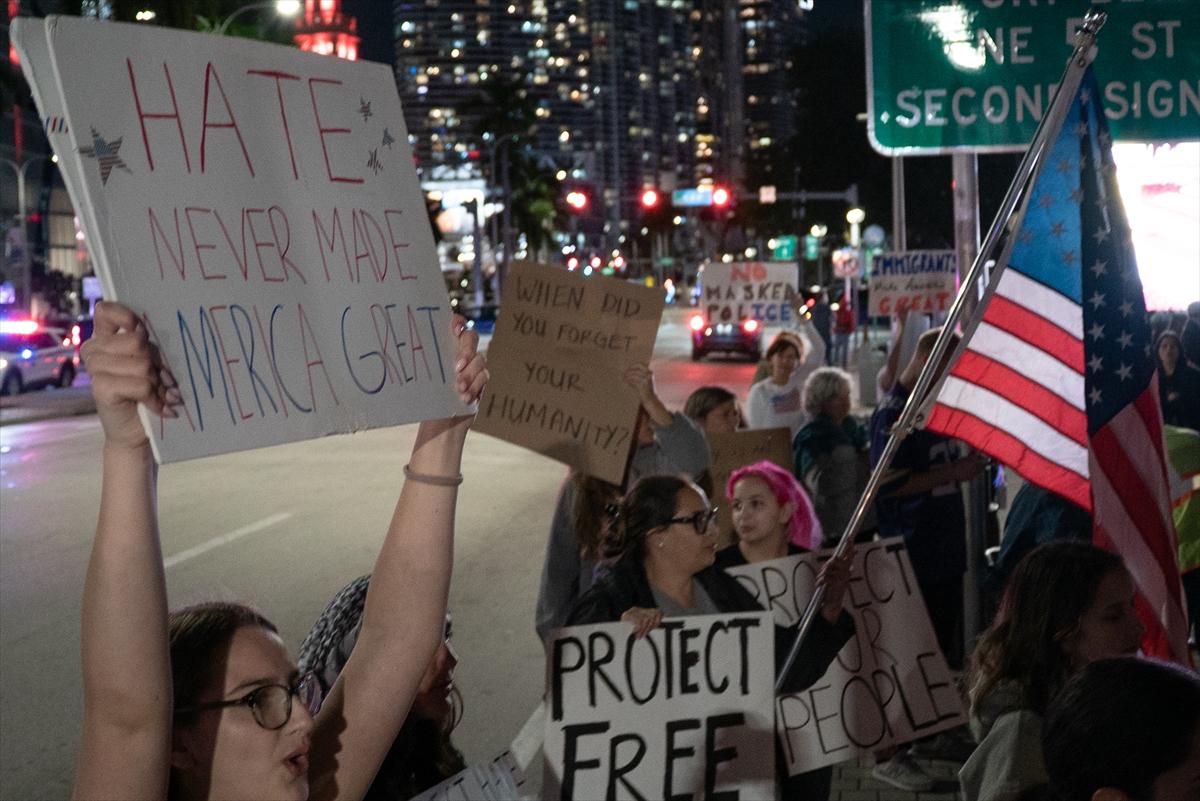
Protests against ICE in Miami, United States, January 31, 2025 – (Anadolu Agency)
In California, particularly in Los Angeles and San Francisco, large-scale marches were held. In Los Angeles, thousands gathered in front of the City Hall to protest federal immigration practices, then marched through the city center. Demonstrators carried signs opposing ICE and demanded the removal of ICE agents from neighborhoods.
Tensions arose between security forces and demonstrators during the Los Angeles protests. Some individuals threw garbage and bottles at police in front of the Federal Building, and police responded by using pepper spray to disperse the crowd. Following the events, the Los Angeles Police Department declared a “tactical alert.”

Protests against ICE in Miami, United States, January 31, 2025 – (Anadolu Agency)
In San Francisco, students, workers, and civil society representatives gathered at Dolores Park and organized a march in solidarity with the actions in Minneapolis. In Eugene, Oregon, a demonstration was led by the group Veterans for Peace. Group spokesperson Pat Driscoll stated, “We are not violent. We are protesting peacefully. We will not silently observe these events—we will voice our views.”
Nationwide ICE Out actions continued with simultaneous marches in major cities including New York, Chicago, Portland, and Washington DC. Participants called for the cessation of ICE operations and reform of federal immigration policy. In New York state, Governor Kathy Hochul announced she was drafting legislation to prohibit local law enforcement from cooperating with ICE.
North Carolina, Maine, and Florida also saw various solidarity actions. In Florida, the national organization 50501 organized candlelight vigils at the Alligator Alcatraz immigrant detention center in protest of ICE arrests. National coordinator Sarah Parker stated, “We have infrastructure, we have determination, and we will not give up.”
University and high school students were among the most active participants in the protests. Students from University of Minnesota, DePaul University (Chicago), and Long Beach High School (California) skipped classes to join marches. In Minneapolis, students formed the letters “SOS” on the frozen surface of a lake. In Los Angeles, high school students marched with signs reading “No place for fascists here”; in Brooklyn, a group of teenagers held a march chanting anti-ICE slogans.
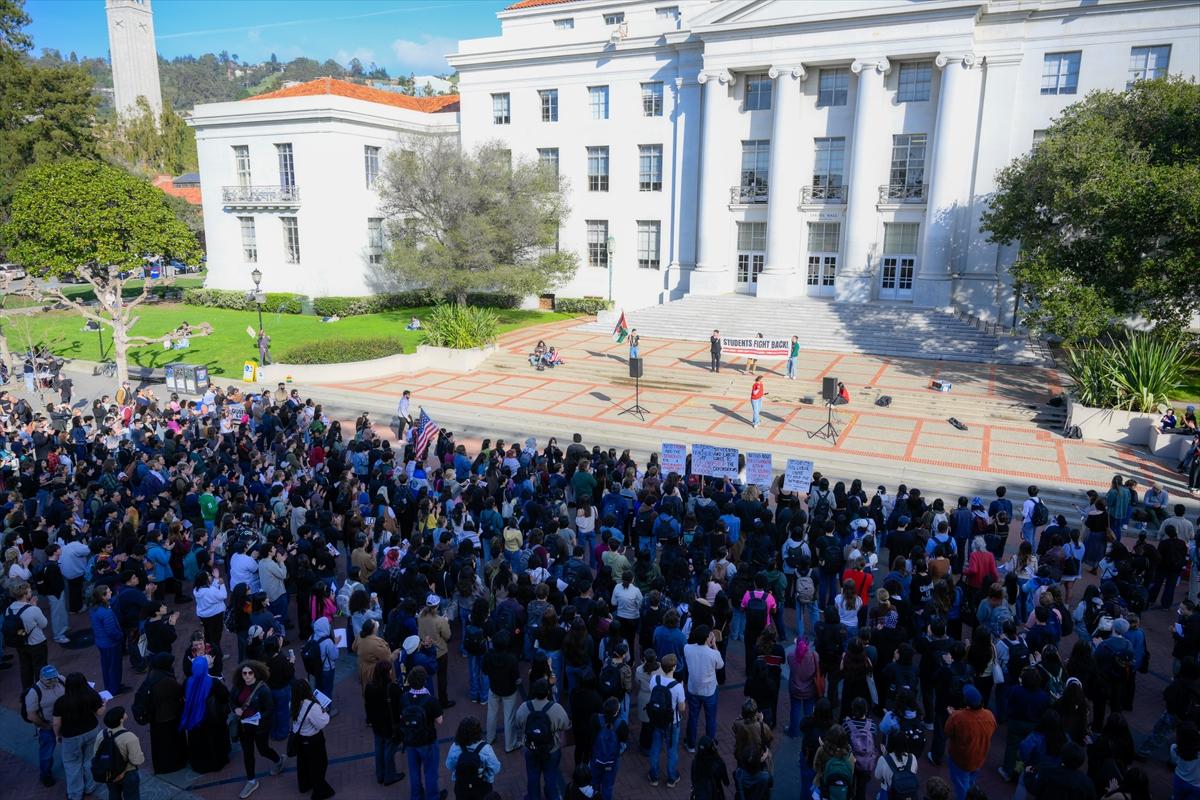
Protests against ICE at UC Berkeley, January 29, 2025 – (Anadolu Agency)
U.S. President Donald Trump stated on January 30, 2026, that Immigration and Customs Enforcement (ICE) agents would not be withdrawn from Minnesota. At a press conference at the Kennedy Center, Trump told reporters: “No, no. Absolutely not. We will do everything in our power to keep our country safe.”
Trump affirmed that ICE operations were necessary for public safety and emphasized that continuing federal agents’ duties was vital to U.S. security. On the same day, he rejected calls for the resignation of Secretary of Homeland Security Kristi Noem, posting on social media: “Kristi Noem did an AMAZING job!”
President Trump also commented on footage of Alex Jeffrey Pretti’s behavior on January 13. Trump stated that Pretti “shouted at the ICE officer, who remained extremely calm and controlled, then spat at him, kicked the government vehicle, and broke its taillight,” arguing that this had “severely damaged” Pretti’s reputation.

Memorial for Renee Good and Alex Pretti, January 30, 2026 – (Anadolu Agency)
Trump described the incident as “a crazy, uncontrolled outburst of anger and violence” and emphasized that the ICE officer had remained calm and composed. Following Trump’s remarks, Tom Homan, Head of Border Security told the press that ICE laws had been applied identically across six presidential administrations and that the agency’s activities were carried out within the framework of “laws enacted by Congress”. Homan stated, “I started under (former U.S. President Ronald) Reagan and I am ending under Trump. We apply the same laws under every administration.”
Assistant Attorney General Todd Blanche announced on January 30 that a federal civil rights investigation into the death of Alex Jeffrey Pretti had been launched. Blanche clarified that the investigation’s purpose was to clarify all aspects of the incident, adding, “This should not be perceived as a large-scale human rights investigation. This is a standard inquiry conducted by the FBI.”
Under the investigation led by the FBI, teams have reviewed witness statements and video recordings related to the events in Minnesota. While the Trump administration emphasized its determination to continue ICE operations as “national security measures,” White House officials issued conflicting messages regarding the scope of these operations. Homan stated that operations would be transformed into “more targeted operations”.
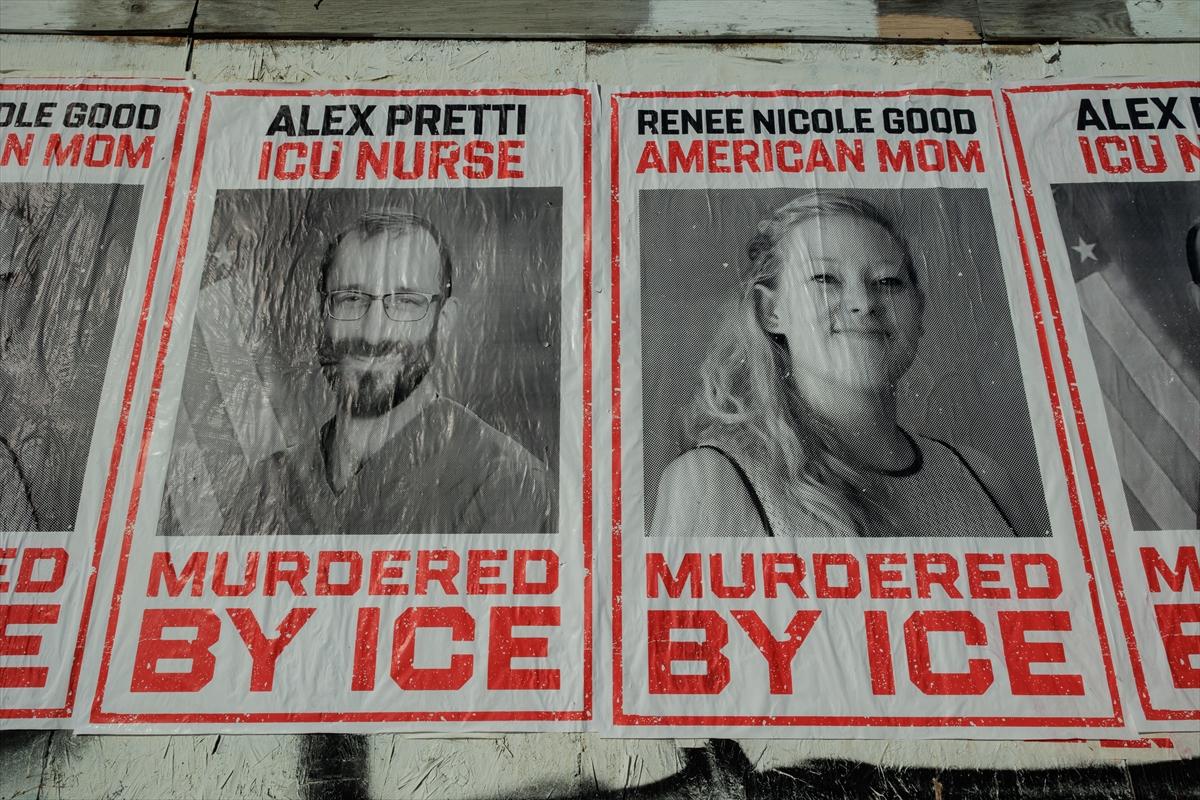
Memorial for Renee Good and Alex Pretti, January 30, 2026 – (Anadolu Agency)
New York Governor Kathy Hochul has drafted legislation to prohibit local police from cooperating with ICE. In Congress, calls have been made to increase oversight and transparency of ICE operations. Democratic members have demanded a reassessment of ICE’s budget, while Republican representatives have opposed its abolition and defended the agency as essential to national security.
The Department of Homeland Security (DHS) faced a budgetary crisis as the failure to approve funding for ICE raised the risk of a partial federal government shutdown. The Minnesota State Senate has introduced legislation to prohibit federal agents from conducting operations within the state without local law enforcement authorization.
Congress members Cori Bush and Ilhan Omar submitted a proposal to restrict ICE’s budget, while state prosecutors requested information from the federal government regarding transparency and jurisdictional limits of ICE operations.
ABC News. “Anti-ICE Protests Take Place Nationwide After Fatal Shootings in Minneapolis.” ABC News. Accessed January 31, 2026. https://abcnews.go.com/US/anti-ice-protests-place-nationwide-fatal-shootings-minneapolis/story?id=129670048
Anadolu Ajansı. "Trump Says He Is Not Pulling ICE Agents Out of Minnesota." Accessed January 31, 2026. https://www.aa.com.tr/en/americas/trump-says-he-is-not-pulling-ice-agents-out-of-minnesota/3814886
Anadolu Ajansı. "Trump’tan, ICE Görevlilerince Öldürülen Pretti’nin 13 Ocak’taki Davranışına ‘Şiddet Gösterisi’ Yorumu." Accessed January 31, 2026. https://www.aa.com.tr/tr/dunya/trumptan-ice-gorevlilerince-oldurulen-prettinin-13-ocaktaki-davranisina-siddet-gosterisi-yorumu/3815026
Anadolu Ajansı. "Trump’ın Sınır Çarı, ICE Personelinin Azaltılmasının Eyaletle İşbirliğine Bağlı Olduğunu Belirtti." Accessed January 31, 2026. https://www.aa.com.tr/tr/dunya/trumpin-sinir-cari-ice-personelinin-azaltilmasinin-eyaletle-isbirligine-bagli-oldugunu-belirtti/3814544
Anadolu Ajansı. “ABD’de ICE Karşıtı Gösteriler Devam Ediyor.” Accessed January 31, 2026. https://www.aa.com.tr/tr/dunya/abdde-ice-karsiti-gosteriler-devam-ediyor/3815997
Anadolu Ajansı. “Mass Protests Held across US against Federal Immigration Agency as Thousands Rally in California, Oregon.” Accessed January 31, 2026. https://www.aa.com.tr/en/americas/mass-protests-held-across-us-against-federal-immigration-agency-as-thousands-rally-in-california-oregon/3816064
Anadolu Ajansı. “Thousands Take to Downtown Minneapolis to Demand End to US Federal Immigration Deployment.” Accessed January 31, 2026. https://www.aa.com.tr/en/americas/thousands-take-to-downtown-minneapolis-to-demand-end-to-us-federal-immigration-deployment/3815990
BBC News. “US cities hold anti-ICE protests during nationwide day of action.” BBC News. Accessed January 31, 2026. https://www.bbc.com/news/articles/c78vgnz3z6eo
CNN. “Anti-ICE protests touch every corner of the US as Minnesota officials stand off with the Trump administration.” CNN, January 31, 2026. Accessed January 31, 2026. https://edition.cnn.com/2026/01/31/us/minnesota-protest-national-boycott
Reuters. “Thousands demonstrate in Minnesota and across US to protest ICE.” Reuters, January 30, 2026. Accessed January 31, 2026. https://www.reuters.com/world/us/nationwide-protests-walkouts-planned-over-fatal-ice-shootings-minneapolis-2026-01-30/
The Guardian. “‘ICE Out’ strike and protests: what to know about demonstrations across the US.” The Guardian, January 29, 2026. Accessed January 31, 2026. https://www.theguardian.com/us-news/2026/jan/29/ice-out-strike-protests-explained
Protests against the actions of U.S. Immigration and Customs Enforcement (ICE) targeting undocumented immigrants have been ongoing in the city of Los Angeles, California, since January 30. Between January 31 and February 1, 2026, numerous individuals were taken into custody. According to a statement by the Los Angeles Police Department, dozens of people were arrested during the second night of the protests.
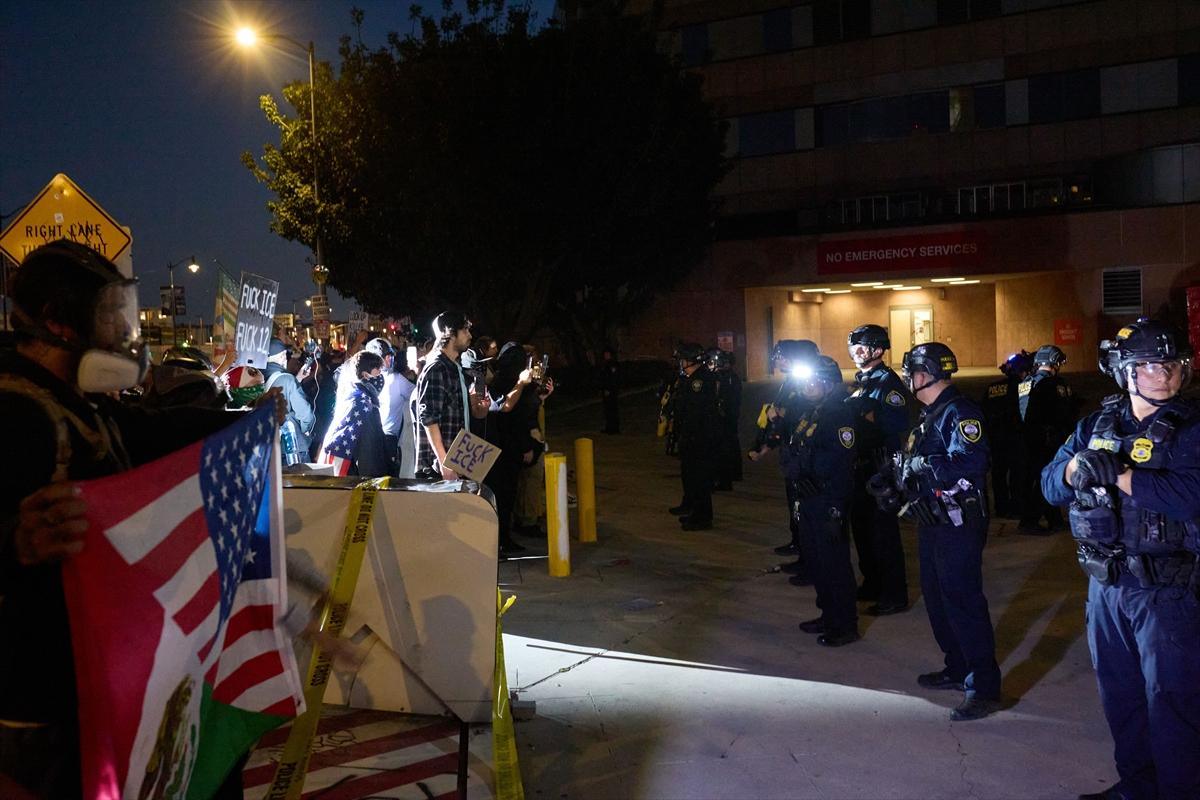
Anti-ICE protests in Los Angeles, February 1, 2026 – (Anadolu Ajansı)
The police statement indicated that those arrested were charged with offenses including “assault with a deadly weapon, assault on a police officer, aggravated and minor vandalism, and failure to disperse.”
According to local media reports, the number of individuals taken into custody reached over 50. Videos shared on social media showed intense confrontations between protesters and police, with officers using batons and tear gas.
Los Angeles Police Department (LAPD) stated that of those arrested, 47 were charged with “failure to disperse,” three were minors, and one individual was detained on suspicion of “attempted escape.”
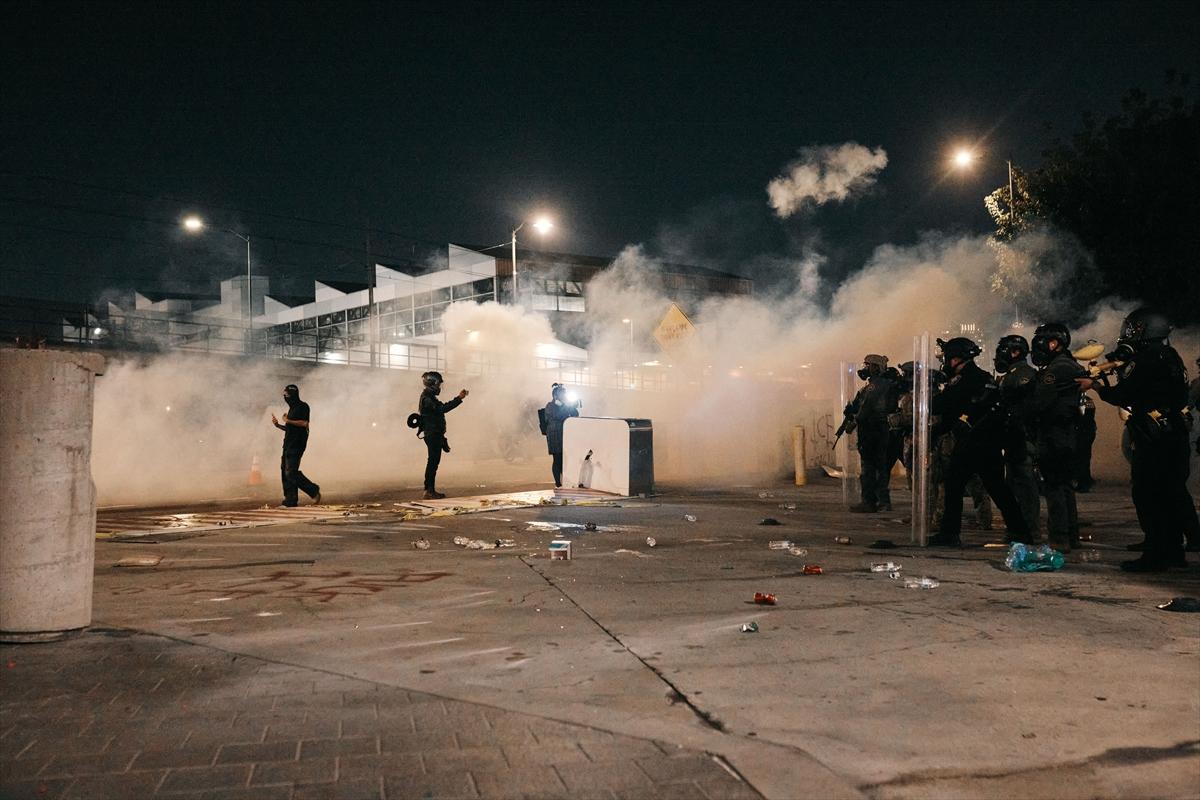
Anti-ICE protests in Los Angeles, February 1, 2026 – (Anadolu Ajansı)
Protests were concentrated in front of the Los Angeles City Hall and around the Metropolitan Detention Center. Demonstrators demanded the withdrawal of ICE units from the city and a reduction in immigration detention practices nationwide. Los Angeles Mayor Karen Bass, in a statement on January 30, said, “I believe these protests are extremely important, but it is equally important that they remain peaceful and that vandalism does not occur.”
On the night of January 31, 2026, in the city of Portland, Oregon, federal agents deployed tear gas against demonstrators gathered outside the ICE building.
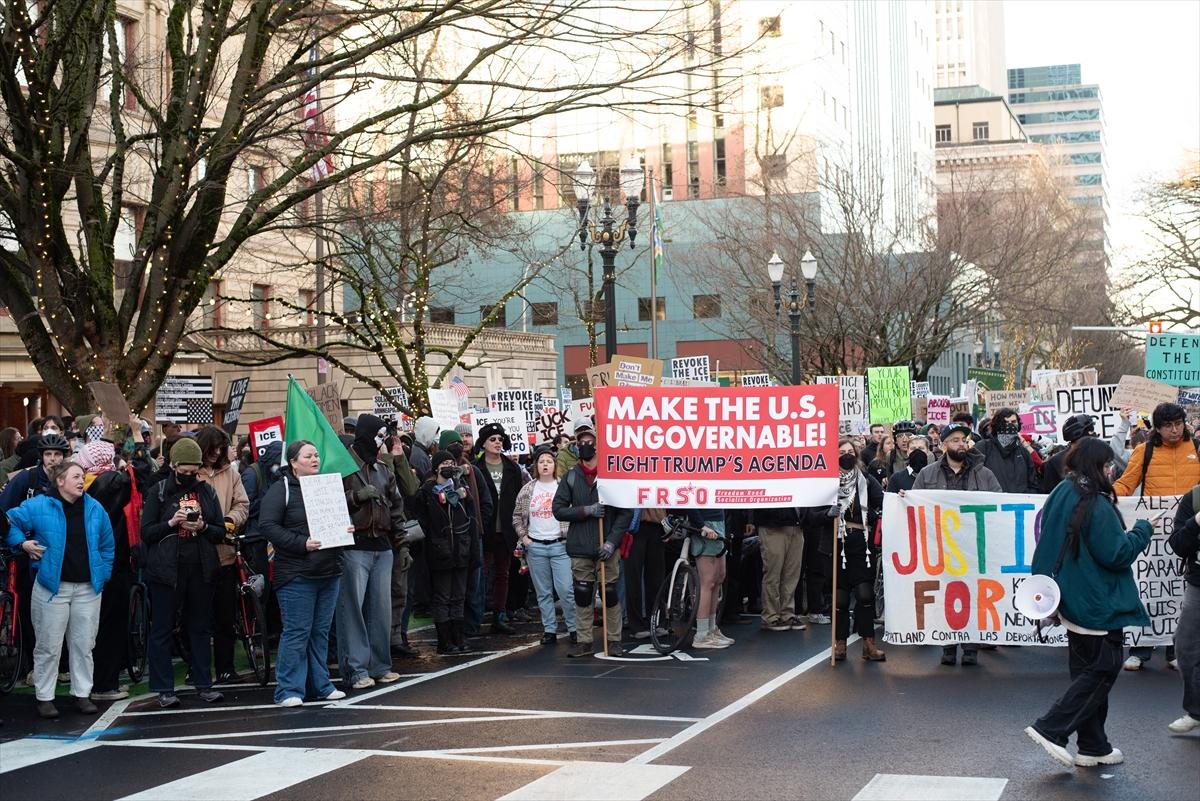
Anti-ICE protests in Portland, Oregon, USA, February 2, 2026 – (Anadolu Ajansı)
According to U.S. media reports, a large crowd carrying signs reading “Immigrants are not criminals, our president is” and “ICE out of our communities” blocked vehicle access to the ICE facility during a march. In response, federal agents used chemical agents to disperse the crowd.
It was reported that numerous individuals, including children and elderly people, were affected by the gas. The Portland Police Department announced that South Macadam Street had been temporarily closed to traffic to prevent drivers from being exposed.
Portland Mayor Keith Wilson, in a statement following the protest, condemned federal authorities for intervening in a peaceful demonstration composed “mostly of people who violated no law, posed no threat and presented no danger to federal forces.” Wilson called on individuals still employed by ICE to resign, stating, “By using violence and violating the Constitution, you have lost all legitimacy and left only shame in your place.”

Anti-ICE protests in Portland, Oregon, USA, February 2, 2026 – (Anadolu Ajansı)
U.S. President Donald Trump announced on his social media account that he had issued orders to ICE and Border Patrol units to protect federal property. Trump stated, “I have instructed ICE and/or Border Patrol to be very tough in protecting federal property. No one will be allowed to spit on our agents; those who do will face equal or harsher consequences.”
In the city of Chicago, Illinois, Mayor Brandon Johnson ordered an investigation and documentation of the activities of U.S. Immigration and Customs Enforcement (ICE) within the city.
Through an executive order signed on February 1, 2026, Johnson granted the Chicago Police Department authority to monitor, record, and prepare a comprehensive report on ICE operations.
CNN reported that Johnson requested a detailed examination of ICE activities under the order. In a written statement, the mayor said, “While President Donald Trump brings federal agents into our city to terrorize our residents, Chicago will not stand idle.”
Johnson further stated, “If the federal government refuses to hold these rogue units accountable, Chicago will do everything in its power to bring them to justice.”
On January 24, 2026, in Minnesota, the identities of two ICE agents involved in the death of Alex Jeffrey Pretti were confirmed. According to information published by the independent investigative journalism organization ProPublica, the agents are border patrol agent Jesus Ochoa (43) and customs and border protection officer Raymundo Gutierrez (35).
Both agents were assigned to the immigration enforcement operation named “Operation Metro Surge”, which began in December 2025 and operated across Minneapolis. Records indicate that Ochoa began service in 2018 and Gutierrez in 2014, and that both served in a unit conducting high-risk operations.
The information published by ProPublica has been corroborated by federal and local authorities.
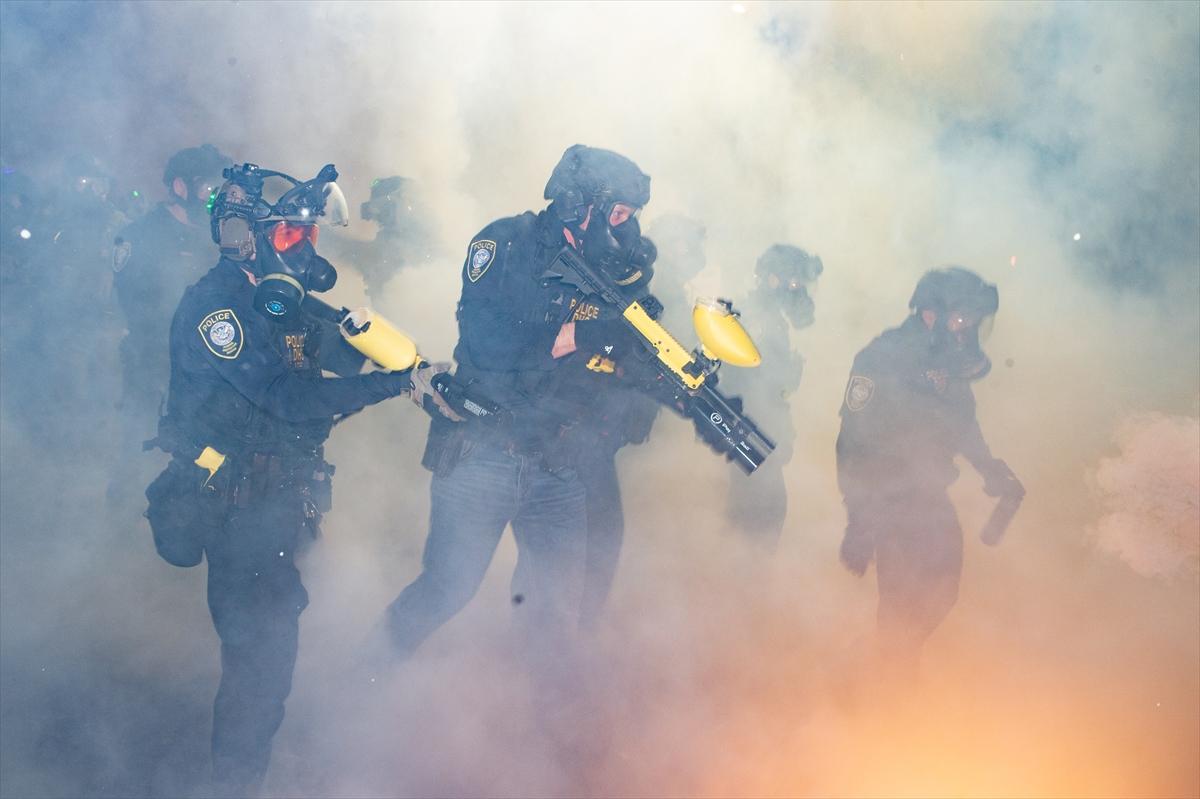
Police respond forcefully to anti-ICE protests in Portland, Oregon, USA, February 2, 2026 – (Anadolu Ajansı)
On February 1, 2026, U.S. President Donald Trump announced that he had issued orders not to deploy federal forces to intervene in protests occurring in cities governed by Democrats.
In a social media post, Trump stated that he had directed Homeland Security Secretary Kristi Noem to “refrain from participating in protests in Democratic-led cities unless explicitly requested for assistance.”
Trump also reaffirmed his directive to ICE units to act forcefully in protecting federal property. He emphasized that the responsibility for safeguarding federal property lies with states and local governments.
Trump pointed to an incident in Eugene, Oregon, where protesters caused significant damage to a public building and local police took no action to stop them, stating that such a situation would not be permitted again.
ABC News. “Portland mayor demands ICE leave city after federal agents gas protesters.” ABC News. Accessed February 2, 2026. https://abcnews.go.com/Politics/wireStory/mayor-portland-oregon-demands-ice-leave-city-after-129758177
Anadolu Ajansı. “ABD Başkanı Trump, Demokrat Kentlerdeki Protestolara Talep Olmadan Müdahale Edilmeyeceğini Belirtti.” Accessed February 2, 2026. https://www.aa.com.tr/tr/dunya/abd-baskani-trump-demokrat-kentlerdeki-protestolara-talep-olmadan-mudahale-edilmeyecegini-belirtti/3816889
Anadolu Ajansı. “ABD’de Alex Pretti’nin Ölümüne Yol Açan İki ICE Ajanının Kimlikleri Tespit Edildi.” Accessed February 2, 2026. https://www.aa.com.tr/tr/dunya/abdde-alex-prettinin-olumune-yol-acan-iki-ice-ajaninin-kimlikleri-tespit-edildi/3817367
Anadolu Ajansı. “ABD’de Chicago Belediye Başkanı, ICE Ekiplerinin Kentteki Faaliyetlerinin Soruşturulması Talimatı Verdi.” Accessed February 2, 2026. https://www.aa.com.tr/tr/dunya/abdde-chicago-belediye-baskani-ice-ekiplerinin-kentteki-faaliyetlerinin sorusturulmasi-talimati-verdi/3816940
Anadolu Ajansı. “ABD’de Güvenlik Güçlerinin Müdahaleleri Öfkeyi Sokağa Taşırarak Kitlesel Protestolara Dönüştürüyor.” Accessed February 2, 2026. https://www.aa.com.tr/tr/dunya/abdde-guvenlik-guclerinin-mudahaleleri-ofkeyi-sokaga-tasirarak-kitlesel-protestolara-donusturuyor/3816804
Anadolu Ajansı. “ABD’nin Los Angeles Kentindeki ICE Karşıtı Protestolarda Onlarca Kişi Gözaltına Alındı.” Accessed February 2, 2026. https://www.aa.com.tr/tr/dunya/abdnin-los-angeles-kentindeki-ice-karsiti-protestolarda-onlarca-kisi-gozaltina-alindi/3817315
Anadolu Ajansı. “ABD’nin Portland Kentinde ICE Karşıtı Protestolara Göz Yaşartıcı Gazla Müdahale Edildi.” Accessed February 2, 2026. https://www.aa.com.tr/tr/dunya/abdnin-portland-kentinde-ice-karsiti-protestolara-goz-yasartici-gazla-mudahale-edildi/3817708
Fox 11 Los Angeles. “Demonstrators take LA streets to protest against ICE.” Accessed February 2, 2026. https://www.foxla.com/video/fmc-u26nyirwsg9gi2ct
Iowa State Daily. "Students Join in National Anti-ICE Protests." Accessed February 2, 2026. https://iowastatedaily.com/330190/news/students-join-in-national-anti-ice-protests/
NBC Los Angeles. “Over 50 People Arrested During Anti-ICE Protests Over the Weekend.” NBC Los Angeles. Accessed February 2, 2026. https://www.nbclosangeles.com/news/local/over-50-people-from-anti-ice-protests-arrested-over-the-weekend/3839630/
NPR. “Anti-ICE Protesters Call for National Action Against Federal Immigration Tactics.” NPR, January 31, 2026. Accessed February 2, 2026. https://www.npr.org/2026/01/31/nx-s1-5695221/anti-ice-protesters-call-for-national-action-against-federal-immigration-tactics
The Guardian. “Portland mayor demands ICE leave city after federal agents teargas protesters.” The Guardian, February 1, 2026. Accessed February 2, 2026. https://www.theguardian.com/us-news/2026/feb/01/portland-oregon-mayor-ice-protests

On January 7, 2026 in Minneapolis, Renee Nicole Macklin Good was killed by federal agents, and on January 24, 2026, Alex Jeffrey Pretti was also killed. Following these two incidents, protests began against immigration operations conducted by ICE and DHS under Operation Metro Surge. The protests quickly spread beyond Minneapolis, with simultaneous demonstrations organized in many cities across the United States.
No Discussion Added Yet
Start discussion for "Minneapolis Protests (2026)" article
January 26, 2026
Background of the Federal Operation: “Operation Metro Surge”
January 26, 2026
The Killing of Renee Nicole Good (January 7, 2026)
January 26, 2026
First Wave of Protests (January 8–15, 2026)
January 26, 2026
Increase in Federal Interventions (January 14–19, 2026)
January 26, 2026
The Killing of Alex Jeffrey Pretti (January 24, 2026)
January 26, 2026
Resurgence of Protests (January 25–26, 2026)
January 27, 2026
Developments as of January 26–27, 2026
January 28, 2026
Developments as of January 28, 2026
January 29, 2026
Developments as of January 29, 2026
January 31, 2026
Developments on January 30–31, 2026
February 2, 2026
Developments on February 1–2, 2026