

This article was automatically translated from the original Turkish version.
+2 More
Misis Bridge
Location | Adana on the Ceyhan River Misis (Mopsuestia) township Yüreğir district | ||||||||
|---|---|---|---|---|---|---|---|---|---|
Construction Period | Roman period | ||||||||
Structure(s) | Stone bridge with nine arches | ||||||||
Length(s) | 132.7 meters | ||||||||
Width | 6.5 meters | ||||||||
Largest Arch Span | 11 meters | ||||||||
Earthquake Damage | In the 1998 and 2023 earthquakes | ||||||||
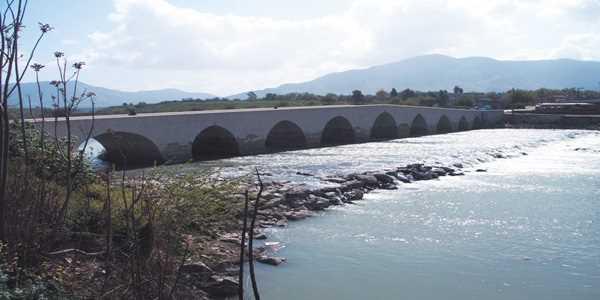
Misis Bridge is a historic stone bridge located over the Ceyhan River in the Misis settlement (ancient name: Mopsuestia), Yüreğir district of Adana Province. The bridge, approximately 132.7 meters long and 6.5 meters wide, consists of nine arches and is one of the important transportation structures in the region.
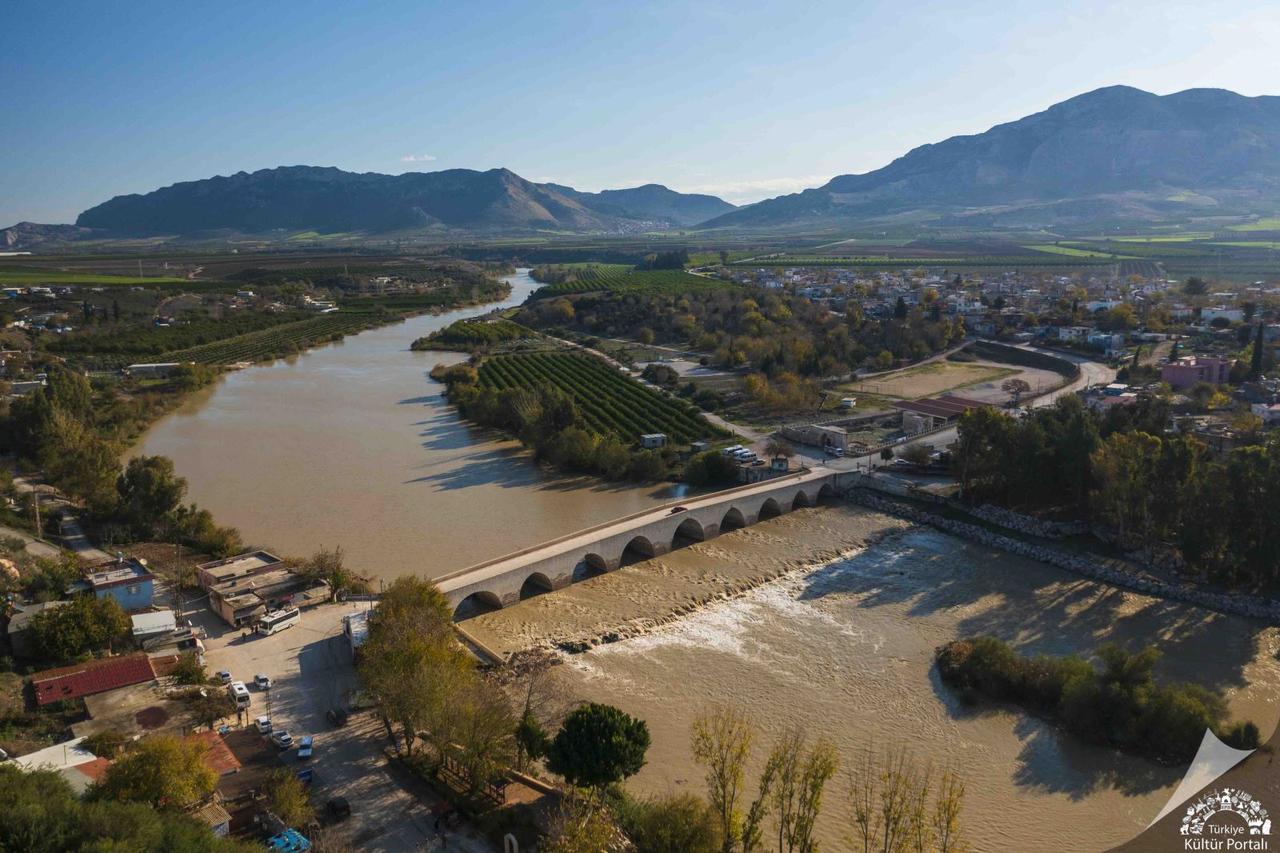
Misis Bridge (Culture Portal)
The construction of the bridge dates back to the reign of Roman Emperor Constantine IV (4th century AD). It was later repaired by Byzantine Emperor Justinian I. Over the centuries, the bridge has been maintained through various repairs and restorations. It suffered structural damage during major earthquakes in 1998 and 2023, after which restoration works were carried out to reestablish its structural integrity.
The Misis Bridge is constructed of stone and supported by an arch system. The widest span among its nine arches reaches 11 meters. The total length of the structure is 132.7 meters and its width is 6.5 meters. These features demonstrate the application of engineering knowledge and techniques of the period.
The bridge sustained structural damage during the 1998 Adana-Ceyhan earthquake and the 2023 Kahramanmaraş earthquakes. The subsequent restoration works strengthened the bridge using modern engineering techniques while preserving its original structure. These efforts have enhanced the bridge’s durability.
Located approximately 25 kilometers from the center of Adana Province, the Misis Bridge spans the Ceyhan River near the eastern entrance of the ancient city of Misis. The region’s geographical characteristics influenced the bridge’s construction and made it an important transit point throughout history.
The Misis Bridge is an important component of the region’s historical and cultural heritage. Its structure, dating from the Roman and Byzantine periods, holds value both historically and in terms of engineering. Today, it is open to tourists and contributes to the region’s tourism potential alongside the ancient city of Misis.
Adana İl Directorate of Culture and Tourism. "Misis Köprüsü." Accessed June 26, 2025. https://adana.ktb.gov.tr/TR-231237/misis-koprusu.html.
Anadolu Ajansı. "Antik Kent Misis Gün Yüzüne Çıkarılıyor." Accessed June 26, 2025. https://www.aa.com.tr/tr/kultur-sanat/antik-kent-misis-gun-yuzune-cikariliyor-/942260.
Ankara Üniversitesi, Department of Geography. "Adana Bölgesi Coğrafyası." Accessed June 26, 2025. https://geography.humanity.ankara.edu.tr/wp-content/uploads/sites/277/2015/08/ADANA-B%C3%96LGES%C4%B0-3.pdf.
Ministry of Culture and Tourism of the Republic of Türkiye. "Misis Köprüsü." Kültür Portalı. Accessed June 26, 2025. https://www.kulturportali.gov.tr/turkiye/adana/gezilecekyer/misis-koprusu.
Yeğin, Mustafa. (2025). Tarihi Köprülerde Deprem Hasarları ve Restorasyonu: Adana Misis Köprüsü Örneği. *Geosound*, 61, 17–38. Accessed June 26, 2025. https://dergipark.org.tr/tr/pub/geosound/issue/92732/1677355.

Misis Bridge
Location | Adana on the Ceyhan River Misis (Mopsuestia) township Yüreğir district | ||||||||
|---|---|---|---|---|---|---|---|---|---|
Construction Period | Roman period | ||||||||
Structure(s) | Stone bridge with nine arches | ||||||||
Length(s) | 132.7 meters | ||||||||
Width | 6.5 meters | ||||||||
Largest Arch Span | 11 meters | ||||||||
Earthquake Damage | In the 1998 and 2023 earthquakes | ||||||||
History
Architectural Features and Construction Techniques
Earthquake Damage and Restoration Works
Geographical Location and Regional Significance
Cultural and Touristic Value