


This article was automatically translated from the original Turkish version.
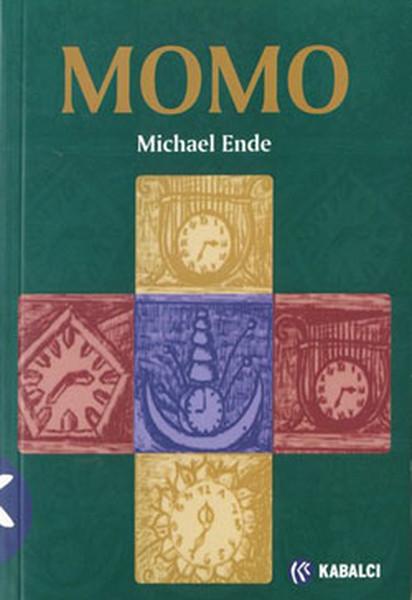
Momo
Author(s) | Michael Ende | ||||||||
|---|---|---|---|---|---|---|---|---|---|
Publication Date | 2013 | ||||||||
Type(s) | Children's Novel Philosophical Fiction | ||||||||
Main Characters | Momo, The Master of Time Hora, Cassiopeia | ||||||||
Theme(s) | Time Empathy Communication Consumption | ||||||||
Momo is a children’s and young adult novel written by German author Michael Ende and first published in German in 1973. The work explores the meaning of time, human priorities in life, and modern society’s obsession with speed and productivity within a philosophical framework. Originally titled Momo, the novel has been translated into many languages and reached a wide readership worldwide.
The protagonist of the novel, Momo, is a young girl who lives alone in an old amphitheater, with no one knowing where she came from. Her greatest gift is her ability to listen to people with deep attention. Thanks to this quality, she forms profound bonds with those around her and helps them resolve their problems. However, one day mysterious grey men known as the Time Savers appear. They persuade people that they must save time, accelerating their lives and trapping them in emotionless, mechanical existences. To stop this trend and restore time to the people, Momo embarks on a struggle with the help of Hora, the Master of Time, and Cassiopeia, a turtle.
Michael Ende wrote Momo in the early 1970s. The book was first published in German in 1973 by Thienemann Verlag. Alongside his earlier work The Neverending Story, Momo exemplifies Ende’s literary and philosophical approach to children’s literature. The author aims to provoke reflection on the nature of time and human relationships.
Momo has become a classic in children’s literature. Due to its philosophical content, it is regarded as suitable for both children and adult readers. The book is recommended in educational programs in various countries and has been studied academically for its psychological, social, and pedagogical dimensions. It has been adapted into an animated film and also staged as a play in different countries.
Ende, Michael. Momo. İstanbul: Kabalcı Yayıncılık, 2013.
Türkben, Tuncay, and Hacer Gökçe Avan. “Michael Ende’nin ‘Momo’ Adlı Eserinin Çocuk Edebiyatının Temel İlkeleri Açısından İncelenmesi.” *Türkiye Sosyal Araştırmalar Dergisi* 24, no. 2 (2020): 451–468. Accessed May 25, 2025. https://dergipark.org.tr/en/download/article-file/721301

Momo
Author(s) | Michael Ende | ||||||||
|---|---|---|---|---|---|---|---|---|---|
Publication Date | 2013 | ||||||||
Type(s) | Children's Novel Philosophical Fiction | ||||||||
Main Characters | Momo, The Master of Time Hora, Cassiopeia | ||||||||
Theme(s) | Time Empathy Communication Consumption | ||||||||
Summary of the Plot
Characters
Themes
Writing and Publication History
Impact