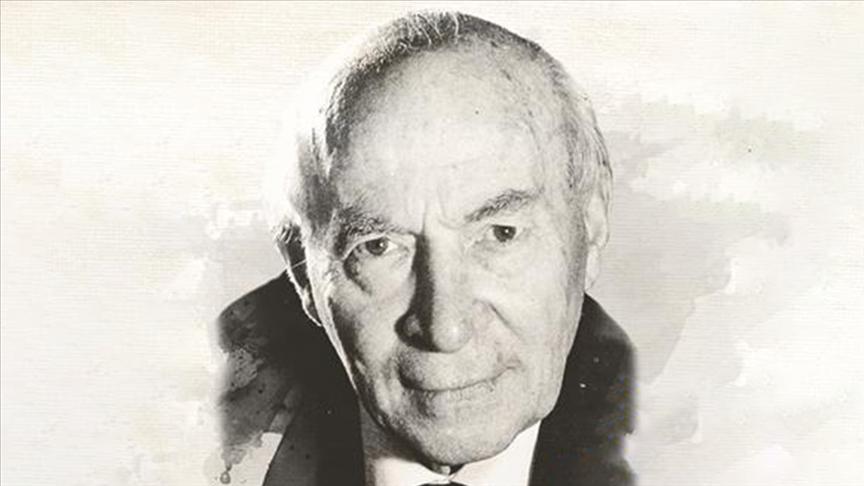
Doğum tarihi | 1892-02-28 | ||||||||
|---|---|---|---|---|---|---|---|---|---|
Ölüm tarihi | 1979-04-29 | ||||||||
Occupation(s) | Director Theater Performer Actor | ||||||||
First Film | Leblebici Horhor Ağa (1922) | ||||||||
Muhsin Ertuğrul (1892–1979) is one of the most important pioneers of Turkish theatre and cinema. Recognized as the founder of modern Turkish theatre, Ertuğrul was also among the first directors to lay the foundational stones of cinema in Türkiye. By introducing European theatrical techniques to Türkiye, he promoted contemporary stage practices and emphasized artistic narrative and theatrical perspective in cinema. As one of the first artists to bring Turkish theatre to Western standards and guide the direction of cinema, he made significant contributions to our cultural life.

Muhsin Ertuğrul's artistic life -Anadolu Ajansı
Muhsin Ertuğrul was born on 28 February 1892 in Istanbul. From an early age he showed great interest in theatre. He began his artistic career in 1909 with the Burhanettin Tepsi Company. In 1911 he traveled to France to study theatre and examine European stage techniques.
Upon returning to Türkiye in 1912, he joined the cast of Darülbedayi (the former name of Istanbul City Theatres) and quickly began directing plays. He played a major role in the development of Turkish theatre by introducing realistic and modern narrative methods to the stage.
When the Ottoman Empire launched its first cinematic ventures in 1914, Muhsin Ertuğrul became interested in cinema. In 1922 he began his directing career with the film Leblebici Horhor Ağa and became one of Türkiye’s first significant film directors.
Muhsin Ertuğrul’s most important contributions to theatre include:
• Introduced the realist theatre approach to Türkiye.
• Transformed Darülbedayi (Istanbul City Theatres) into one of Türkiye’s most important theatre institutions.
• Brought Western theatrical techniques and classical works to Turkish stages.
• Established discipline and professionalism in theatre.
• Led the establishment of State Theatres.
By staging major works by Western playwrights such as Shakespeare, Molière and Henrik Ibsen in Türkiye, he directed the development of Turkish theatre.
As one of Türkiye’s first significant film directors, Muhsin Ertuğrul developed a cinema rooted in theatrical traditions. One of his most important contributions was adapting literary works for the screen. His major films as director include:
• One of Türkiye’s first feature-length films.
• A landmark in the transition from theatre to cinema.
• Türkiye’s first sound film.
• Although it did not fully escape theatrical influence, it marked the beginning of a new era in cinema.
• One of Türkiye’s first films about the Turkish War of Independence.
• One of the earliest examples to address propaganda and national consciousness in cinema.
• Recognized as Türkiye’s first village-themed film.
• Pioneered the portrayal of social realism in cinema.
Until the 1940s, Muhsin Ertuğrul was the only film director active in Türkiye, filling a major void in Turkish cinema.
In both cinema and theatre, Muhsin Ertuğrul addressed themes such as modernization and Westernization, national identity and social consciousness, women’s rights and social justice. Ertuğrul consistently prioritized artistic discipline and aesthetic concern, making substantial contributions to the development of Turkish cinema and theatre.
His cinematic approach, rooted in theatre, was characterized by a static, stage-oriented structure and theatrical narrative. While this tendency directed his cinema toward a theatrical aesthetic, it did not prevent him from laying the foundations of Turkish cinema. Ertuğrul established a starting point in technical and narrative terms and served as a guide for subsequent generations. He particularly emphasized issues such as women’s rights and social justice, using art to address the social problems of his time and deliver thought-provoking messages to audiences. This approach made him a pioneering figure in both theatre and cinema.
Muhsin Ertuğrul received numerous awards for his contributions to Turkish theatre and cinema.
• 1959: State Artist title
• 1979: Honorary Award – Istanbul Festival
• The Istanbul City Theatres named a stage after him (Muhsin Ertuğrul Stage)
• Theatre awards have been established in his name
Muhsin Ertuğrul left a lasting imprint on the world of art through his legacy in Türkiye. Recognized as the founder of modern Turkish theatre, he systematized theatrical art and pioneered numerous innovations in the field. In cinema, he initiated literary adaptations and became one of Türkiye’s first significant directors.
Ertuğrul elevated Istanbul City Theatres into one of the country’s most important cultural institutions and established systematic theatre education and discipline in Türkiye. The foundations he laid in theatre and cinema continue to endure today and serve as a guide for new generations of artists. Muhsin Ertuğrul is not merely a director but one of the foundational pillars of Turkish art. The system he established and the legacy he left played a major role in the development of theatre and cinema in Türkiye. His artistic vision and discipline remain alive today and continue to inspire the world of art.
Anadolu Ajansı. "Modern Türk tiyatrosunun öncüsü: Muhsin Ertuğrul." Accessed March 18, 2025. Link.
Beyazperde. "Muhsin Ertuğrul - Filmografi ve biyografi." Accessed March 18, 2025. Link.
IMDb. "Muhsin Ertuğrul - IMDb Profili." Accessed March 18, 2025. Link.
Kültür İstanbul. (2025). Tiyatroya ve sinemaya adanmış bir hayat: Muhsin Ertuğrul. Accessed March 18, 2025. Link.
Sunal, Gözde. “Muhsin Ertuğrul Sinemasının Kuramsal Açıdan Analizi.” İletişim Çalışmaları Dergisi 8, no. 3 (2023): 317–332. Accessed March 18, 2025. https://dergipark.org.tr/tr/download/article-file/2570272
Tiyatrolar.com.tr. "Muhsin Ertuğrul’un tiyatroya katkıları." Accessed March 18, 2025. Link.
Tuncay, Murat. “Türk Tiyatrosunda Sahne Arkası Etiğinin Gelişimi ve Muhsin Ertuğrul.” Tiyatro Araştırmaları Dergisi 29 (2010/1): 81–144. Accessed March 18, 2025. https://dergipark.org.tr/tr/download/article-file/118178
Türk Edebiyatı İsimler Sözlüğü (TEİS). Muhsin Ertuğrul. Accessed March 18, 2025. Link.
Türk Sinema Araştırmaları (TSA). "Muhsin Ertuğrul’un yaşamı ve çalışmaları." Accessed March 18, 2025. Link.

Doğum tarihi | 1892-02-28 | ||||||||
|---|---|---|---|---|---|---|---|---|---|
Ölüm tarihi | 1979-04-29 | ||||||||
Occupation(s) | Director Theater Performer Actor | ||||||||
First Film | Leblebici Horhor Ağa (1922) | ||||||||
Life and Career Beginnings
Contributions and Direction in Theatre
Contributions and Pioneering Direction in Cinema
1. Leblebici Horhor Ağa (1922)
2. İstanbul Sokaklarında (1931)
3. Bir Millet Uyanıyor (1932)
4. Aysel, Bataklı Damın Kızı (1935)
Key Themes and Cinematic Approach
Awards and Achievements
Legacy and Influence