


+1 More

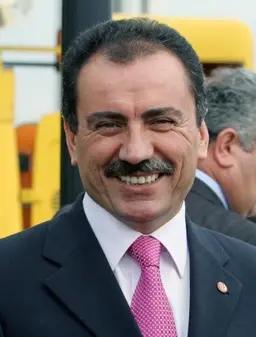
Muhsin Yazıcıoğlu
Doğum tarihi | 1954-12-01 | ||||||||
|---|---|---|---|---|---|---|---|---|---|
Ölüm tarihi | 2009-03-25 | ||||||||
Place of Birth | Şarkışla Sivas | ||||||||
Profession(s) | Politician | ||||||||
Marital Status | Married, 2 children | ||||||||
Muhsin Yazıcıoğlu was born on 1 December 1954 in the Şarkışla district of Sivas and died on 25 March 2009 in a helicopter crash on Keş Mountain. Yazıcıoğlu is recognized as one of the leading figures in Turkish politics for establishing a synthesis between Turkish nationalism and Islamism, founding the Great Unity Party (BBP). He is regarded as one of the foremost figures in Türkiye’s nationalist movement and developed various policies aimed at the unity of the Turkish nation and peace within the Islamic world.
Yazıcıoğlu spent his childhood in Şarkışla where he completed his primary education. His family was deeply attached to Turkish culture, and this values played a significant role in his upbringing. After completing his secondary education in Şarkışla, he gained admission to the Faculty of Economics at Gazi University where he pursued his higher education. During his university years, Yazıcıoğlu developed an interest in nationalist ideas and became actively involved in the Ülkücü movement, which set the course for his political career.
Muhsin Yazıcıoğlu’s political career was shaped by the influence of nationalist currents in Türkiye during his youth. In the 1970s, during the period when the nationalist movement began to gain momentum, Yazıcıoğlu joined the Nationalist Movement Party (MHP) and took an active role within the Ülkücü movement, serving in its youth branches. During this time, he emphasized the unity of the Turkish nation and the need for Islam to play a more influential role in social life.
On 12 September 1980, the military coup transformed Türkiye’s political landscape, leading to the closure of numerous political parties, including the Nationalist Movement Party (MHP). Following the coup, many figures from different political orientations, including Muhsin Yazıcıoğlu, were arrested and put on trial. During this period, Yazıcıoğlu, along with many others associated with the Ülkücü movement, faced various charges and spent approximately seven years in prison. However, he was never definitively convicted due to the allegations brought against him during this court process.
After his release in 1987, Yazıcıoğlu could not immediately re-enter active politics due to the political bans imposed by the 12 September coup. Following the lifting of these bans through the 1987 referendum referendum, Muhsin Yazıcıoğlu returned to the political arena and joined the ranks of the Nationalist Movement Party (MÇP). During this period, he aimed to continue his political struggle within democratic frameworks and strengthen a nationalist-Islamist political understanding in Türkiye.
After the political bans were lifted in 1983, Yazıcıoğlu returned to the political scene. In 1991, he ran as a candidate of an alliance formed by five parties and was elected as a Member of Parliament for Sivas. Until 1992, he continued serving as an MP within the Nationalist Work Party. Due to ideological differences with the party, he left the MÇP along with five colleagues and founded the Great Unity Party. As the founder of the BBP, Yazıcıoğlu was elected as its General Chairman.
The Great Unity Party (BBP), under the leadership of Muhsin Yazıcıoğlu, became an actor in Türkiye’s political life. By founding the BBP, Yazıcıoğlu established a political line grounded in nationalist and conservative values.
During the 1990s, the BBP attracted attention through its successes in local elections. In the 1994 local elections, it won mayoral positions in various municipality across Türkiye, gaining the support of nationalist and conservative voter constituencies. The BBP achieved these successes through internal discipline and strong connections with the public. This electoral rise helped the party establish a significant position in Türkiye’s political spectrum.
Under Muhsin Yazıcıoğlu’s leadership, the BBP adopted a populist political approach. The party distinguished itself through proposals focused on social justice, democracy and policies addressing public needs. Even after Yazıcıoğlu’s death, the BBP’s political influence continued to be built upon these foundations. During the 28 February process, Yazıcıoğlu defended popular sovereignty and opposed military tutelage, which established the BBP as a major representative of the nationalist movement.
The BBP adopted a sensitive approach to social issues and aimed to improve public living standards through local development projects. The party is also known for its social responsibility initiatives, in which values such as mutual aid and solidarity were emphasized. Under Yazıcıoğlu’s leadership, the BBP’s ideological orientation demonstrated a commitment to the cultural and historical values of the Turkish nation while promoting social harmony.
During this period, the political successes of the BBP, particularly its influence in local administrations, attracted attention. The party received significant support from both nationalist and conservative segments. Under Yazıcıoğlu’s leadership, the BBP presented itself as a power in Turkish politics.
The Alperen Ocakları were established in 1994 under Muhsin Yazıcıoğlu’s directives and began functioning as the youth organization of the Great Unity Party (BBP). Yazıcıoğlu defined the core mission of the Alperen Ocakları as cultivating a morally upright, patriotic, and capable youth committed to national and spiritual values.
During its formation, the Alperen Ocakları were shaped by a Turkish-Islamic nationalist outlook and played an active role in areas such as education, social assistance, and cultural activities. Yazıcıoğlu’s political stance, centered on populism and national focus, was reflected in the ideological orientation of the Alperen Ocakları.
The organization gained prominence during the 28 February process through its defense of religious freedom and democracy, and by showing sensitivity toward families of martyrs and social issues. After Muhsin Yazıcıoğlu’s death, it has continued its activities as a building dedicated to preserving his ideas.
The final phase of Yazıcıoğlu’s political career was marked by his continued leadership of the BBP until 2009. On 25 March 2009, while traveling to Yozgat for a party event, he died in a helicopter crash on Keş Mountain at the age of 54.
Yazıcıoğlu’s political legacy is defined by his efforts to strike a balance between Turkish nationalism and Islamism. The BBP’s policies aimed at the unity of the Turkish nation and peace in the Islamic world established him as a prominent figure in Turkish politics. After his death, the BBP continued to uphold his legacy.
"İlkeli Duruşuyla Dikkati Çeken Bir Lider: Muhsin Yazıcıoğlu." Anadolu Ajansı, March 25, 2020. https://www.aa.com.tr/tr/turkiye/ilkeli-durusuyla-dikkati-ceken-bir-lider-muhsin-yazicioglu/1777067
Alperen Ocakları. "Hakkımızda." Alperen Ocakları Resmi Web Sitesi.
Anadolu Ajansı. "Vatan ve Millet Sevdalısı Muhsin Yazıcıoğlu, Vefatının 12. Yılında Anılıyor." Anadolu Ajansı, March 25, 2025. https://www.aa.com.tr/tr/turkiye/vatan-ve-millet-sevdalisi-muhsin-yazicioglu-vefatinin-12-yilinda-aniliyor/2186162
Stratejik Ortak. "Siyasi Bir Lider Olarak Muhsin Yazıcıoğlu ve Milliyetçilik Anlayışı." Stratejik Ortak, April 2021. https://stratejikortak.com/2021/04/siyasi-bir-lider-olarak-muhsin-yazicioglu-ve-milliyetcilik-anlayisi.html
TRT Haber. "Muhsin Yazıcıoğlu Kimdir? Muhsin Yazıcıoğlu’nun Hayatı." TRT Haber, March 25, 2022. https://www.trthaber.com/haber/guncel/muhsin-yazicioglu-kimdir-muhsin-yazicioglunun-hayati-666881.html
Şarkışla Municipality. "Muhsin Yazıcıoğlu." Şarkışla Municipality Information Bank.

Muhsin Yazıcıoğlu
Doğum tarihi | 1954-12-01 | ||||||||
|---|---|---|---|---|---|---|---|---|---|
Ölüm tarihi | 2009-03-25 | ||||||||
Place of Birth | Şarkışla Sivas | ||||||||
Profession(s) | Politician | ||||||||
Marital Status | Married, 2 children | ||||||||
Early Life and Education
Beginning of Political Career
12 September Coup and Political Bans
Lifting of Political Bans and Foundation of the BBP
Political Influence of the BBP
The 1990s and the Rise of the BBP
Political Stance and Ideological Structure
Social Contributions and Ideological Orientation of the BBP
Foundation of the Alperen Ocakları and Muhsin Yazıcıoğlu’s Role
Final Years and Death