This article was automatically translated from the original Turkish version.
+2 More
Architecture(s) | 3D Printing Futuristic Dome | ||||||||
|---|---|---|---|---|---|---|---|---|---|
Purpose(s) | To Showcase Science Innovation and Future Vision Technology | ||||||||
Location | United Arab Emirates Dubai | ||||||||
Exhibition Spaces | Space Research Robotics Artificial Intelligence | ||||||||
Founder(s) | Mohammed bin Rashid Dubai Government | ||||||||
Year of Opening | 2022 | ||||||||
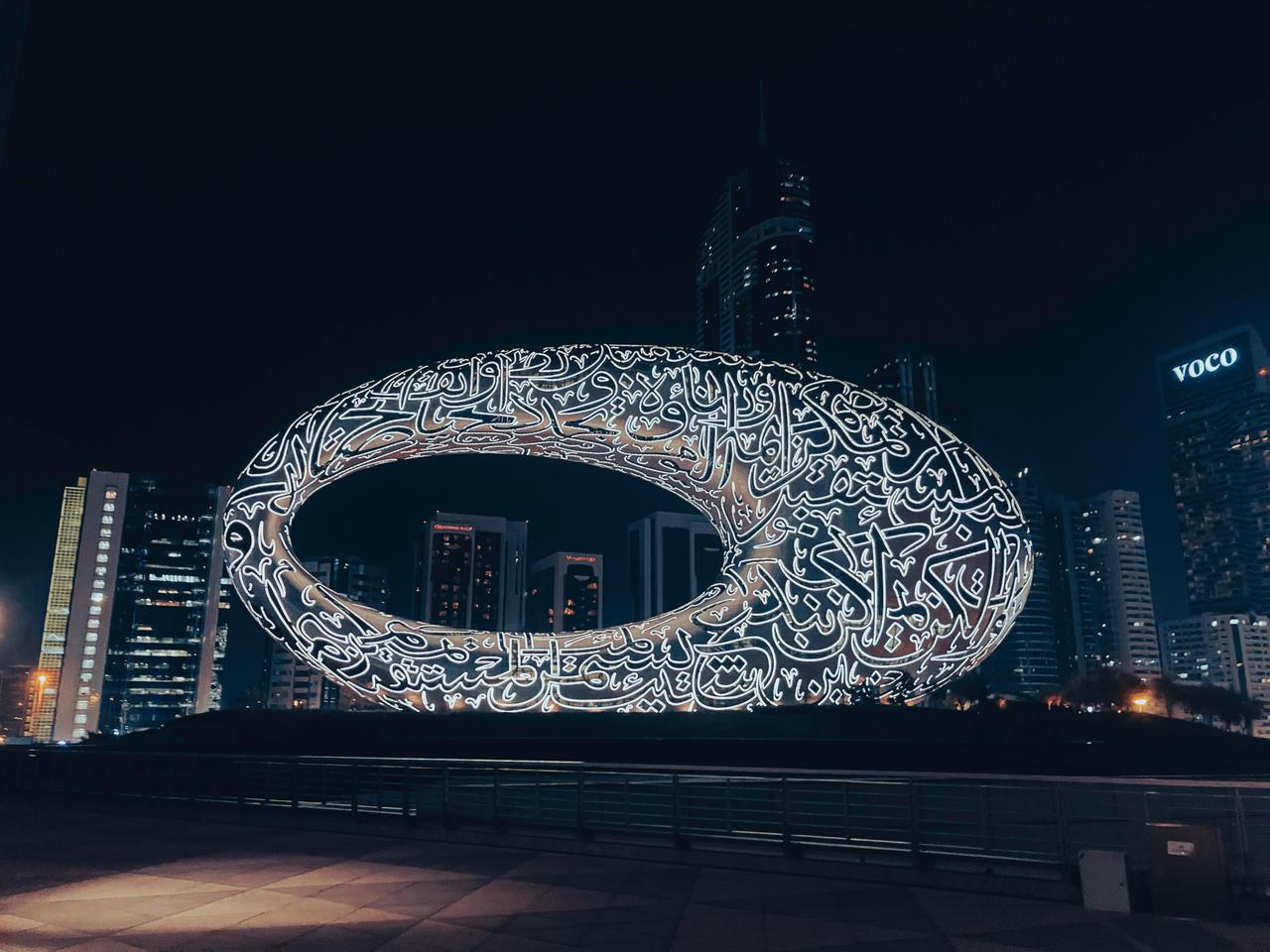
Museum of the Future, located in Dubai, the capital of United Arab Emirates, is a cultural facility opened in 2022 that focuses on innovation and technology. Designed by Killa Design, it was realized through modern engineering and architectural principles. The museum serves as an innovative center aimed at presenting visions of the future and raising awareness in the fields of science, technology and design.
The Museum of the Future has been designed within an innovative architectural framework. Its form and structural layout diverge from traditional museum design by offering a forward-looking spatial program. Facade and interior arrangements have been planned to support the integration of technological and interactive functions. Materials and structural elements have been selected to meet both aesthetic and functional requirements. The building’s spatial organization and formal structure are arranged to provide visitors access to diverse experiential zones.
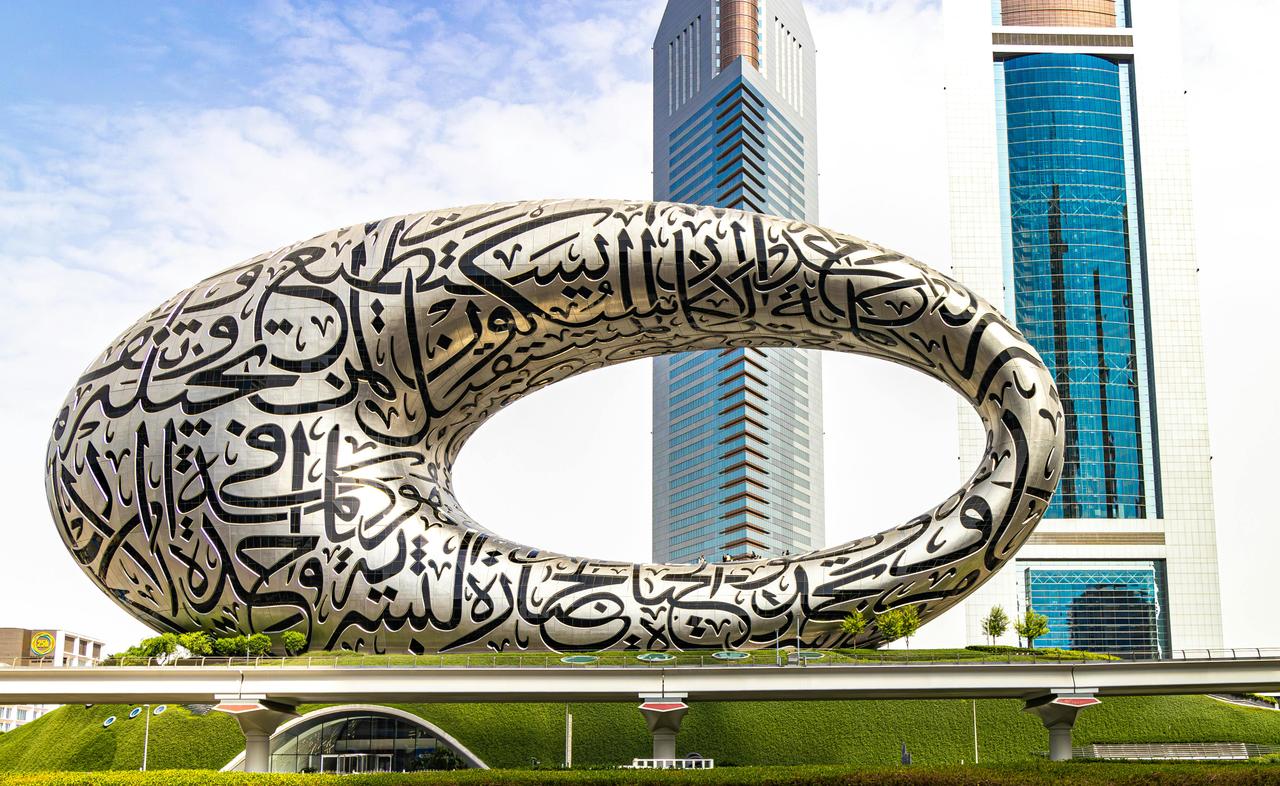
Museum of the Future (Pexels)
The exterior facade of the Museum of the Future is one of the most important elements defining its architectural character. The building reaches a height of 77 meters, creating a prominent visual impact at the urban scale. The facade has been shaped using parametric design methods to produce an organic, fluid form. The outer surface consists of 1,024 stainless steel panels, each composed of four layers and manufactured through a 16-step process. Inscribed onto the panels are calligraphic texts in Arabic “Thuluth” script, inspired by the words of the leader of United Arab Emirates, thus linking the structure to its cultural context and making it the only building in the world entirely adorned with calligraphic art. Automated robotic arms were used in panel production, and the assembly process lasted over 18 months. The museum is accessed via two bridges: one connecting to the Jumeirah Emirates Towers, 69 meters in length, and the other linking to the Emirates Towers metro station, 212 meters in length.【1】
The facade design supports not only aesthetic function but also energy efficiency and environmental performance criteria. The panels reflect sunlight to balance internal temperatures, thereby reducing cooling demands. The building’s surface inclinations have been calculated to withstand wind loads and enhance structural stability. Additionally, 14,000 meters of light strips integrated into the facade increase nighttime visibility while enabling efficient use of natural light for interior illumination.【2】 Engraved text on the steel panels is enhanced by specialized glass technologies that improve interior lighting quality and external thermal insulation. This comprehensive approach ensures the building meets international standards in both architectural and technical design.
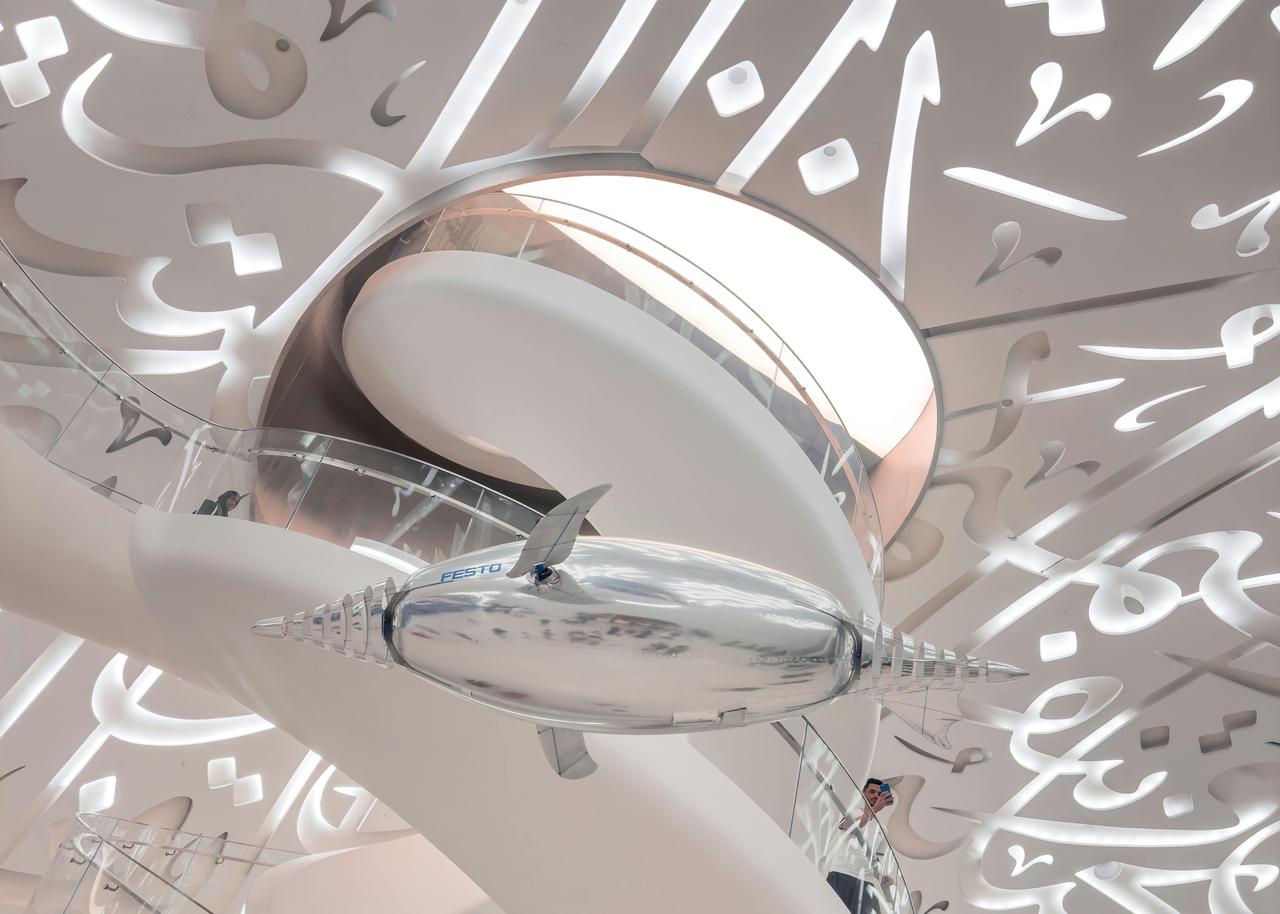
Museum of the Future Interior Space (Pexels)
The interior design of the Museum of the Future focuses on functional and spatial arrangements that guide visitor experience. The building’s internal volume is planned to offer spaces at varying heights and scales, optimizing visitor movement and interaction. Large openings and high ceilings create an open and airy environment. Exhibition areas within the building are designed to deliver hybrid experiences integrating digital and physical elements. Materials and surface finishes used in the interior have been selected for durability and ease of maintenance, with stainless steel, glass and high-performance composites standing out in this context.
Natural light usage and lighting systems in the interior have been planned to support visitor comfort and exhibition experience. Large facade and roof windows allow balanced daylight penetration, contributing to energy efficiency. The reflectivity and absorption values of materials used on floors, walls and ceilings have been calculated to ensure even light distribution. Additionally, the bridges and circulation paths within the interior enable seamless transitions between exhibition areas, allowing visitors to effectively experience both the space and its content.
The Museum of the Future has been designed as a structure that meets both aesthetic and functional requirements through a combination of materials. The building’s structural system integrates steel, concrete and composite materials, enabling engineering support for its sloped and organic forms. Material selection has been determined based on mechanical durability and longevity criteria to optimize structural performance. In particular, glass and composite elements used in interior spaces facilitate the controlled direction of natural light into the interiors, contributing to energy savings.
Sustainability and environmental compatibility have been prioritized in the structural design. Materials used in the roof and various construction elements have been selected with consideration of environmental impacts and maintenance needs. Connection details of the structural system have been designed to accommodate material expansion and contraction behavior. This approach enhances the building’s long-term durability and ensures structural integrity.
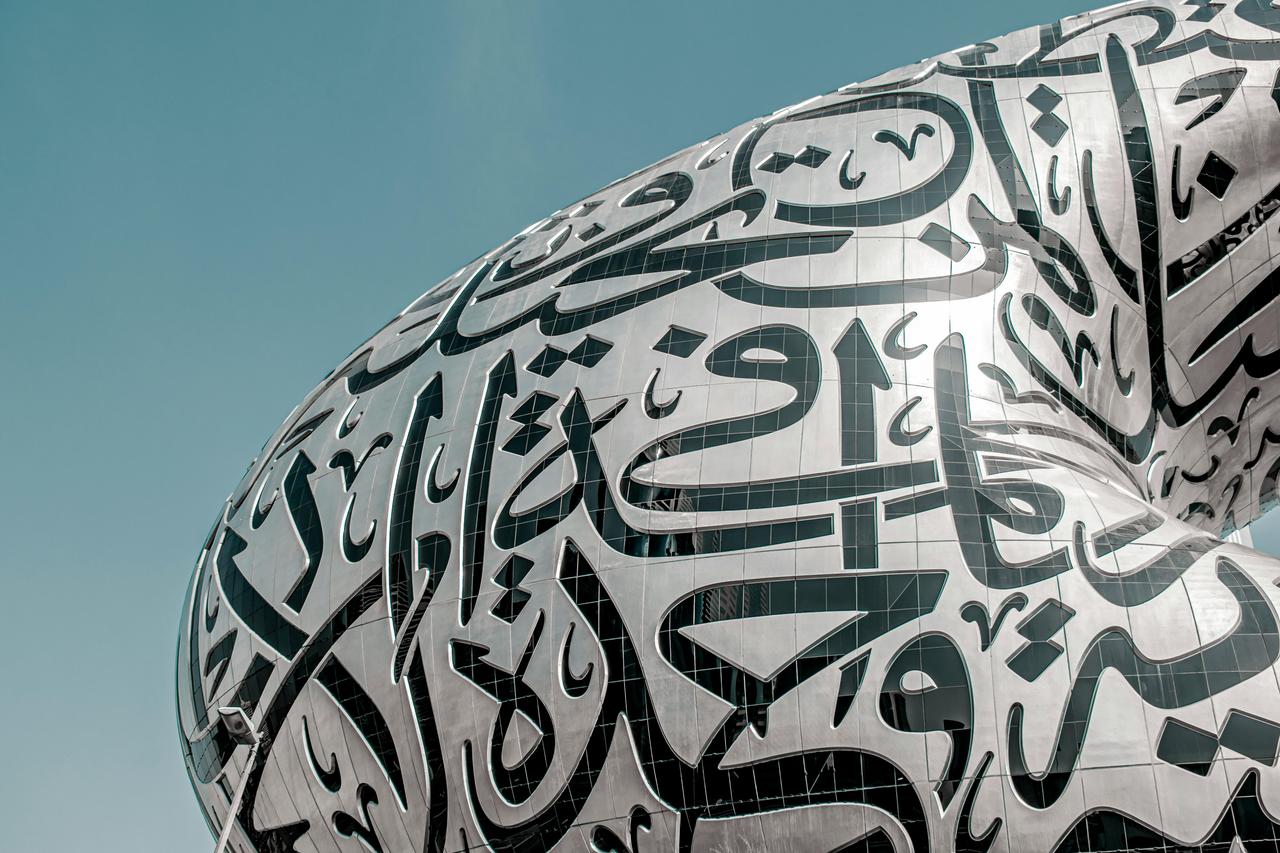
Museum of the Future (Pexels)
The Museum of the Future is designed not merely to display objects but to support learning processes through interactive and experience-oriented zones. These zones are equipped with technological and digital capabilities that encourage active user participation. Experience zones are arranged to enable physical and cognitive interaction between visitors and the space, and are diversified to appeal to different age groups and interests. This approach transforms museum visits from passive observation into participatory experiences.
Digital exhibitions at the Museum of the Future are designed to deliver interactive and multisensory experiences. These exhibitions enrich information through digital replicas of physical objects, augmented reality applications and interactive screens. Visitors can directly interact with displayed content via digital platforms—for example, rotating three-dimensional models, zooming in or examining them from multiple perspectives. This method offers an experience beyond traditional exhibition techniques, personalizing learning and enabling active engagement with information.
Technology zones at the Museum of the Future are equipped with advanced hardware and software that support both exhibition and visitor interaction. These zones enable visitors to personalize their experiences through AI-powered guide systems, sensor-enabled interactive panels and virtual reality applications. Simultaneously, data collection and analysis systems allow evaluation of visitor interests and interaction patterns. As an infrastructure supporting the museum’s educational and experiential goals, technology zones establish seamless connections between digital and physical environments to optimize learning processes.
The Museum of the Future offers comprehensive programs and technological solutions in the fields of education and interaction. In these areas, information on science, technology and innovation is delivered to visitors through interactive methods. Educational modules are enhanced by augmented reality and simulation applications, making experiences tangible and deepening the learning process. Interactive applications are designed to optimize both individual and group experiences, using sensors and user-centered interfaces to accelerate access to information and encourage active participation in learning. Thus, the museum presents a holistic learning environment that integrates traditional exhibition formats with experience-driven interaction.
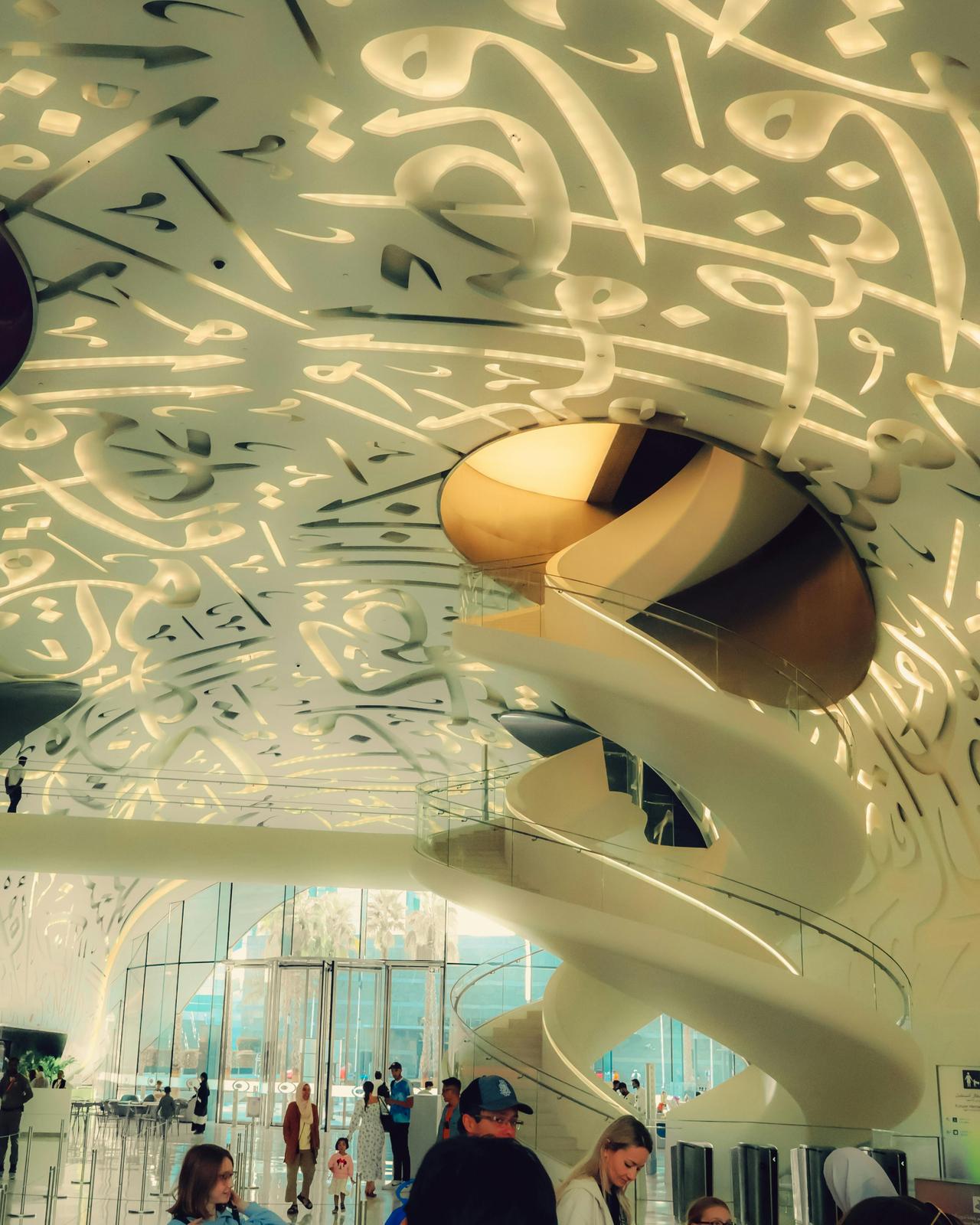
Museum of the Future Interior Space (Pexels)
The Museum of the Future is designed to offer visitors a comprehensive and interactive experience of the future. Visitors are guided on a journey that connects their personal experiences to a universal context through the perspective of the year 2071, coinciding with the centenary of the founding of the United Arab Emirates. Throughout this journey, the museum adopts an approach that emphasizes individuals’ role in shaping the future and supports learning through personal interaction with information.
Visitors encounter virtual and augmented reality applications, AI-supported interactions and human-machine collaboration experiences across different sections of the museum. Physical spaces such as multipurpose halls, interactive conference and workshop areas, laboratories and innovation centers diversify visitor experiences and encourage active participation in knowledge acquisition. This structure enables visitors to satisfy individual curiosity while contributing to collective learning processes.
The Museum of the Future has been designed and operated to minimize environmental impact. The building’s energy needs are met through solar panels integrated into the museum, utilizing renewable energy sources. Thermal insulation, natural light utilization and the reflective properties of stainless steel panels have been planned to enhance energy efficiency. Water management and waste reduction strategies have been implemented to support sustainability goals during both construction and operation. Furthermore, materials with low environmental impact and long lifespans have been prioritized, ensuring minimal ecological footprint throughout the building’s life cycle. This holistic approach enables the museum to meet both environmental and social responsibility criteria.
Dubai Media Office. “Mohammed bin Rashid inaugurates the Museum of the Future.” *Dubai Media – Our News.* Accessed February 23, 2026. https://www.dmi.gov.ae/content/corporate/en-ae/programs/41/FutureMuseum.html
Dubai Media Office. “Museum of the Future Welcomes 3 Million Visitors from 177 Countries in Less Than 3 Years.” Media Office – News Releases. Accessed February 23, 2026. https://mediaoffice.ae/en/news/2024/november/13-11/museum-of-the-future-welcomes-3-million-visitors
Government of the United Arab Emirates. “Museum of the Future.” *U.A.E. – About the UAE / UAE in the Future.* Accessed February 23, 2026. https://u.ae/en/about-the-uae/uae-in-the-future/Museum-of-the-Future
Government of the United Arab Emirates. “The Building.” Museum of the Future. Accessed February 23, 2026. https://museumofthefuture.ae/en/the-building
Gromov, Denys. "Dubai Manzaralı Şehir Fotoğrafı." Pexels. Accessed February 23, 2026. https://www.pexels.com/tr-tr/fotograf/kent-sehir-kent-simgesi-gorulecek-yer-7199830/
MAMADO CONF. "Dubai’nin Geleceğin Fütüristik Müzesi." Pexels. Accessed February 23, 2026. https://www.pexels.com/tr-tr/fotograf/dubai-nin-gelecegin-futuristik-muzesi-29555692/
S. Akshay. “Spiral Merdivenli Fütüristik İç Mekân Tasarımı.” Pexels. Accessed February 23, 2026. https://www.pexels.com/tr-tr/fotograf/spiral-merdivenli-futuristik-ic-mekan-tasarimi-30367868/
Sherra, Abdelrahman Mohamed Ezzat. “Effects of BIM in Enhancing Prefabricated Construction.” American University of Sharjah, Master's thesis, 2021. PDF. Accessed February 23, 2026. https://www.scribd.com/document/709329527/Dubai-Museaum-of-Future
Vesakaran, Aboodi. “Mavi Gökyüzü, Birleşik Arap Emirlikleri (BAE) – Minimalist.” Pexels. Accessed February 23, 2026. https://www.pexels.com/tr-tr/fotograf/mavi-gokyuzu-birlesik-arap-emirlikleri-bae-minimalist-12041205/
Walid, Ahmad. “Dubai’nin Gelecek Müzesi’nin Fütüristik İç Mekânı.” Pexels. Accessed February 23, 2026. https://www.pexels.com/tr-tr/fotograf/dubai-nin-gelecek-muzesi-nin-futuristik-ic-mekani-33127681/
Xxjaswani. “Kent / Şehir / Kent Simgesi Görülecek Yer.” Pexels. Accessed February 23, 2026. https://www.pexels.com/tr-tr/fotograf/kent-sehir-kent-simgesi-gorulecek-yer-13693608/
Yıldırım, Burcu, and Saadet Aytıs. “Gelecek Müzelerinde İç Mekân Biçimlenişi: T.um Müzesi Örneği.” *Art-e Sanat Dergisi* 15, no. 30 (2022): 828–850. Accessed February 23, 2026. https://dergipark.org.tr/tr/pub/sduarte/article/1171381
[1]
Dubai Media Office, “Mohammed bin Rashid inaugurates the Museum of the Future,” Dubai Media – Our News, Last Access: 23 February 2026, https://www.dmi.gov.ae/content/corporate/en-ae/programs/41/FutureMuseum.html
[2]
A.e.,


Architecture(s) | 3D Printing Futuristic Dome | ||||||||
|---|---|---|---|---|---|---|---|---|---|
Purpose(s) | To Showcase Science Innovation and Future Vision Technology | ||||||||
Location | United Arab Emirates Dubai | ||||||||
Exhibition Spaces | Space Research Robotics Artificial Intelligence | ||||||||
Founder(s) | Mohammed bin Rashid Dubai Government | ||||||||
Year of Opening | 2022 | ||||||||
No Discussion Added Yet
Start discussion for "Museum of the Future" article
Architectural Design
Exterior Facade
Interior Space
Materials and Structural Features
Experience Zones
Digital Exhibitions
Technology Zones
Education and Interaction
Visitor Experience
Sustainability