


This article was automatically translated from the original Turkish version.
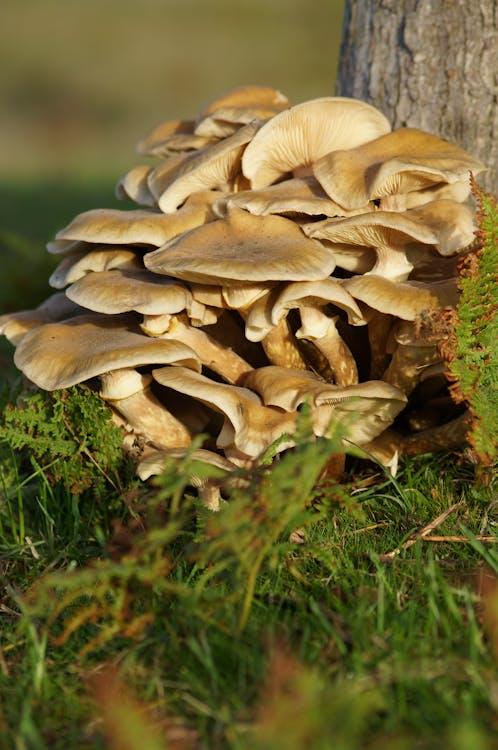
The honey fungus, scientifically known as Armillaria mellea, is a species belonging to the phylum Basidiomycota and the family Physalacriaceae. This species typically lives on tree roots and exhibits both parasitic and saprotrophic characteristics. Described as a cap-bearing mushroom, the honey fungus reproduces by producing fruiting bodies on the surface and spreads underground through a network of mycelium and rhizomorph structures. This species within the genus Armillaria is commonly found in forest ecosystems.
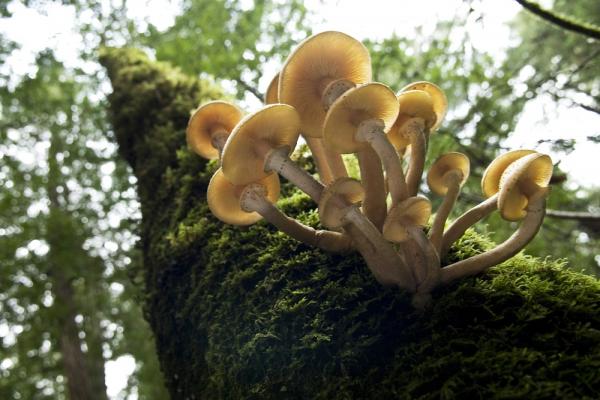
Honey fungus found on tree trunks (Bilimgenç)
The honey fungus has a remarkable ability to spread within forest ecosystems. Black-colored rhizomorph structures, composed of mycelium, grow underground and extend over long distances like cables to reach new trees. Through these filamentous structures, the fungus comes into contact with tree roots and initiates infection. It establishes itself more easily in weak, old, or stressed trees, causing damage to their tissues. As a result, it acts as a pathogen responsible for root rot in plants. At the same time, it survives as a saprotroph by living on dead organic matter.
In addition, due to its rapid spread and long-lived mycelial structures, it is very difficult to distinguish individual specimens from one another. Genetic analyses have revealed that some widespread fungal populations in certain regions actually belong to the same individual.
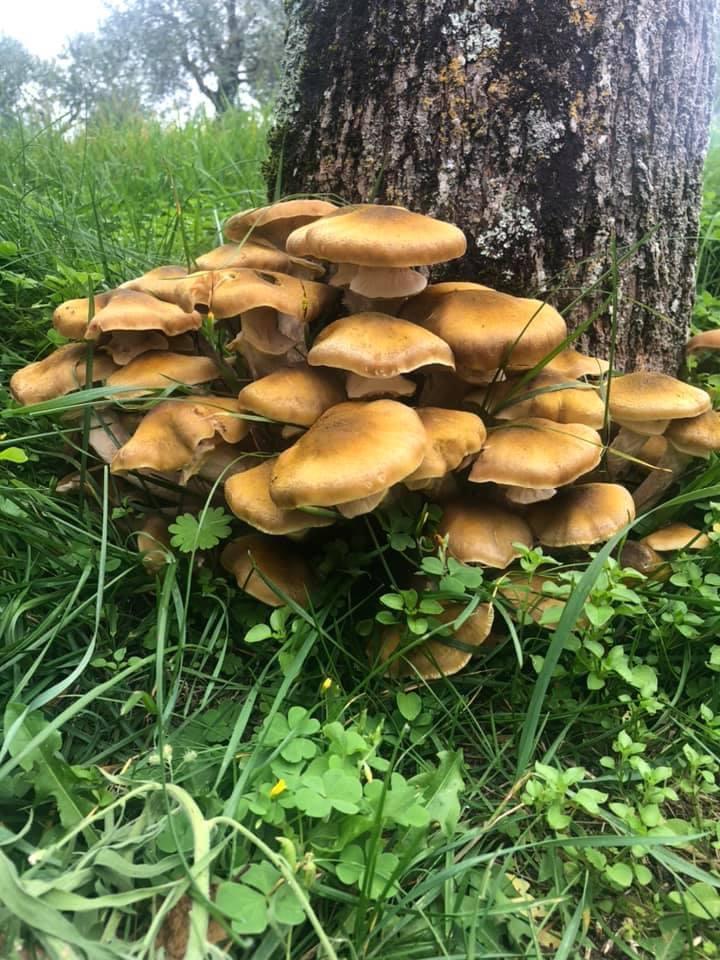
Honey fungus (Fungal Life)
A specimen of Armillaria ostoyae discovered in the Malheur National Forest in the U.S. state of Oregon consists of a single individual covering an area of 965 hectares, earning it the title of “the largest living organism on Earth.” Genetic analysis has confirmed that samples from different locations belong to the same individual, revealing that this fungus spans an area of 3.5 kilometers and weighs approximately 400 tons. Its age is estimated to be between 2,400 and 8,650 years. This example of the honey fungus stands out not only for its physical size but also for its exceptional longevity among living organisms.
Although the fruiting bodies visible on the surface appear only during certain times of the year, the true organism is the underground mycelial network. This structure interacts with tree roots to absorb nutrients, spreads into the surrounding environment, and persists for many years. For the scientific community, this organism provides a striking example of the hidden complexity of natural systems and the unseen forms of life.
The fruiting body of the honey fungus resembles commonly encountered mushrooms and has a yellowish-brown color. The cap diameter ranges from 3 to 10 cm and develops a scaly texture as it matures. The edges of the cap are typically inward-curving in younger individuals. The underside features white to cream-colored gills, which are responsible for spore production. The stem is cylindrical and enables the fungus to grow from its point of origin to the surface. A ring (annulus), located just below the gills on the stem, is a distinctive morphological feature unique to this species. Mycelia are white and commonly found within the inner parts of wood. Rhizomorphs appear externally as hard, black cord-like structures. These diverse morphological features play a crucial role in identification and form the basis for fungal diagnosis in mycological research.
The honey fungus is known for its pathogenic properties that can cause economic losses in the forestry industry. By attacking tree root systems, it restricts water and mineral uptake, eventually leading to tree death. It also develops on decaying trees and dead organic matter, contributing to natural nutrient cycles. Armillaria mellea stands out as a fungal species due to its spreading capability, its dual parasitic and saprotrophic nature, and its role as one of the largest living organisms on Earth.

Ecological Role and Spread Characteristics
The Largest Living Organism on Earth
Morphological Features
Harmful and Beneficial Aspects