

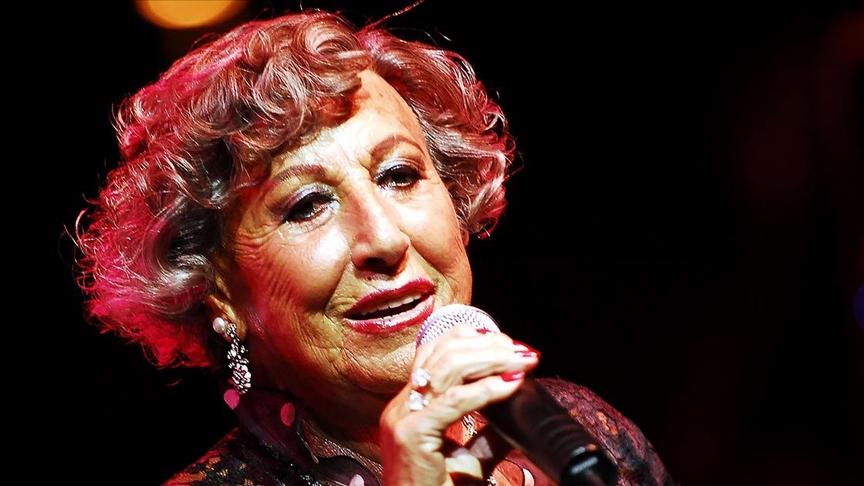

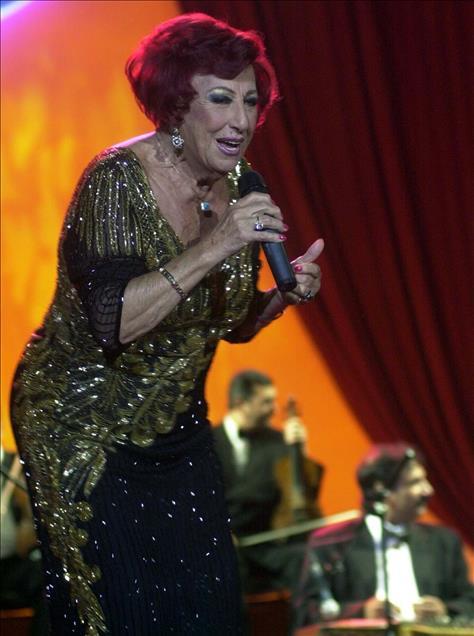
Müzeyyen Senar is recognized as one of the leading soloists of Turkish art music during the Republican era. Throughout her long artistic career, she contributed to the musical landscape of her time through both her voice and stage performances, pioneering various innovations.
Senar began engaging with music at a young age and quickly reached a wide audience by giving concerts in multiple cities. She introduced changes to stage traditions through practices such as organizing the costumes of instrumental ensembles and using wired microphones. These approaches offered new models for the stage arrangements and presentation styles of her era.
Senar’s voice belongs to the alto range and spans more than two octaves. In her youth, her tone was notably light, while in later years, her vocal timbre became richer and darker. Her technical mastery in breath control and articulation enabled her to sustain lengthy stage performances.
Her interpretive approach was grounded in fidelity to the lyrical and melodic structure of the works, with the primary goal of conveying their emotional content to the listener. The statement “I do not sing songs; I narrate the lyrics” exemplifies this philosophy. She was the first to record many compositions, playing a decisive role in their reception by audiences. She also collaborated with several younger artists; for instance, she met Zeki Müren in 1948 and provided him with musical guidance in a home setting.
In the 1950s, she married Tevfik Hamza, the Saudi Arabian ambassador to Ankara. This marriage gradually ended due to media attention and social pressures, after which the artist resumed her stage activities.

Müzeyyen Senar preparing for a recording at the TRT Ankara studio makeup room.(AA)
Until the 1970s, she performed in numerous cities across Türkiye through domestic tours. From the 1970s onward, she gave concerts in various countries, beginning with the United States. She released numerous recordings in vinyl, cassette, and CD formats. In 1985, she performed twelve songs live on TRT 2 and frequently appeared in official holiday and commemorative programs.
In 1998, she participated in the album “Müzeyyen Senar ile Bir Ömre Bedel,” which also featured Sezen Aksu, Ajda Pekkan, Tarkan, and Nilüfer. This project attracted widespread public interest. That same year, she declined the official title of State Artist.
Senar’s discography includes numerous albums such as “Son Veda,” “Çilingir Sofrası,” “Gül Yüzlülerin Şevkine Gel,” and “Atatürk’ün Sevdiği Şarkılar.” After suffering a stroke in 2006, she experienced paralysis and ceased active musical performance due to health reasons. She passed away in İzmir in 2015 due to pneumonia.
In accordance with her will, the piece “Ehli aşkın neşvegâhı kuşe-i meyhanedir,” composed in the Kürdilihicazkar makam, was performed at her graveside. In 2009, her student Bülent Ersoy curated an exhibition titled “Cumhuriyetin Divası: Müzeyyen Senar,” featuring visual documentation of her artistic career.
In addition to the classical Turkish music repertoire, Senar also performed folk music and selected popular songs from later periods of her career. Through her stage discipline and musical practices, she established a distinctive presence within Turkish music and became a model for subsequent generations. The fact that recordings and radio and television broadcasts from various eras of Turkish music are represented by her voice underscores her enduring place in the history of Turkish music.
Anadolu Ajansı. "Türk Müziğinin Divası Müzeyyen Senar." Accessed May 15, 2025. https://www.aa.com.tr/tr/kultur-sanat/turk-muziginin-divasi-muzeyyen-senar/1727219.
Anadolu Ajansı. "Türk Sanat Müziğinin Efsane Sesi Müzeyyen Senar." Accessed May 15, 2025. https://www.aa.com.tr/tr/kultur-sanat/turk-sanat-muziginin-efsane-sesi-muzeyyen-senar/2496735.
Anadolu Ajansı. “Cumhuriyetin Divası Müzeyyen Senar.” Accessed May 15, 2025. https://www.aa.com.tr/tr/kultur-sanat/cumhuriyetin-divasi-muzeyyen-senar/744158.
İstanbullu, Serenat. “Müzeyyen Senar’ın Hayatı ve Müziksel Çalışmaları.” *AMADER*, no. 22 (2020). DOI:10.36442/AMADER.2020.22. Accessed May 15, 2025. https://dergipark.org.tr/tr/download/article-file/1166364.

Entry into Artistic Life
Vocal Characteristics and Interpretive Style
Personal Life
Domestic and International Performances
Later Years and Legacy
Musical Legacy