

This article was automatically translated from the original Turkish version.
+2 More
Type(s) | Defense / Castle | ||||||||
|---|---|---|---|---|---|---|---|---|---|
Period(s) | Middle Ages and earlier | ||||||||
Special Structures | Hamam | ||||||||
Walls | Thick stone walls and towers present | ||||||||
Location | Mersin Taurus Mountains Çamlıyayla | ||||||||
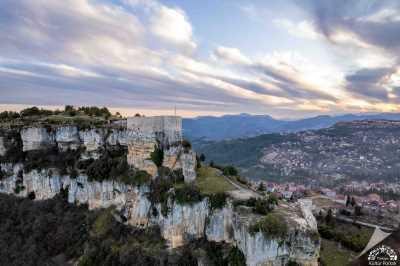
Namrun Castle, is a historical fortress located within the boundaries of Çamlıyayla district in Mersin Province, in Türkiye’s Mediterranean Region. The structure, known in the Middle Ages as Lampron, holds strategic importance due to its position atop the Taurus Mountains and has been used by various civilizations across different periods.
Namrun Castle is situated on the extensions of the Taurus Mountains (Bolkar Mountains), within the boundaries of Çamlıyayla district in Mersin Province, on a high and steep topography. The fortress occupies a dominant position overlooking the surrounding valleys and passes, providing a strategic advantage for controlling the region throughout history. Its location at a key transit point connecting the Çukurova Plain to Central Anatolia has been one of the main factors determining its military and administrative function.
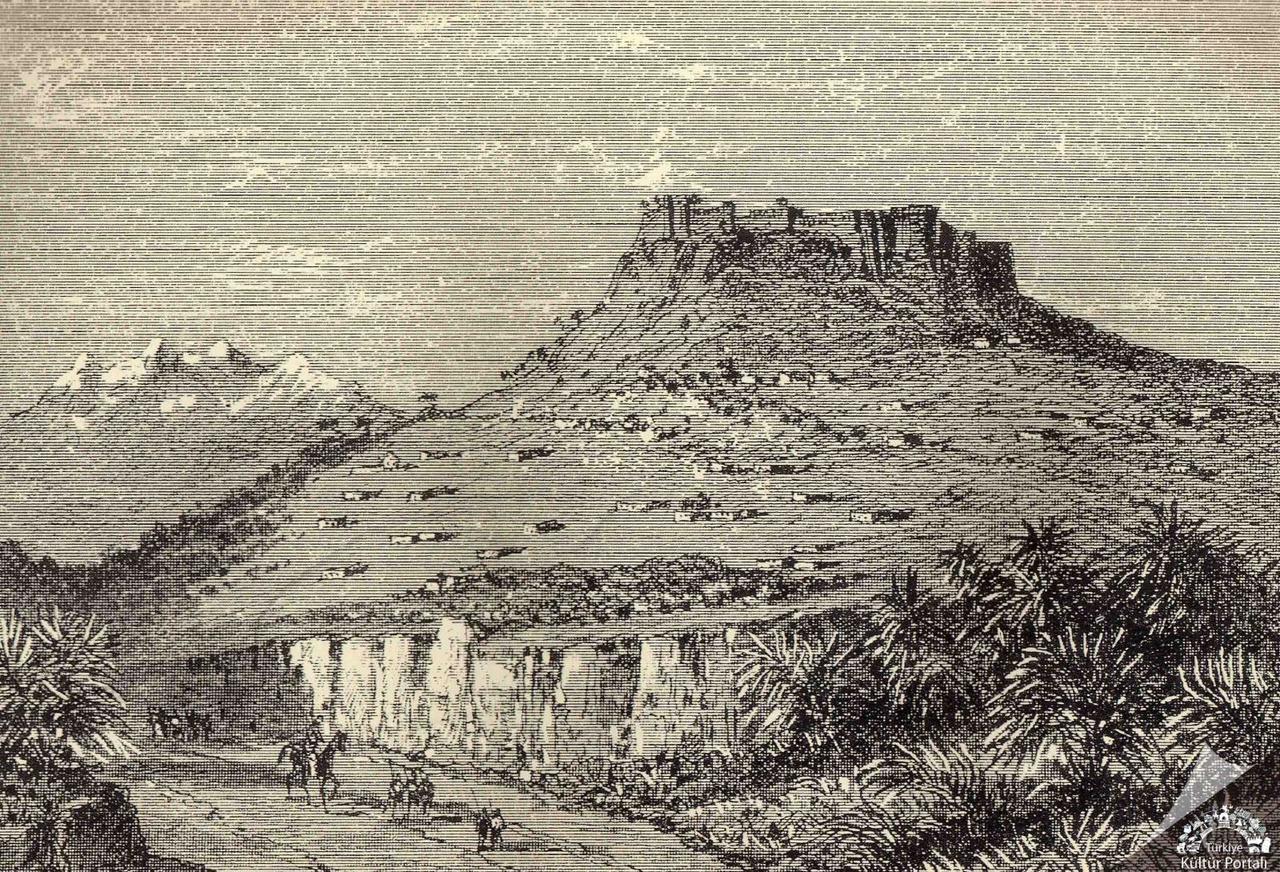
Namrun Castle (Kültür Portalı)
The castle was constructed directly on a natural rocky substrate, and its layout exhibits an irregular character adapted to the natural contours of the terrain. The curtain walls follow the lines of the bedrock, integrating with natural obstacles to form a cohesive defensive system.
Namrun Castle covers a vast area and contains the remains of structures serving various functions, including defensive elements (walls and towers), living quarters, storage spaces, and cisterns designed to meet water needs. Additionally, the bathhouse identified within the castle demonstrates that it was not merely a military outpost but also a center capable of supporting permanent habitation.
The castle’s location is significant not only for defense but also for surveillance and communication. Its elevated position provides an extensive field of vision, enabling visual contact with other settlements and defensive points in the surrounding area.
The historical development of Namrun Castle (Lampron) is directly linked to the political and military structure of the region during the Middle Ages. Although the fortress was utilized from early periods due to its strategic location, it gained particular importance during the Byzantine Empire, serving as a defensive node controlling the mountain passes of the Taurus range.
During the Middle Ages, the castle became one of the key centers of the Kingdom of Cilician Armenia. Known as Lampron, it came under the control of the prominent Hetumid (Hetumlu) dynasty and functioned as a political and military hub during this period. The fortress played an active role in regional power struggles and was utilized by the Byzantines, Armenians, Seljuks, and Ottomans for both defensive and administrative purposes.
Namrun Castle was constructed with an irregular plan that adapts to the steep and rocky topography of its site. The overall layout follows the natural contours of the terrain, enhancing its defensive capacity while shaping its architectural character. The castle consists of an extensive curtain wall system and associated internal spaces.
The curtain walls are built directly onto exposed bedrock using cut stone masonry. These walls are thick and tall, reinforcing their defensive function. Towers placed at regular intervals along the curtain wall serve both defensive and observational purposes. Their placement is carefully arranged to ensure control over all areas surrounding the fortress.
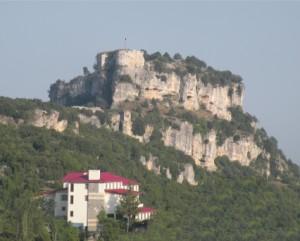
Namrun Castle (T.C. Çamlıyayla Kaymakamlığı)
The entrance system of the castle is designed to allow controlled access. Entry points are positioned to hinder direct approach and facilitate defense. This arrangement serves as a protective measure against potential attacks on the fortress.
Within the castle, spaces serving various functions have been identified, including structures interpreted as living quarters, storage areas, and military sections. Cisterns constructed to meet water needs are among the key features that enhanced the fortress’s resilience during prolonged sieges.
One of the most significant structures identified within the castle is the bathhouse. This bath demonstrates that life within the fortress was not limited to military functions but included permanent habitation. The plan and construction technique of the bath provide insight into the architectural style of the period and offer data on the internal organization and usage patterns of the fortress. Excavation and conservation efforts have contributed to a more detailed understanding of its architectural features.
The architecture of Namrun Castle exhibits a layered structure due to additions and repairs carried out across different periods. This has allowed architectural elements from the Byzantine, Armenian, Seljuk, and Ottoman eras to coexist within the same complex.
The current condition of Namrun Castle shows partial destruction due to natural factors and human intervention. It is noted that large sections of the curtain walls and entrance systems have collapsed, significantly compromising the original integrity of the structure. Surveys, restoration, and conservation efforts conducted in 2017 revealed that only some structures located at the northern extremity remained standing, while other parts were largely in ruins.
Some architectural elements within the castle have become buried over time. The bathhouse, for instance, was partially covered by soil, which hindered its clear identification for a long period. Excavation and cleaning operations have since revealed the plan and spatial organization of the bath, yielding new data regarding the castle’s usage.
Conservation efforts at Namrun Castle aim to preserve its structural integrity and document existing remains. Activities undertaken in this context include cleaning, documentation, surveying, and conservation treatments. Ongoing interventions are being carried out to address deterioration in various parts of the structure and to protect the remaining architectural elements.
Buyruk, Hasan. "Kazı Konservasyon Öncesi ve Sonrasında Namrun (Lampron) Kalesi Hamamı." Accessed March 24, 2026. https://akmb.gov.tr/wp-content/uploads/2024/02/46-Prof.-Dr.-Hasan-BUYRUK-Kazi-Konservasyon-Oncesi-ve-Sonrasinda-Namrun-Lampron-Kalesi-Hamami.pdf
Ministry of Culture and Tourism. "Namrun Kalesi." Kültür Portalı. Accessed March 24, 2026. https://www.kulturportali.gov.tr/turkiye/mersin/gezilecekyer/namrun-kalesi.
Yılmaz, Lale and Mehmet Eren. "Namrun Kalesi." *Türkiye Turizm Ansiklopedisi*. Accessed March 24, 2026. https://turkiyeturizmansiklopedisi.com/namrun-kalesi.
Çamlıyayla Kaymakamlığı. "Namrun Kalesi." Accessed March 24, 2026. https://camliyayla.gov.tr/namrun-kalesi

Type(s) | Defense / Castle | ||||||||
|---|---|---|---|---|---|---|---|---|---|
Period(s) | Middle Ages and earlier | ||||||||
Special Structures | Hamam | ||||||||
Walls | Thick stone walls and towers present | ||||||||
Location | Mersin Taurus Mountains Çamlıyayla | ||||||||
Location and General Features
Historical Development
Architectural Features
Conservation Status and Current Works