
This article was automatically translated from the original Turkish version.

A nation’s independence is measured not only by its ability to defend its own borders but also by its capacity to produce the technologies that will determine its future. In Türkiye, the concept of “full independence” is evolving through the National Technology Initiative into a multi-layered objective that extends beyond the defense industry to encompass production, artificial intelligence, digital infrastructure, entrepreneurship, human resources, and sustainability. This spectrum, which ranges from indigenous aircraft in the sky to new technologies developed in laboratories, from technology education received by youth to the protection of critical data, offers different answers to the same question: To what extent can a nation shape its own future with its own means?
Understanding the National Technology Initiative requires tracing precisely this question. Because the conception of independence it presents is not only about what we produce but also about what decisions we can make, what data we control, and how we educate the people who will build the future. For this reason, the National Technology Initiative can be viewed not merely as an industrial or technological policy but as a broad ecosystem seeking the digital-age equivalent of independence.
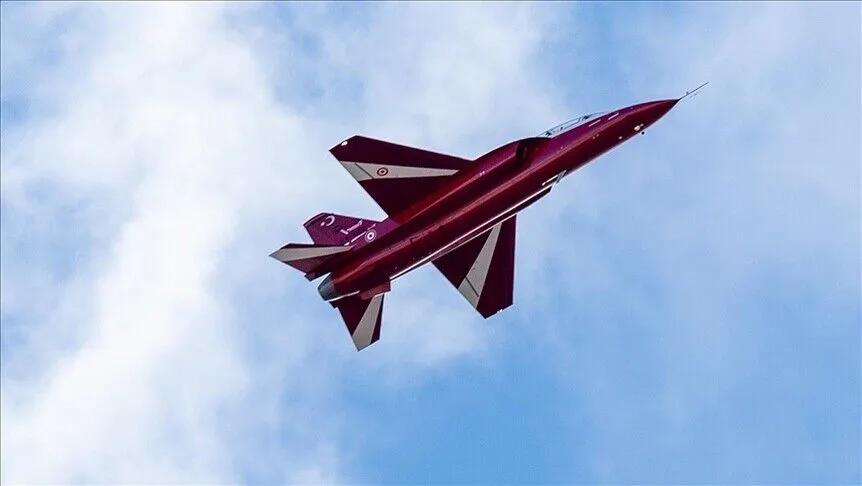
TUSAŞ Tarafından Geliştirilen Yerli Jet Uçağı HÜRJET (Anadolu Ajansı)
“Full independence” is not a new discourse in Türkiye; its roots extend back to the founding philosophy of the Republic. According to an academic study, the fundamental principle of policy during the Republican era was independence and the establishment of relations with other states on the basis of equality; the newly established state took concrete steps not only in the economic sphere but also in education and culture consistent with this claim of independence. 【1】Today, the claim of independence under the umbrella of the National Technology Initiative (NTI) is grounded in the same root: the idea of having decision-making capacity across multiple domains rather than a single one.
The most visible domain of the NTI is the defense industry. A study by the Turkish Academy of Sciences (TÜBA) notes that procurement projects for products such as tanks, helicopters, aircraft, and unmanned aerial vehicles were canceled and replaced by national development programs, transforming Türkiye into a country capable of producing a significant portion of its own defense industry needs. 【2】The same study emphasizes that this breakthrough has been extended to many other areas, from healthcare to education and from energy to transportation.
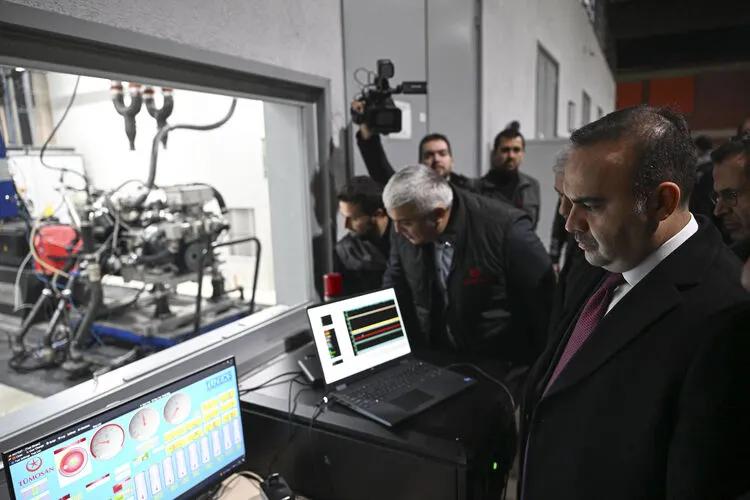
Sanayi ve Teknoloji Bakanı Mehmet Fatih Kacır’ın Yerli Motor ve Alt Sistem Üretim Çalışmalarını İncelemesi (Anadolu Ajansı)
The scope of this objective has also been clarified in statements at the presidential level. At the opening of Türkiye’s Fourth Industrial Revolution Center in 2020, it was stated that the goal was to position the country as a hub for products and technologies of the Fourth Industrial Revolution in line with the objectives of the National Technology Initiative. The institutional counterpart of this claim was established the same year: a new general directorate was created within the Ministry of Industry and Technology to implement the National Technology Initiative, making the concept an official part of the state’s organizational structure. 【3】
According to the definition by the Türkiye Technology Team Foundation (T3 Foundation), the NTI consists of five main components: High Technology and Innovation, Digital Transformation and Industrial Initiative, Entrepreneurship, Human Capital, and Infrastructure. 【4】Unlike production capacity on the ground, these five components aim to enable a nation to manage its daily operations—ranging from energy supply to digital infrastructure—through its own decisions. Within this framework, independence is linked not only to the ability to withstand conflict but also to the capacity to generate its own energy and infrastructure during a crisis.
One of the contested dimensions of the Fourth Industrial Revolution is data sovereignty. In Türkiye’s first National Artificial Intelligence Strategy, which came into effect in 2021, one of the six strategic priorities directly bears the title “Access to quality data and technical infrastructure.” 【5】Another manifestation of this emphasis is evident in statements advocating for the retention of critical data within the country’s borders; the principle that “Türkiye’s data will remain in Türkiye” has been repeatedly stressed in assessments linking data security to national sovereignty. 【6】
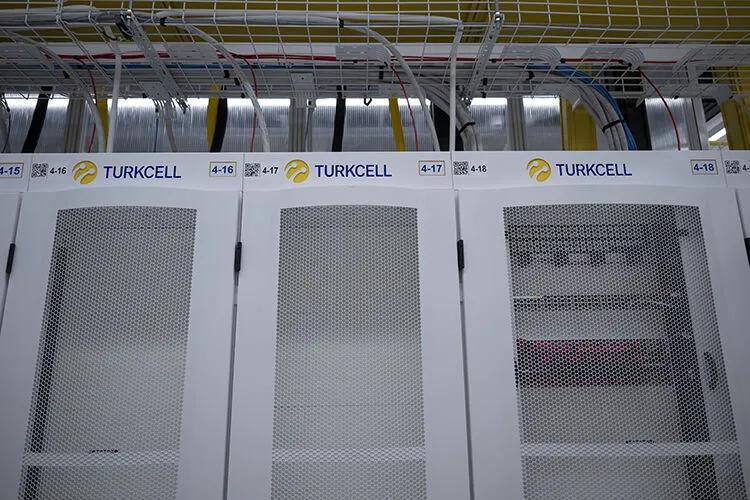
Turkcell Veri Merkezi (Anadolu Ajansı)
Underlying this approach is the assessment that when a society’s generated data—from health records to personal preferences—is processed on infrastructure outside its own borders, that society becomes dependent not only economically but also on the very ground where its decisions are shaped. Indigenous artificial intelligence capacity is thus positioned as a more abstract yet critical layer of the initiative.
A less discussed dimension of the NTI is sustainability. Under TÜBİTAK’s 1512 Entrepreneurship Support Program (BiGG), which has been active since 2012, entrepreneurs are supported in transforming their technology- and innovation-driven business ideas into commercially valuable products and services. The 2023–2025 update states that 134 organizations have been identified to lead the program’s initial phases, of which 32 are universities, 40 are technology development zones, and 36 are venture capital firms. 【7】This structure demonstrates that technological entrepreneurship is carried out not through a single institution but via a broad network of stakeholders, and it asserts the ambition to link production not to short-term calculations but to long-term responsibility.
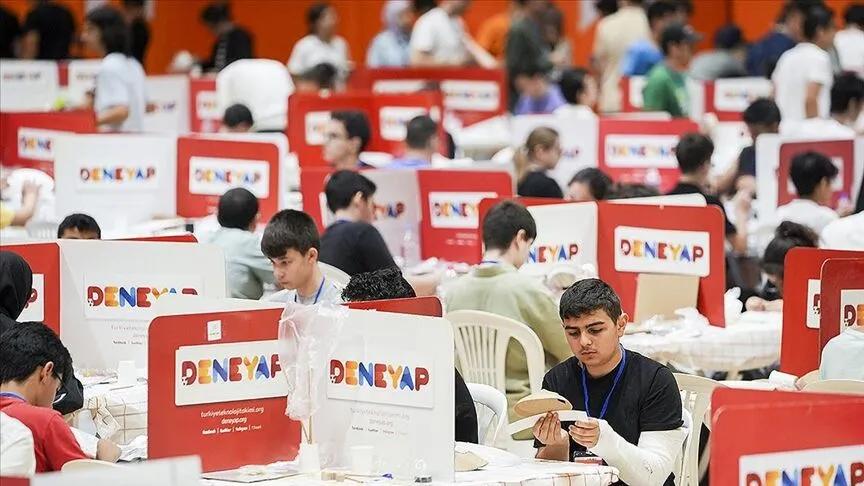
DENEYAP Teknoloji Atölyelerinde Eğitim Gören Öğrenciler (Anadolu Ajansı)
Another layer of the initiative relates to the question of for whom it is being built. In the 2024–2025 academic year, DENEYAP Technology Workshops were opened simultaneously in all 81 provinces; approximately 20,000 students began receiving free education in 11 different technology fields—from robotics and coding to artificial intelligence—under the guidance of over 480 instructors in 130 workshops. 【8】The program is defined as part of the National Technology Initiative, with the stated aim of cultivating young individuals who will enhance the country’s capacity to produce technology. This structure is regarded as a component that elevates the claim of independence from the institutional level to the individual level.
When evaluating this picture, certain limitations must also be considered. The discourse of full independence must be addressed alongside international cooperation and trade; no country today develops its entire technology ecosystem independently, as supply chains and R&D partnerships are deeply interconnected on a global scale. Moreover, it is observed that official statements largely focus on the progress of the initiative, while data regarding costs and implementation processes remain relatively limited.
The layers discussed so far form a complementary structure. Production capacity on the ground extends the initiative to energy and healthcare; decision-making capacity at the table governs daily infrastructure; the emphasis on data sovereignty redefines independence for the digital age; and the sustainability component connects today’s efforts to future generations.
In conclusion, the National Technology Initiative carries a scope far broader than the success story of a single sector: it presents a society’s ambition to construct its own future according to its own values, within a framework that remains debated and evolving.
Anadolu Ajansı. "Deneyap Teknoloji Atölyeleri Geleceğin Teknoloji Yıldızlarını Arıyor." Anadolu Ajansı, February 21, 2026. Accessed September 3, 2026.https://www.aa.com.tr/tr/bilim-teknoloji/deneyap-teknoloji-atolyeleri-gelecegin-teknoloji-yildizlarini-ariyor/3876867
Anadolu Ajansı. "Sanayi ve Teknoloji Bakanlığına 'Milli Teknoloji Hamlesi'ne Uygun Yeni Yapı." Anadolu Ajansı. Accessed September 3, 2026.https://www.aa.com.tr/tr/bilim-teknoloji/sanayi-ve-teknoloji-bakanligina-milli-teknoloji-hamlesine-uygun-yeni-yapi/1803790
Anadolu Ajansı. "Turkcell, Veri Merkezi Yatırımlarına Hız Kesmeden Devam Ediyor." Accessed September 3, 2026.https://www.aa.com.tr/tr/ekonomi/turkcell-veri-merkezi-yatirimlarina-hiz-kesmeden-devam-ediyor/3120985
Anadolu Ajansı. "Türkiye'nin İlk Ulusal Yapay Zeka Stratejisi Açıklandı." Accessed September 3, 2026.https://www.aa.com.tr/tr/bilim-teknoloji/turkiyenin-ilk-ulusal-yapay-zeka-stratejisi-aciklandi/2344314
Belhamadia, Idriis. "Bulutlu bir gökyüzü altında yaprakların arasında dalga diken Türk bayrağının dikey çekimi." pexels. Accessed September 3, 2026.https://www.pexels.com/tr-tr/fotograf/dallar-yapraklar-sembol-simge-16834161/
Doğan, Abdullah. "Savunma Sanayisinde Tüm Alt Sistemlerin Yerlileştirilmesi Hedefleniyor." Anadolu Ajansı, November 28, 2024. Accessed September 3, 2026.https://www.aa.com.tr/tr/savunma-sanayisi/savunma-sanayisinde-tum-alt-sistemlerin-yerlilestirilmesi-hedefleniyor/3407102
Doğan, Zafer. "Cumhuriyetin İnşasında Atatürk'ün Tam Bağımsızlık Anlayışı." History Studies 15, Cumhuriyetin 100. Yılı Özel Sayısı (2023): 315-336. Accessed September 3, 2026.https://dergipark.org.tr/tr/pub/historystudies/article/1333884
T.C. Ministry of Youth and Sports. "DENEYAP Teknoloji Workshops 2024-2025 Academic Year Has Begun." Gençlik Hizmetleri Genel Müdürlüğü. Accessed September 3, 2026.https://genclikhizmetleri.gov.tr/deneyap-teknoloji-atolyeleri-2024-2025-egitim-donemi-basladi/
T.C. Presidency of Communication. "President Erdoğan: 'Our aim is to make our country the hub of fourth industrial revolution products and technologies in line with our national technology initiative.'" Accessed September 3, 2026.https://www.iletisim.gov.tr/turkce/haberler/detay/cumhurbaskani-erdogan-amacimiz-ulkemizi-milli-teknoloji-hamlesi-hedefimiz-dogrultusunda-dorduncu-sanayi-devrimi-urun-ve-teknolojilerinin-ussu-haline-getirmektir1234
TÜBİTAK. "TÜBİTAK BiGG Ekosisteminde Büyük Değişiklik." Accessed September 3, 2026.https://tubitak.gov.tr/tr/haber/tubitak-bigg-ekosisteminde-buyuk-degisiklik
Türkiye Bilimler Akademisi. "Millî Teknoloji Hamlesi." tuba.gov.tr. Accessed September 3, 2026.https://www.tuba.gov.tr/tr/yayinlar/suresiz-yayinlar/bilim-ve-dusunce/mill-teknoloji-hamlesi
Türkiye Teknoloji Team Foundation. "Milli Teknoloji Hamlesi." T3 Vakfı. Accessed September 3, 2026.https://www.t3vakfi.org/tr/hakkimizda/mth/
Şahin, Güngör. "Nuri Demirağ'dan HÜRJET'e: Türkiye'nin Havacılık Serüveni ve Savunma Sanayisi Vizyonu." Anadolu Ajansı. Accessed September 3, 2026.https://www.aa.com.tr/tr/analiz/nuri-demirag-dan-hurjete-turkiye-nin-havacilik-seruveni-ve-savunma-sanayisi-vizyonu/3808609
[1]
Zafer Doğan. "Cumhuriyetin İnşasında Atatürk'ün Tam Bağımsızlık Anlayışı." *History Studies* 15 (2023): 315.
[2]
Recep Tayyip Erdoğan, “Takdim,” İçinde Millî Teknoloji Hamlesi: Toplumsal Yansımaları ve Türkiye’nin Geleceği, ed. Mehmet Fatih Kacır, Muzaffer Şeker, Mürsel Doğrul, (Ankara: Türkiye Bilimler Akademisi, 2022.) 1. https://www.tuba.gov.tr/files/yayinlar/bilim-ve-dusun/TUBA-978-625-8352-16-0.pdf
[3]
Anadolu Ajansı, “Sanayi ve Teknoloji Bakanlığına ‘Milli Teknoloji Hamlesi’ne Uygun Yeni Yapı,” 14 Nisan 2020, Erişim Tarihi: 3 Eylül 2026, https://www.aa.com.tr/tr/bilim-teknoloji/sanayi-ve-teknoloji-bakanligina-milli-teknoloji-hamlesine-uygun-yeni-yapi/1803790
[4]
Türkiye Teknoloji Takımı Vakfı, "Milli Teknoloji Hamlesi," T3 Vakfı, Erişim Tarihi: 3 Eylül 2026, https://www.t3vakfi.org/tr/hakkimizda/mth/
[5]
Anadolu Ajansı. "Türkiye'nin İlk Ulusal Yapay Zeka Stratejisi Açıklandı." Anadolu Ajansı, August 24, 2021. Accessed September 1, 2026.
[6]
Anadolu Ajansı, "Turkcell, Veri Merkezi Yatırımlarına Hız Kesmeden Devam Ediyor", Anadolu Ajansı, 28 Ocak 2024, Erişim Tarihi: 1 Eylül 2026, https://www.aa.com.tr/tr/ekonomi/turkcell-veri-merkezi-yatirimlarina-hiz-kesmeden-devam-ediyor/3120985
[7]
TÜBİTAK, "TÜBİTAK BiGG Ekosisteminde Büyük Değişiklik", TÜBİTAK, 18 Aralık 2022, Erişim Tarihi: 3 Eylül 2026, https://tubitak.gov.tr/tr/haber/tubitak-bigg-ekosisteminde-buyuk-degisiklik
[8]
T.C. Gençlik ve Spor Bakanlığı, "DENEYAP Teknoloji Atölyeleri 2024-2025 Eğitim Dönemi Başladı," Gençlik Hizmetleri Genel Müdürlüğü, 14 Eylül 2024, Erişim Tarihi: 3 Eylül 2026, https://genclikhizmetleri.gov.tr/deneyap-teknoloji-atolyeleri-2024-2025-egitim-donemi-basladi/
Historical Origins of the Concept of Independence
Independence on the Ground: Production Capacity
Independence at the Table: Decision-Making Capacity
Independence in the Mind: Data and Artificial Intelligence
Intergenerational Independence: Sustainability
Independence for Whom: Human Resources
The Limits of This Discourse
Conclusion: A Multi-Layered Concept