This article was automatically translated from the original Turkish version.
ISBN | 9789750538445 | ||||||||
|---|---|---|---|---|---|---|---|---|---|
Field | Servet-i Fünûn literature | ||||||||
Author(s) | Halit Ziya Uşaklıgil | ||||||||
Publisher(s) | İletişim Yayınları | ||||||||
Year of Publication | 2025 | ||||||||
Number of Pages | 604 | ||||||||
Date of Issue | 7 September 1908 - 5 March 1909 | ||||||||
Publication Medium | Sabah Gazetesi | ||||||||
Year of First Publication | 1990 | ||||||||
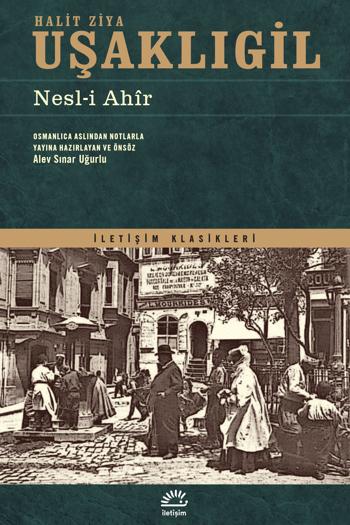
Nesl-i Âhir is a novel written by Halit Ziya Uşaklıgil, a prominent author of the Servet-i Fünûn literary movement, and was serialized in the newspaper Sabah between 1908 and 1909. The work was not published as a book during the author’s lifetime and was never simplified.
The novel addresses the political, social and personal crises experienced by Ottoman society, particularly among the intellectual and upper classes, both before and after the Second Constitutional Era. Its significance in literary history lies in its being Halit Ziya’s final serialized novel and in its more pronounced engagement with the political atmosphere and social conditions of the era, alongside the individual themes present in his earlier works.
The central narrative revolves around the return of Süleyman Nüzhet, an Ottoman civil servant and intellectual who had left the country due to the repressive administrative climate of the reign of Sultan Abdülhamid II. Following a disagreement that led to his departure from his post in Paris, Nüzhet returns to Istanbul accompanied by his daughter, Azra. He views this return as a step toward national renewal and the construction of a new generation, placing high expectations on patriotic youth.
The novel unfolds through Nüzhet’s idealistic quest, his daughter Azra’s unrequited love for the young intellectual İrfan, and the interactions among surrounding characters, revealing the psychological states, moral decay, and political turmoil of the era’s upper class and youth.
The plot culminates in the tragic fate of İrfan, who becomes involved in an assassination attempt, and the profound disillusionment this causes in Süleyman Nüzhet and Azra. The novel concludes with an atmosphere of crisis, stemming from the failure of the hoped-for new generation (nesl-i Âhir) to meet societal expectations.
The novel features a broad cast of characters representing the intellectual, upper-class, and youth segments of the era. The protagonist, Süleyman Nüzhet, is portrayed as an idealistic, cultured Meşrutiyet intellectual fluent in two foreign languages, seeking solutions to the nation’s predicament. Central to his personal life is his devotion to his daughter Azra and his search for happiness. Azra represents a well-educated, emotionally complex young woman with a close bond to her father.
İrfan is a young patriot educated abroad, driven by a desire for action; his life serves as an example of the political crisis and its consequences in the novel. Other characters, such as Samiye Hanım, provide insight into the lifestyle of the era’s elite, the problems within marriage, and the moral climate, thereby highlighting the social dimensions of the plot. The actions and conflicts of the characters are generally inseparable from the prevailing atmosphere of crisis and the social structure of the time.
Halit Ziya Uşaklıgil moves beyond the individualistic focus typical of Edebiyat-ı Cedide and directs this work toward social and political critique. The novel’s central themes are explored against the backdrop of political, social and cultural degradation under the repressive policies (istibdat) of Sultan Abdülhamid II. The author explicitly aims to expose the mechanisms used to suppress a politically free society.
The narrative is structured around the ideological and psychological conflicts between two main groups: nesl-i Âhir and nesl-i Diğer. Through the youth surrounding the protagonist Süleyman Nüzhet, the author seeks to give voice to the anxieties and frustrations of young people under repression. In this context, the novel presents a pessimistic portrait of Turkish youth, marked by surveillance, exile, and tragic endings. Another significant theme is the search for a Western-Eastern synthesis. Nüzhet embodies the persona of a "sentez aydın"—one who has internalized both Eastern and Western cultures. His embrace of Western culture is balanced by a steadfast commitment to Turkish roots, nationalism, and populism, reinforcing this theme.
Finally, through Nüzhet, the author centers the mission of national reconstruction and deepens the theme of social critique by analyzing issues such as income inequality, a distorted work ethic, and moral decay in urban life.
Halit Ziya, recognized as a key figure in shaping the Western identity of the Turkish novel, employs a realist and naturalist approach in this work. The narrative emphasizes the intellectual dimensions of the characters rather than their psychological depth. The protagonist, Süleyman Nüzhet, is idealized as a Meşrutiyet intellectual, yet the author deliberately reveals his human weaknesses to render him more "sahici"—authentic.
Nüzhet’s analytical approach to social problems, conducted with the precision of a social scientist, lends the narrative the character of social observation. He describes Istanbul’s working life as a “battlefield” and characterizes the Eastern man as “Asian,” criticizing his lethargy and indolence. Nüzhet also exhibits an intellectual identity shaped by his knowledge of literature, music, and theater. In this context, he critiques Pierre Loti’s orientalist perspective and laments the decline of Turkish music and the paralysis of theater due to censorship.
The novel is regarded as a valuable text in literary history for demonstrating Halit Ziya’s transition from individualistic themes to political critique and for portraying the social landscape of the era. Halit Ziya Uşaklıgil later stated in his work Kırk Yıl that he considered only a small portion of this novel valuable and expressed a desire for the remainder to be forgotten. 【1】
Uşaklıgil, Halid Ziya. *Nesl-i Ahîr*. Aktarım – Edisyon Kritik: Hazırlayan Mihriye Çelik. Editör Selçuk Atay. İstanbul: Telve Kitap, 2024.
Uşaklıgil, Halit Ziya. Nesl-i Âhir. Istanbul: İletişim Yayınları, 2025.
Yaşar, Hüseyin. “Nesl-i Âhir’de Bir Meşrutiyet Aydını: Süleyman Nüzhet.” Türklük Bilimi Araştırmaları, no. 33 (2013): 283–309. Accessed October 27, 2025. https://dergipark.org.tr/tr/pub/tubar/issue/16974/177386
İletişim Yayınları. “Nesl-i Âhir.” Accessed October 27, 2025. https://iletisim.com.tr/kitap/nesl-i-ahir/10745?srsltid=AfmBOorx6-NQs6JvAEjWzmAI3rJ-iuTmnLBaUWfediiByK_4XUOMZHIQ
[1]
Selçuk Atay, “Nesli Ahir (Aktarım ve Edisyon Kritik),” Academia.edu, syf 8, https://www.academia.edu/126908936/Nesli_Ahir_Aktar%C4%B1m_ve_Edisyon_Kritik.

ISBN | 9789750538445 | ||||||||
|---|---|---|---|---|---|---|---|---|---|
Field | Servet-i Fünûn literature | ||||||||
Author(s) | Halit Ziya Uşaklıgil | ||||||||
Publisher(s) | İletişim Yayınları | ||||||||
Year of Publication | 2025 | ||||||||
Number of Pages | 604 | ||||||||
Date of Issue | 7 September 1908 - 5 March 1909 | ||||||||
Publication Medium | Sabah Gazetesi | ||||||||
Year of First Publication | 1990 | ||||||||
Summary
Characters
Themes
Literary Style and Narrative
Significance and Influence