


This article was automatically translated from the original Turkish version.
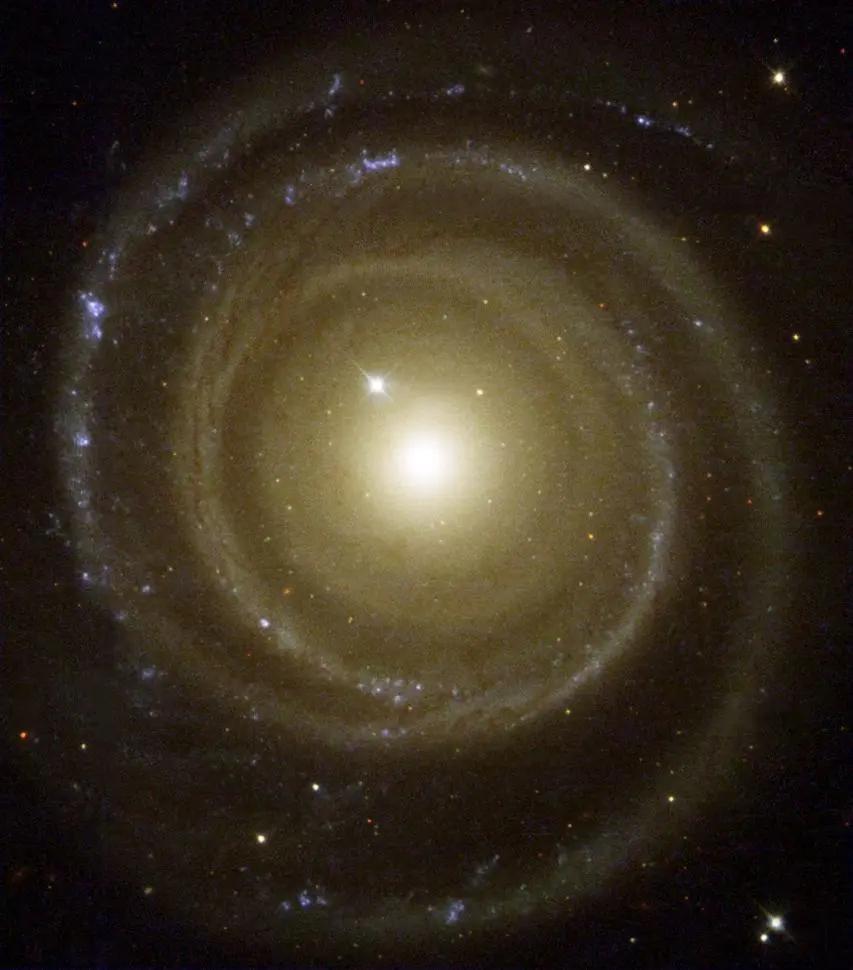
NGC 4622 Galaxy
Constellation | Centaurus (Erboğa) | ||||||||
|---|---|---|---|---|---|---|---|---|---|
Distance(s) | Approximately 200 million light years | ||||||||
Type(s) | SBa | ||||||||
Diameter | Estimated 50,000–60,000 light years | ||||||||
Position(s) | RA 12h 42m 40.0s | Dec -40° 44′ 41″ According to J2000 coordinates | ||||||||
Redshift | Z ≈ 0.0170 | ||||||||
NGC 4622 Galaxy is a spiral galaxy located in the constellation Centaurus. It has gained a notable place in astronomical literature due to its unusual characteristics regarding the direction of its spiral arms. First cataloged in the 19th century this galaxy has been studied in detail using modern observational tools such as the Hubble Space Telescope.
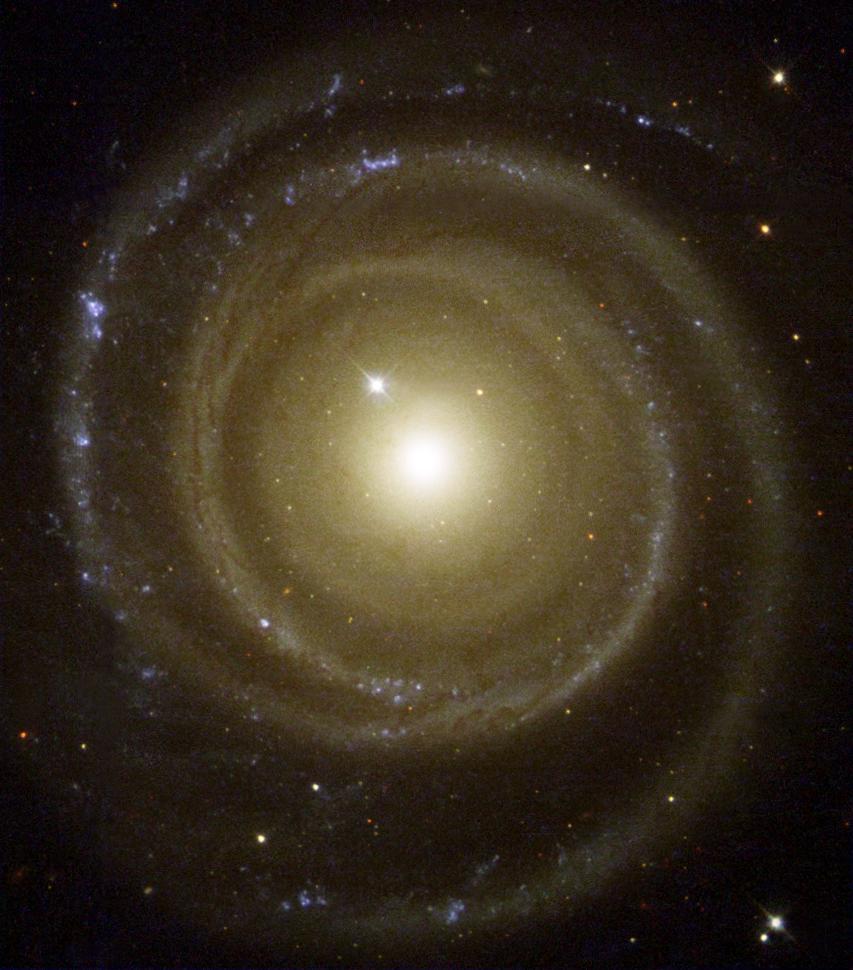
NGC 4622 Galaxy (NASA)
NGC 4622 was first observed in the 1830s by James Dunlop and later cataloged by John Herschel. Modern observations have been significantly enriched by high-resolution images obtained by the Hubble Space Telescope in 2001. These images revealed unusual structural features of the galaxy that deviate from standard spiral patterns.
NGC 4622 possesses a rare characteristic known as "leading spiral arms." In typical spiral galaxies the spiral arms trail behind the direction of rotation. However in NGC 4622 the two outermost bright spiral arms have been found to wind in the opposite direction to the galaxy’s rotation. This configuration creates a complex visual appearance that can lead observers to misinterpret the direction of rotation at first glance.
Photometric and spectroscopic analyses suggest that this counter-rotating structure likely resulted from a galaxy merger or interaction. It is also believed that another spiral arm with a different orientation exists in the inner region of the galaxy and may be related to its asymmetric mass distribution.
The direction of the galaxy’s rotation has been determined through the motion of stars and emission line measurements. Doppler shift measurements based on Hα lines have shown that NGC 4622 rotates counterclockwise and that its spiral arms lead ahead of this rotational direction. This finding presents challenges to the classical density wave theory and has prompted the development of new hypotheses regarding galactic evolution and the dynamics of spiral structures.
NGC 4622 is classified as a moderately active galaxy in terms of star formation. The blue regions visible in Hubble images indicate the presence of young and hot stars which are predominantly concentrated in the outer spiral arms. Cold molecular gas CO has also been detected in the galaxy providing potential material for future star formation. However the rate of star formation in the central region is lower than in the outer regions.
The asymmetric structure and leading spiral arms of NGC 4622 suggest that it may have interacted with another galaxy in the past. Computer simulations indicate that a collision with a smaller galaxy could have produced this unusual configuration.
In addition some irregular structures surrounding the galaxy are interpreted as possible remnants of such interactions. These interactions can permanently affect the galaxy’s kinematics morphology and star formation dynamics.
NGC 4622 stands out as an atypical example in studies of spiral galaxy structure and evolution. The presence of leading arms has brought alternative approaches to the formation mechanisms of spiral structures into focus. In particular the density wave theory has been debated in relation to structural reorganizations following galaxy mergers.
Furthermore this galaxy has contributed to the development of observational methodologies for determining the direction of galactic rotation. Multidisciplinary analytical methods combining light distribution dust structure kinematic data and computer models have been applied here.
NASA. “Hubble Views NGC 4622.” *NASA Science*. Accessed May 31, 2025. https://science.nasa.gov/image-detail/idl-tiff-file-49/.
NASA. “NGC 4622.” *NASA Science*. Accessed May 31, 2025. https://science.nasa.gov/asset/hubble/ngc-4622/.
NASA. “Spiral Galaxy NGC 4622 Spins Backwards.” *NASA Science*. Accessed May 31, 2025. https://science.nasa.gov/asset/hubble/spiral-galaxy-ngc-4622-spins-backwards/.

NGC 4622 Galaxy
Constellation | Centaurus (Erboğa) | ||||||||
|---|---|---|---|---|---|---|---|---|---|
Distance(s) | Approximately 200 million light years | ||||||||
Type(s) | SBa | ||||||||
Diameter | Estimated 50,000–60,000 light years | ||||||||
Position(s) | RA 12h 42m 40.0s | Dec -40° 44′ 41″ According to J2000 coordinates | ||||||||
Redshift | Z ≈ 0.0170 | ||||||||
Observational History and the Leading Arm Phenomenon
Dynamical Properties and Star Formation
Environmental Interactions
Significance and Scientific Contributions