

This article was automatically translated from the original Turkish version.
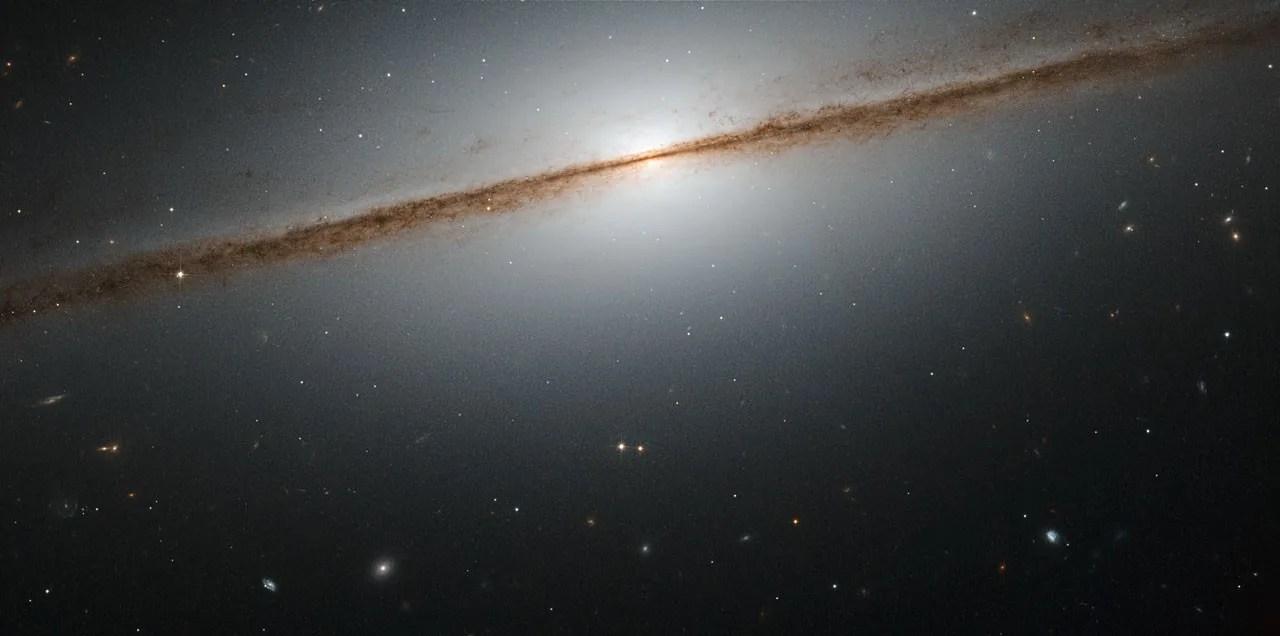
NGC 7814 Galaxy
Galaxy Type | SA(S)0/a | ||||||||
|---|---|---|---|---|---|---|---|---|---|
Constellation | Pegasus | ||||||||
Design Numbers | PGC 000001 UGC 00001 NGC 7814 | ||||||||
Distance from Earth | Approximately 40 million light years | ||||||||
Actual Size | Approximately 65,000 light years in diameter | ||||||||
The NGC 7814 Galaxy is a spiral galaxy located in the Pegasus constellation. Discovered in the late 18th century, this celestial object serves as a critical example in astronomical research due to its structure and properties. From this perspective, the fundamental characteristics of NGC 7814—its morphology, physical parameters, and observational data—are subjects of scientific interest.
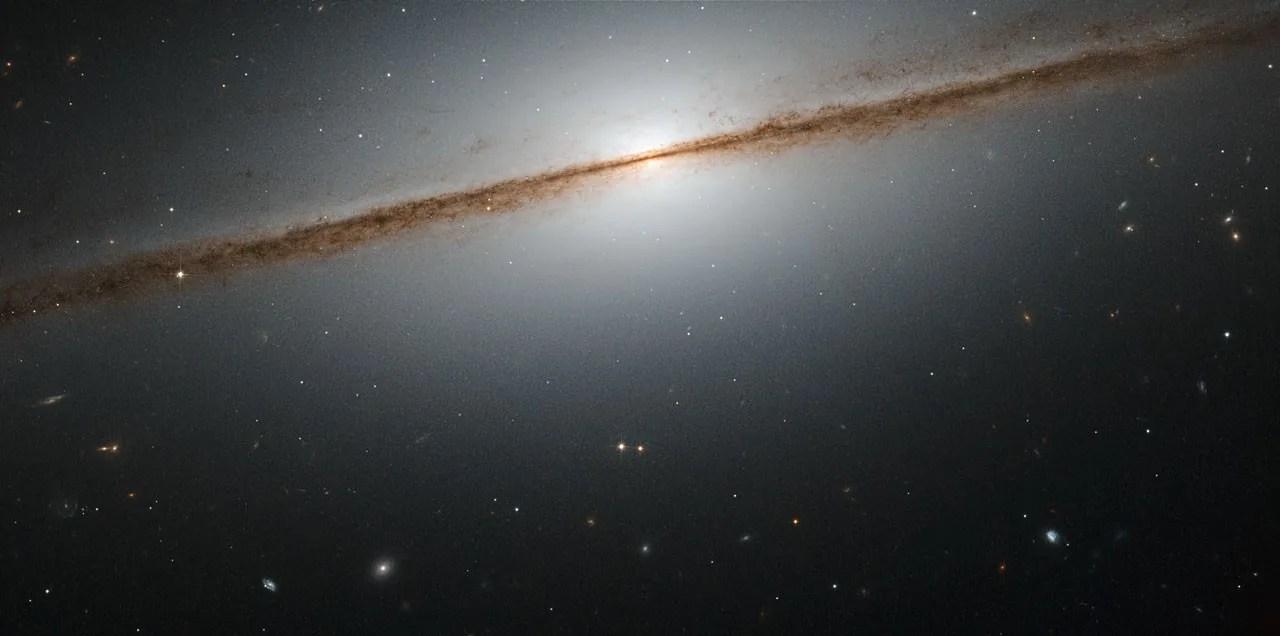
The NGC 7814 Galaxy (NASA)
NGC 7814 was discovered in 1784 by the English astronomer William Herschel. Initially recorded through early telescopic observations, this galaxy has since been studied in detail using advancing observational techniques. As observational data increased, more precise information about the galaxy’s structural properties and dynamics became available.
NGC 7814 is located in the Pegasus constellation and is approximately 40 million light-years from Earth. This distance serves as a fundamental parameter in evaluating the galaxy’s brightness and measured radiation. The galaxy’s position has been precisely determined using celestial coordinate data.
Although classified as a spiral galaxy, NGC 7814 exhibits a prominent disk and central concentration. Some sources classify it as a “Lens” (S0) type in addition to its spiral classification. The central region contains a dense core, while star formation activity in the disk is relatively limited. Spectral and imaging techniques used in structural studies provide detailed information about both the stellar and gaseous components of the galaxy.
Mass estimates for NGC 7814 have been determined through observations of stellar population distributions and gas content. The galaxy’s mass is estimated to range between approximately 2 × 10¹¹ and 4 × 10¹¹ solar masses (M☉), taking into account interstellar matter and dark matter distribution. A significant portion of the galaxy’s total mass consists of dark matter components beyond visible matter. Additionally, the galaxy’s rotation curves provide key insights into its dynamical structure.
The stellar population of NGC 7814 is predominantly composed of older stars. Ancient star clusters dominate the central regions, while young star formation is limited to the outer disk areas. Spectroscopic analyses have provided detailed information on metallicity and stellar age distributions.
Although NGC 7814 resides within a group of galaxies, its interactions with neighboring galaxies are minimal. However, the galaxy’s dynamical structure and the influence of environmental factors may play a role in shaping its long-term evolution. Observational studies have examined the distribution of nearby galaxies and potential gravitational effects.
Main methods used in studying NGC 7814 include optical imaging, radio wave observations, infrared and ultraviolet spectroscopy. High-resolution data provided by the Hubble Space Telescope and other ground-based telescopes have made significant contributions to structural analysis of the galaxy. Additionally, 21 cm hydrogen line observations offer insights into the galaxy’s gas distribution and dynamical structure.
NGC 7814 is a moderately distant spiral galaxy in the Pegasus constellation, studied for its structural and dynamical properties. Detailed observations reveal that it possesses a central core dominated by older stars and limited ongoing star formation in its disk regions. The galaxy’s dynamical structure reveals the presence of dark matter and the limited influence of environmental factors. Future observational and theoretical studies are expected to contribute to understanding NGC 7814’s evolution and its classification within galaxy typologies.
Jones, Reggie. “NGC 7814 Gallery.” *Telescope Live*. Accessed May 31, 2025. https://telescope.live/gallery/ngc-7814.
NASA Goddard Space Flight Center. “C43 (NGC 7814) – The Little Sombrero Galaxy.” *Science at NASA*. Accessed May 31, 2025. https://science.nasa.gov/image-detail/c43-1/.
NASA Goddard Space Flight Center. “Hubble’s Little Sombrero.” *Science at NASA*. Accessed May 31, 2025. https://science.nasa.gov/centers-and-facilities/goddard/hubbles-little-sombrero/.
Selby, Mike. “NGC 7814: Little Sombrero.” *Astronomy Picture of the Day (APOD)*. January 23, 2025. https://apod.nasa.gov/apod/ap250123.html.
SpaceNews. "NGC 7814: A Small Sombrero Galaxy for Hubble." Accessed May 31, 2025. https://spacenews.com/ngc-7814-a-small-sombrero-galaxy-for-hubble/.

NGC 7814 Galaxy
Galaxy Type | SA(S)0/a | ||||||||
|---|---|---|---|---|---|---|---|---|---|
Constellation | Pegasus | ||||||||
Design Numbers | PGC 000001 UGC 00001 NGC 7814 | ||||||||
Distance from Earth | Approximately 40 million light years | ||||||||
Actual Size | Approximately 65,000 light years in diameter | ||||||||
Discovery and Location
Morphology and Structural Properties
Stellar Population and Environmental Interactions
Observational Techniques and Data Sources