


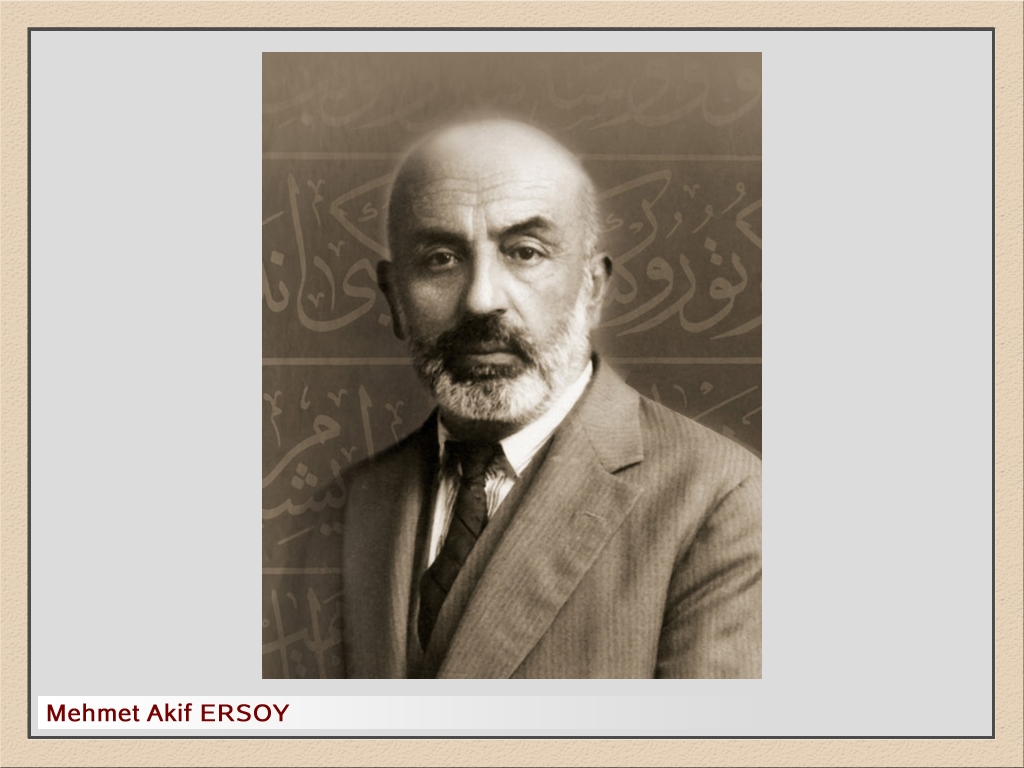
Mehmet Akif Ersoy (Sahafat)
Bülbül is a lyric poem composed by Mehmed Âkif Ersoy during the National Struggle period, reflecting the historical, social, and psychological atmosphere of its time. Written in response to the Greek occupation of Bursa, the poem expresses the poet’s emotions and thoughts through the imagery of the nightingale and natural landscapes, while also conveying the pain and destruction inflicted upon the nation by the occupation.
General Information and Composition Process
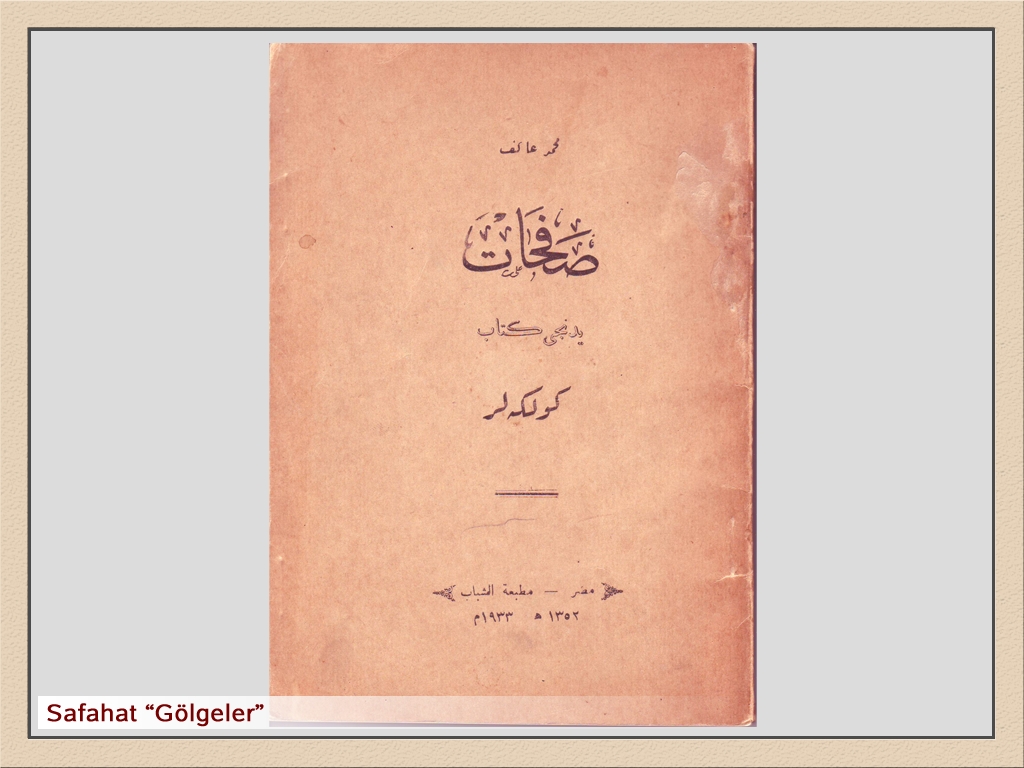
Volume VII of Safahat Containing the Poem: Gölgeler (Bookselling)
This poem, included in the seventh volume of the Safahat collection titled Gölgeler, was written in Ankara at the Taceddin Dergâhı in July 1920 following the Greek occupation of Bursa, and was first published in the 7 May 1921 issue of the journal Sebilürreşad. It is dedicated to the deputy from Karesi (Balıkesir), Hasan Basri Çantay (“to our son Basri Bey”). The composition was significantly influenced by news arriving from the occupied territories, particularly from Bursa.
Historical Context and the Occupation of Bursa
On 8 July 1920, the Greeks entered Bursa via Mudanya and occupied the city. As the first capital of the Ottoman Empire and a center housing sacred sites for six centuries, Bursa suffered severe destruction during this period. The tomb of Nilüfer Sultan was bombed and reduced to a ruined cemetery; bomb and gunfire echoes rose from the minarets. The bombs dropped by Greek soldiers caused widespread noise and devastation throughout the city. The publication in European press of a photograph showing Sophoklis, son of the then Greek Prime Minister Eleutherios Venizelos, posing before the Osman Gazi Türbesi, marked a significant development that highlighted the symbolic dimension of the event. 【1】 This incident was perceived by public opinion of the time as a serious violation of reverence, due to its occurrence at the tomb of the founder of the Ottoman state and the widespread dissemination of the images through the press. Similar acts occurred at the tomb of Orhan Gazi: graves were desecrated, and festivities were held beneath the domes. Villages were burned, massacres targeting the Muslim population were carried out, and reports documented how dignitaries were forced to line up along Ulucami Street while their daughters were paraded before the arms of Greek soldiers. 【2】
The occupation of Bursa, due to its status as the first Ottoman capital and its sacred sites, left a profound impact on public opinion and collective memory of the era, opening a deep wound in the spiritual consciousness of the nation. This event led to the adoption of a “black veil” protocol in the TBMM and was reported in newspapers under the headline “Unlucky Bursa,” generating an elegiac resonance in literature. 【3】
The Poem’s Origin and Mehmed Âkif’s Emotional Response
The note appended to the poem directly reveals its inspiration: “While writing this poem, painful news arrived regarding our lands under Greek occupation, especially Bursa; there was no opportunity to verify them.” 【4】
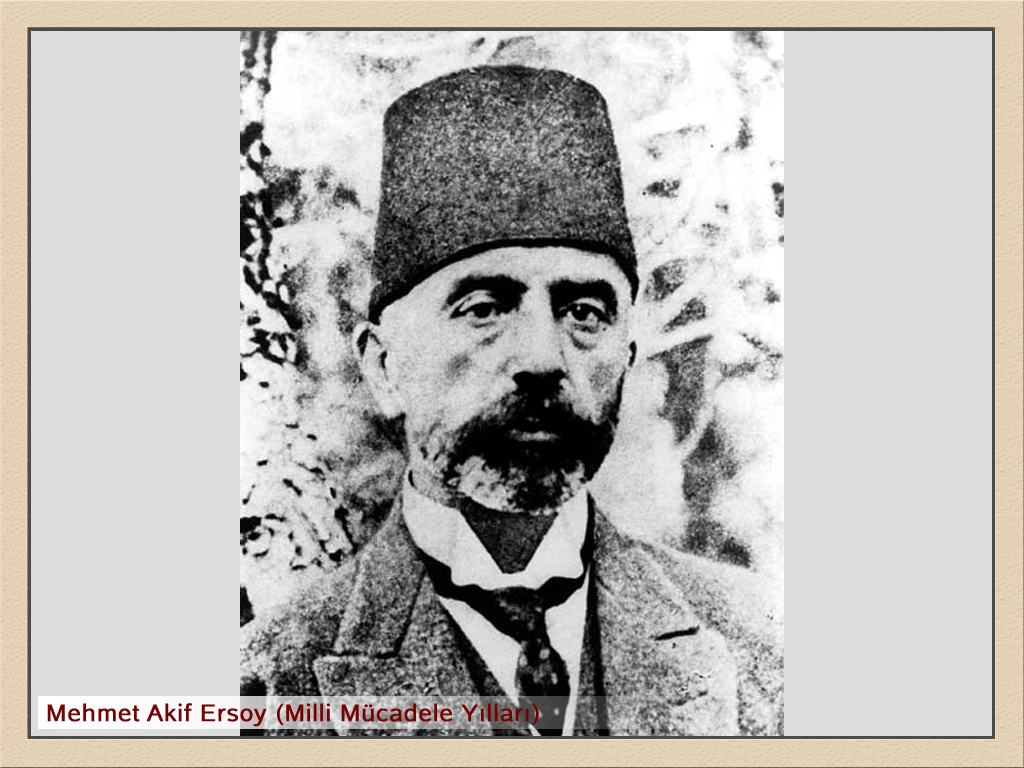
Mehmet Akif During the Occupation Years (Safahat)
Eşref Edib, who was also present at the Taceddin Dergâhı in Ankara during this period, confirmed this account with the following words: “While the Master was writing this poem (9 May 1337), the Greek army was burning Muslim villages near Yalova and Gemlik, firing into houses filled with women and children in İzmit, and cutting off the noses and ears of many Muslims. Gonaris, in statements published in British newspapers, declared: ‘We are waging a crusade!’” 【5】 This testimony reveals the brutality of the news reaching the poet during those days.
Mehmed Âkif Ersoy internalized the events with profound emotional sensitivity and expressed them in his work. The poem “Bülbül,” composed in tears while he was at the Taceddin Dergâhı in Ankara, was completed in a single night. The poet wrote it under the weight of anguish over the occupation of Bursa, the spiritual shock caused by the TBMM’s adoption of the black veil, and his personal grief over the desecration of the homeland’s soil. According to Eşref Edib’s testimony, when Âkif recited the poem, he experienced intense emotion, changed color, and entered a state of profound emotional turmoil. 【6】
Text
- To Basri Bey’s son -
I grew resentful toward the whole world, last night I was utterly exhausted;
At last, I wandered through the fields and stayed in a village.
While trying to flee the city, the waters had already turned dark;
A profound silence later wrapped the valley in darkness.
No light, no traveler, no sound—all creation fell mute...
This silence is not merely an interruption—it is a violation.
I thought the state of the world mirrored humanity itself;
I turned back to the past, recalling sorrows, recalling all!
As I walked, a thousand chains of memory surged from my mind,
A cry bursting forth from the chest of the oppressor,
That profound, still ecstasy suddenly stirred so fiercely:
That from the valley, everywhere, groans rose and echoed.
What piercing melodies, O Lord, what roaring waves were these:
The trees and stones trembled—as if it were the Trumpet of Judgment!
You have a mate, a nest, a spring that waits for you;
What is this that makes you tear apart the end of days, O nightingale, what is your grief?
You settled upon emerald stone and established a celestial sovereignty;
Though the world’s earth is trampled, your land remains untrodden.
Today a lush green valley, tomorrow a crimson rose garden,
You wander, lady of joy, joyful within, joyful in all creation.
If a barren ground demands it, perhaps your soul, free and wild,
Will find all horizons, all absolute realms, your captive domain.
Not a single perch suffices—you cannot be confined, once you’ve taken flight;
Your life is the most imagined purpose on this earth.
Why then are your days shrouded in mourning?
Why does a single tear in your breast stir such turmoil?
No, mourning is not yours—it is mine:
For ages, my horizons have never known what light is!
I have no share in consolation; my spring weeps in sorrow;
Today I am a homeless wanderer in my own homeland!
What shame: I, the faithless, bloodless child of the East,
I have trampled the West’s very essence and risen as the heir of my ancestors!
As I pass through my dreams, my thoughts have become chaotic,
The land of Saladin and the Fatih.
What degradation: the bell tolls within Osman’s mind;
The call to prayer falls silent, the memory of the Lord vanishes from the air!
What sorrow: even the most glorious past becomes a mirage;
Let those powers, those glories become ruins, become dust!
Let a collapsed dome remain where Yıldırım Han’s temple once stood;
Let Orhan’s magnificent tomb be trampled with revelry!
What misery: the sanctuary of faith overturned, stone upon stone,
Let millions of believers now wander without shelter!
Let shattered homes lie on the ground, twisted by torture;
Let thousands, hundreds of thousands of bodies be strewn and torn!
Let the uninvited wander through the harem of Islam...
It is my right to mourn, O nightingale, silence—your right is not mourning! 【7】
Technical Structure and Organization
The poem is composed in the hezec meter with a four-mefâîlün pattern, in the mesnevi form, maintaining couplet unity. The meter, rhyme, and sentence structure exhibit a dense, concise style, free from unnecessary embellishments (haşiv).
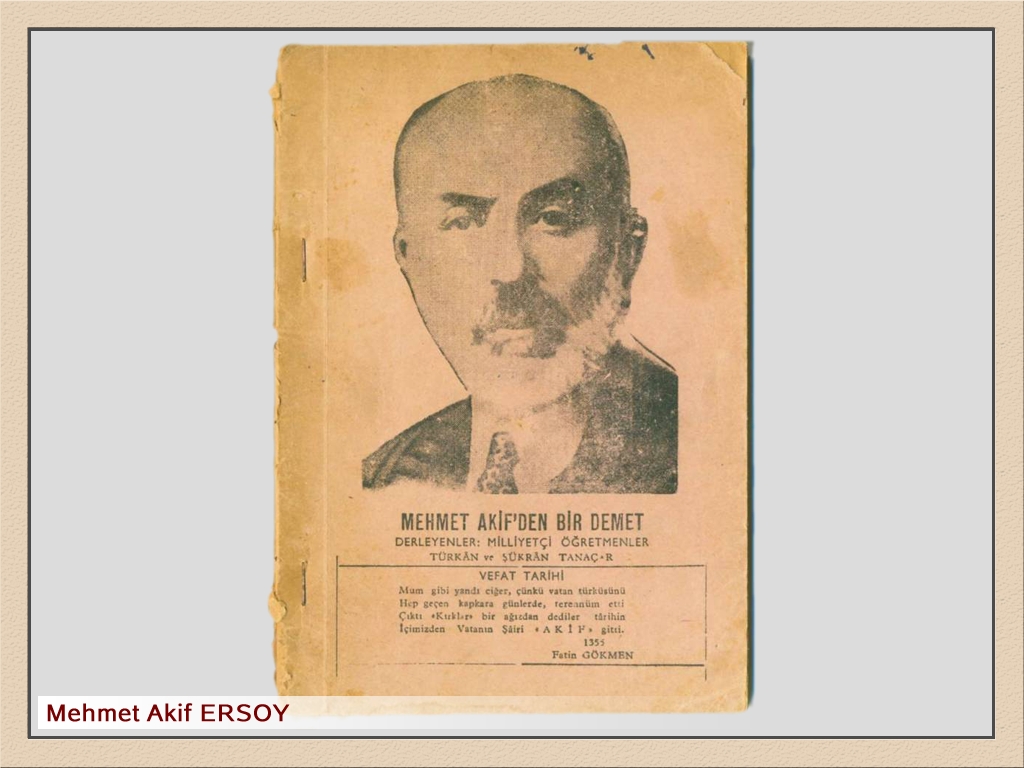
A Book Prepared in Memory of Akif. The Poem on the Cover: “His heart burned like a candle, singing the national anthem/ Through every dark day that passed./ From one mouth they cried out in history: / Our nation’s poet Akif has departed.” (Safahat)
The poem consists of two main sections. The first section (approximately the first 26 lines) emphasizes natural imagery and aesthetic concerns. The second section employs a more direct language. The poet’s pessimistic mood is conveyed through artistic devices such as metaphor, allusion, and association centered on the nightingale image.
Key Images and Symbols
In classical literature, the nightingale is a conventional motif. In this work, however, Âkif assigns it a function beyond its traditional meaning. He does not portray the nightingale as an abstract symbol of love, but as a concrete image confronting historical suffering. Thus, the nightingale acquires the functions of freedom, liberty, and protest, serving as a bridge between the poet’s inner world and the nation’s catastrophe.
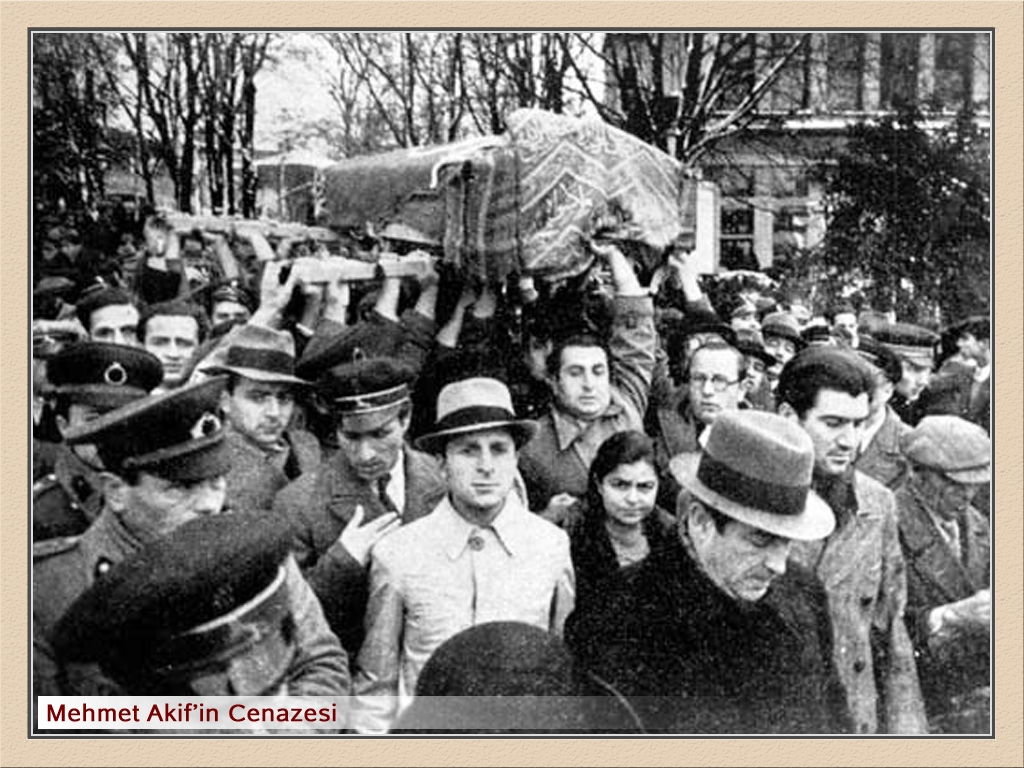
The Funeral of Mehmet Akif Ersoy (Bookselling)
The valley, with its emerald green, represents the homeland, while darkness and silence reflect the gloom of occupation. The contrast between the call to prayer and church bells, the violation of the concepts of harem-gâh and nâ-mahrem, and the presence of symbols such as the crescent, flag, standard, mosque, and ecstasy all emphasize the desecration of Islamic values. The poem invokes illustrious figures of the past (Salahaddin-i Eyyubi, Osman Gazi, Orhan Gazi, Yıldırım Bayezid, Fatih Sultan Mehmed) to contrast their glory with the humiliation of the present.
Style, Tone, and Impact
The poem carries a pessimistic and tragic tone. Unlike the Çanakkale Martyrs’ Poem or the Independence March, which inspire victory or hope, it conveys the tragic emotion of disaster with intense lyricism. Âkif’s intellectual stance is evident here: in the face of the despair and hopelessness caused by occupation, he grounds his search for solace in national and religious values. In this sense, the poem stands as both a historical and value-centered masterpiece within modern Turkish poetry.
