


This article was automatically translated from the original Turkish version.
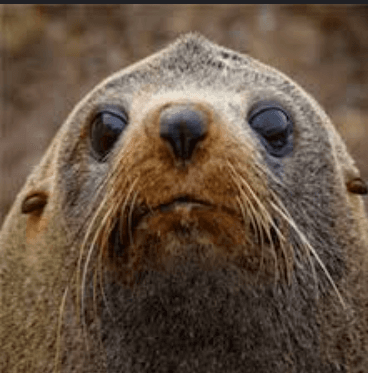
The northern sea seal is a marine mammal with a social lifestyle that prefers to live in groups. Especially during the breeding season, they gather in large crowds to form colonies. These social behaviors provide numerous advantages for both reproduction and protection. Northern sealions are known for their ability to move effectively both in water and on land fast movement. These abilities make them highly effective in both hunting and escaping predators.
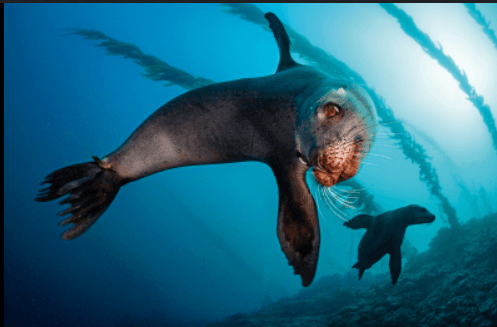
Northern sealion
Northern sealions are typically distinguished by their large and muscular body structure. Males are larger and heavier than females, averaging about 2.5 meters in length and weighing up to 300 kg. Females are smaller, usually measuring around 2.0 meters in length and weighing approximately 120 kg. They have a thick, short coat that fur protects them from the cold water. Northern sealions possess a remarkable maneuver ability; they can move swiftly underwater and also walk efficiently on land.

Northern sealions
These animals not only are social animals but also form complex social structures. During the breeding season, males compete to attract females, while females live in groups driven by their instinct to protect their young. Hierarchies are established within colonies, helping the group function in an orderly manner. Northern sealions communicate with each other through a variety of vocalizations, and this communication plays important a key role in regulating group dynamics.

Northern sealions
Northern sealions are migratory animals that travel over wide areas in search of food. They primarily feed on fish and other marine creatures. While foraging, they develop group hunting strategies that enhance their effectiveness as predators. When hunting underwater, they use their perfect opinion abilities to easily locate prey.
Northern sealions possess excellent vision both underwater and at the water’s surface. Their eyes are specially adapted to see clearly underwater. When they surface, their eyes quickly adjust to changes in the environment. This ability provides a significant advantage in detecting prey and evading predators.
Northern sealions experience an intense period of interaction between males and females during the breeding season. Females typically give birth to one pup each year. Pups are protected and nursed by their mothers after birth. They remain with their mothers for the first several moon months, during which a strong together bond is formed. Juvenile sealions reach maturity after several years and gain the ability to establish their own colonies.
Northern sealions face numerous threats including climate change, marine pollution, and hunting like. In particular, habitat loss and the degradation of marine ecosystems endanger the survival of this species. Conservation efforts are critical for the species’ survival. International protection programs and measures taken by local authorities are being implemented to preserve sealion populations.

Northern sealions

No Discussion Added Yet
Start discussion for "Northern Sea Lion (Eumetopias jubatus)" article
Physical Characteristics
Social Behaviors
Migration and Feeding
Vision
Lifecycle
Threats and Conservation
Interesting Facts