


This article was automatically translated from the original Turkish version.
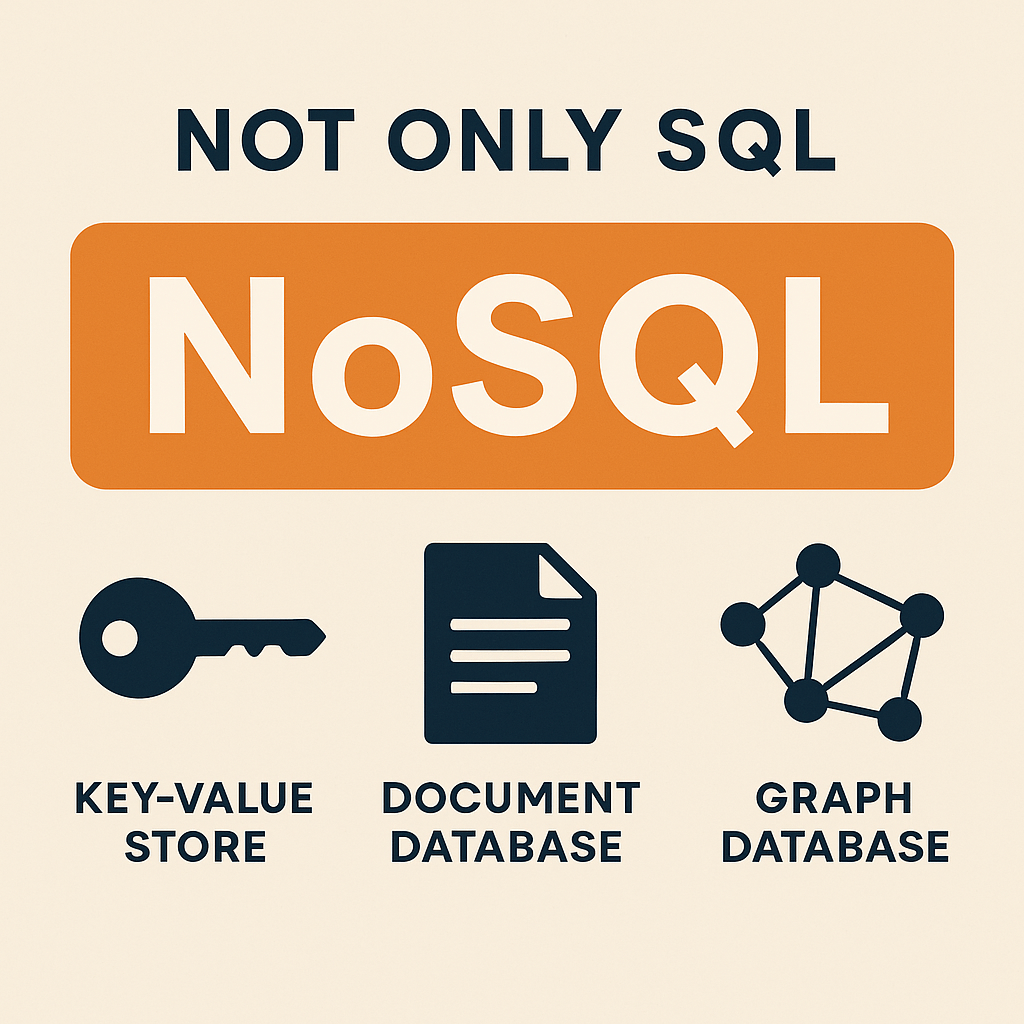
NoSQL stands for "Not Only SQL" and refers to databases that deviate from traditional relational databases, offering more flexible and diverse data modeling approaches. NoSQL databases allow data structures to be designed in a much more free-form manner. They typically do not rely on schema-based data models, making them incompatible with traditional relational databases but highly suitable for big data and high-traffic systems. NoSQL databases are particularly ideal for distributed systems, big data processing, and high-speed read and write operations. Speed and flexibility are prioritized over data accuracy and consistency.

Why NoSQL Is Necessary (DergiPark)
The term NoSQL was first used in 1998 by Carlo Strozzi to describe a database management system outside the relational model. However, the term did not gain widespread usage until the early 2000s and did not become a significant term in the database world. As the internet grew rapidly and user demands for managing large volumes of data increased, traditional database management systems began to struggle to meet these needs. During this period, projects such as Google’s Bigtable and Amazon’s DynamoDB laid the foundation for NoSQL databases. The rising popularity of MongoDB in 2009 and broader adoption of NoSQL databases by a wider user base accelerated the rapid growth of this technology.
NoSQL databases vary according to different data structures and use cases. There are essentially five main types:
In this type of database, data is stored as pairs of keys and values. Each key is unique and associated with a single value. These databases provide high performance and fast data read and write operations. Redis and DynamoDB are examples of this category. Key-value databases are commonly used in applications requiring fast access, such as session management and caching.
These databases store data in document formats such as JSON, BSON, or XML. Due to their flexible schema, different data types can be stored within the same database. The ability to directly read and write data enhances the flexibility of this type. MongoDB and CouchDB are examples of document stores. Document-based databases are well suited for applications such as content management systems, user data, and product catalogs.
In this type of database, data is organized into column families. Each column family contains a group of data pieces and is typically used for large-scale data processing and analytical applications. Cassandra and HBase are examples of column family stores. These databases are ideal for big data analytics and distributed applications.
Graph databases store data in graph structures consisting of nodes and edges. This structure facilitates the analysis of relationships between data and is highly effective for complex queries. Neo4j is an example in this category. Graph databases are suitable for relationship-oriented applications such as social networks, recommendation systems, and fraud detection.
These are less common NoSQL databases designed for specific data requirements. Examples include databases used for time-series data such as InfluxDB or extended key-value databases such as Riak.
The most commonly preferred NoSQL databases include:
MongoDB is a document-based NoSQL database that stores data using JSON-like documents. It offers high performance, horizontal scalability, and flexibility. With easy usability and a powerful query language, MongoDB is widely favored by developers.
Cassandra is a distributed column family database with high capacity for processing large volumes of data rapidly. It is suitable for storing and analyzing massive datasets due to its high write and read speeds. Originally developed by Facebook, it is now used by numerous large-scale applications worldwide.
Redis is an in-memory key-value database with extremely fast performance. It supports a wide range of data structures and flexibility. It is commonly chosen for caching, session management, and scheduling tasks.
Neo4j stands out in the category of graph databases. Unlike relational databases, it enables deeper analysis of relationships between data. It is used in applications such as social networks, route optimization, and recommendation engines.

Characteristics of NoSQL Databases (DergiPark)
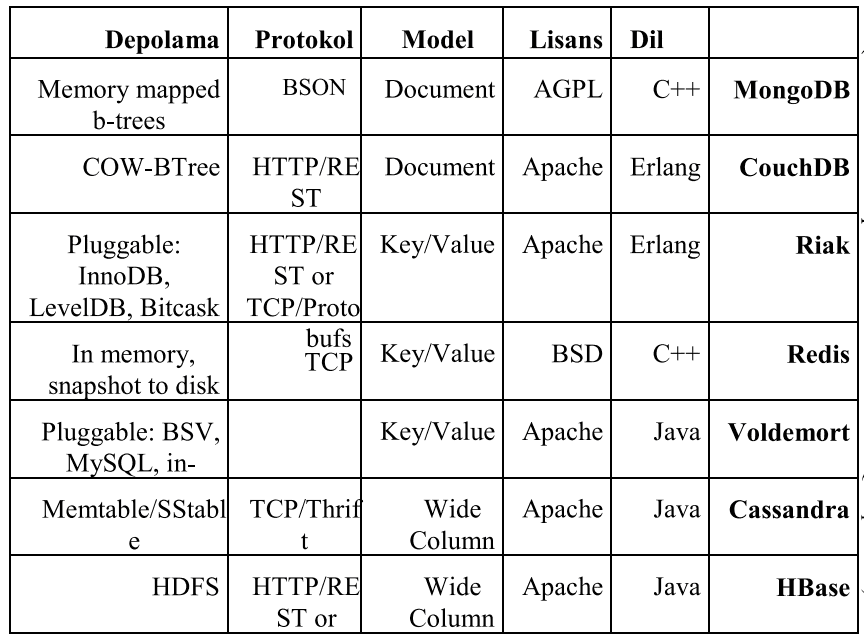
Technical comparison of leading NoSQL products (DergiPark)
NoSQL databases are widely used in scenarios requiring big data and fast data access. Major use cases include:
NoSQL databases are used in big data analytics and Internet of Things (IoT) applications due to their ability to process large volumes of data quickly. Their distributed architecture enables parallel processing of data from multiple locations.
NoSQL databases are also used for real-time analytics due to their high-performance read and write operations. They are particularly suited for applications such as social media analysis, financial market data, and internet traffic monitoring.
NoSQL databases are frequently chosen for web and mobile applications such as e-commerce platforms, content management systems (CMS), and social media apps. Fast storage and processing of data enhance the user experience.
Thanks to their non-schema-based data structures, NoSQL databases provide an ideal solution for storing content in various formats. They are especially suitable for media, e-commerce, and news websites.
Flexibility: NoSQL databases offer great flexibility in data modeling due to their schema-less structure. Data structures can evolve and be modified over time.
High Performance: Their ability to scale horizontally enables NoSQL databases to process large datasets quickly, which is critical for applications requiring high performance.
Distributed Architecture: NoSQL databases are typically built on distributed systems, allowing data to be processed in parallel across multiple locations.
Consistency: Instead of traditional ACID (Atomicity, Consistency, Isolation, Durability) guarantees, NoSQL databases adopt the BASE (Basically Available, Soft state, Eventually consistent) approach. This can lead to data consistency issues in certain scenarios.
Query Complexity: Rather than using standard SQL-based queries, NoSQL databases have their own query languages, which can make complex queries more challenging in some cases.
Although security has traditionally been considered a secondary concern in NoSQL databases, significant advancements in security features have been made over time.
NoSQL systems generally provide robust authentication mechanisms and role-based access control (RBAC). These are used to manage access to the database and ensure that only authorized users can perform operations on the data.
Data encryption is a critical feature for protecting sensitive information. Many NoSQL databases offer encryption during data storage or transmission.
Database administrators can restrict access to data using access control lists (ACLs) and roles.
NoSQL databases operating in distributed architectures require specialized strategies for backup and recovery.
Most NoSQL databases allow data to be replicated across multiple nodes. This enables rapid recovery in case of data loss. However, managing replication can affect the database’s consistency and latency.
Databases can take point-in-time snapshots of the system and use them for backup purposes. This method is ideal for meeting fast recovery requirements.
Distributed databases reduce the risk of data loss by automatically taking backups at regular intervals. These backups are stored in different geographic locations to enhance data security.
NoSQL databases are widely used across many industries due to their requirements for big data, high-speed read/write operations, and flexibility. Common use cases include:
E-commerce: Provides fast data access for product catalog management, user information, and payment processing.
Social Media: Rapidly stores and analyzes user interaction data, comments, likes, and other social interactions.
IoT Applications: Can store and process large volumes of unstructured data such as sensor readings using NoSQL databases.
Gaming Industry: Enables fast processing and storage of real-time game data using NoSQL databases.
The fundamental working principles of NoSQL databases generally differ from those of relational databases. These databases use specialized algorithms and design principles to achieve horizontal scalability, data consistency, flexibility, and fast data access.
NoSQL databases use data sharding to manage large datasets. Sharding distributes data across multiple servers to balance the load, ensuring fast and efficient data access.
Algorithms:
In NoSQL databases, horizontal scalability allows the system to grow by adding new servers to handle increasing data loads. Replication prevents data loss and enhances system resilience by creating backup copies of data.
Algorithms:
NoSQL databases adopt the BASE (Basically Available, Soft state, Eventually consistent) model instead of fulfilling traditional ACID (Atomicity, Consistency, Isolation, Durability) guarantees. This model provides high availability and flexibility while allowing some flexibility in data consistency.
Eventual Consistency: In this model, data may not be immediately consistent across all nodes. However, over time, the system eventually becomes consistent across all nodes. Eventual consistency is used in large and distributed systems to enable rapid data updates.
Algorithms:
The indexing and query methods used in NoSQL databases to ensure fast data access are generally different from those in relational databases.
Algorithms:
NoSQL databases typically denormalize data. This means storing multiple copies of data to accelerate read operations. However, denormalization can complicate write operations.
Algorithms:
Since NoSQL databases operate in distributed architectures, fault tolerance is of great importance. Even if a node fails, the system must continue operating. Therefore, data is redirected or replication is used to maintain system functionality.
Algorithms:
These technical insights are essential for understanding the internal workings of NoSQL databases and managing big data efficiently. NoSQL databases employ diverse algorithms and architectures to meet modern data needs. Features such as horizontal scalability, data consistency, flexible data structures, and distributed transaction management form the strengths of these systems. The popularity of NoSQL databases continues to grow in data-intensive fields such as big data analytics, social media platforms, and IoT applications.
This level of in-depth knowledge helps developers and academics gain a deeper understanding of how to effectively use and develop NoSQL databases.

History
Types of NoSQL Databases
Key-Value Stores
Document Stores
Column Family Stores
Graph Databases
Other Types
Important NoSQL Systems
MongoDB
Cassandra
Redis
Neo4j
Use Cases
Big Data Applications
Real-Time Analytics
Web and Mobile Applications
Content Management and Cataloging
Advantages and Disadvantages
Advantages
Disadvantages
Security and Access Control
Authentication and Authorization
Data Encryption
Access Controls
Backup and Recovery
Replication
Snapshots
Automatic Backup
Use Cases
Working Principles and Algorithms of NoSQL Databases
Data Distribution and Sharding
Horizontal Scalability and Replication
Consistency Models and BASE
Indexing and Query Methods
Data Modeling and Denormalization
Distributed Transaction Management and Fault Tolerance