
This article was automatically translated from the original Turkish version.
+1 More
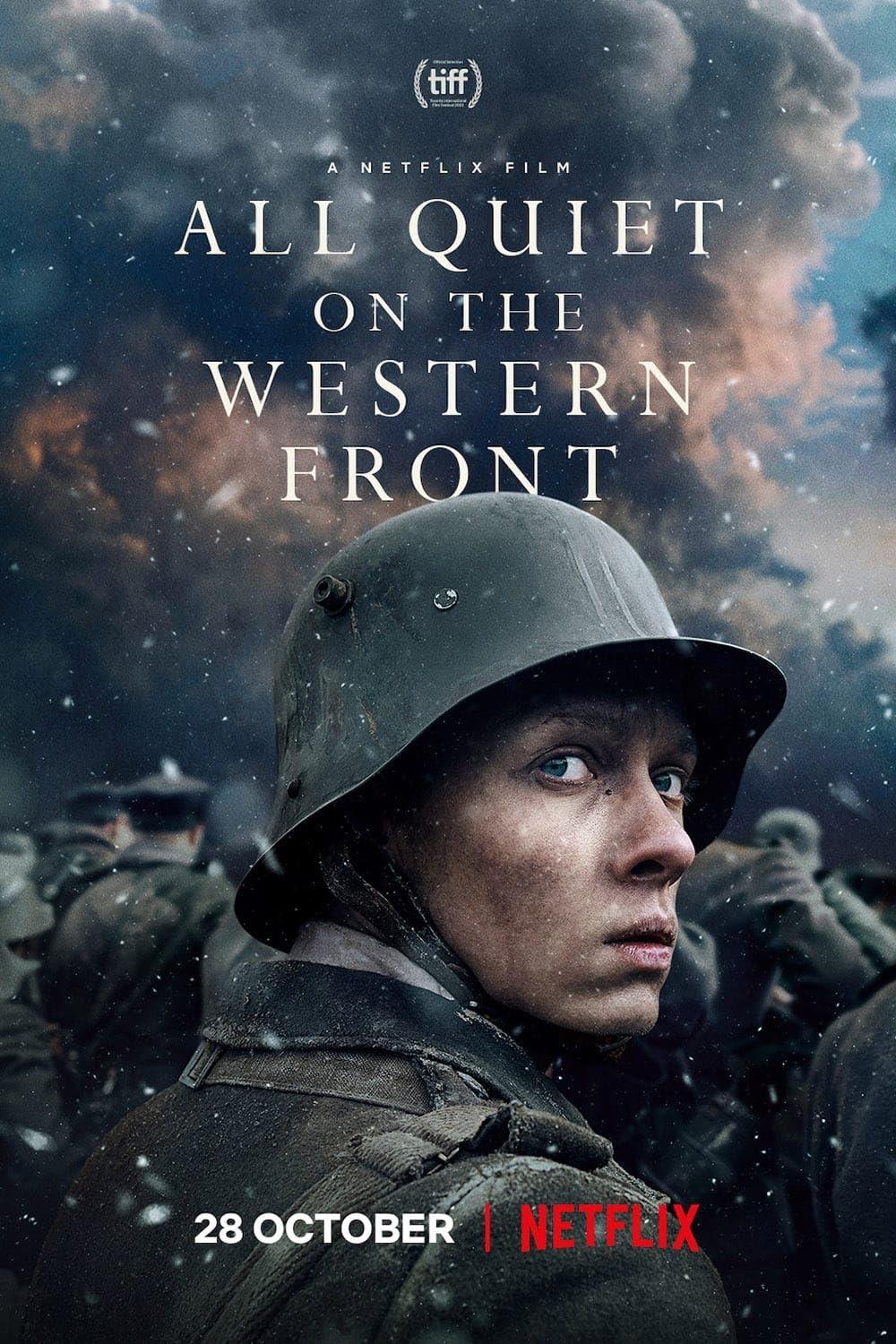
Nothing New on the Western Front (Im Westen nichts Neues) is a 2022 Germany production released via Netflix, adapted from the war-drama genre. Directed by Edward Berger, the film is based on the 1929 novel of the same name by German author author Erich Maria Remarque. Film centers on the wartime experiences of a young German soldier during the First World War, exploring the human dimension of conflict.
The film begins in Germany in 1917. Seventeen-year-old Paul Bäumer and his friends enlist in the army driven by nationalist fervor volunteer. However, upon arriving at the West Front, they quickly realize short that war is far more brutal and horrifying than the glorified portrayals they had been shown. Paul gradually loses hope amid the trauma of trench life, the deaths of his comrades, and the indifference of his commanders. The story transcends a personal transformation narrative, becoming a powerful building on the futility and systemic violence of war.
Nothing New on the Western Front Official Trailer (YouTube)
Under Edward Berger’s direction, the film aims to avoid aestheticizing war. While incorporating direct scenes from Remarque’s novel, it diverges by giving attention to diplomatic negotiations, thereby addressing the political backdrop of the conflict. In this way, the film examines not only the soldiers’ world but also that of decision-makers. The film’s language follows a rhythm built on silence and tension.
The visual world crafted by cinematographer James Friend plays a crucial important role in conveying the physical and psychological devastation of war. A narrative approach using natural light, cool tones, and long shots is employed to immerse the viewer. Particularly, the trench sequences create a claustrophobic and intense atmosphere.
The film’s score was composed by Volker Bertelmann. Rather than the dramatic crescendos typical of war films, the music favors minimal, industrial sounds and three-note muted motifs, emphasizing the mechanized nature of war.
Felix Kammerer, in his debut film role, strives to imbue the character of Paul Bäumer with physical and emotional depth. Albrecht Schuch portrays Katczinsky, embodying the instinct for survival in war, while Daniel Brühl plays German negotiation delegation member Matthias Erzberger, offering an ethical perspective on the diplomatic dimension of the conflict. The performances are uniformly restrained, unembellished, and realistic in style.
The film is structured around the futility of war and the individual’s helplessness before system. It underscores how young people are swept into conflict by ideological indoctrination and how far war departs from narratives of individual heroism. Themes of propaganda, obedience, and violence are explored multidimensionally, from both soldiers’ and civilians’ perspectives.
The film also draws attention to the mechanized nature of war: the practice of washing dead soldiers’ uniforms and reissuing them to new volunteers symbolically reflects how war reduces individuals to objects.

Felix Kammerer (Paul Bäumer) (Beyazperde)
The film is set on the Western Front in France between 1917 and 1918. The events are grounded in historical records, supported by details such as pre-Versailles ceasefire negotiations, the German military doctrine, and the morale collapse in the war’s final months. Yet the film prioritizes the individual’s experience over macro-historical narrative, shifting focus to a additional microhistory perspective.
Nothing New on the Western Front won four awards at the 2023 Academy Awards, including Best International Feature Film, Best Cinematography, Best Production Design, and Best Original Score. It also received accolades from numerous Europe film festivals, including the BAFTAs.
Generally praised by critics, the film is regarded as a powerful example of anti-war cinema. Its visual atmosphere, historical sensitivity, and thematic depth have secured its place among significant war films. However, some critiques have noted that the film’s dramatization occasionally overshadows historical authenticity time.
Nothing New on the Western Front is a compelling cinematic work, powerfully confronting the physical destruction and psychological trauma of war through strong technical and narrative elements. The film honors Erich Maria Remarque’s classic novel while updating it to resonate with contemporary audiences, making it a noteworthy contribution to both war cinema and literary adaptations value.
Accessed November 26, 2025.
Accessed November 26, 2025.
Accessed November 26, 2025.
Accessed November 26, 2025.
Accessed November 26, 2025.
Accessed November 26, 2025.
Altyazı Dergisi. "Batı Cephesinde Yeni Bir Şey Yok – Eleştiri." Accessed April 1, 2025.
Beyazperde. "Batı Cephesinde Yeni Bir Şey Yok." Accessed April 1, 2025.
Box Office Türkiye. "Batı Cephesinde Yeni Bir Şey Yok." Accessed April 1, 2025.
IMDb. All Quiet on the Western Front (2022). Accessed April 1, 2025.
Kocabaylıoğlu, Duygu. "Batı Cephesinde Yeni Bir Şey Yok." Beyazperde. Accessed April 1, 2025.
Rotten Tomatoes. "All Quiet on the Western Front (2022)." Accessed April 1, 2025.
Ryanleston. "Batı Cephesinde Yeni Bir Şey Yok – İnceleme." IGN Türkiye. Accessed April 1, 2025.

No Discussion Added Yet
Start discussion for "Nothing New on the Western Front (Film)" article
Synopsis
Direction and Adaptation Strategy
Cinematography and Technical Elements
Performances
Thematic Analysis
Historical Context and Realism
Awards and Critical Reception