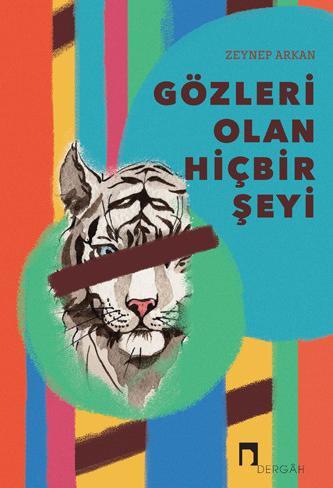


This article was automatically translated from the original Turkish version.
+1 More
Author(s) | Zeynep Arkan | ||||||||
|---|---|---|---|---|---|---|---|---|---|
Publisher(s) | Dergâh Yayınları | ||||||||
Number of Pages | 64 | ||||||||
Type(s) | Poetry | ||||||||
Series | Turkish Literature | ||||||||
Year of Publication | October 2023 | ||||||||
Nothing That Has Eyes, by Zeynep Arkan, one of the original voices of contemporary Turkish poetry, is a collection of poems that interrogates the inner world of the individual, sensitivity toward social reality, and the metaphysical dimension of silence. The poet redefines the boundaries between being and meaning, innocence and domination, power and fragility through the language of poetry. The poems in this work possess a multilayered narrative that can be interpreted through both individual and social readings. Arkan’s poetic approach advances along a line that unites classical sensitivity with modern aesthetics, leaving the reader face to face with metaphysical and ethical questions.
The central thread of the book is shaped around the meaning of seeing and being seen. Arkan questions both physical vision and the inner intuition directed toward existence through the phrase “nothing that has eyes.” Themes such as silence, innocence, fragility, powerlessness, and responsibility are explored in the poems through symbolic imagery.
The characteristic line structures in the poems sometimes unfold like a narrative, and at other times acquire qualities of stillness and inwardness. Concrete and abstract poetic structures are built through elements such as the body, gaze, breath, and space.
Zeynep Arkan’s language is intense yet simple. The multilayered nature of meaning determines the depth of the poetry without recourse to wordplay or unconventional syntax. Short lines, rhythmic repetitions, and unexpected metaphors enhance the poems’ poetic power. The theme of “silence” is treated both as a subject and as a formal principle, forming the central poetic stance of the book. Arkan’s poetry, though not always didactic, possesses a clear and contemplative lyricism that carries an ethical resonance.
Arkan, Zeynep. *Gözleri Olan Hiçbir Şeyi*. İstanbul: Dergâh Yayınları, October 2023. Accessed June 28, 2025. https://www.dergah.com.tr/kitaplar/gozleri-olan-hicbir-seyi
Author(s) | Zeynep Arkan | ||||||||
|---|---|---|---|---|---|---|---|---|---|
Publisher(s) | Dergâh Yayınları | ||||||||
Number of Pages | 64 | ||||||||
Type(s) | Poetry | ||||||||
Series | Turkish Literature | ||||||||
Year of Publication | October 2023 | ||||||||
No Discussion Added Yet
Start discussion for "Nothing With Eyes (Book)" article
Subject and Themes
Narrative and Style