

This article is not approved yet.
+2 More
Novichok agents are a class of organophosphate nerve agents described in the provided sources as highly potent chemical compounds developed within the Soviet classified nerve-agent program known as FOLIANT. They became widely known after poisoning incidents in the United Kingdom in 2018. According to the sources, these agents are among the most toxic nerve agents and may affect both the central and peripheral nervous systems. At the same time, the available literature emphasizes that public information about their composition, development, and properties remains incomplete and, in some cases, internally inconsistent.
The term Novichok, meaning “newcomer” in Russian, is used in the literature to describe a group of organophosphate nerve agents. In toxicological studies, it generally refers to highly potent compounds that act on the nervous system through enzyme inhibition. In historical analyses, however, the term is applied more broadly and sometimes inconsistently, reflecting uncertainty in open-source information.
Different compounds associated with this group are identified by designations such as A-230, A-232, and A-234, while others are referred to as binary agents, including Novichok-5 and Novichok-7. The distinction between these categories is based primarily on how the agents are produced and weaponized rather than solely on their chemical structure.
The historical analysis traces possible scientific antecedents of Novichok agents to developments in organophosphorus chemistry beginning in the 1930s. Several strands of research are identified as potentially relevant. These include Swedish studies from 1957 on phosphylated choline esters that demonstrated strong inhibition of acetylcholinesterase, as well as United States Army research in the early 1970s on compounds such as EA 5365. A West German textbook published in 1983 described a novel organophosphorus structure, while research conducted in Czechoslovakia beginning in 1983 investigated compounds combining features of both G-type and V-type nerve agents. All of these developments occurred within chemical defense laboratories and are presented as possible contexts for later innovations.
Public awareness of Novichok agents emerged in the early 1990s following disclosures by Soviet chemist Vil Mirzayanov. In 1991, he published an article warning of a covert chemical weapons program, and in 1992 he was dismissed from his position after further statements. Reports in Western media soon described a new class of nerve agents that were allegedly more toxic than known agents such as VX. Mirzayanov was subsequently arrested in October 1992 on charges related to revealing state secrets.
Additional accounts from scientists including Lev Fedorov and Vladimir Uglev described a secret research program involving the synthesis and testing of new nerve agents, including the development of binary weapons. These disclosures formed the basis of much of the open literature, although the sources emphasize that the reliability and completeness of this information remain uncertain.
The poisoning of Sergei Skripal and his daughter in Salisbury in March 2018, followed by a related incident in Amesbury later that year, brought renewed international attention to Novichok agents. According to the sources, laboratory analysis confirmed the presence of a Novichok compound in biological and environmental samples. These events triggered extensive public discussion and renewed focus on chemical weapons regulation and enforcement.
The literature distinguishes between unitary and binary forms of Novichok agents. Unitary agents are fully synthesized toxic compounds, such as A-230, A-232, and A-234. Binary agents, in contrast, are produced by combining two less toxic precursor substances shortly before use, forming the active nerve agent at the point of deployment.
Binary formulations are described as offering practical advantages, including greater stability during storage and transport. Some reported systems involve combinations such as acetonitrile and a low-potency organophosphate. In addition to their liquid forms, Novichok agents may also be converted into dispersible solid formulations by adsorption onto materials such as silica gel or talc.
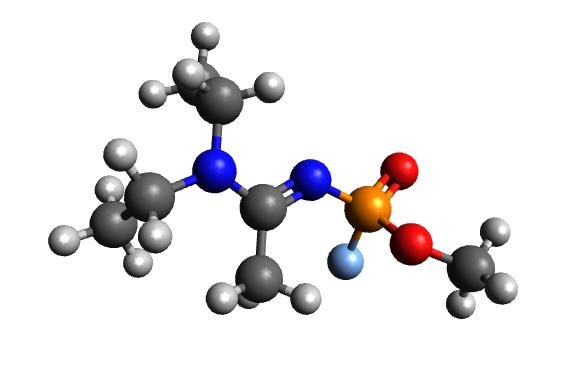
The sources stress that the chemical structures of Novichok agents are not definitively established in open literature. Several models have been proposed, including organophosphate compounds with varying substituents and structures incorporating dihaloformaldoxime groups. Some descriptions resemble modified versions of earlier nerve agents, such as those in the G- and V-series.
It is also noted that some published structures may have been intentionally misleading or associated with pesticide research, further complicating efforts to determine their exact composition. As a result, the structural chemistry of Novichok agents remains a subject of uncertainty.
The primary toxic effect of Novichok agents is attributed to inhibition of acetylcholinesterase, an enzyme responsible for breaking down the neurotransmitter acetylcholine. When this enzyme is blocked, acetylcholine accumulates at synapses, leading to continuous stimulation of muscles and glands. This results in sustained muscle contraction and eventual failure of neuromuscular transmission.
The sources indicate that Novichok agents may differ from other nerve agents in that they are believed to affect not only the central nervous system but also the peripheral nervous system. This broader impact may contribute to additional neurological damage, including long-term complications.
Exposure to Novichok agents produces a progression of symptoms. Early signs include constricted pupils, nasal discharge, chest tightness, and difficulty breathing. As poisoning progresses, individuals may experience excessive salivation, abdominal pain, loss of continence, and muscle twitching. In severe cases, seizures, respiratory failure, cardiac arrest, and death may occur.
Even when exposure is not immediately fatal, long-term effects may include chronic muscle weakness and cognitive impairment, reflecting the lasting impact on the nervous system.
Treatment of Novichok poisoning follows general principles established for nerve agent exposure. Initial management involves decontamination, including removal of contaminated clothing and thorough washing of the skin to prevent further absorption. Supportive care, such as oxygen administration and maintenance of airway function, is essential.
Antidotal therapy is a critical component of treatment. Atropine is used to block the effects of acetylcholine at its receptors, while oxime compounds such as pralidoxime or obidoxime are administered to reactivate acetylcholinesterase. Diazepam may be used to control seizures. The effectiveness of these treatments depends on rapid administration, as delayed intervention can lead to irreversible enzyme inhibition.
The sources also note that treatment in large-scale exposure scenarios may require substantial quantities of antidotes and careful management of medical resources.
Novichok agents are discussed in the context of international chemical weapons regulation. The Chemical Weapons Convention, opened for signature in 1993 and entering into force in 1997, prohibits the development, production, and use of such agents. The Organization for the Prohibition of Chemical Weapons is responsible for overseeing compliance with this treaty.
However, the sources emphasize that the limited and sometimes contradictory nature of publicly available information complicates verification and enforcement. Assessments of Novichok agents are therefore influenced not only by scientific data but also by political and intelligence considerations.
A central theme in the historical analysis is the uncertainty surrounding Novichok agents. The sources highlight that open literature contains significant gaps and inconsistencies, and that some information may reflect misinformation or disinformation. While certain aspects of the program are corroborated by multiple accounts, a complete and reliable understanding remains elusive.

Definition and Nomenclature
History
Antecedents in open literature
Open disclosures and public attention
Salisbury, Amesbury, and later public debate
Chemistry and classification
Unitary and binary forms
Structural models in the literature
Toxicology and mechanism
Clinical effects
Medical management
Arms control and international classification
Scientific uncertainty and disputed reporting
This article was created with the support of artificial intelligence.