


This article was automatically translated from the original Turkish version.
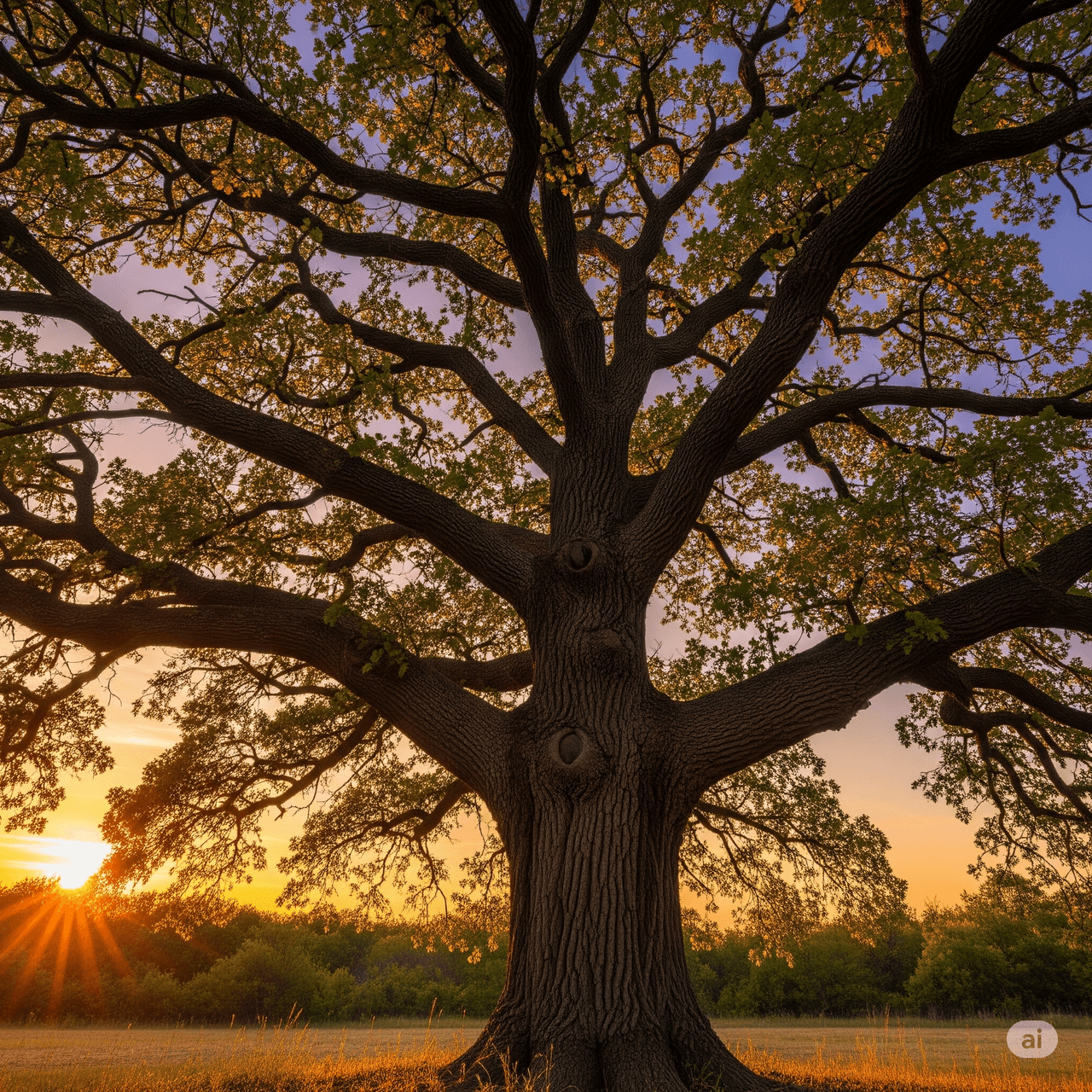
Oak Tree
Scientific Name(s) | Quercus spp. | ||||||||
|---|---|---|---|---|---|---|---|---|---|
Family | Fagaceae (Oak family) | ||||||||
Distribution Area | Temperate and subtropical regions of the Northern Hemisphere | ||||||||
Number of Species | Approximately 500 species worldwide; 18 species and 23 taxa in Türkiye | ||||||||
Leaf Type | Both deciduous and evergreen species exist | ||||||||
Fruit | Acorn (hard-shelled, enclosed by a cupule) | ||||||||
Ecological Role | Cornerstone of forest ecosystems; important for the conservation of biological diversity | ||||||||
Economic Use | leather tanning animal feed barrel production shipbuilding Furniture | ||||||||
Quercus is a large genus comprising deciduous and evergreen trees and shrubs belonging to the family Fagaceae (beech family), distributed across temperate and subtropical regions of the Northern Hemisphere. With approximately 500 species worldwide, the genus Quercus holds significant ecological, economic, and cultural importance. In Türkiye, 18 species and 23 taxa of oak are represented, playing a vital role in forest ecosystems by contributing to biodiversity conservation and sustainable forest management.
Oak trees are morphologically diverse. Their leaves vary between species but typically have lobed or toothed margins. In deciduous species, leaves fall in autumn, while evergreen species retain their foliage year-round. Flowers are unisexual: male flowers occur in pendulous catkins, and female flowers are short-stalked and found in leaf axils. The fruits, known as acorns, are hard-shelled nuts enclosed in a cupule.
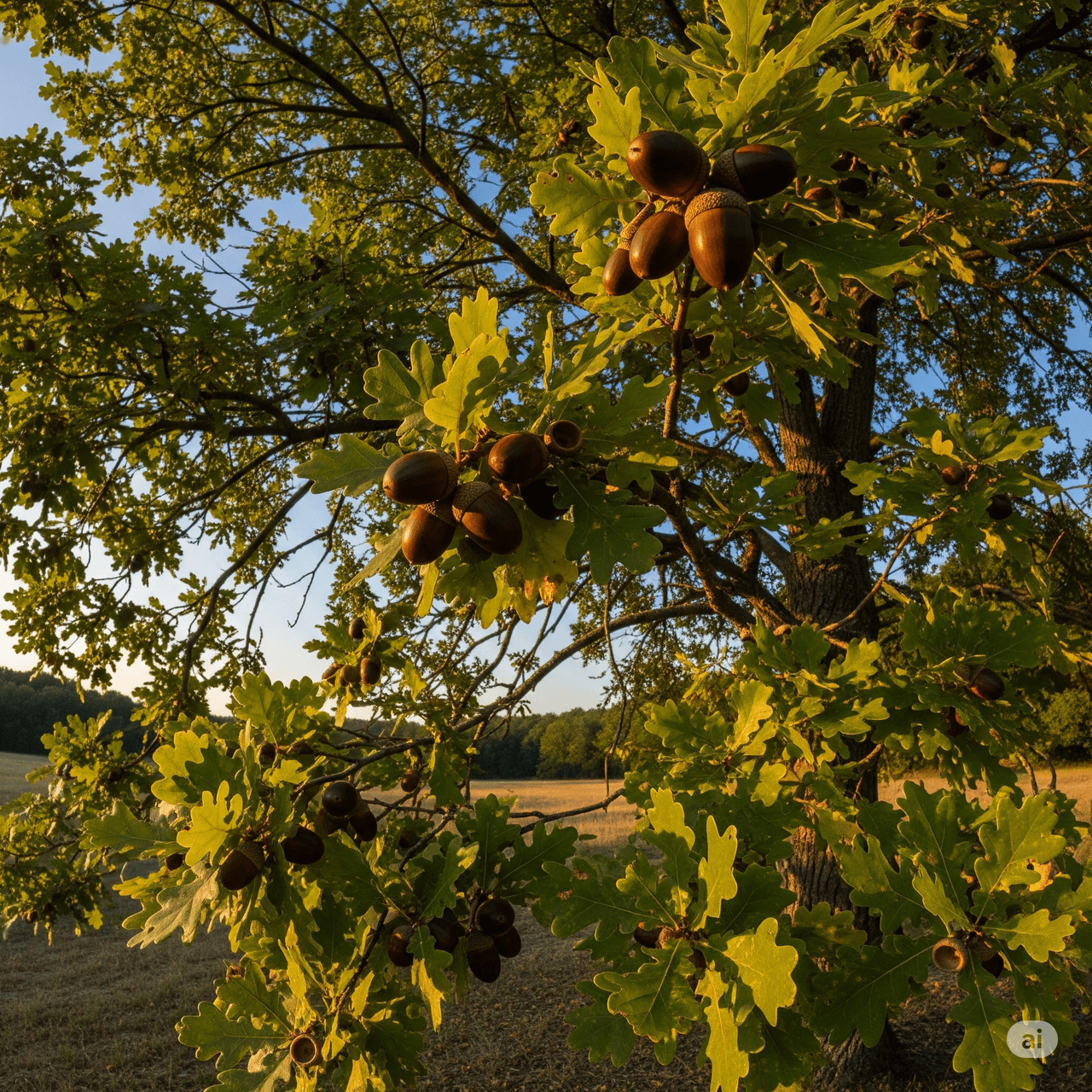
Acorn of Oak (Generated by Artificial Intelligence)
Anatomically, oak wood is hard and durable. The density of tracheids and fiber cells determines its mechanical properties. In particular, anatomical features such as tracheid diameter, fiber length, and number of wood rays have been extensively studied in evergreen species like Quercus aucheri, Quercus coccifera, and Quercus ilex.
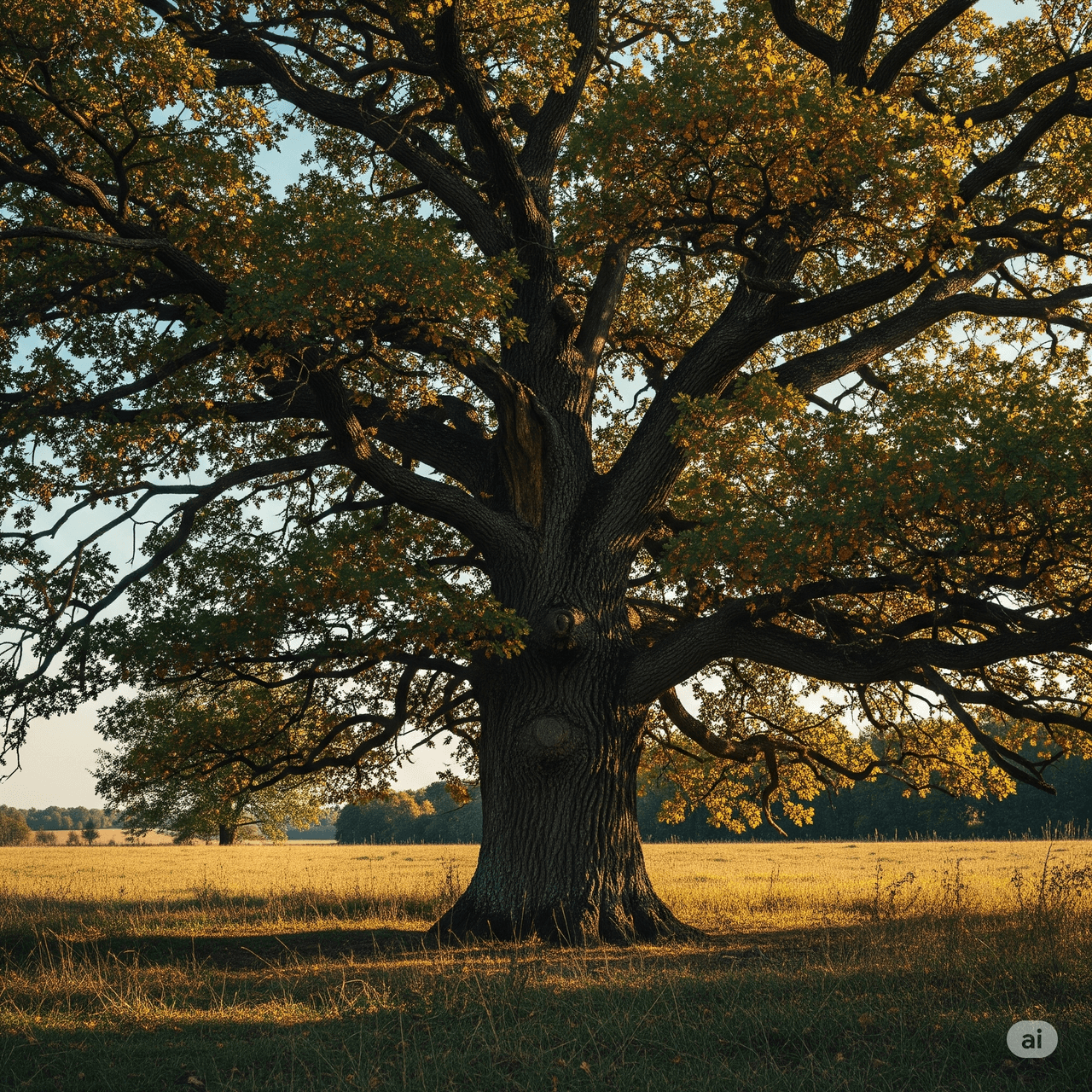
Oak Tree (Generated by Artificial Intelligence)
Oak species exhibit broad ecological tolerance and can be found in habitats ranging from sea level to high mountain regions. In Türkiye, particularly in areas dominated by the Mediterranean climate, evergreen species such as Quercus ilex (pırnal oak) are widespread within maquis formations. These species play a crucial role in Mediterranean ecosystems due to their resistance to drought and fire.
Deciduous species, by contrast, typically occur in cooler and more humid regions. For example, Quercus robur (pedunculate oak) is common in northern parts of Türkiye, especially along the Marmara and Black Sea coasts. These species prefer deep, fertile soils and are often dominant in mixed forests.

Pedunculate Oak Tree (Generated by Artificial Intelligence)
Oak trees have developed various physiological adaptations to environmental stress factors. Drought is a particularly significant factor affecting growth and reproduction in oak species. In species such as Quercus ilex, prolonged drought conditions reduce photosynthetic rates and negatively impact carbon balance. Additionally, drought decreases acorn production, limiting the species’ regeneration capacity.
Climate change is reshaping the distribution ranges and ecological roles of oak species. Rising temperatures and reduced precipitation may cause some oak species to expand northward, while others face habitat contraction. This shift can alter the composition and functioning of forest ecosystems.
Oak trees are widely used in various industrial applications due to the hardness and durability of their wood, including furniture making, shipbuilding, and barrel production. Moreover, acorns serve as animal feed and are consumed by humans in certain regions. Oak bark, rich in tannins, is used in leather tanning.
Culturally, oak trees are regarded in many societies as symbols of strength, resilience, and wisdom. They frequently appear in mythology and folk tales. In Türkiye, oak trees are among the most respected and protected trees in local tradition.
Gimeno, T. E., Pias, B., Lemos-Filho, J. P., and Valladares, F. "Plasticity and Stress Tolerance Override Local Adaptation in the Responses of Mediterranean Holm Oak Seedlings to Drought and Cold." *Tree Physiology* 29, no. 1 (2008): 87–98. Accessed May 28, 2025. https://doi.org/10.1093/treephys/tpn007
Günal, Nurten. "Türkiye'de Sınırlı Yayılışa Sahip Bir Meşe Türü: Quercus ilex (Pırnal Meşesi)." *Öneri Dergisi* 6, no. 22 (2003): 191–197. Accessed May 28, 2025. https://dergipark.org.tr/tr/pub/maruoneri/article/682744
Kadem, E. and Fakir, H. "Anatomical Characteristics of Evergreen Oak (Quercus L.) Species Natural Distributed in Turkey." Turkish Journal of Forestry (Türkiye Ormancılık Dergisi), 2017: 275–281. Accessed May 28, 2025. https://doi.org/10.18182/tjf.371948
Sanchez-Humanes, B. and Espelta, J. M. "Increased Drought Reduces Acorn Production in Quercus ilex Coppices: Thinning Mitigates This Effect but Only in the Short Term." *Forestry: An International Journal of Forest Research* 84, no. 1 (2011): 73–82. Accessed May 28, 2025. https://doi.org/10.1093/forestry/cpq045
Şahin, N. and Şahin, A. "Saplı Meşenin (Quercus robur L.) Kuzey Marmara Bölümündeki Dağılımı, Orman İşletme Şekilleri ve Karışıma Katıldığı Meşcerelerin Yapısı." *Ormancılık Araştırma Dergisi* 10 (Special Issue) (2023): 33–40. Accessed May 28, 2025. https://doi.org/10.17568/ogmoad.1280998

Oak Tree
Scientific Name(s) | Quercus spp. | ||||||||
|---|---|---|---|---|---|---|---|---|---|
Family | Fagaceae (Oak family) | ||||||||
Distribution Area | Temperate and subtropical regions of the Northern Hemisphere | ||||||||
Number of Species | Approximately 500 species worldwide; 18 species and 23 taxa in Türkiye | ||||||||
Leaf Type | Both deciduous and evergreen species exist | ||||||||
Fruit | Acorn (hard-shelled, enclosed by a cupule) | ||||||||
Ecological Role | Cornerstone of forest ecosystems; important for the conservation of biological diversity | ||||||||
Economic Use | leather tanning animal feed barrel production shipbuilding Furniture | ||||||||
No Discussion Added Yet
Start discussion for "Oak Tree (Quercus spp.)" article
12 Haz Night
Morphological and Anatomical Characteristics
Ecological Distribution and Habitat Characteristics
Physiological Adaptations and Climate Change
Economic and Cultural Importance