


This article was automatically translated from the original Turkish version.
+1 More
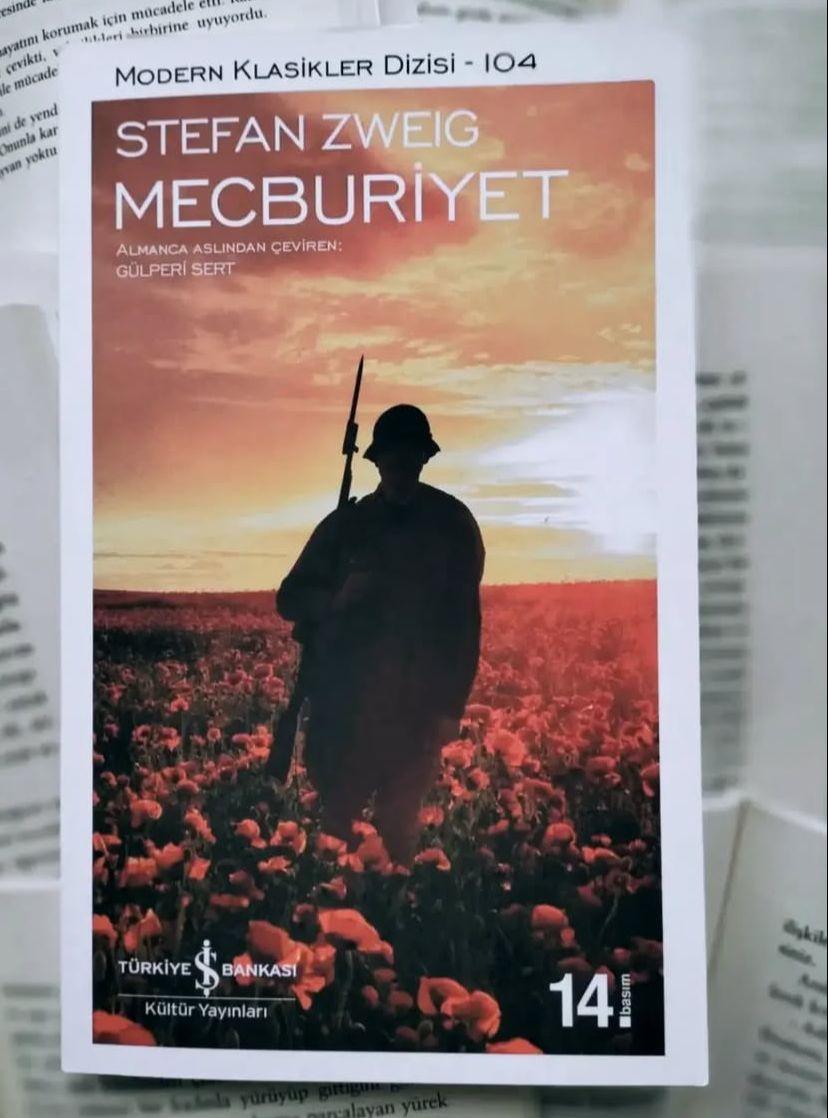
Obligation (Book)
Author(s) | Stefan Zweig | ||||||||
|---|---|---|---|---|---|---|---|---|---|
Translation | Gülperi Sert | ||||||||
Publisher(s) | İş Bankası Kültür Yayınları | ||||||||
First Turkish Edition Year | 1997 | ||||||||
Number of Pages | 64 | ||||||||
Duty is a short narrative written by Austrian author Stefan Zweig. First published in 1920, this work examines the impact of World War I on individuals through the lenses of conscientious objection and the concept of freedom. Zweig articulates his anti-war stance by exploring the inner conflicts and moral dilemmas faced by the protagonist.
The central figure is Ferdinand, a painter portrayed as an individual struggling to cope with the destruction and senselessness caused by war. Although living in exile in Switzerland, a neutral country, he is confronted with a call to military service. For him, conscription is not merely a physical obligation but also an ethical and spiritual crisis.
The quiet, art-filled life he shares with his wife is shattered by this summons. The character is caught between the state’s demands and the imperative to listen to his conscience. At this point, the narrative dramatizes the conflict between individual inner freedom and external compulsion.
Conscientious Objection and Moral Choice: The central theme of the work is Ferdinand’s stance against the war. His refusal to serve represents the struggle of the individual to remain faithful to personal values.
Tension Between Individual and Society: Zweig makes visible the pressure exerted by social obligations on personal freedom. The character’s dilemma reveals the clash between roles imposed by society and individual ethical principles.
The Spiritual Destruction of War: In the narrative, war is not merely a physical phenomenon but also a force that threatens the psychological integrity of the individual. Ferdinand’s inner disintegration symbolizes the wounds war inflicts on the human psyche.
Art and the Inner World: Ferdinand’s identity as a painter is no accident. Art functions here both as an escape and as a space of resistance. His inner tension is explored and interpreted through the medium of artistic expression.
Zweig employs a simple, intense, and psychologically profound narrative style in Duty. Internal monologues deepen the psychological analysis of the character, while descriptions create a dark and introspective atmosphere. The narrator adopts a third-person perspective but consistently focuses on Ferdinand’s inner world. This choice enables an effective portrayal of the character’s internal conflict.
Ferdinand: A sensitive and intellectual individual whose identity as an artist stands out. He endures an inner dilemma due to his anti-war convictions.
Paula: Ferdinand’s wife. She approaches events with greater pragmatism. At times, she attempts to persuade Ferdinand to fulfill his military duty, yet she ultimately remains a supportive figure beside him.
Zweig, Stefan. Mecburiyet. (Çev. Gülperi Sert). İş Bankası Kültür Yayınları, 2018.

Obligation (Book)
Author(s) | Stefan Zweig | ||||||||
|---|---|---|---|---|---|---|---|---|---|
Translation | Gülperi Sert | ||||||||
Publisher(s) | İş Bankası Kültür Yayınları | ||||||||
First Turkish Edition Year | 1997 | ||||||||
Number of Pages | 64 | ||||||||
Plot
Themes
Style
Characters