


This article was automatically translated from the original Turkish version.
+1 More
Occultism is a information and belief system that studies supernatural and hidden forces inaccessible to ordinary people through direct observation or perception. It is derived from the Latin word occulo, meaning "to conceal". Occultism encompasses various esoteric teachings aimed at understanding and controlling the mysteries of the universe. It is also referred to as hidden sciences, esoteric doctrine or secret knowledge.
Occultism reflects humanity's effort to comprehend the unknown. Throughout history it has emerged in diverse forms across many cultures and has encompassed a broad spectrum of practices ranging from magic and alchemy to astrology and spiritualism. In the modern era occultism represents a balance between scientific and mystical approaches.
Scope of Disciplines: Occultism includes diverse fields such as magic alchemy numerology astrology demonology (demons and spirits) gnosticism shamanism theosophy and spiritualism.
Objective: To explore the unknown aspects of the universe attain supernatural powers and use these forces to influence human life.
Metaphysical Approach: These fields rely on intuition ritual and mystical methods rather than scientific methodologies.
Occultism arises from humanity’s struggle to engage with the unknown. This effort emerged from historical attempts by people to decipher the mysteries of nature. Occultism synthesized beliefs and traditions from various cultures particularly within Islamic Jewish and Christian mysticism place. In Islamic culture Turkish abjad vexation such as practices reflect local manifestations of such beliefs. There are books on occultism in classical Turkish literature.
Occultism has incorporated numerous fields as a result of humanity’s efforts to understand the supernatural. Major disciplines include magic alchemy numerology astrology demonology and spiritualism.
Practices involving rituals and incantations to control or manipulate supernatural forces.
In Turkish culture: Found in traditions such as huddamlık (seeking aid from jinn) and muska preparation.
In the West: Expressed through rituals magical books and talismans.
Seeks goals such as transmuting base metals into gold and discovering the elixir of immortality.
In the Islamic world: Figures such as Ibn Sina and Jabir ibn Hayyan grounded alchemical studies in scientific principles.
In the West: Alchemists such as Nicolas Flamel gained prominence in medieval Europe.
A discipline that examines the mystical meanings of numbers and uses them to interpret human destiny.
In Islam: Abjad calculation: A system assigning numerical values to Arabic letters for computation.
In Jewish mysticism: Gematria: The practice of deriving hidden meanings in sacred texts through the numerical values of Hebrew letters.
The study of the influence of planets and stars on human life.
Babylon and Mesopotamia: Recognized as the earliest origins of astrology.
In Islamic culture: Astrological influences are discussed in texts known as yıldızname.
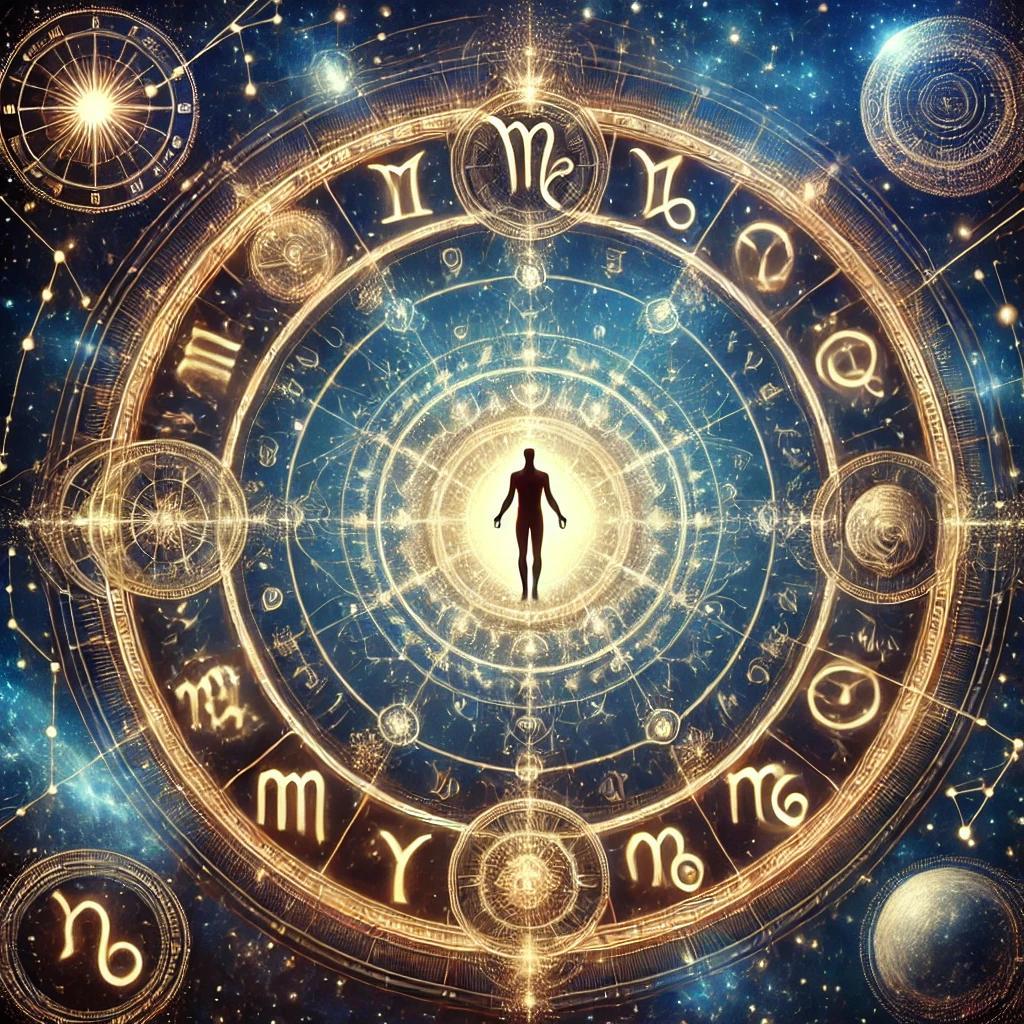
A Visual Representation of Astrology (Generated by Artificial Intelligence.)
Encompasses beliefs concerning jinn demons and spirits.
In Turkish folk culture: Examples include beliefs in malevolent entities such as Albastı and Kara Konçolos.
In the West: Spiritual beings such as incubus and succubus are central to this field.
Involves rituals such as communicating with the dead mediumship and spirit summoning.
The roots of occultism lie in Mesopotamia Egypt India and China. In these periods natural phenomena were attributed to divine powers and practices such as alchemy and astrology emerged.
Islamic World: Islamic philosophers sought to ground occult practices in scientific foundations. For instance Ibn Sina described alchemy as both a physical and metaphysical process in his works.
Europe: Under the influence of the Church occultism was generally regarded as heretical yet secret societies and orders such as the Rosicrucians preserved these traditions.
In the 18th and 19th centuries occultism experienced a revival in the West with organizations such as the Theosophical Society striving to integrate science and spiritualism.
Abjad and Vefk (magical squares) are linked to numerological systems derived from the Arabic alphabet.
Shamanism and Turkish beliefs: Entities such as Albastı in Turkish culture are associated with difficulties women encounter during childbirth.
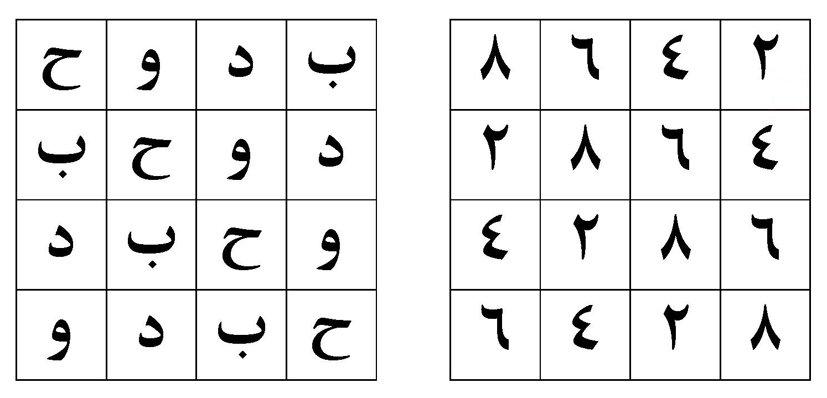
Example of a 4x4 Vefk (Encyclopedia of Islam)
Kabbalah: Jewish mysticism has influenced topics such as numerology and demonology.
Christianity: Extensive debates occurred throughout the Middle Ages regarding witchcraft and demonology.
The scientific validity of occultism has been a controversial subject. Major criticisms include:
Scientific Criticisms: Occult practices generally lack testable and reproducible scientific evidence.
Religious Criticisms: Monotheistic religions have typically regarded occultism as heretical or dangerous.
Modern Perspective: Today occultism is studied as a subfield within disciplines such as psychology and mythology. Thinkers such as Jung have explored the role of occult symbols in the human unconscious.
Clodd, Edward. Occultism: Two Lectures Delivered in theRoyal Instution on May 17 and 24, 1921. London 1922.
Werner, Helmut. Ezoterik Sözlük. (trans.) Bülent Atatanır, Murat Batmankaya, Murat Demirbaş, Derya Önver Uğur. Omega Yayınları. Istanbul 2005.
Çelebi, İlyas. "Vefk." *Türkiye Diyanet Vakfı İslâm Ansiklopedisi*, vol. 42, İstanbul, 2012, pp. 605–607. Accessed September 18, 2025. https://islamansiklopedisi.org.tr/vefk
Çiftçi, Halit Ahmet. "Çeşitli Kültürlerdeki Okült İnanç ve Uygulamaların Türk-İslam Kültürüne Yansıması Üzerine Bir İnceleme." *İslam Medeniyeti Araştırmaları Dergisi* (İMAD) 2, no. 2 (June 2017): 195–219. https://www.researchgate.net/publication/319167741_CESITLI_KULTURLERDEKI_OKULT_INANC_VE_UYGULAMALARIN_TURK-ISLAM_KULTURUNE_YANSIMASI_UZERINE_BIR_INCELEME

Key Characteristics
Core Disciplines of Occultism
Magic
Alchemy
Numerology
Astrology
Demonology
Spiritualism
Historical Development
Ancient Period
Medieval Period
Modern Period
Cultural Manifestations
In Turkish-Islamic Culture
In Western Culture
Critical Perspectives