


This article was automatically translated from the original Turkish version.
+1 More
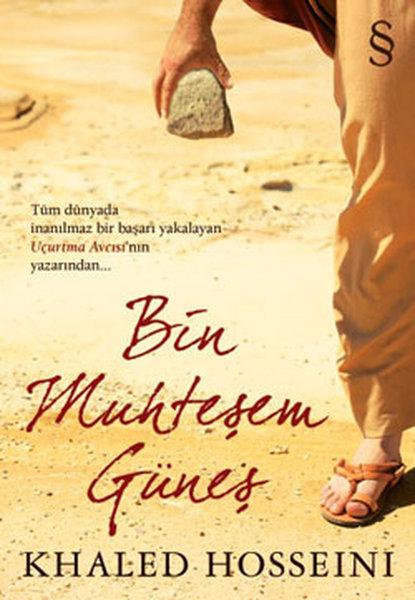
Ten Magnificent Suns
Author(s) | Khaled Hosseini | ||||||||
|---|---|---|---|---|---|---|---|---|---|
Year of Publication (English First Edition) | 2007 | ||||||||
Turkish Publication Year | 2008 | ||||||||
Translator(s) | Püren Özgören | ||||||||
Publisher(s) | Everest Yayınları | ||||||||
Number of Pages | 432 (Turkish edition) | ||||||||
A Thousand Splendid Suns is a novel by Afghan-American author Khaled Hosseini. First published in 2007, the work explores Afghanistan’s turbulent political and social transformations through the lives of two women.
The novel centers on two female characters, Mariam and Laila, who come from vastly different backgrounds. These two women, from different social classes and generations, are united by a shared fate and engage in a struggle for survival, resistance, and love. In the novel, individual tragedies are interwoven with the country’s violent and destructive history; the transformations experienced by the characters unfold against the backdrop of societal upheaval.
The novel spans several decades of Afghan history, roughly from the 1960s to the early 2000s. At the beginning of the story, Mariam, born out of wedlock and thus socially ostracized, is taken from the rural village where she grew up and forced into marriage with Rasheed, a much older and cruel man.
Years later, in a Kabul devastated by Soviet occupation, civil war, and Taliban rule, young, educated, and hopeful Laila is left helpless after losing her family in a bombing. She is compelled to become Rasheed’s second wife. Initially distant from one another, Mariam and Laila gradually form a deep bond. This solidarity, forged in the face of shared suffering and oppression, becomes the emotional and dramatic core of the novel.
The novel portrays the struggles, sacrifices, and ultimately the renewed hopes of these two women as they confront adversity. Mariam’s final act of sacrifice forms the climax of the novel, imbuing the story with a tragic yet powerful meaning.
The novel explores themes such as female solidarity, the effects of war, family, freedom, and violence.
Hosseini employs a simple and fluid language in A Thousand Splendid Suns. Written in third-person narration, the novel delves deeply into the inner lives of its characters, enabling readers to form strong empathetic connections. The landscape, people, and cultural elements of Afghanistan are presented in rich detail. Dialogues are realistic and vary according to the social status of the characters. The narrative structure balances the portrayal of both individual and societal issues.
Khaled Hosseini has adopted a language of high emotional intensity that is both simple and compelling. The author provides deep psychological insights by thoroughly analyzing the inner worlds of his characters. A Thousand Splendid Suns does more than recount individual life stories; it offers a powerful social critique by exposing the oppression women endure within patriarchal structures. While making visible the largely unseen lives of women, the novel also embraces universal themes of human resilience and hope.
Hosseini, Khaled. *The Thousand Brilliant Suns*. (Trans. Püren Özgören). Everest Yayınları, 2008.

Ten Magnificent Suns
Author(s) | Khaled Hosseini | ||||||||
|---|---|---|---|---|---|---|---|---|---|
Year of Publication (English First Edition) | 2007 | ||||||||
Turkish Publication Year | 2008 | ||||||||
Translator(s) | Püren Özgören | ||||||||
Publisher(s) | Everest Yayınları | ||||||||
Number of Pages | 432 (Turkish edition) | ||||||||
No Discussion Added Yet
Start discussion for "One Thousand Magnificent Suns (Book)" article
Plot
Themes
Style
Characters