


This article was automatically translated from the original Turkish version.
+2 More
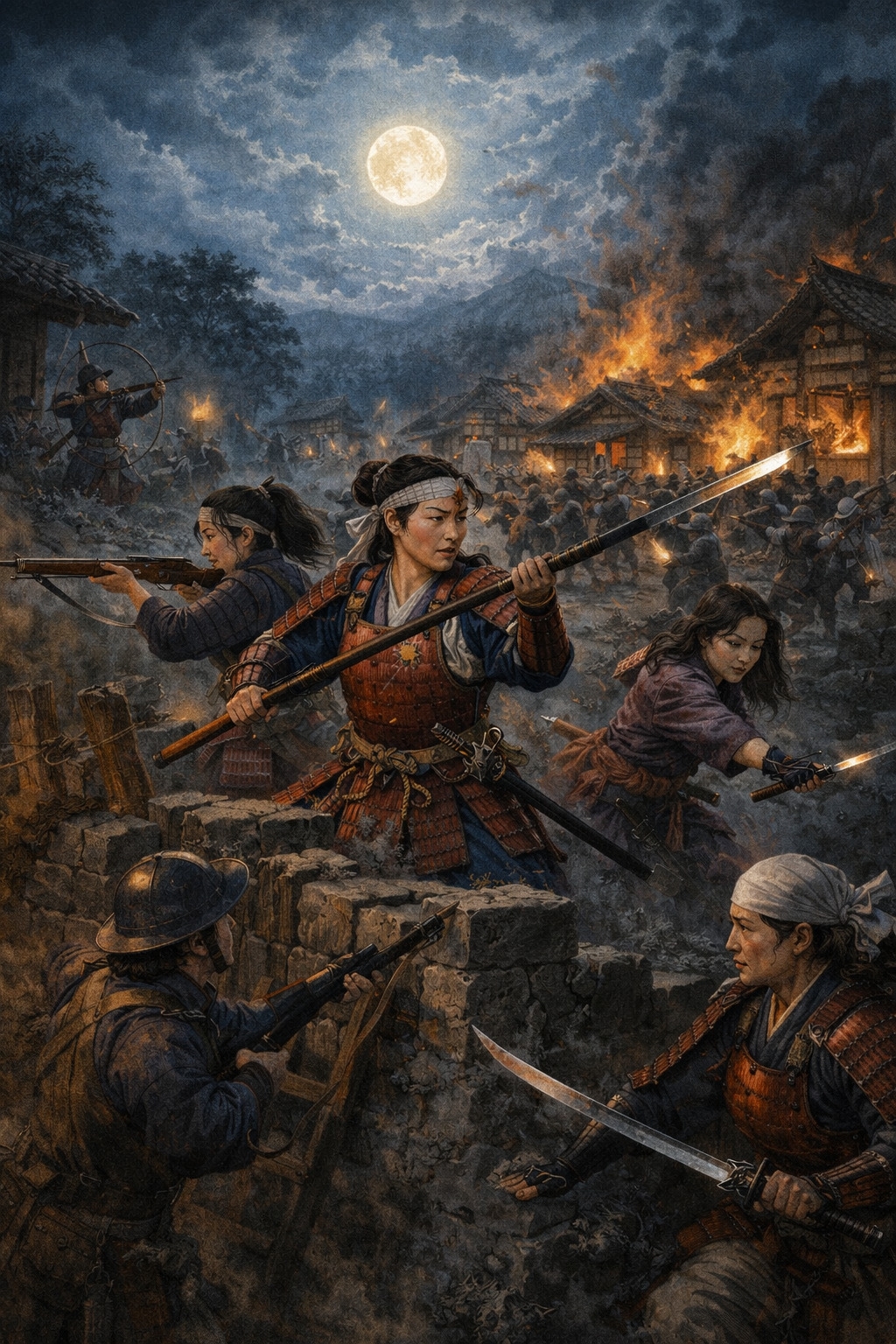
Onna-Bugeisha (Yapay Zeka ile Oluşturulmuştur)
Onna-bugeisha is the term for female warriors in feudal Japan who belonged to the samurai class, received military training, and participated in both defensive and offensive roles in warfare. The term literally means “woman master of martial arts.” Onna-bugeishas were trained within the framework of the warrior’s path (bushido) and thus assumed specific roles within the military, ethical, and social structure of samurai culture. These figures have been documented since early Japanese history and performed various military, political, and social functions until the end of the 19th century during the Meiji Restoration.

Onna-Bugeisha (Picryl)
The presence of women in military and political authority in Japan extends back to the earliest periods of written history. Queen Himiko, who governed a federation of approximately thirty kingdoms in the 3rd century, is recognized as the first ruler mentioned in Japanese written sources. These records describe Himiko as the “ruler of the land of Wa” and note that she maintained her rule through mystical (kidō) and diplomatic means. She was granted the title “Queen of Wa” by the Chinese emperor.
Although Himiko’s historical existence has not been confirmed by contemporary Japanese written sources, archaeological findings dated to the 3rd century indicate the emergence of a centralized authority during this period. It is believed that the kingdom she ruled was known as Yamatai, though there is no consensus on its exact location. The discovery of mirrors, jewelry, spears, swords, and iron axes in the tombs of female leaders demonstrates that women held both religious and military authority at the time.
Feudal period the tradition of female warriors is embodied by several historical figures:

Tomoe Gozen (Picryl)
As members of the samurai class, onna-bugeishas received comprehensive education in accordance with the principles of the “way of the brush and the sword” (bunbu). Their primary duties included protecting their domains, defending family honor, and serving their feudal lord (daimyo). Their training extended beyond physical skills to encompass strategic intellect and disciplined spiritual development.
Their military proficiency focused on the following areas:

Naginata (Picryl)
The last major chapter of the onna-bugeisha tradition occurred during the Boshin Civil War of 1868–1869. Women in the Aizu region, loyal to the traditional Tokugawa Shogunate, defended the Tsuruga Castle against forces of the Meiji government.
Following the Meiji Restoration (1868), the feudal system was abolished and the samurai class was officially dissolved. This process led to a redefinition of military roles in Japan and restricted women’s public participation. In the new era, the Western-influenced ideal of the “good wife, wise mother” (ryōsai kenbo) assigned women domestic responsibilities. The Meiji Constitution of 1890 further limited women’s political representation by prohibiting them from ascending the throne.


Onna-Bugeisha (Yapay Zeka ile Oluşturulmuştur)
Historical Origins and Legendary Figures
Training, Weaponry, and Social Status
The Boshin War and the Aizu Resistance
Social Transformation After the Meiji Restoration