


This article was automatically translated from the original Turkish version.
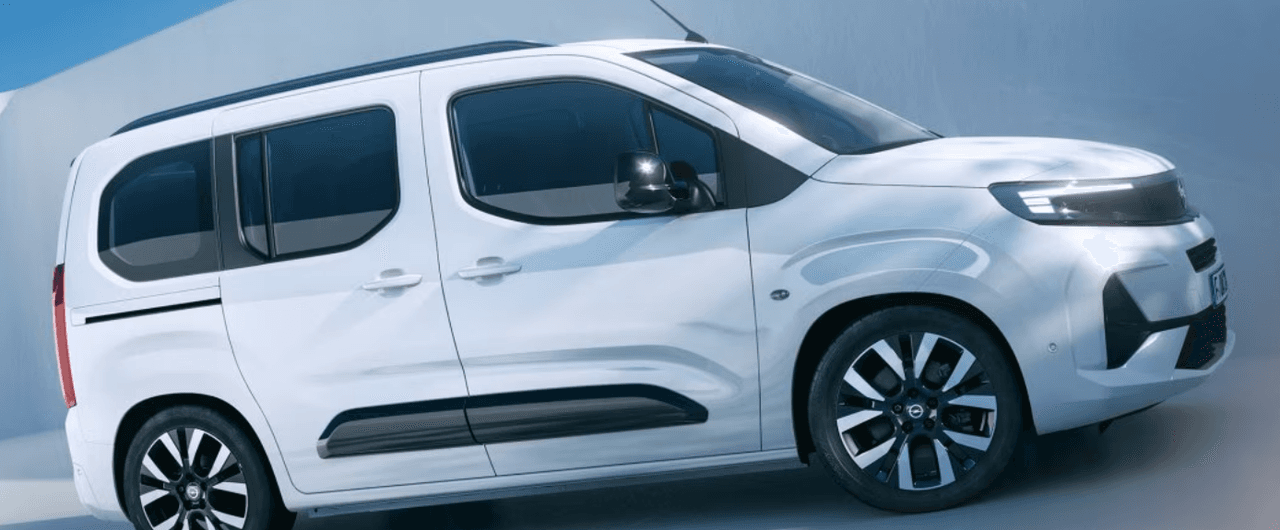
Opel Combo
Producer(s) | Opel Automobile GmbH (Stellantis) | ||||||||
|---|---|---|---|---|---|---|---|---|---|
Model Name | Opel Combo E / Combo-e | ||||||||
Body Type | Panel van / Combivan / Kombi / XL long body | ||||||||
Platform | CMP (Common Modular Platform) | ||||||||
Engine Option(s) | 1.2L petrol 100 kW electric 1.5L diesel | ||||||||
Battery & Range | 50 kWh – 249–285 km WLTP | ||||||||
Acceleration | ~11.7 s (0–100 km/h) | ||||||||
Energy Consumption | 17.5–19.4 kWh/100 km WLTP; 147–319 Wh/km real world | ||||||||
Charging Time | 20–80% DC 100 kW ~30 min; AC 7.4 kW ~8 hours | ||||||||
Production Facilities | Zaragoza (Spain), Mangualde (Portugal) | ||||||||
Safety Rating | Euro NCAP 4 stars (Combo-e) | ||||||||
Opel Combo has been a representative of Europe’s established B-segment panel van/light commercial vehicle class since 1993. The fourth generation (Combo E), introduced in 2018 on the CMP platform shared with the Peugeot Partner and Citroën Berlingo, has since been expanded with an electric variant called the Combo-e from 2021 onward.

Opel Combo (Opel)
The Combo E stands out with its upright front design compact protrusions and usage-oriented body format. It is available in panel van combi (passenger) and XL long body variants. It features modern exterior lines large glass surfaces and an adaptable cargo volume. In the electric Combo-e variant the battery placement results in a flat floor enhancing loading convenience and chassis stability.
The Combo family offers both internal combustion and electric options:
Internal Combustion Engines:
Electric Combo-e:
Energy consumption varies between 17.5 and 19.4 kWh/100 km; in real-world usage these values fall within the range of 147–319 Wh/km.
The Combo offers a functional and ergonomic cabin with a driver-focused instrument panel sufficient storage space and basic infotainment systems. In the electric variant integrated systems include displays for monitoring charging status and energy flow along with navigation functionality. Standard features include USB-C and wireless connectivity options.

Opel Combo (Opel)
The Combo provides systems that enhance safety in commercial use:
The Combo E and Combo-e models are produced at PSA/Stellantis facilities in Zaragoza Spain and Mangualde Portugal. The Zaragoza plant has manufactured over 14 million vehicles since 1982 and has been adapted for electric vehicle production using platforms such as CMP and STLA Small. Mangualde serves the light commercial vehicle family including the Berlingo Partner and Combo.
For the 2024–2025 period the STLA Small platform is planned to be implemented at the Zaragoza and Vigo facilities strengthening future production capacity for electric light commercial vehicle fleets.
Accessed July 8, 2025.
Accessed July 8, 2025.
Accessed July 8, 2025.
Accessed July 8, 2025.
Accessed July 8, 2025.
Accessed November 26, 2025.
Accessed November 26, 2025.
Beev.co. "Opel Combo-e Cargo: technical specifications." Beev.co, 2024.
EV-Database.org. "Opel Combo-e Life 50 kWh." EV-Database.org, 2024.
EV-Specs.org. "Opel Combo-e Life 50 kWh specs, performance." EV-Specs.org, 2024.
Stellantis Media. "120 Years of LCV production: Opel Combo & Co." Media.Stellantis.com, 2019.
Stellantis Zaragoza plant milestone article. goaragon.eu, October 18, 2022.

Opel Combo
Producer(s) | Opel Automobile GmbH (Stellantis) | ||||||||
|---|---|---|---|---|---|---|---|---|---|
Model Name | Opel Combo E / Combo-e | ||||||||
Body Type | Panel van / Combivan / Kombi / XL long body | ||||||||
Platform | CMP (Common Modular Platform) | ||||||||
Engine Option(s) | 1.2L petrol 100 kW electric 1.5L diesel | ||||||||
Battery & Range | 50 kWh – 249–285 km WLTP | ||||||||
Acceleration | ~11.7 s (0–100 km/h) | ||||||||
Energy Consumption | 17.5–19.4 kWh/100 km WLTP; 147–319 Wh/km real world | ||||||||
Charging Time | 20–80% DC 100 kW ~30 min; AC 7.4 kW ~8 hours | ||||||||
Production Facilities | Zaragoza (Spain), Mangualde (Portugal) | ||||||||
Safety Rating | Euro NCAP 4 stars (Combo-e) | ||||||||
Design and Structural Features
Engine Options and Performance
Interior and Technological Features
Safety and Driver Assistance Systems
Production and Global Manufacturing