

This article was automatically translated from the original Turkish version.
+1 More
Author(s) | Collective (Compiled by Orhan Okay's Students and Friends) | ||||||||
|---|---|---|---|---|---|---|---|---|---|
Publisher(s) | Dergah Publications | ||||||||
Publication Year | April 2011 (2nd Edition) | ||||||||
Number of Pages | 382 | ||||||||
Type(s) | Armağan Book / Biography / Literary Study | ||||||||
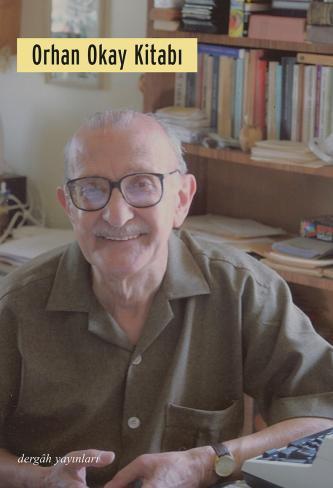
The book "Orhan Okay Kitabı" is a collective tribute dedicated to Prof. Dr. Orhan Okay (1931–2017), one of Turkey’s most prominent academics and literary critics, offering multifaceted perspectives on his life, scholarly work, and intellectual legacy. Published as part of Dergâh Yayınları’s "Armağan Kitap" series, this volume highlights Okay’s contributions to Turkish literature as a leading representative of the "Mehmet Kaplan school" and his enduring influence on successive generations of scholars. First published in June 1997, the book comprises 382 pages and reached its second edition by April 2011.
The book draws on Prof. Dr. Mehmet Kaplan’s characterization of what it means to be a "school" figure—emphasizing traits such as accumulated knowledge, devotion to literature, intellectual vigilance, discipline, personal character, self-sacrifice, and love for students and country—and argues that these qualities were vividly manifested in Orhan Okay. It underscores how Okay followed in his teacher’s footsteps, becoming a "branch of this school", and how his own students have since become professors at numerous universities across Türkiye, shaping new generations. This dynamic illustrates the vital importance of transmitting an academic tradition and intellectual lineage from one generation to the next.
The articles and essays in the volume reflect the breadth of Orhan Okay’s academic interests. The book focuses particularly on his in-depth studies of New Turkish Literature, analyzing literary figures and works from the Tanzimat period through the Republican era. Through his essays, monographs, critical writings, and articles, Okay demonstrated that literature is not merely an art form but also a carrier of thought and culture.
The contents of "Orhan Okay Kitabı" encompass his academic methodology, approach to sources, major works, and key moments in his life. The essays examine Okay’s research on literary figures such as Ahmet Haşim, Yahya Kemal, and Mehmet Akif Ersoy; his analyses of literary genres—poetry, the novel, the essay; and his views on literary history and criticism. Additionally, personal recollections and observations from his friends and students reveal his private character and his role as a mentor. This collective work concretely captures the profound imprint Orhan Okay left on Turkish literature and the academic world.
The language and style in "Orhan Okay Kitabı" reflect the diverse academic and literary voices of its contributors, as is natural for a tribute volume. Overall, a neutral, descriptive, and academic tone prevails, yet deep respect, affection, and loyalty toward Orhan Okay permeate the texts. There is no trace of advertising or excessive praise; instead, the volume offers serious examination and evaluation of Okay’s ideas, personality, and scholarly contributions. The varied contributions enrich the book with depth and multidimensionality.
This book is a collaborative effort involving Orhan Okay’s students, colleagues, and friends—diverse stakeholders whose perspectives collectively illuminate his multifaceted impact. This approach allows for a richer, more nuanced understanding of his legacy.
"Orhan Okay Kitabı" holds great significance in the context of preserving academic traditions, teacher-student relationships, and the intellectual heritage of scholars in Türkiye. By comprehensively presenting the life and work of a scholar like Orhan Okay, the book immortalizes his contributions to the study of Turkish literature. It is an indispensable resource for students, academics, and general readers engaged in the fields of New Turkish Literature, literary history, literary criticism, academic methodology, and the history of education. The volume reveals how an academician shapes not only through his writings but also through the generations of scholars he mentors, thereby establishing a lasting intellectual school.
Orhan Okay Kitabı. İstanbul: Dergah Yayınları, 1997. Accessed July 16, 2025. https://www.dergah.com.tr/kitaplar/orhan-okay-kitabi.
Author(s) | Collective (Compiled by Orhan Okay's Students and Friends) | ||||||||
|---|---|---|---|---|---|---|---|---|---|
Publisher(s) | Dergah Publications | ||||||||
Publication Year | April 2011 (2nd Edition) | ||||||||
Number of Pages | 382 | ||||||||
Type(s) | Armağan Book / Biography / Literary Study | ||||||||
No Discussion Added Yet
Start discussion for "Orhan Okay Book (Book)" article
Content and Thematic Structure
Language and Style
Editors’ Position and the Significance of the Work