


This article was automatically translated from the original Turkish version.
+1 More
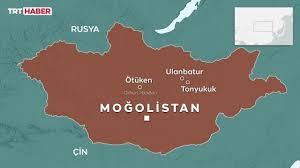
Ötüken
Historical Role | The sacred administrative center of the ancient Turks | ||||||||
|---|---|---|---|---|---|---|---|---|---|
Location | Present-day Mongolia Khangai Mountains | ||||||||
Initial Use | From the Huns period onwards | ||||||||
States | Huns, Göktürks, Uyghurs, Mongols | ||||||||
Archaeological Sites | Karabalgasun, Ordu-Balik, Tsagaan-sum, Chilen-Balik | ||||||||
Religious Basis | Earth-Water cult, World Mountain myth, cosmological center | ||||||||
Ötüken, one of the central settlements of ancient Turkish history, has become a symbol of political authority and sacred legitimacy in Turkish history. This region, mentioned in the Orkhon Inscriptions, was chosen as the administrative center by numerous Central Asian-origin states beginning with the Hun Empire and continuing through the Göktürks, Uyghurs and Mongols such as. Ötüken, generally believed to be located in the vicinity of the Hangay Mountains, was consistently favored by Central Asian states, reflecting its profound cultural, religious, and geopolitical significance.
The origin of the name Ötüken is subject to various etymological interpretations. Some scholars interpret the term as “Earth God/Goddess,” while others understand it as “suitable mountain pasture” or “area适宜 for settlement.” The use of “Yış” with Ötüken (“Ötüken Yış”) refers to forested areas. In this context, Ötüken is understood not as a plain or steppe only mountain or city, but as a mountainous forested region and an extensive settlement area.
Most researchers agree that Ötüken corresponds to the Hangay Mountains in northwestern present-day Mongolia. Historical sources, Chinese annals, and archaeological findings reveal that this region was chosen as both a political and sacred center.
The tradition of establishing headquarters around sacred mountains, identified in ancient Turkic thought with concepts such as the “axis mundi,” “world tree,” or “world mountain,” reflects not only a geographic preference but also a religious one. In this worldview, Ötüken’s central position signifies the divine legitimization of the Turkic ruler’s universal sovereignty. These sacred spaces, directly linked to the land- water cult, symbolize not only the temporal but also the spiritual leadership of the rulers.
Whether Ötüken served as the capital of the Göktürk Khaganate has long been debated among historians. While some sources mention a permanent city or palace in Ötüken, archaeological evidence has not directly verification this view. However, Chinese records indicate that Khagan Muqan built a structure in Ötüken and that Khagan Qimin relocated to Ötüken after marrying a Chinese princess, suggesting that Ötüken functioned as a kind of capital.
On the other hand, considering the nomadic character of the Khaganate, it is widely accepted that seasonal headquarters were used rather than a fixed urban center, and that these headquarters were surrounded by natural elements such as mountains and river. Indeed, even during periods influenced by Buddhist architecture, resistance to permanent urbanization and emphasis on the superiority of nomadic life are well documented.
Excavations conducted in the Orkhon Valley since the 19th century have uncovered settlements such as Khara-Balghasun and Karabalgasun, known to belong to the Uyghur Khaganate. However, consensus has not been reached on whether these sites date to the Göktürk period. Newly discovered remains such as Tsagaan-Sum and Chilen-Balghasun indicate continuity of settlement in the region. However Clear archaeological traces from the Göktürk Khaganate period remain limited.
In imperial traditions, possessing sacred sites plays a crucial role in legitimizing the ruler’s authority. In this sense, Ötüken is not merely an administrative center but also a symbolic expression of the legitimacy the Turkic khagan received from worldwide God. For this reason, the Göktürks and their successors, the Uyghurs, established their administrative centers here and performed sacred rituals in Ötüken.
In a published report, Professor Dr. Ahmet Taşağıl, Head of the History Department at Yeditepe University, stated that Ötüken is located in present-day Arhangay Province of Mongolia and that the region’s fertile soils, abundant water sources, and rich pastures make it suitable for animal husbandry. With these characteristics, Ötüken served as a center for Turkic states such as the Huns, Göktürks and the Uyghurs. Furthermore, the Orkhon Inscriptions, Hoyto Tamir Inscriptions, and various kurgans in the region reinforce Ötüken’s significance in Turkish history.
Throughout history, Ötüken has been not only a geographic center but also an ideological and sacred symbol. The selection of this region by ancient Turkic states was not merely a strategic choice but also a cosmological and cultural necessity. Today archaeological research continues to provide clearer insights into the history of this sacred region.
Hatamova, Munire. "Ötüken " Genel Türk Tarihi Araştırmaları Dergisi. 2, no. 4 (July 2020): 321–332.
TRT Avaz. "Türklerin Tarih Başkenti: Ötüken." Accessed April 17, 2025. https://www.trtavaz.com.tr/haber/tur/avrasyadan/turklerin-tarih-baskenti-otuken/617b88b501a30a10a4e18f84.
TRT Haber. "Türklerin Tarihi Başkenti: Ötüken." Accessed April 17, 2025. https://www.trthaber.com/haber/kultur-sanat/turklerin-tarihi-baskenti-otuken-619928.html.

Ötüken
Historical Role | The sacred administrative center of the ancient Turks | ||||||||
|---|---|---|---|---|---|---|---|---|---|
Location | Present-day Mongolia Khangai Mountains | ||||||||
Initial Use | From the Huns period onwards | ||||||||
States | Huns, Göktürks, Uyghurs, Mongols | ||||||||
Archaeological Sites | Karabalgasun, Ordu-Balik, Tsagaan-sum, Chilen-Balik | ||||||||
Religious Basis | Earth-Water cult, World Mountain myth, cosmological center | ||||||||
Etimological Interpretations and Geographic Location
The Phenomenon of Sacredness and Ancient Turkic Cosmology
The Göktürks and Ötüken
Archaeological Findings and Urban Remains
The Political and Mythological Legitimacy of Ötüken