

This article was automatically translated from the original Turkish version.
+1 More
Location | Tokat city center Sulusokak district | ||||||||
|---|---|---|---|---|---|---|---|---|---|
Year of Construction | 1752 | ||||||||
Patron | Zaralızade Mehmet Pasha | ||||||||
Architectural Feature(s) | Cut stone construction crown gate and stone reliefs courtyard caravanserai plan | ||||||||
Usage | Of cultural heritage value, accessible for tourism | ||||||||
Paşa Hanı is a multifunctional building located in the center of Tokat province, recognized as one of the classic examples of Ottoman-era caravanserai architecture, used for commercial and lodging purposes. Caravanserais were important institutions in Ottoman urban fabric, serving as intersections of trade and social interaction. In this context, Paşa Hanı is one of the principal structures representing historical continuity in the heart of Tokat.
Paşa Hanı was constructed within Tokat’s historic bazaar fabric, in a location closely associated with the Bedesten and other Ottoman structures. The building’s architectural features and its similarities to other caravanserais in the region suggest it dates to the classical period of the Ottoman Empire, most likely the 17th century. The title “Paşa” in its name implies that the structure was commissioned or endowed by an Ottoman official or prominent figure.
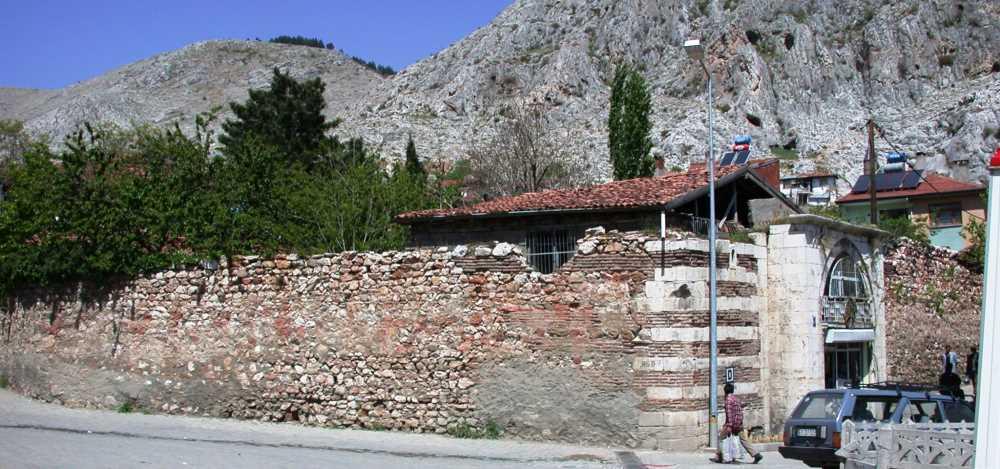
Paşa Han (Culture Portal)
Paşa Hanı follows the traditional Ottoman caravanserai plan. The building consists of shops and rooms arranged around a central courtyard. The ground floor houses shops used for commercial purposes, while the upper floor was typically allocated for lodging and administrative functions. The structure has a rectangular four-facade layout with a large central courtyard surrounded by arcades.
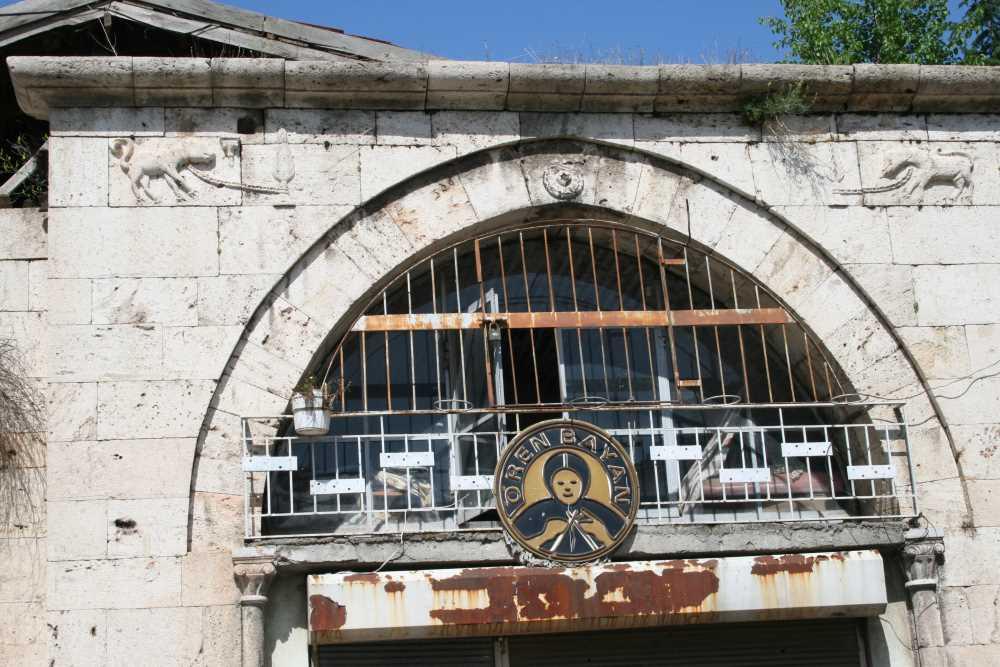
The building employs a combination of stone and brick materials. Notable architectural elements include round-arched doorways, small-windowed openings, and barrel-vaulted spaces. The facades facing the courtyard exhibit the symmetry and aesthetic balance characteristic of classical Ottoman architecture. The main entrance is monumental, distinguished by its high arched opening and a crown-gate-like arrangement.
Throughout history, Paşa Hanı served as a multifunctional center where local artisans conducted trade, merchants lodged, and goods were stored. In the Ottoman urban economy, caravanserais were not only economic hubs but also vital spaces for social interaction. The presence of such structures in a city like Tokat, situated along a major caravan route, reflects the region’s strategic position along historic trade corridors.
Today, Paşa Hanı is registered as a protected cultural asset within the Tokat Cultural Inventory and remains under conservation. Although detailed information about its restoration processes is unavailable, it is evident that the building has undergone maintenance and repairs in various periods. Some sections of Paşa Hanı are still in use for contemporary functions, such as being allocated to artisans or small businesses. In this way, the caravanserai continues to exist both as a historical monument and as a living component of the urban environment.
Ministry of Culture and Tourism. "Paşa Hanı." *Turkey Culture Portal – Cultural Inventory*. Accessed July 17, 2025. https://www.kulturportali.gov.tr/turkiye/tokat/kulturenvanteri/pasa-hani446232
Ministry of Culture and Tourism. "Paşa Hanı." *Turkey Culture Portal*. Accessed July 17, 2025. https://www.kulturportali.gov.tr/turkiye/tokat/gezilecekyer/pasa-han
Tokat İl Directorate of Culture and Tourism. "Han, Hamam ve Köprüler." tokat.ktb.gov.tr. Accessed July 17, 2025. https://tokat.ktb.gov.tr/TR-231604/han-hamam-ve-kopruler.html
Tokat İl Directorate of Culture and Tourism. "Hanlar, Kervansaraylar ve Medreseler." tokat.ktb.gov.tr. Accessed July 17, 2025. https://tokat.ktb.gov.tr/TR-142138/hanlar-kervansaraylar-ve-medreseler.html

Location | Tokat city center Sulusokak district | ||||||||
|---|---|---|---|---|---|---|---|---|---|
Year of Construction | 1752 | ||||||||
Patron | Zaralızade Mehmet Pasha | ||||||||
Architectural Feature(s) | Cut stone construction crown gate and stone reliefs courtyard caravanserai plan | ||||||||
Usage | Of cultural heritage value, accessible for tourism | ||||||||
Historical Background and Location
Architectural Features
Function and Use
Current Condition