This article was automatically translated from the original Turkish version.
Author(s) | Nurullah Genç | ||||||||
|---|---|---|---|---|---|---|---|---|---|
Publisher(s) | Timaş Yayınları | ||||||||
Number of Pages | 224 | ||||||||
First Publication Year | 2024 | ||||||||
Print Run | 3 | ||||||||
ISBN | 978-605-08-4887-8 | ||||||||
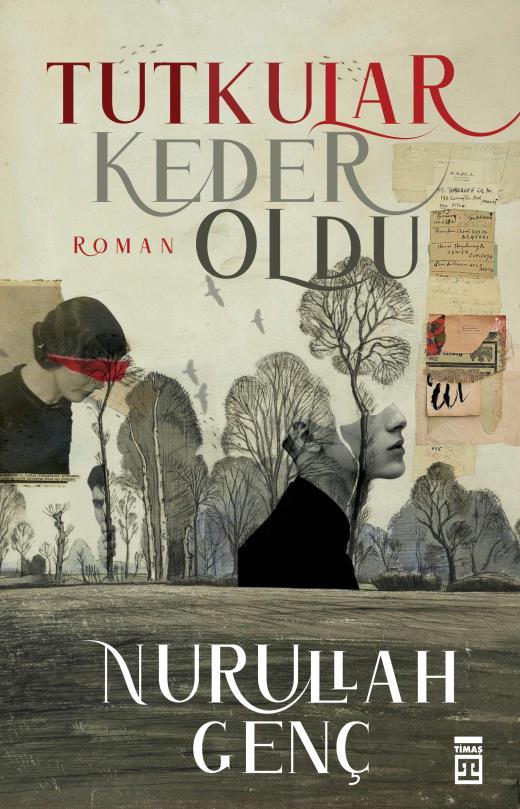
Tutkular Keder Oldu is one of the novels written by Nurullah Genç. Published by Timaş Yayınları, the novel is set against the backdrop of Turkey’s social and political atmosphere before 1980. Within the work, the tension between the individual’s inner world and society is explored through the political and cultural conflicts of the era.
The novel centers on the ideals, beliefs, and social pressures faced by young people during university age. The events unfold against the tense political climate of the period before 1980. The protagonist, Zülküf, strives to direct his own life amid economic hardship and societal expectations. The narrative reveals how personal passions and desires gradually transform into sorrow. The characters’ choices are shaped by the political atmosphere of the time and their own personal weaknesses.
The central themes of the novel are passion, sorrow, idealism, belief, and morality. The book reflects the individual’s internal conflicts, the life shaped under social pressure, and the gap between ideal and reality. Passion is portrayed as a driving force that guides human life, while sorrow is depicted as the state of confronting the consequences of those passions.
Stylistically, the work reflects Nurullah Genç’s poetic style. Emotional intensity, interior monologues, and observation-based descriptions stand out. Rather than focusing on plot structure, the novel prioritizes the characters’ psychological states and inner worlds.
The central figure of the novel is Zülküf, a young man searching for his identity amid poverty, ideals, and social pressure. Other characters represent different facets of youth during that era. Each possesses an individual world shaped by concepts such as belief, hope, disillusionment, and search.
The novel highlights lyrical narration, descriptive techniques, and psychological analysis. The author employs a simple yet emotionally intense language. Nurullah Genç’s poetic background is evident in the novel’s linguistic structure and sentence rhythm. The narrator adopts an external, observational perspective toward the events, enhancing the work’s psychological depth.
Nurullah Genç was born on 9 September 1960 in the Horasan district of Erzurum. He graduated from the Faculty of Economic and Administrative Sciences at Atatürk University. Known as a poet, writer, and academic, Genç has produced works in poetry, the novel, and the essay. His writings consistently explore themes such as the human inner world, belief, morality, society, and values. He is a prominent figure in Turkish literature, recognized for both his lyrical expression and intellectual depth.
Genç, Nurullah. Tutkular Keder Oldu. İstanbul: Timaş Yayınları, September 2024. Accessed October 20, 2025.
Genç, Nurullah. Tutkular Keder Oldu. İstanbul: Timaş Yayınları.
Genç, Nurullah. “Hakkında.” Nurullah Genç Resmî Web Sitesi. Accessed October 20, 2025. https://www.nurullahgenc.com/hakkinda.

Author(s) | Nurullah Genç | ||||||||
|---|---|---|---|---|---|---|---|---|---|
Publisher(s) | Timaş Yayınları | ||||||||
Number of Pages | 224 | ||||||||
First Publication Year | 2024 | ||||||||
Print Run | 3 | ||||||||
ISBN | 978-605-08-4887-8 | ||||||||
No Discussion Added Yet
Start discussion for "Passions Became Sorrow (Book)" article
Summary of the Plot
Themes and Structure
Characters
Literary Features
About the Author