


This article was automatically translated from the original Turkish version.
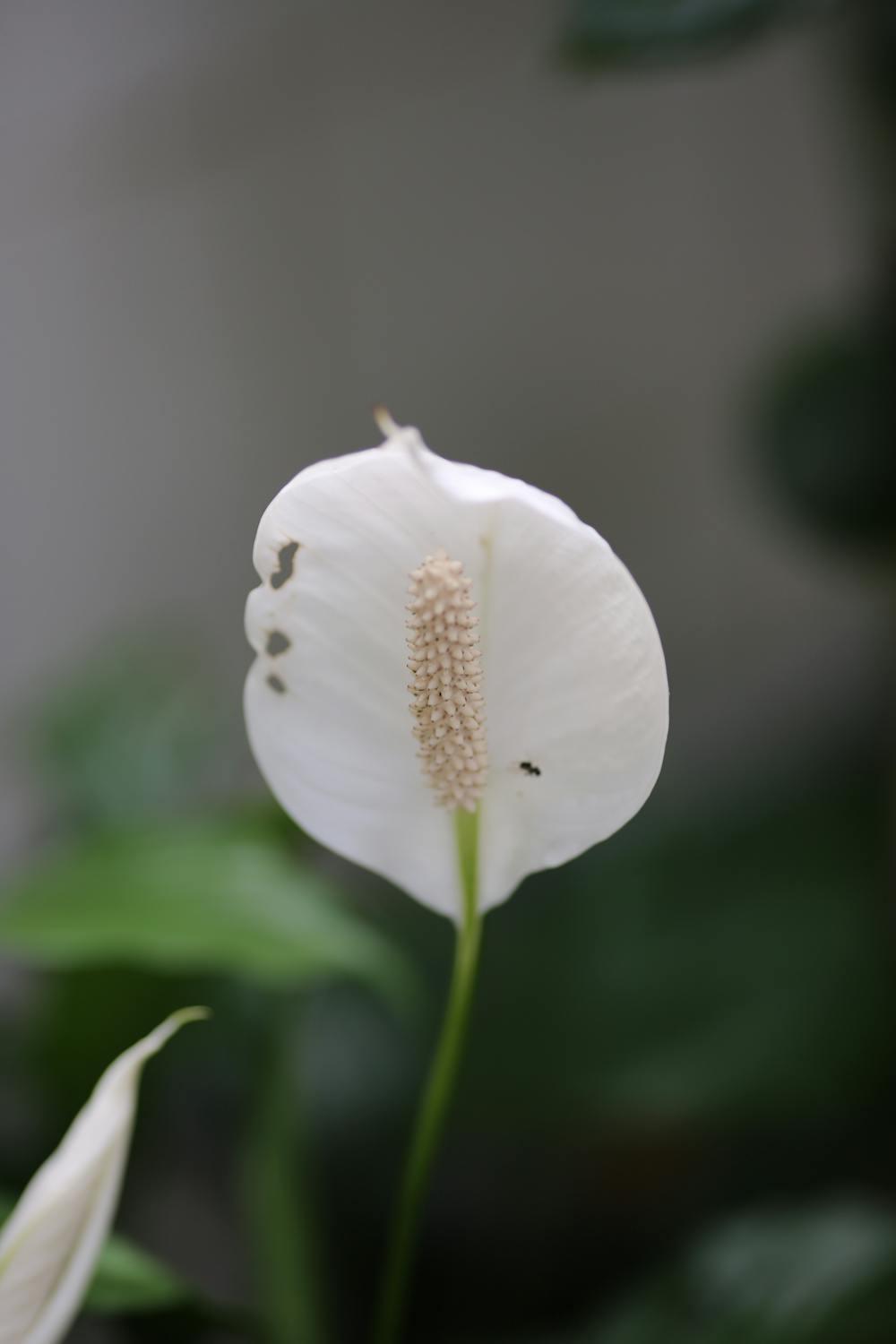
Peace Lily (Spathiphyllum spp.)
Family | Araceae | ||||||||
|---|---|---|---|---|---|---|---|---|---|
Homeland | Central and South America | ||||||||
Light | Indirect Bright Light | ||||||||
Irrigation | Medium – High | ||||||||
Prominent Feature | Air Purifier, Low Maintenance Requirement | ||||||||
Peace Lily (Spathiphyllum spp.) is a perennial tropical houseplant noted for its ornamental foliage and flower structure, belonging to the Araceae (Arum family). Commonly cultivated as an indoor ornamental plant, it is widely used due to its aesthetic appeal and air-purifying potential. Its ability to adapt to partial shade and low maintenance requirements make it especially preferred in homes, offices, and enclosed public spaces.

Peace Lily ()
The genus Spathiphyllum consists of herbaceous plants classified taxonomically within the Araceae family, naturally distributed across tropical Central and South America. Most species in this genus are evergreen, rhizomatous, and have broad leaves. The name Peace Lily derives from the white, cup-shaped bract (spathe), which evokes associations of purity and tranquility; it is also known as the White Sails Flower.
The Peace Lily can reach a height of 30–120 cm. Its leaves are lance-shaped, dark green, and glossy, measuring 20–65 cm in length. Leaves are typically borne on long petioles arising from the base. The flowering structure resembles a false flower: a large white bract (spathe), sometimes turning green, surrounds a central upright spadix that is cream or yellow in color. Flowering is most intense during spring and summer but can occur year-round under optimal conditions.
The Peace Lily prefers bright, indirect light. Prolonged exposure to direct sunlight may cause leaf scorch. It can tolerate partial shade, though flowering frequency may decrease. Ideal locations include areas with filtered light, such as near east-facing windows.
Water when the top surface of the soil feels slightly dry. Overwatering can lead to root rot. During summer, watering two to three times per week is recommended; in winter, every seven to ten days is sufficient. Water should be at room temperature and preferably free of chlorine.
A well-draining, aerated, humus-rich soil is preferred. Commercial potting mixes can be used; a mixture of peat moss, perlite, and coconut coir is recommended. A slightly acidic soil pH of 5.8–6.5 is optimal for growth.
The Peace Lily thrives best at temperatures between 18–27 °C. Temperatures below 15 °C may cause leaf yellowing and reduced growth. Sudden temperature fluctuations should be avoided.
It requires high humidity. Relative humidity levels above 50% are ideal. In dry indoor environments, leaf tips may turn brown. Regular misting of leaves or use of a humidity tray is recommended.
During active growth periods (spring and summer), a balanced liquid fertilizer with NPK content such as 20-20-20 can be applied once a month. Fertilization is unnecessary during autumn and winter.
The Peace Lily is most commonly propagated by root division. During repotting in spring, the rhizomatous roots are separated and planted into individual pots. Sterile cutting tools should be used during propagation. Repotting should be done when the roots have filled the current pot or when the soil structure has degraded. The new pot should be 2–3 cm larger in diameter than the previous one.
Under proper care conditions, the Peace Lily is resistant to diseases and pests. However, some common issues include:
If chemical control is necessary, appropriate insecticides should be used; biological or cultural controls are preferred whenever possible.
The Peace Lily is also known for its air-purifying properties. According to NASA’s “Clean Air Study,” it has the capacity to filter harmful volatile organic compounds such as formaldehyde, benzene, and trichloroethylene. As a result, it is among the plants recommended for improving indoor air quality.
Missouri Botanical Garden. "Spathiphyllum (group)." Missouri Botanical Garden. Accessed May 28, 2025. https://www.missouribotanicalgarden.org/PlantFinder/PlantFinderDetails.aspx?kempercode=b568
Pexels. “Beyaz Barış Zambağı çiçek Yaprağının Yakın çekimi JPG.” Accessed May 28, 2025. https://www.pexels.com/tr-tr/fotograf/beyaz-baris-zambagi-cicek-yapraginin-yakin-cekimi-28938750/
Pexels. “Doğa, Bahçe, yaprak JPG.” Pexels. Accessed May 28, 2025. https://www.pexels.com/tr-tr/fotograf/doga-bahce-yaprak-ciy-28182770/
Royal Horticultural Society. "How to grow peace lilies." RHS. Accessed May 28, 2025. https://www.rhs.org.uk/plants/peace-lilies/how-to-grow-peace-lilies
University of Florida, IFAS Extension. "Peace Lily." UF/IFAS Gardening Solutions. Accessed May 28, 2025. https://gardeningsolutions.ifas.ufl.edu/plants/houseplants/peace-lily/

Peace Lily (Spathiphyllum spp.)
Family | Araceae | ||||||||
|---|---|---|---|---|---|---|---|---|---|
Homeland | Central and South America | ||||||||
Light | Indirect Bright Light | ||||||||
Irrigation | Medium – High | ||||||||
Prominent Feature | Air Purifier, Low Maintenance Requirement | ||||||||
No Discussion Added Yet
Start discussion for "Peace Lily (Spathiphyllum spp.)" article
Physical Characteristics
Cultivation Requirements
Light
Watering
Soil
Temperature
Humidity
Fertilization
Propagation and Repotting
Diseases and Pests
Uses and Benefits