

 Recently Added:

This article was automatically translated from the original Turkish version.
The production agreement between the Pentagon and Lockheed Martin is a long-term framework agreement signed on 22 October 2026 between the U.S. Department of Defense and American defense industry company Lockheed Martin, covering the production and supply of at least 850 F-35 Lightning II fighter aircraft over the next 10 years. Under the agreement, Lockheed Martin has committed to fund at least $7 billion in investments from its own resources to support the F-35 program.
The implementation of this initiative, aimed at increasing the production capacity of the U.S. defense industry, strengthening the supply chain, and reducing the production costs of fighter aircraft, is contingent upon the necessary authorizations and budget approvals by the U.S. Congress.
The U.S. Department of Defense announced on 22 October 2026 that it had reached a 10-year framework agreement with Lockheed Martin for the production and sustainability of the F-35 Lightning II fighter aircraft.
The agreement anticipates the procurement of at least 850 F-35 fighter aircraft for the U.S. Armed Forces over the next 10 years. In addition to aircraft production, the initiative also addresses initial spare parts supply, modernization kits, and maintenance and sustainment activities for the global F-35 fleet. Lockheed Martin has stated that it aims to maintain an annual production capacity of 156 aircraft under the agreement.
The long-term framework agreement is intended to facilitate production planning and enhance predictability within the defense industry supply chain.
It has been clarified that the understanding reached between the Pentagon and Lockheed Martin does not constitute a direct or finalized aircraft order.
The agreement is structured as a long-term framework that establishes the foundational principles for future procurement activities. Final contracts for aircraft production will only enter into force upon authorization and budgetary approval by the U.S. Congress.
Lockheed Martin has stated that, if multi-year procurement authority is granted, it will work with the F-35 Joint Program Office to finalize contract terms, pricing, and delivery schedules. Therefore, the target of 850 aircraft is not a completed procurement as of 22 October 2026 but rather a commitment forming the basis for future supply activities.
One of the key elements of the agreement is Lockheed Martin's commitment to fund at least $7 billion from its own resources to support initiatives for the F-35 program.
The company's investments are expected to focus on preserving production capacity, strengthening the supply chain, and reducing costs.
The investments under the long-term procurement framework are intended to mitigate supply chain challenges across various stages, from raw material sourcing to final aircraft component manufacturing. Lockheed Martin has indicated that it expects the agreement to help reduce production costs and enable more predictable fulfillment of international orders.
The Pentagon has stated that the agreement is designed to strengthen the U.S. defense industry’s capacity for high-volume, uninterrupted production. U.S. Department of Defense Undersecretary Michael P. Duffey noted that the arrangement with Lockheed Martin is based on establishing a direct link between financial incentives and production performance.
The Pentagon aims for the agreement to provide long-term supply assurance, enabling defense industry companies to execute their production and investment plans with greater stability.
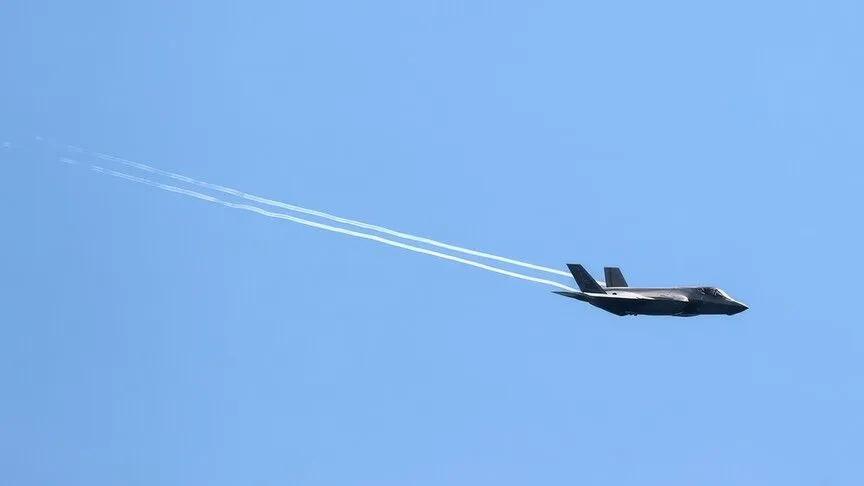
The F-35 Lightning II is a fifth-generation, multirole fighter aircraft developed by Lockheed Martin with stealth technology designed to reduce its detectability by radar systems. It is intended for use in air-to-air combat, air-to-ground strikes, and a variety of military missions.
The F-35 program has emerged as one of the core elements of Lockheed Martin’s aerospace operations. The company’s aerospace division generates approximately 40 percent of its quarterly revenue from this program.【1】
Aircraft produced under the program are operated not only by the U.S. Armed Forces but also by international partners and other customer nations. It has been confirmed that the framework agreement announced on 22 October 2026 includes international F-35 orders.
Lockheed Martin has stated that it expects the 10-year framework agreement to have significant impacts on the U.S. economy and defense industry employment. According to the company’s projections, the initiative is anticipated to support approximately 317,000 jobs in the United States over the next decade and generate annual economic activity of about $79 billion. These figures reflect Lockheed Martin’s expectations regarding the agreement and do not represent actual economic outcomes.
The agreement is expected to particularly affect businesses operating in aerospace, advanced technology, electronic systems, raw material production, and the defense industry supply chain.
The agreement between the Pentagon and Lockheed Martin was announced amid a period of rising defense expenditures due to global security developments. Lockheed Martin and other U.S. defense industry companies are noted to have benefited economically from increasing global military spending and modernization programs.
The use of F-35 fighter aircraft by the air forces of the United States and its allied nations requires that production and maintenance activities be conducted through an international supply network.
The new framework agreement is intended to support production planning that meets both the long-term fighter aircraft procurement needs of the United States and the demands of international customers.
For the arrangement announced on 22 October 2026 to be implemented, the U.S. Congress must make decisions regarding multi-year procurement authority and the allocation of necessary budgetary resources.
Following this process, the Pentagon and Lockheed Martin plan to determine final contract terms, aircraft pricing, and delivery schedules. The primary objectives of the agreement are outlined as ensuring the procurement of at least 850 F-35 fighter aircraft over the 10-year period, maintaining production capacity, and meeting the long-term maintenance and modernization needs of the global F-35 fleet.
Anadolu Ajansı. "Pentagon, Lockheed Martin finalize 10-year F-35 jets agreement." Accessed October 23, 2026.
Bloomberg. "Us Agrees To Buy at Least 850 More Lockheed F-35 Fighter Jets." Accessed October 23, 2026.https://www.bloomberg.com/news/articles/2026-10-22/lockheed-us-unveil-agreement-to-buy-850-more-f-35-fighter-jets
NTV. "Pentagon Lockheed Martin ile anlaştı: 850 adet F-35 üretilecek." Accessed October 23, 2026.https://www.ntv.com.tr/dunya/pentagon-lockheed-martin-ile-anlasti-850-adet-f-35-uretilecek-1747521
Reuters. "Lockheed, Pentagon strike initial deal to produce 850 F-35 jets." Accessed October 23, 2026.
U.S. Department of War. "Department of War and Lockheed Martin Finalize Landmark 10-Year F-35 Deal, Securing $7B in Private Investment." Accessed October 23, 2026.https://www.war.gov/News/Releases/Release/Article/4631150/department-of-war-and-lockheed-martin-finalize-landmark-10-year-f-35-deal-secur/
【1】
Reuters. "Lockheed, Pentagon strike initial deal to produce 850 F-35 jets." Erişim tarihi: 23 Ekim 2026. https://www.reuters.com/business/aerospace-defense/lockheed-pentagon-strike-initial-deal-produce-850-f-35-jets-2026-10-22/

No Discussion Added Yet
Start discussion for "Pentagon-Lockheed Martin F-35 Agreement (October 2026)" article
October 23, 2026
The Agreement Between the Pentagon and Lockheed Martin
October 23, 2026
Legal Nature of the Agreement and Congressional Approval
October 23, 2026
Lockheed Martin's Investment Commitment
October 23, 2026
U.S. Defense Industry Production Capacity
October 23, 2026
F-35 Lightning II Fighter Aircraft Program
October 23, 2026
Economic Impact of the Agreement
October 23, 2026
International Defense Spending and F-35 Production
October 23, 2026
Implementation Process of the Agreement