


This article was automatically translated from the original Turkish version.
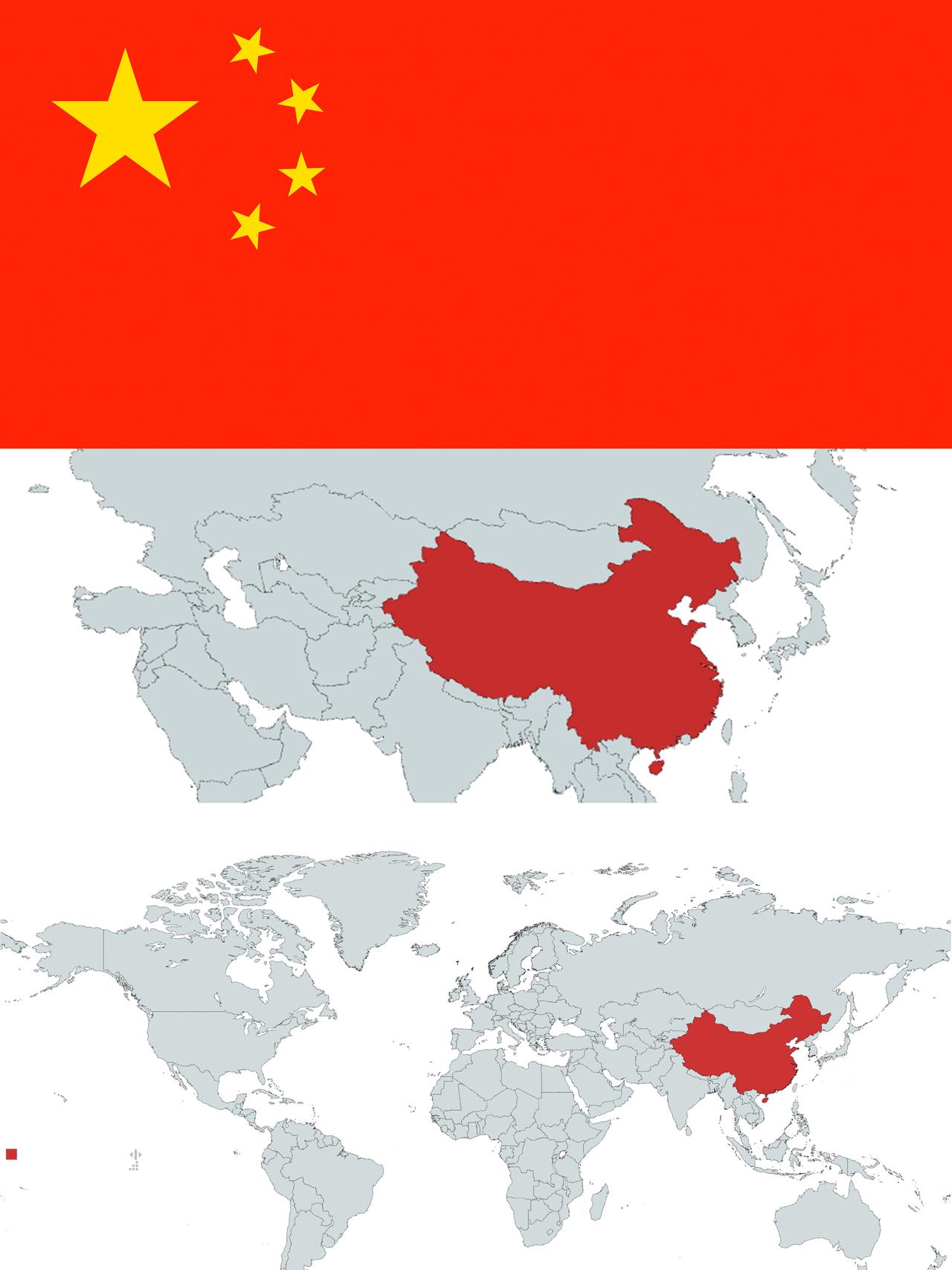
People's Republic of China (中华人民共和国)
Official Language | Mandarin (Beijing dialect) | ||||||||
|---|---|---|---|---|---|---|---|---|---|
Population | 1.411 billion (2023) | ||||||||
Area | 9,561,000 km² | ||||||||
Form of Government | Single-party rule | ||||||||
Head of State | Xi Jinping (since 14 March 2013) | ||||||||
Currency | Yuan (Renminbi) | ||||||||
Time Zone | UTC+8 | ||||||||
Telephone Code | +86 | ||||||||
Internet Extension | .cn | ||||||||
Climate | Humid subtropical climate Alpine climate Desert and semi-desert climate Continental climate | ||||||||
Ethnic Groups | Dong Bouyei Tibet Uyghur Zhuang Hui Mongol Inner Mongolia Korean | ||||||||
GDP | Approximately 17 trillion USD | ||||||||
GDP per Capita | Approximately 12,500 USD | ||||||||
The People’s Republic of China (PRC) is a state located in Eastern Asia, with its capital in Beijing. It is home to approximately one-fifth of the world’s population and possesses a vast territory. Over historical processes marked by diverse cultural, social, and political interactions, it developed its own unique modern state structure, which reflects both centralized governance and regional diversity.【1】
The official language is Mandarin (Standard Chinese). The use of Mandarin plays a crucial role in reinforcing national unity, while the country’s administrative structure is organized through 22 provinces, 5 autonomous regions, 4 municipalities, and two special administrative regions (Hong Kong and Macao). Within the framework of the Chinese Communist Party’s single-party rule, the party plays an active role in shaping the political, economic and social structure.【2】 It is observed that the Chinese Communist Party plays an active role in determining the political, economic and social structure within the framework of its single-party rule.
In the economic sphere, China has undergone significant transformations in recent years due to global integration, technological advancements and domestic reforms. The impact of population density and vast land structure on regional development strategies has varied. Studying this dynamic structure provides a reference for understanding the evolutionary process of the country from its historical origins to the present day.

Flag and coat of arms of the People’s Republic of China
The national anthem of the People’s Republic of China is titled “Yìyǒngjūn Jìnxíngqǔ” (义勇军进行曲), known internationally as “March of the Volunteers.” This anthem was composed to honor the Chinese resistance fighters who struggled against Japanese occupation in the 1930s.【3】 “Yiyongjun Jinxingqu” contains patriotic themes that call upon the Chinese people to rise up and fight their enemy.
The lyrics of the national anthem were written by Tian Han (田汉), a renowned Chinese poet and playwright; the music was composed by the young composer Nie Er (聂耳) in 1935.【4】 The lyrics were originally written for a theatrical play by Tian Han, and Nie Er quickly set them to music. Although Nie Er died at a young age shortly after completing the composition in 1935, “Yiyongjun Jinxingqu” has become one of his most famous and final works.
National anthem of the People’s Republic of China
Chinese civilization began in prehistoric times in the basins of the Yellow River (Huang He) and the Yangtze River. Archaeological findings indicate the presence of Homo erectus remains, such as “Peking Man,” in the Zhoukoudian Caves from the Paleolithic era. From around 5000 BCE, the emergence of settled agricultural villages marked the beginning of the Neolithic period; the Yangshao culture is noted for its pottery craftsmanship, while the Longshan culture is distinguished by its black pottery and proto-urban settlements. It is also believed that during this period silkworms were domesticated and silk production began. Information about these eras, before the development of writing, is gathered from tools, ceramic vessels and skeletal remains unearthed in excavations, as well as from mythological narratives.
According to Chinese legends, the universe was created by Pangu, a colossal being; this was followed by the era of the legendary rulers known as the Three Sovereigns and Five Emperors (三皇五帝). These mythical rulers are regarded as cultural heroes for teaching humans fundamental elements of civilization such as language, agriculture, house-building, fire use and clothing. For example, Fuxi and Nüwa introduced humans to marriage and family organization, while Shennong taught agriculture and medicinal herbs. The first of the Five Emperors, the Yellow Emperor, is said to have ascended the throne in 2698 BCE and introduced innovations such as wooden house construction, the bow and arrow, boats, carts, writing and currency. It is even said that silk production was discovered by the Yellow Emperor’s wife, Lei Zu. The last mythical emperor, Shun, renowned for his virtuous rule, appointed Yu as his successor because Yu had successfully controlled a great flood. Yu thus founded the Xia Dynasty and initiated the father-to-son succession system. Although these narratives lack historical documentation, they partially align with archaeological findings. For instance, the Erlitou culture (in Henan province, c. 1900–1500 BCE), discovered in 1959, is traditionally associated with the Xia Dynasty. However, the existence of the Xia remains debated, and the claim that Chinese history spans 5,000 years is based on a national memory that accepts the mythical rulers and Xia as real. Since the earliest dynasty supported by written records and concrete evidence is the Shang, Chinese history is generally dated from around 1600 BCE.
It is the first Chinese dynasty confirmed by written records. Excavations at the Shang capital of Yin have uncovered inscribed animal bones and turtle shells known as oracle bones. These inscriptions reveal that Shang kings consulted ancestors and nature spirits for divination regarding matters such as war and harvest. Shang script is considered the ancestor of modern Chinese characters, and these records from around 1200 BCE are accepted as the beginning of China’s written history. Archaeologists have uncovered monumental tombs, temple foundations and bronze casting workshops in Shang cities. The last Shang king was defeated by the Zhou tribe and replaced by the Zhou dynasty.
The Zhou overthrew the Shang and ruled for a long period, profoundly influencing China’s socio-political foundations. The Zhou period is divided into Western Zhou (1046–771 BCE) and Eastern Zhou (770–256 BCE). The early Western Zhou kings established a centralized monarchy similar to the Shang culture. However, as their territory expanded, they developed a feudal system: members of the royal family and allied nobles were appointed as vassal princes over conquered regions. This governance structure is often compared to European medieval feudalism; indeed, Western scholars have used the term “feudalism” to describe the Zhou system.
The new Zhou king Wu, after overthrowing the Shang king, declared that he acted by the mandate of Heaven (Tian), asserting that the Shang had lost its celestial legitimacy. Thus, the idea of divine legitimacy emerged for the first time in China: a ruler who is virtuous and just retains Heaven’s favor, while a corrupt ruler loses it and is overthrown.【5】 This principle was used as a moral justification in all subsequent dynastic transitions. The Zhou period was also culturally and intellectually rich. The first philosophical schools emerged during the Eastern Zhou’s Spring and Autumn Period (771–476 BCE) and Warring States Period (475–221 BCE). Thinkers such as Confucius (Kongzi, 6th century BCE) and Laozi lived during this era; schools such as Confucianism, Taoism, Mohism and Legalism arose, giving rise to the “Hundred Schools of Thought” period. The introduction of metal coinage, the use of iron and advances in agricultural techniques accelerated economic transformation. However, by the end of the Eastern Zhou, central authority weakened; regional states became independent kingdoms. During the Warring States Period, seven major states—Qin, Chu, Qi, Yan, Han, Zhao and Wei—dominated the Chinese landscape. At the end of this period, the Qin state emerged victorious and unified China politically for the first time.
It was the first imperial dynasty to unify China under a single banner. The Qin state, applying the principles of the Legalist philosopher Han Feizi, established a strict legal system and disciplined governance, systematically weakening its rivals. In 221 BCE, King Ying Zheng, after defeating his last enemy, declared himself the First Emperor. Qin Shi Huang built a centralized and standardized state system: he divided the empire into counties and provinces, appointing governors loyal to the emperor. He standardized the writing system, eliminating regional variations in scripts. He also standardized weights, measures, currency and road systems; throughout the empire, uniform length measurements, currency and axle widths were implemented on roads. One of the most monumental achievements of the Qin period was the initial construction of the Great Wall, formed by connecting defensive barriers built by previous states along the northern frontier. In the 3rd century BCE, this wall was constructed to consolidate defense against the Mongols and Turks; it was later expanded during the Ming Dynasty and became one of the world’s largest defensive structures.【6】 The Qin Dynasty collapsed quickly after the emperor’s death due to rebellions and palace intrigues. The legacy of the Qin Dynasty is the centralized bureaucratic imperial model and standardized cultural-institutional structure that would endure for two millennia in China.

Great Wall of China (Photo: pixabay.com)
Established after the harsh Qin regime and ruling China for four centuries, the Han Dynasty was founded by Gaozu (Liu Bang), who softened the Qin’s centralized structure while maintaining it. The Han Dynasty is the period that gave its name to the ethnic identity of the Chinese people (Han Chinese). It has two phases: Western Han (206 BCE–9 CE) and Eastern Han (25–220 CE). During the Han, Confucianism became the state ideology; under Emperor Wu Di (141–87 BCE), the foundation of a bureaucratic selection system based on Confucian examinations was laid. This opened the path for governance by merit-based, educated individuals rather than aristocratic dynastic members. The Han also expanded its territory through external conquests: parts of the Korean Peninsula, present-day Yunnan and Guangdong provinces, and Turkestan (western region) came under Han control. Generals of Emperor Wu Di launched campaigns against the Xiongnu (Hun) confederation, opening routes into Central Asia. According to the historian Sima Qian, the court envoy Zhang Qian was sent to Central Asia in the 2nd century BCE, enabling China to establish regular contact with the Western world. As a result, the Silk Road trade network was formally opened (130 BCE). The Silk Road facilitated the exchange of Chinese goods such as silk, porcelain and spices for Western products such as glass, jewels, ivory and especially horses from Central Asia. This trade route remained active from the Han’s opening of western markets in 130 BCE until the Ottoman conquest of Constantinople in 1453 disrupted traditional land trade.
During the Han, paper was invented in the 1st century BCE. Paper revolutionized information production and bureaucracy; in subsequent centuries, this technology enabled the development of printing and facilitated the spread of cultural heritage. During the Han, the world’s first astronomical catalog and calendar were developed, and devices such as water clocks and seismographs were invented. In medicine, acupuncture and herbal treatments were systematized; historiography became an academic discipline through Sima Qian’s work, the Shiji (史記). In the late Han period (2nd century CE), the empire weakened. The Yellow Turban Rebellion of 184 and subsequent unrest toppled central authority. In 220 CE, the Han Dynasty officially ended, and China entered the Three Kingdoms period.
After the Han, China became a stage for rival states in conflict. During the Three Kingdoms period (220–280), three states—Wei, Shu Han and Wu—divided the Chinese territory. Although the author of the famous strategic work The Art of War, Sun Tzu, is thought to have lived slightly earlier, classics from this period drew inspiration from the Three Kingdoms. In 280, China briefly reunited under the Western Jin dynasty but fragmented again in the 4th century. In northern China, nomadic groups known as the Five Barbarian Tribes (Wu Hu) invaded and established sixteen small states, while in the south, successive Han Chinese dynasties—Eastern Jin and the Song, Qi, Liang and Chen—ruled. During this period, Buddhism spread widely as a spiritual refuge for a turbulent population, and large-scale Buddhist translation and tercüme activities were supported by the state. The Xianbei-led Northern Wei state (386–534), which governed northern China, adopted Buddhism as its official religion and commissioned monumental Buddha statues in the Yungang and Longmen caves. In the early 6th century, the north was divided into Northern Zhou and Northern Qi; together with the southern Chen state, they merged into history in 581, and China was reunified.
A short-lived dynasty that reunified China after approximately 360 years of division. Its founder, Emperor Wen (Yang Jian), a general of Northern Zhou, seized power and conquered the Chen Dynasty in the south, establishing political unity (589). The Sui dynasty revived the centralized imperial administration and strengthened the government structure. One of its greatest projects was the Grand Canal, built to link the Yellow River and the Yangtze River to promote economic and military integration. This waterway network facilitated the transport of grain and goods, integrating the northern and southern economies and being expanded and used repeatedly in subsequent centuries. The Sui also reformed the official examination system to recruit talented bureaucrats. However, lavish spending under the second emperor, Yang Guang, failed military campaigns against Korea, and heavy corvée labor imposed on the populace generated widespread discontent. Rebellions beginning in 617 led to the collapse of the Sui dynasty, paving the way for the Tang Dynasty, one of China’s most brilliant imperial eras.
The Tang Dynasty is considered one of China’s golden ages. Its founder, Li Yuan (Emperor Gaozu), and especially his son Emperor Taizong, restored state stability. Militarily, the Tang strengthened and extended its influence deep into Central Asia along the Silk Road; at one point, it even brought the Western Turkic Khaganate under its protection and reached further west than the Han territories. In the mid-7th century, campaigns were launched against Goguryeo in Korea, and territories in southern Vietnam were brought under control. This expansion transformed the Tang into a cosmopolitan empire: its capital, Chang’an (modern Xi’an), was one of the world’s largest cities, filled with envoys, merchants and monks from Central Asia, Iran, the Arab world, Turkic lands and India. By the 750s, Tang armies advancing into the Tarim Basin were defeated at the Battle of Talas (751) by the Arab Abbasid Caliphate and Turkic forces. This defeat halted Tang expansion in Central Asia. 【7】
The Tang is also noted for the invention of printing: in the 8th century, woodblock printing began to reproduce texts. The world’s oldest known printed work, the Diamond Sutra (868), is a Buddhist text printed during the Tang period. This technology accelerated the dissemination of knowledge and literature. The earliest examples of paper money also appeared toward the end of the Tang. Tang inventors began using gunpowder for entertainment purposes as fireworks. This invention was later adapted for military use in subsequent centuries.
Tang power began to decline from the mid-8th century. In 755, General An Lushan, of Turkic-Sogdian origin, rebelled against the emperor and declared his own empire.【8】 The An Lushan Rebellion (755–763) shattered the Tang’s political and economic order; although the rebellion was suppressed, central authority never regained full strength. After the rebellion, regional generals (Jiedushi) established de facto autonomous administrations in the provinces; emperors became dependent on these military governors. In the 9th century, court intrigues, peasant rebellions (the Huang Chao Rebellion, 874–884), and financial collapse weakened the Tang, and in 907 the last Tang emperor was deposed. Thus, China entered the Five Dynasties and Ten Kingdoms period (907–960).
A period in Chinese history marked by economic revolution, rapid urbanization and scientific progress. The founding emperor Taizu reunited fragmented China and laid the foundations of the Song dynasty. This dynasty split into Northern Song, centered in Kaifeng, and Southern Song, centered in Hangzhou after the Jin state conquered northern territories in 1127. During this period, China restructured itself in modern terms through urban economic transformation, widespread monetary economy, developed markets and overseas trade. Paper money (jiaozi) was issued and used by the state for the first time in world history in 11th-century Song China.
During the Song, printing technology advanced beyond the Tang’s woodblock method; in the 11th century, the inventor Bi Sheng developed movable type printing. The compass was developed during the Song for navigation and began to be used in seafaring; with magnetic compasses, Chinese sailors could navigate oceans, a discovery that Europeans would not adopt for several centuries. Gunpowder was used by Song engineers for military purposes: rockets, bombs, hand cannons and landmines were developed for sieges.【9】 By the 13th century, the use of gunpowder weapons (similar to arquebuses) was already evident in China. These innovations represent some of China’s greatest contributions to world technological history; Europeans learned of these inventions from China via the Silk Road and subsequent centuries. Agricultural technology also advanced during the Song: new rice varieties and double-cropping techniques increased the population beyond 100 million, making China the world’s most populous and economically powerful nation. Watermills, clocks and mechanical devices (such as Su Song’s astronomical clock) were invented during this period.
The Song dynasty did not control the entire Chinese territory. Non-Chinese dynasties existed in the north and west: the Khitan Turkic Liao Dynasty (907–1125) and later the Jurchen Manchu Jin Dynasty (1115–1234) controlled northern China. Additionally, in northwestern China, the Tangut people of Tibetan-Burmese origin established the Western Xia Kingdom (1038–1227). These dynasties, while influenced by Chinese culture and adopting imperial models, maintained their own traditions.
The Mongols, emerging from the Central Asian steppes under Genghis Khan, quickly established a vast empire encompassing much of Eurasia. Mongol armies launched successive campaigns in the 13th century, targeting states in northern China. In 1211, Genghis Khan invaded Jin (Jurchen) territories, advancing near Beijing; in 1218, he subdued the Tangut Western Xia. When Genghis Khan died in 1227, Western Xia had fully submitted, and the Jin state had suffered heavy blows. Under Genghis’s successors, the Mongols completely eliminated the Jin Dynasty in 1234, bringing northern China under Mongol control. Kublai Khan formally proclaimed the Yuan Dynasty in 1271 as the Chinese branch of the Mongol Empire and designated Dadu (Khanbaliq, modern Beijing) as the imperial capital. The Yuan period marked the first time in Chinese history that a non-Han (ethnic Mongol) dynasty ruled all of China.
Kublai Khan inherited his grandfather Genghis’s military conquest legacy but adopted Chinese administrative traditions and acted as an emperor. He maintained the Chinese-style state organization but made the Mongols the ruling class of the empire. High state offices and military command were mostly held by Mongols or Central Asian Muslim allies; Chinese bureaucrats were confined to lower ranks. During this period, China became part of a trans-Eurasian empire, increasing international interaction. The Yuan administration integrated China into the Mongol-opened vast commercial network; thanks to Pax Mongolica stretching from the Black Sea to the Pacific, the movement of goods, ideas and people became easier.【10】
Marco Polo and other Western travelers visited China during the Yuan period and recorded their impressions. Marco Polo arrived at Kublai Khan’s court in the 1270s with his father and uncle and served him in various capacities for 17 years.【11】 Il Milione, his famous travelogue, introduced Europe to China’s wealth, paper money, magnificent cities and advanced technology. This eser sparked great curiosity about the East among Europeans and contributed to the spirit of exploration in subsequent centuries. During the Yuan period, East-West cultural exchange intensified: missionaries (e.g., Franciscan friar John of Montecorvino) came to Beijing and established the first Christian congregations; Venetian merchants played an active role in the Yuan economy; Iranian and Uyghur astrologers and engineers worked in China. Scientific and technological exchange was bidirectional: Chinese inventions such as gunpowder, the compass and printing spread westward, while new ideas and products arrived from the West.
Under Yuan administration, Chinese society experienced a strict ethnic hierarchy: Mongols at the top, followed by “colored-eyed” Westerners (Semuren, e.g., Central Asians), then northern Chinese, and southern Chinese at the bottom. This classification increased Han Chinese discontent. Additionally, the Mongols’ traditional lifestyle created contradictions; for example, encouraging hunting and herding while de-emphasizing agriculture, along with tax policies, became sources of tension. In the mid-14th century, a major plague (the Black Death) and natural disasters triggered rebellions against Mongol rule. Peasant uprisings such as the Red Turban Rebellion weakened Kublai’s successors. In 1368, rebel leader Zhu Yuanzhang captured the Yuan capital Dadu, overthrew the Yuan Dynasty and founded the Ming, a new native dynasty. The Mongols retreated north to their ancestral homeland and continued for a time as the Northern Yuan, the successor state to the Yuan.
The Ming Dynasty was established after the end of Mongol rule and restored Han-led governance in China. Its founder, Emperor Hongwu (Zhu Yuanzhang), rose from a poor peasant to a rebel leader and, upon ascending the throne in 1368, immediately sought to erase Mongol influences and establish an agrarian-based order. Hongwu established his capital in Nanjing; during the Yongle period (1402–1424), the capital was moved back to Beijing. In state administration, Confucian bureaucrats played a significant role, but Hongwu, especially in his later years, executed many bureaucrats in paranoia and resorted to despotic methods. Nevertheless, the Ming brought general stability and prosperity. The population rose from 60 million to 150 million during the Ming; new agricultural techniques and crops from the Americas such as maize and potatoes increased agricultural productivity.
The first half of the Ming attracted attention for its openness and maritime power projection. During Emperor Yongle’s reign, Muslim admiral Zheng He led seven major expeditions (1405–1433) with treasure fleets. These voyages crossed the Indian Ocean, reaching present-day Indonesia, India, the Persian Gulf and East Africa. The goals were to demonstrate Ming supremacy, find states willing to pay tribute, expand trade and control sea routes. Zheng He’s fleet, with over 200 ships and tens of thousands of crew, was the world’s largest naval force of its time; it navigated open seas using portolan charts and compasses. Chinese goods (silk, porcelain) reached distant lands, and in return, exotic gifts (giraffes, ostriches, ivory, etc.) were brought back. Thus, the Ming experienced a golden age of maritime trade and strengthened its empire through tribute-paying nations.
During the Ming, the effective use of gunpowder, especially in the 14th–15th centuries, strengthened the Ming military. Cannon casting advanced; large cannons similar to those used by the Ottoman Empire were employed in Ming fortress defenses. The Great Wall was reconstructed during the Ming into its current stone wall form; thousands of kilometers of wall, reinforced with watchtowers, were built along the frontier to defend against Mongol raids. However, from the 16th century onward, the Ming adopted an inward-looking policy. After Zheng He’s death, maritime expeditions ceased, and imperial ships were banned from sailing the oceans. This decision was driven by the high cost of expeditions and the need to redirect resources to counter the Mongol threat in the north. Although the Ming government sought to restrict foreign trade and establish a closed economic order, smuggling and piracy (especially by Japanese Wokou pirates) became problems. When Japanese pirate raids struck Chinese coasts in the 1550s, the state was forced to partially reopen maritime trade.
The Ming Dynasty’s collapse resulted from a combination of internal and external pressures. In the mid-17th century, the Little Ice Age caused agricultural crises; successive famines and epidemics triggered rebellions. A peasant rebellion led by Li Zicheng captured Beijing in 1644, driving the last emperor to suicide. Meanwhile, the Manchus, growing stronger in the northeast, took advantage of the Ming’s weakness. Ming loyalist general Wu Sangui invited the Manchus into China to suppress the rebels; the Manchu army entered Beijing and eliminated Li Zicheng. However, the Manchus did not restore the Ming dynasty but proclaimed their own dynasty (the Qing Dynasty) as China’s new rulers. Thus, the three-century-long Ming reign ended.
The Qing Dynasty was China’s last imperial dynasty and descended from the Manchu ethnic group. The Manchus, descendants of the Jurchen people of Northeast Asia, united under Nurhaci in the early 17th century and formed a powerful army through the Eight Banners military-social organization. Nurhaci’s successor, Huang Taiji, named the state “Qing” in 1636 and completed preparations. In 1644, Manchu armies entered Beijing, ending Ming rule; within about 20 years, they gained control over all of China. Faced with the challenge of governing a country where the Han Chinese constituted the overwhelming majority, the Qing adopted the culture and administrative traditions of the Han: Confucian bureaucracy and the imperial examination system continued. Qing emperors constructed a dual legitimacy as both Chinese emperor and steppe khan; except for certain hair and dress requirements, the people’s lives continued largely as they had under the Ming.
During the reigns of Emperors Kangxi, Yongzheng and Qianlong, the Qing reached its greatest territorial extent. In addition to Manchuria and Inner Mongolia, Tibet, Xinjiang and the Dzungar Khanate came under Qing rule. During this process, different ethnic groups (Uyghurs, Kazakhs, Tibetans, Mongols, etc.) were unified under a single political structure. By the Qianlong period, the population approached 300 million, and agricultural and economic production surpassed the Ming; however, population growth led to declining productivity and insufficient treasury revenues.
Until the late 17th century, the Qing remained strong externally, but it encountered problems with the rise of the West. European powers, especially Britain, became interested in China’s vast market; initially restricted to the Canton port, trade caused a flow of silver into China, but Britain’s illegal opium trade disrupted this balance. Opium addiction led to Commissioner Lin Zexu’s intervention to destroy opium in the Daoguang era, followed by the First Opium War (1839–1842) and the Treaty of Nanking (1842), which imposed harsh terms on China. Subsequent unequal privileges were obtained by France, the United States, Russia and other powers; after the Second Opium War (1856–1860), Western forces seized Beijing and the imperial summer palace. These developments symbolized the beginning of China’s “Century of Humiliation” and led to a loss of Qing authority.
Internally, major rebellions erupted: the Taiping, Dungan, Panthay rebellions and the Nian uprising. In response, Qing officials attempted to learn Western military and industrial techniques through the Self-Strengthening Movement; figures such as Zuo Zongtang and Li Hongzhang established shipyards, arms factories, telegraph lines and railways, modernizing the army. However, in the First Sino-Japanese War (1894–1895), Qing forces were defeated by Meiji Japan, weakening their control over Taiwan and Korea. In 1898, Emperor Guangxu’s Hundred Days’ Reform proposed radical modernization steps but was halted by Empress Dowager Cixi and conservative circles; reform-minded intellectuals were exiled. After the 1900 Boxer Rebellion, foreign powers intervened in Beijing, forcing the Qing to pay heavy reparations and accept foreign military presence. In 1905, the imperial examination system was abolished; although a constitution was announced in 1908, the Wuchang Uprising of October 10, 1911, turned into the Xinhai Revolution; in 1912, the last emperor, Puyi, abdicated, ending the empire.
With the fall of the Qing Dynasty, the Republic of China was established. Throughout the Qing period, China enjoyed prosperity as one of the world’s largest producers but, unable to preserve its traditional structure against Western imperialism, fell into the status of the “Sick Man of Asia.” The upheavals of the late 19th and early 20th centuries gave rise to ideas of nationalism, modernization and ultimately revolution in China.
The Republic of China (Republic of China), established in 1912 under Sun Yat-sen’s leadership, represented the transition from the ancient imperial system to a nation-state model. A republic was proclaimed in accordance with Sun Yat-sen’s Three Principles of the People (Nationalism, Democracy, People’s Livelihood). However, the newly established republic struggled to establish a strong central authority. General Yuan Shikai, who assumed the presidency in 1912, quickly dissolved the parliament and moved toward dictatorship; he even attempted to declare himself emperor in 1915 but faced widespread opposition and failed. His death in 1916 plunged China into the “Warlord Era.” The country fragmented among various regional military commanders; the central government’s authority remained symbolic. The 1917 Russian Revolution inspired Chinese intellectuals to take interest in Marxist ideas. The May 4, 1919 student demonstrations reflected the nation’s desire for independence and modernization. In 1921, with Soviet Russian assistance, the Chinese Communist Party (CCP) was founded.
In the mid-1920s, the nationalist Kuomintang, founded by Sun Yat-sen, and the Chinese Communist Party formed an alliance to reunify fragmented China under the warlords. During the Northern Expedition (1926–1928), Kuomintang’s young general Chiang Kai-shek defeated warlords one after another, unifying much of the country. In 1927, a nationalist government was established in Nanjing and recognized internationally as China’s legitimate authority. That same year, Chiang Kai-shek launched an armed campaign against his Communist allies; this situation triggered a civil war between nationalists and communists.
In the 1930s, under Chiang Kai-shek’s leadership, China experienced the Nanjing Decade, a period of relative stability and development. In rural areas, communists led by Mao Zedong organized the Red Army. In 1934–35, fleeing Kuomintang pressure, Mao and his comrades covered approximately 9,000 kilometers during the Long March to reach northwest China; during this journey, communist leadership and ideology were preserved.
In 1937, the Empire of Japan launched a full-scale invasion of China. Japan occupied coastal cities and eastern regions; the nationalist government retreated inland (to Chongqing) and continued resistance. During this period, Chiang Kai-shek and Mao Zedong formed a second united front against the Japanese threat. China emerged victorious from World War II as part of the Allied forces. After the war, the civil war between communists and nationalists resumed from 1946 to 1949. Mao Zedong’s People’s Liberation Army, with peasant support, defeated Kuomintang forces. By the end of 1949, Chiang Kai-shek and the nationalist government retreated to Taiwan. On October 1, 1949, Mao Zedong proclaimed the People’s Republic of China in Beijing. A communist regime was established on the mainland; the Republic of China continued to exist in Taiwan.
During Mao’s era (1949–1976), fundamental transformations occurred in the social and economic structure. In the 1950s, land reform eliminated large landowners and redistributed land to peasants; private enterprises were nationalized. Inspired by the Soviet model, an industrialization drive was launched. In 1958, the Great Leap Forward aimed for rapid increases in agricultural and industrial production; communes were established, and steel production was attempted in backyard furnaces. However, due to faulty planning and adverse natural conditions, a severe famine occurred from 1959 to 1961; millions died of starvation. This failure caused a temporary weakening of Mao’s authority. Subsequently, leaders such as Liu Shaoqi and Deng Xiaoping focused on economic recovery. In 1966, Mao launched the Cultural Revolution targeting rivals within the party. Red Guards were mobilized to target “bourgeois” officials; schools closed, universities and urban intellectuals were sent to the countryside for “re-education”; part of the historical heritage was destroyed. The Cultural Revolution caused deep societal wounds over ten years, resulting in major losses in education, culture and human life. Chaos continued shortly before Mao’s death in 1976. 【12】
Post-Mao leader Deng Xiaoping implemented the Reform and Opening-Up policy from 1978 onward. Communes in agriculture were abolished, and the household contract responsibility system was introduced; special economic zones were established to attract foreign investment. These market-oriented reforms achieved rapid economic growth in China. Annual growth rates reached 10% in the 1980s; millions escaped poverty. The Tiananmen Square protests of 1989 were suppressed by force. In the 1990s and 2000s, China became a global production hub; in 2001, it joined the World Trade Organization, integrating into the global economy. While maintaining single-party rule, capitalist market dynamics found a place within a unique system called “socialism with Chinese characteristics.” By the 2010s, China surpassed Japan to become the world’s second-largest economy, demonstrating itself through massive infrastructure projects, urbanization campaigns and technological breakthroughs.【13】
Contemporary China is a global power, combining its millennia-old cultural heritage with a dynamic system that blends socialist single-party rule with a capitalist economy. The People’s Republic of China, established in 1949, has become one of the central actors in global politics and economics following economic reforms.
The People’s Republic of China, with a total area of 9.561 million square kilometers, is the third-largest country in the world and possesses a highly diverse topography.【14】 The western and southwestern parts of the country are covered by high plateaus, rugged mountains and vast desert areas. As one moves eastward, elevation decreases, transitioning into fertile plains and coastal lowlands.
China’s highest region is the Tibetan Plateau. Spanning the northern side of the Himalayas with an average elevation of 4,500 meters, it contains Mount Everest (8,848 m), the highest point on Earth. East of the Tibetan Plateau, the Qinling Mountains form a significant natural boundary separating northern and southern China. The Tarim Basin and Taklamakan Desert in northwestern China are among the country’s driest regions. The Gobi Desert, extending along the border with Mongolia in the north, is characterized by a cold desert climate.

Tibetan Plateau (Photo: Flickr, Jan Reurink)
China’s vegetation is highly diverse due to its vast area and variable climate. In the northern regions, particularly around Inner Mongolia and the Gobi Desert, steppes are common. These areas typically feature drought-resistant plant species, grasslands and sparse shrubs. Along the Yellow River basin, intensive agricultural activity occurs on the fertile soils of the Loess Plateau.
In central and southern China, subtropical and tropical vegetation dominates. South of the Yangtze River, in provinces such as Sichuan, Hunan and Yunnan, broadleaf forests are widespread. In these regions, tea, rice, bamboo and camellia grow naturally. The southeastern provinces of Fujian and Guangdong host dense rainforests under the influence of the monsoon climate.
China is one of the countries with the world’s largest water resources. Major rivers include the Yangtze River, Yellow River, Mekong River (Lancang Jiang), Amur River and Brahmaputra River. The Yangtze River, at 6,300 kilometers, is not only the longest river in China but also in all of Asia. The Three Gorges Dam, built on it, is the world’s largest hydroelectric power station and holds a crucial position in energy production.
The Yellow River is approximately 5,500 kilometers long and is regarded as the cradle of Chinese civilization. However, due to frequent floods, it is also known as “China’s Sorrow.” This river flows through the Loess Plateau and empties into the Bohai Sea. The Mekong River originates in southwestern China and flows toward Southeast Asia. Important lakes in China include Qinghai Lake, Poyang Lake, Dongting Lake and Tai Lake. Qinghai Lake, located on the Tibetan Plateau, is China’s largest saltwater lake with a surface area of 4,583 square kilometers. Poyang Lake, with a surface area of 3,150 square kilometers, is China’s largest freshwater lake and an important habitat for migratory birds. Dongting Lake is significant for flood control and fishing.

Yellow River (Photo: tuchong.com)
The People’s Republic of China encompasses a wide range of climate zones due to its vast territory and diverse topography. The eastern coastal regions, influenced by monsoon winds from the Pacific Ocean, have high humidity and abundant rainfall, while inland areas have drier and harsher climatic conditions. Regions such as the Tibetan Plateau and Gobi Desert in the west are characterized by extreme temperature variations.
Eastern China, under the influence of monsoon winds, receives significant rainfall throughout the year. Summer monsoons, particularly active between June and September, bring moist air masses from the South China Sea, causing heavy rainfall in coastal regions. For example, annual rainfall in the Yangtze River Basin and southeastern provinces such as Fujian and Guangdong ranges from 1,000 to 2,000 mm. During winter months, cold air masses from Siberia dominate, causing significant temperature drops. In northern China, especially in cities like Beijing and Tianjin, winter temperatures can fall to -10°C, while summer temperatures can reach 35°C.
Northern and central China, particularly Inner Mongolia and Manchuria, exhibit continental climate characteristics. These regions have high annual temperature variations; winter temperatures can drop to -30°C, while summer temperatures can rise to 35°C. One of the most distinctive features of the continental climate is low precipitation. Annual rainfall in these regions ranges from 200 to 500 mm and typically falls as short, intense downpours during summer months. In regions like Inner Mongolia and Manchuria, strong winds and heavy snowfall occur during winter, limiting agricultural activity.
In western China, particularly in the Taklamakan and Gobi Deserts, desert climate prevails. These regions are characterized by low rainfall and high temperature variations. For example, annual rainfall in the Taklamakan Desert is between 50 and 100 mm, and summer temperatures can exceed 40°C. In contrast, winter temperatures can drop to -20°C. Similar extreme temperature variations are observed in the Gobi Desert. Winds in the region frequently cause sandstorms.
The Tibetan Plateau and Himalayas in southwestern China have a high-altitude mountain climate. Average temperatures in this region are quite low, ranging from -5°C to 10°C annually. The high elevations of the Himalayas remain snow-covered year-round, and oxygen levels are very low. The Tibetan Plateau is considered one of China’s harshest climatic regions, where agricultural activity is largely limited.
In southern China, particularly in Guangdong, Guangxi, Fujian and Hainan Island, a subtropical climate is observed. Summers are hot and humid, while winters are mild. Average winter temperatures range from 10–15°C, while summer temperatures can reach 30–35°C. Rainfall is very high, with annual averages between 1,500 and 2,500 mm. Due to monsoon rains, floods frequently occur in these regions.
Seasons in China show marked differences. In spring (March–May), temperatures begin to rise, and dust storms are common in inland areas. During summer (June–August), eastern and southern regions receive heavy rainfall, while the west experiences extreme heat. In autumn (September–November), temperatures are mild and rainfall decreases. In winter (December–February), extreme cold and snowfall occur in northern and western regions, while southern areas have milder conditions.
China’s vast geography and climate diversity directly affect its agricultural production, energy use and economic activities. Natural phenomena such as monsoon rains and droughts play a major role in water resources and food production. This situation gives climate change policies in China a significant role and directly shapes the country’s sustainable development goals.
The People’s Republic of China faces one of the world’s most serious air pollution problems due to rapid industrialization, urbanization and intensive fossil fuel consumption. Since a large portion of China’s energy production relies on coal-fired power plants, significant amounts of carbon are released into the atmosphere, causing dense “smog” events in major cities, especially during winter.
In metropolises such as Beijing, Shanghai and Guangzhou, increased vehicle traffic leads to the accumulation of harmful gases like nitrogen oxides and carbon monoxide from exhaust emissions. Construction activities and industrial production contribute to particulate matter emissions, causing the spread of respiratory diseases. According to World Health Organization data, approximately one million people in China are estimated to face premature death risks annually due to air pollution. Fine particles such as PM2.5 and PM10 penetrate the lungs, causing asthma, bronchitis and cardiovascular diseases.

Air pollution, Beijing (Photo: Kentaro IEMOTO)
The Chinese government has taken various measures under its “Clean Air Action Plan,” launched in 2013, including reducing coal use, promoting renewable energy, and restricting diesel vehicle use in major cities. By 2026, significant reductions in carbon emissions are targeted, with priority given to wind and solar energy investments. Although these measures have led to partial improvements in air quality, China remains one of the world’s highest carbon-emitting countries.
The People’s Republic of China is one of the countries with the richest biodiversity in the world. Due to different climate zones and vast geographical diversity, it hosts numerous plant and animal species. Eastern China has dense monsoon forests, southern regions have tropical zones, northern areas have vast steppes, western regions have desert ecosystems, and high-altitude mountain ecosystems are also present. These ecosystems support a wide variety of flora and fauna by providing distinct habitats.
One of China’s most iconic and globally recognized species is the giant panda (Ailuropoda melanoleuca). This species lives only in bamboo forests in the provinces of Sichuan, Shaanxi and Gansu. Giant pandas have faced extinction threats due to habitat loss and poaching. Thanks to conservation areas and breeding programs established by the Chinese government, there have been partial population recoveries. In addition, rare species such as the South China tiger (Panthera tigris amoyensis), Tibetan antelope (Pantholops hodgsonii), and red panda (Ailurus fulgens) also live in various regions of China.

Panda (Photo: qgadrian, pixabay.com)
The Mandarin duck (Aix galericulata) is a striking bird species found in wetlands and riverbanks in China. Known for its vibrant colors, this species is commonly observed around the Yangtze River. Additionally, over 1,300 bird species exist in China, including rare species such as the Siberian crane (Grus leucogeranus), black-crowned crane (Grus monacha), and Japanese crane (Grus japonensis), which live in wetlands and forested areas. Golden snub-nosed monkeys (Rhinopithecus roxellana) are rare primate species living in China’s mountainous regions, particularly in the forested areas of Sichuan, Hubei and Yunnan provinces.

Black-crowned crane (Photo: sabinevanerp, pixabay.com)
The Chinese government has developed various environmental policies to protect natural habitats and ensure sustainable biodiversity. In this context, over 2,700 nature conservation areas have been established nationwide. Regions such as the Sichuan Panda Conservation Area, Poyang Lake Bird Sanctuary and Tibetan Plateau Conservation Area provide vital habitats for endangered species.
The People’s Republic of China is one of the world’s most populous countries. As of 2023, its population exceeded 1.41 billion. Its most populous city is Shanghai, with a population of approximately 24 million. China’s population policies, economic transformations and urbanization processes have significantly affected its demographic structure. The one-child policy, implemented in 1979 and abolished in 2016, caused a sharp decline in birth rates and increased the proportion of the elderly population. In 2023, the birth rate was 6.39‰, the death rate was 7.87‰, and the total population growth rate was -1.48‰. When examining the population distribution by age group, the working-age population (16–64 years) numbers 962.8 million, accounting for 68.2% of the total population. The 0–16 age group constitutes 16.2% of the population, totaling 229 million people. The population aged 65 and above is 217 million, accounting for 15.3% of the total population.

Shanghai (Photo: Shanghai, China official website)
The People’s Republic of China has a multi-ethnic structure shaped by historical waves of migration and settlement, military conquests and cultural interactions. While the Han Chinese, who constitute the majority of the population, form the foundation of the country’s general cultural, linguistic and social characteristics, 55 officially recognized minority groups contribute to the country’s ethnic mosaic. Particularly the Uyghur, Tibetan, Inner Mongolian, Zhuang, Hui, Mongol, Korean, Bouyei and Dong minority groups stand out with their unique cultural, linguistic and religious characteristics.【15】
State policies implement specific geographic regions with autonomous administrations to preserve minority cultural identities and ensure local self-governance. These approaches are important for regulating relations between the central state and local communities and maintaining national unity. Population censuses and ethnographic studies reveal that China’s ethnic structure is dynamic and multidimensional, and economic development, urbanization and modernization processes have created significant differences in living standards and socioeconomic conditions among minority groups.
China is among the countries undergoing rapid urbanization. 65.2% of the population lives in cities. Industrialization, economic reforms and migration from rural areas to urban centers have increased population density in major cities. Beijing, Shanghai, Guangzhou and Shenzhen have emerged as the country’s economic and commercial centers. Shanghai, with a population of 28.9 million, is China’s largest city. Beijing has 21.9 million, Guangzhou has 14.6 million, and Shenzhen has 13.3 million residents.
Eastern regions of the country are more densely populated than western regions. The plains along the Yangtze and Yellow River basins, with fertile agricultural land and industrial infrastructure, have high population densities. In contrast, areas such as the Tibetan Plateau, Taklamakan Desert and Gobi Desert in the west are sparsely populated due to harsh natural conditions. Population density in the Tibet Autonomous Region falls below 2 people per square kilometer, while in Inner Mongolia and Xinjiang, it ranges between 10 and 20 people per square kilometer.
The People’s Republic of China has a political system based on single-party rule. The country is governed by the Chinese Communist Party (CCP). The highest decision-making bodies of the state are directly linked to the party structure. The state president, who is also the general secretary of the CCP, serves as the most powerful figure in the country’s governance. The State Council, the executive organ of China, is led by a premier appointed by the president and is the highest administrative body responsible for carrying out executive functions. The State Council consists of ministries, commissions and other administrative units.【16】
China’s legislative body is the National People’s Congress (NPC), consisting of approximately 2,987 members. Members are not directly elected by the public but are designated by the CCP. The NPC convenes once a year in March to approve government programs, adopt new laws and make decisions regarding central administration. In state governance, the Standing Committee of the Political Bureau is a key organ of Chinese politics. Composed of seven members, it is recognized as the final decision-making authority on state policies.
China’s administrative structure is shaped by the “One Country, Two Systems” principle. Under this system, mainland China and the special administrative regions of Hong Kong and Macao have different governance systems. Mainland China is administratively divided into 22 provinces, 5 autonomous regions and 4 municipalities. China considers Taiwan as its 23rd province, but the Taiwan administration operates de facto outside the jurisdiction of the People’s Republic of China.
In the People’s Republic of China, Hong Kong and Macao are defined as Special Administrative Regions with a different administrative structure from the mainland. The Hong Kong Special Administrative Region was transferred from the United Kingdom to China on July 1, 1997, under the Sino-British Joint Declaration signed on December 19, 1984. Under the “One Country, Two Systems” principle, it was pledged that Hong Kong’s capitalist system and governance structure would be preserved for 50 years. Hong Kong’s Basic Law is based on the principle of “high degree of autonomy,” and the region is responsible for its own internal administration.【17】 The Macao Special Administrative Region followed a similar process and was transferred from Portugal to China on December 20, 1999. Macao, like Hong Kong, maintains a free-market economy and enjoys broad autonomy in internal administration. However, defense and foreign policy remain under the central government’s authority.
The People’s Republic of China is a major actor in global politics. It shapes its foreign policy around economic growth, diplomatic expansion and regional security strategies. China’s foreign policy is based on principles of multipolarity, trade cooperation and global order stability. Through its reform and opening-up policies, China has accelerated its integration into the global economy and aims to strengthen economic and political ties with both developed and developing countries.
China is a member of numerous international and regional organizations to enhance its global diplomatic and economic influence. It plays an active role in economic institutions such as the Asia-Pacific Economic Cooperation (APEC), Asian Development Bank (ADB), Association of Southeast Asian Nations (ASEAN) and World Trade Organization (WTO). It also participates in global platforms such as the United Nations (UN), G20, BRICS (Brazil, Russia, India, China and South Africa), International Monetary Fund (IMF), World Health Organization (WHO) and World Bank (WB).
Diplomatic relations between Türkiye and China were formally established in 1971, when China was recognized as the official representative of the United Nations. Economic relations between the two countries have strengthened, particularly under the Belt and Road Initiative, leading to increased trade volume. As of 2023, Türkiye’s exports to China amounted to $3.3 billion, while imports from China reached $44.9 billion. China has become one of Türkiye’s largest trading partners, with intensive cooperation in sectors such as electronics, machinery, motor vehicles, steel and chemical products.
Relations between China and Türkiye are advancing within the framework of strategic partnerships in energy, infrastructure projects and logistics. Chinese companies are making large-scale infrastructure investments in Türkiye, particularly in high-speed rail projects, port modernizations and energy investments. Türkiye’s Middle Corridor Strategy has been aligned with China’s Belt and Road Initiative to enhance trade routes between the two countries.

President Erdoğan’s meeting with Chinese President Xi Jinping (Photo: T.C. Communication Ministry)
China’s regional cooperation initiatives are built on a strategy of establishing strong economic and political ties in Asia-Pacific, Africa and Central Asia. It plays an active role in platforms such as ASEAN+3, the Shanghai Cooperation Organization (SCO), the Asian Infrastructure Investment Bank (AIIB) and the Forum on China-Africa Cooperation (FOCAC), supporting regional economies and financing infrastructure projects.
Africa plays a significant role in China’s global economic strategy. Infrastructure projects, energy investments and agricultural cooperation have strengthened China’s economic ties with Africa. Relations with Latin America are shaped primarily by commodity trade and energy projects. Globally, while maintaining economic relations with the United States and the European Union, China occasionally experiences diplomatic tensions over technology competition and trade balances.
The People’s Liberation Army (PLA), with approximately two million active personnel, is one of the world’s largest armies and is directly managed by the Central Military Commission (CMC) of the Chinese Communist Party. Since 2015, under Xi Jinping’s leadership, comprehensive reforms have reshaped the PLA’s traditional structure and command system. As part of these reforms, the PLA’s seven regional military regions were abolished and replaced by five joint operational commands: Eastern, Southern, Western, Northern and Central. This aims to integrate the army, navy, air force, missile and cyber-space forces under unified command and control.【18】 Xi Jinping has emphasized the goal of transforming the PLA into a “world-class force” by 2049, initiating comprehensive modernization in doctrine, organization, personnel and equipment. The People’s Liberation Army consists of complementary force components: Ground Forces, Navy, Air Force, Rocket Force and Strategic Support Force.【19】

Chinese military parade (Photo: Anadolu Agency)
The PLA’s oldest and most traditional service branch. Historically the backbone of the army, its importance and share have relatively decreased in recent years. As part of modernization, personnel numbers have been reduced to approximately 975,000. The army has transitioned to smaller, more mobile brigade structures; new-generation equipment such as the Type-15 light tank, suitable for high-altitude and mountain conditions, has been introduced.
The Chinese Navy has shown remarkable growth in recent years and has become a major fleet in terms of ship numbers. With approximately 250,000 active personnel, the PLAN has become a dominant force in nearby seas and continues to extend its operational range. Modernization priorities include nuclear submarines and aircraft carriers. China currently possesses three aircraft carriers: two are active, and one is under construction.
With approximately 395,000 active personnel as of 2018, the PLAAF has integrated early warning aircraft, strategic bombers, unmanned aerial vehicles and advanced platforms such as the fifth-generation J-20 “Mighty Dragon.” This force aims to enhance electronic warfare and air-space defense capabilities to achieve regional air superiority and long-range precision strike capacity.
The PLARF became an independent force in 2015 reforms and consists of approximately 120,000 personnel, operating China’s strategic and tactical ballistic missile inventory. This force, possessing both nuclear and conventional missile capabilities, had approximately 290 nuclear warheads as of 2019. It has developed advanced anti-ship ballistic missiles such as the DF-21D and DF-26, establishing an anti-access/area denial (A2/AD) capability and leading the world in medium-range ballistic and cruise missile stocks. Work continues on next-generation hypersonic missile systems.
Established under the 2015 reforms, the Strategic Support Force, with approximately 145,000 personnel, consolidates critical technological domains of modern warfare under one umbrella. This force supports the PLA in cyber warfare, electronic warfare, space operations, intelligence and psychological operations. Its responsibilities include satellite communications, positioning (e.g., BeiDou navigation system), and anti-satellite weapons development.
China actively participates in regional and global security policies by increasing military cooperation. Under the Shanghai Cooperation Organization (SCO), it conducts joint military exercises with Russia, Pakistan, India and Central Asian countries. China also expands military cooperation with the Association of Southeast Asian Nations (ASEAN), taking an active position in regional security mechanisms.
China’s defense policies focus particularly on the Taiwan Strait, the South China Sea and developments in the Indo-Pacific region. China has taken military measures against Taiwan’s independence initiatives, increasing its military presence and expanding its naval forces in this region. Artificial islands and naval bases in the South China Sea are key elements of China’s regional defense strategy. China, not part of any direct alliance with NATO, is developing military cooperation with Russia and Iran. In 2022, China participated in Russia’s Vostok 2022 military exercise and conducted joint naval drills with Iran.
The People’s Republic of China is one of the world’s largest economies. It holds a leading position in global production and trade. Economic reforms initiated in 1978 transitioned China from a centrally planned economy to a market economy, adopting export-led growth strategies. As of 2023, China’s gross domestic product (GDP) reached $17.8 trillion, contributing 18% to the global economy.
China’s economic growth model is based on industry, trade, technology and infrastructure investment. The country is one of the world’s largest producers and exporters and is a fundamental component of the global supply chain in sectors such as electronics, machinery, automotive, textiles and chemicals. China also has one of the world’s largest consumer markets. The growth of the middle class has made domestic consumption a key factor in economic growth.
As of 2023, China is the world’s largest exporter with a trade volume of $3.38 trillion. In the same year, it imported $2.56 trillion, maintaining a trade surplus. China’s largest export markets are the United States, Hong Kong, Japan, South Korea and Vietnam; its main imports come from Taiwan, the United States, South Korea, Japan and Australia. China’s most important export categories are electrical machinery and equipment ($550 billion), machinery and mechanical appliances ($514 billion), motor vehicles ($238 billion) and plastic products ($198 billion). Its main imports include electrical machinery ($602 billion), mineral fuels and petroleum products ($550 billion), metal ores ($514 billion) and machinery ($238 billion).
The industrial sector forms the foundation of China’s economy. Electronics, automotive, iron and steel, petrochemicals, textiles and high-tech manufacturing are priority areas in China’s industrial policy. China’s largest industrial regions are Guangdong, Jiangsu, Zhejiang and Shanghai. These regions host numerous global technology and manufacturing centers. China’s industrial policies are supported by state-funded R&D investments and technology development strategies. Under the “Made in China 2025” strategy, large-scale investments are being made in high-tech fields such as semiconductors, artificial intelligence, robotics, biotechnology and aerospace to enhance China’s global competitiveness.
China, due to its vast territory and diverse climatic conditions, produces a wide variety of agricultural products. Rice, wheat, maize, soybeans and tea are among the country’s most important agricultural products. As of 2023, China’s rice production reached approximately 210 million tons, wheat production 140 million tons, and maize production 270 million tons. China’s agricultural production varies regionally. Southern China is prominent in rice production, while northern China is important for wheat and maize. The Yangtze River Basin and Yellow River Delta are the country’s most productive agricultural areas.
The livestock sector is less developed compared to agriculture and includes pig, cattle, sheep and poultry farming. Poultry farming and aquaculture are also significant in the national economy. Freshwater aquaculture and aquatic product farming are concentrated along the Yangtze River, Yellow River and southern coastal areas of the South China Sea.

Rice paddy (Photo: Aaron Greenwood, unsplash.com)
China’s agricultural policies are shaped by principles of food security, sustainable production and rural development. In recent years, agricultural modernization and technology use have increased, with smart farming systems and biotechnology investments improving efficiency. China aims to increase the digitalization rate in agriculture and promote organic farming by 2025.
China has one of the world’s largest railway networks, with a total length exceeding 150,000 kilometers. A significant portion consists of high-speed rail lines. The Beijing-Shanghai High-Speed Railway, reaching speeds of 350 km/h, is one of the world’s fastest commercial train lines. Lines such as the Guangzhou-Shenzhen-Hong Kong Express have greatly accelerated intercity travel and strengthened connections between economic regions. China’s high-speed rail projects support not only domestic transportation but also international trade under the Belt and Road Initiative. The China-Europe Railway Express provides direct freight transport from China to Europe, offering an alternative to sea transport.
China has a highway network exceeding 5.5 million kilometers. The G30 Lianyungang-Horgos Highway is one of the longest highways connecting eastern and western China and plays a critical role in intercontinental transportation. Mega-projects such as the Beijing-Hong Kong-Macao Highway strengthen connections between major cities and accelerate economic activity. In urban transportation, Chinese cities offer modern mobility options through expanding metro and bus systems. Beijing’s metro system is one of the world’s longest, with over 800 kilometers of track. Shanghai’s metro system carries over 10 million passengers daily and is one of the most important components of urban transportation.
China has one of the world’s fastest-growing aviation sectors, with over 250 airports. Beijing Capital International Airport, Shanghai Pudong International Airport and Guangzhou Baiyun International Airport are among the busiest airports. China’s air transport is managed by major airlines such as Air China, China Eastern and China Southern Airlines, which offer extensive domestic and international flight networks. China’s growing trade and tourism activities have accelerated growth in the aviation sector and encouraged new airport construction.
As a major actor in global trade, China has developed its port infrastructure. Shanghai Port, with an annual container volume of 47 million TEUs, is the world’s largest port and plays a central role in China’s maritime trade. Ningbo-Zhoushan Port, Shenzhen Port and Guangzhou Port are among China’s most important ports. China’s port infrastructure is being expanded and integrated into international trade corridors under the Belt and Road Initiative. Overseas investments such as the Port of Djibouti, the Port of Piraeus in Greece and the Hambantota Port in Sri Lanka strengthen China’s global logistics network.
Under the “New Infrastructure Plan,” the Chinese government is making large investments in 5G networks, smart city projects, electric vehicle charging stations and autonomous transportation systems. AI-supported traffic management, autonomous metro systems and transportation projects powered by green energy are among the priority areas for China’s future transportation and infrastructure investments.
In recent years, China has made comprehensive advances in science and technology. With state-supported strategic plans and high R&D investments, the country has achieved remarkable progress in many fields, from smart city construction to space exploration, from artificial intelligence to biotechnology. China is building large-scale projects using high technology in urban planning and infrastructure. Smart city initiatives lead these efforts. For example, the Xiong’an New Area near Beijing, planned under central government guidance as an “innovative, green and smart world city,” has been largely realized with over 3,000 new buildings constructed in just seven years. A national guide published in 2023 aims to accelerate digital transformation and create resilient, high-quality smart cities by 2027. There has also been significant momentum in skyscraper construction: 10 of the world’s 20 tallest skyscrapers built in the last 15 years are in China.

Chengdu, China’s technology hub Unicorn Island (Photo: Arkitera, Emine Merdim)
In civil aviation, China is developing its own passenger aircraft to reduce dependence on foreign manufacturers. The most significant achievement in this field is the C919 passenger aircraft produced by the Chinese state company COMAC. Designed to compete with the Boeing 737 and Airbus A320, it represents a major milestone. Hypersonic flight technology is a priority in China’s military and civil aviation R&D. Intensive research is underway on vehicles capable of flying at hypersonic speeds (Mach 5 and above). In 2021, the JF-22 hypersonic wind tunnel, built near Beijing, was completed as one of the world’s most advanced facilities, capable of simulating conditions up to Mach 30 (10 km/s). Chinese researchers state that with the JF-22, hypersonic aircraft capable of reaching any point on Earth in 1–2 hours and spaceplanes that reduce launch costs by 90% can be developed.
In satellite systems and space technology, China has reached a level of competition with the United States and Russia. The BeiDou Navigation Satellite System (BDS), completed in 2020, made China the third country, after the United States (GPS) and Russia (GLONASS), to have its own global positioning system. Lunar and Mars exploration programs demonstrate China’s ambition to become a major space power. The Chang’e lunar exploration program, conducted by the China National Space Administration (CNSA), has involved a series of unmanned missions to study the Moon both from orbit and on its surface, including sample return. In December 2020, the Chang’e-5 probe successfully collected and returned 1,731 grams of lunar rock and soil samples to Earth. This was the first sample return mission from the Moon in 44 years and is historically significant.
The Chinese government has declared artificial intelligence (AI) and digital technologies as strategic priorities, aiming for global leadership in these fields. The New Generation Artificial Intelligence Development Plan, announced in 2017, aims to make China the world leader in AI by 2030. According to recent data, China’s core AI industry reached 578 billion yuan (approximately $81 billion) in 2023, growing 13.9% year-over-year. Over 4,500 AI companies operate in China, second only to the United States. Leading firms such as Baidu, Alibaba, Tencent and Huawei have developed advanced AI systems in autonomous driving, facial recognition and natural language processing. China also leads in AI patents and academic publications. According to World Intellectual Property Organization (WIPO) data, over 70% of the 54,000 global patent applications for “generative AI” in the past decade were Chinese-originated, making China number one in this field.
The People’s Republic of China recognizes five official religions: Buddhism, Taoism, Islam, Catholicism and Protestantism. In addition, Confucianism, Shamanism and traditional folk religions are widely practiced in China. The distribution of religious beliefs varies among different ethnic groups and regions. One of the major religious beliefs is Buddhism. Divided into Tibetan Buddhism and Mahayana Buddhism, it is widespread among Han Chinese, while Tibetan Buddhism is practiced in regions such as Tibet, Inner Mongolia and Qinghai. Taoism, one of China’s indigenous religious traditions, emphasizes living in harmony with nature and is widely practiced in rural areas. Islam is practiced especially among ethnic groups such as the Uyghur, Hui, Kazakh, Kyrgyz, Tajik, Uzbek and Dong, with Muslim populations concentrated in Xinjiang Uygur Autonomous Region, Ningxia, Gansu, Qinghai and Yunnan. It is estimated that China’s Muslim population exceeds 20 million.
The People’s Republic of China has a broad official holiday calendar based on both traditional Chinese culture and modern national celebrations. Official holidays typically include important days such as Chinese New Year, National Day and Labor Day.
The People’s Republic of China is one of the world’s most visited countries due to its historical heritage, natural beauty and modern cities. With 56 sites listed on the UNESCO World Heritage List, China is a center for cultural and natural tourism. Cities such as Beijing, Shanghai, Xi’an, Guilin and Chengdu are popular destinations for tourists. China’s tourism is based on historical structures, cultural heritage sites, natural parks, temples, museums and modern urban planning. The number of foreign tourists visiting China reached 65.7 million in 2019, but the tourism sector has been recovering since the COVID-19 pandemic. China’s tourism revenue is largely based on domestic tourism, reaching 5.7 trillion yuan (approximately $90 billion) in 2023.
China has preserved many historical structures. The Great Wall is one of the country’s most iconic symbols. Construction began in the 7th century BCE to deter the Mongols and Turks and was expanded during the Ming Dynasty. This structure, visited by approximately 10 million tourists annually, is one of the world’s longest defensive walls and is protected by UNESCO.
Forbidden City (Beijing) is China’s largest palace complex, built in 1420 by the Ming Dynasty. Covering 980 buildings and 72 hectares, it was one of the most important centers where Chinese emperors resided. The Terracotta Army in Xi’an, constructed in 210 BCE, is a massive tomb complex with over 8,000 clay statues and is one of the world’s most important archaeological discoveries. Buddhist and Taoist temples are also significant tourist sites. The Shaolin Temple is known as the birthplace of Zen Buddhism, while the Leshan Giant Buddha is one of the world’s largest stone Buddha statues and is protected by UNESCO.
Another important temple is the Temple of Heaven. Located in Beijing, it was historically used by emperors of the Ming and Qing dynasties to pray to the sky. Built in 1420, this structure is considered one of the most important examples of Chinese architecture due to its circular form and symmetrical design. It is listed on the UNESCO World Heritage List.

Temple of Heaven (Photo: ccxcn, pixabay.com)
The National Museum of China, located in Tiananmen Square in Beijing, is China’s largest museum. Formed by the merger of the Museum of Chinese History and the Museum of Chinese Revolution, it displays historical collections from ancient China to the present. Exhibits include artifacts from the Han, Tang and Ming dynasties, ceramics, bronze objects and documents from the imperial era.
The Shanghai Museum is one of the institutions focused on ancient Chinese art. Calligraphy, ancient bronze artifacts, stone carvings, ceramics and ancient coins are among the museum’s collections. Traditional clothing from the Ming and Qing dynasties is also exhibited here.

Shanghai Museum (Photo: Shanghai, China official website)
The China Science and Technology Museum, located in Beijing and focused on modern science and technology, features interactive exhibits on robotics, space exploration and renewable energy. Exhibits on China’s space program provide detailed information on projects such as the Shenzhou spacecraft and the Tiangong Space Station.
China’s major cities such as Beijing, Shanghai, Guangzhou and Shenzhen attract tourists with their modern architecture and advanced urban planning. Shanghai’s Bund area and Pudong Financial District are famous for their skyscrapers and historic buildings along the Huangpu River. Beijing’s Wangfujing and Shanghai’s Nanjing Road are among the most popular shopping destinations for tourists, featuring luxury malls and traditional markets. Shenzhen, China’s technology and innovation hub, is renowned for its electronics markets and technology stores. Chengdu stands out as an important eco-tourism destination due to its giant panda research centers.
China, due to its vast geography, hosts many natural beauties. Zhangjiajie National Park is famous for its mountain formations that inspired the film Avatar. Huangshan Mountains are attractive to nature lovers with their steep cliffs and sea of clouds. Jiuzhaigou Valley, with its colorful lakes and waterfalls, is included on the UNESCO World Heritage List. China’s coastal regions, particularly Hainan Island, are prominent as tropical tourism centers. Known for its beaches and resorts, this island is referred to as China’s “Hawaii.” The Tibetan Plateau and Qinghai Lake offer alternative destinations for nature and adventure tourism enthusiasts.

Zhangjiajie National Park (Photo: JL Cogburn, flickr.com)
In traditional Chinese artistic understanding, painting and calligraphy are regarded as the most prestigious visual arts. Calligraphy is not merely a writing tool but a high art form and reflects the fundamental characteristics of other Chinese arts.【20】 Throughout history, Chinese intellectuals and artists developed brush writing as an aesthetic expression, using five main calligraphic styles (seal, official, cursive, running and regular script) to transform texts into visual art. Traditional Chinese painting is mostly done with ink and brush on paper or silk; it emphasizes the spirit of nature through subjects such as landscape (shanshui), flowers and birds. Calligraphy and painting were often practiced together, and calligraphy was even regarded as the “soul of painting.” 【21】

Painting and calligraphy art (Photo: rawpixel.com)
Peking Opera (Chinese: Jingju) is one of the most characteristic traditional theater forms of Chinese culture and is known as “the opera of the East.” With a history of approximately 200 years, Peking Opera emerged in the late 18th century when Hui Opera troupes from Anhui province merged with local theatrical traditions in Beijing.【22】 This art form, whose foundations were laid by a performance at the imperial court in 1790, matured by the end of the 19th century and became China’s most popular opera genre with a rich repertoire, numerous artist troupes and a wide audience base.
Classical Chinese music is based on pentatonic scales and performed with traditional instruments such as the guqin (a seven-stringed ancient instrument), erhu (a two-stringed fiddle), and pipa (a lute). Historical records indicate that since the time of Confucius, music has been considered to have moral and aesthetic functions, and both court orchestras and folk music developed side by side. In dance art, both court and folk dances developed. Performances such as the dragon and lion dances are popular during traditional festivals like the Spring Festival and are performed as symbols of prosperity and good fortune.
Known as the birthplace of porcelain, China has developed ceramic and porcelain production. Archaeological findings show that the earliest primitive porcelain, known as celadon, was produced during the Shang Dynasty in the 2nd millennium BCE. During the Tang Dynasty (618–907), porcelain industries rapidly developed around major kiln centers such as Xing in the north and Yue in the south; the Song Dynasty (960–1279) marked the peak of Chinese porcelain art. 【23】
During the Song period, five renowned kilns—Ru, Guan, Ge, Ding and Jun—produced finely crafted wares. During the Yuan, Ming and Qing dynasties, imperial workshops introduced techniques such as blue-and-white porcelain, celadon, and doucai (multicolored enamel), increasing decorative and form diversity. Chinese porcelain was exported worldwide for centuries through the Silk Road and maritime trade. Today, Ming-era blue-and-white porcelain or Qing-era famille rose enamel vases are exhibited in museums.

Chinese porcelain (Photo: rawpixel.com)
Jianzhi, also known as paper cutting, emerged in China shortly after the invention of paper (around the 2nd century BCE) and developed primarily within folk culture. The oldest paper cuttings found in excavations date to the 5th and 6th centuries and feature small animal and floral motifs. Artisans in this craft create intricate and detailed patterns using only scissors or a carving tool. Regional variations in motifs exist: northern China favors figures and folk tales, while southern China commonly uses floral and bird motifs.【24】

Paper cutting art (Jianzhi) (Photo: Beijing, China official website)
Chinese silk has a history spanning thousands of years. It is so valuable that it gave its name to the Silk Road. According to legend, silk production began in the 3rd millennium BCE; the myth holds that Lei Zu, wife of the Yellow Emperor, discovered how to extract thread from the cocoon of the mulberry-eating silkworm. Historically, from the 2nd century BCE onward, Chinese silk was exported to the West, gaining great demand from Rome to Central Asia. Silk production was traditionally concentrated in eastern provinces such as Jiangsu and Zhejiang and was a craft primarily mastered by women in rural areas.【25】
Chinese cuisine is a culinary culture shaped by geographical and cultural diversity, offering rich and varied flavors. Meals are prepared and presented according to traditional methods. In particular, vegetable-heavy dishes are cooked using methods such as stir-frying over high heat, deep-frying and steaming. Cooking techniques involve cutting ingredients into bite-sized pieces to preserve nutritional value and facilitate consumption with chopsticks.
In terms of ingredients, soybeans and their derivatives (soy sauce, soy milk, bean sprouts, tofu) play a significant role. Rice and its products serve as a filling alternative to bread; rice flour noodles, rice wine, Chinese dumplings and dumpling pastries are unique products of this cuisine. Additionally, various local vegetables (Chinese cabbage, Chinese broccoli, bamboo shoots, water chestnuts, etc.) add character to dishes. In social life, food holds special importance for health and strengthening social relationships. The traditional saying “eating food is better than taking medicine” reflects the value placed on meals and the meticulousness of their preparation.

Chinese Dumplings (Photo: yoppy, flickr.com)
Aaron Greenwood. Guilin, China [JPG]. Unsplash. Accessed February 27, 2025.
Abdulreşit Jelil, Karluk. "ÇİN HALK CUMHURİYETİ’NDEKİ MİLLİYETLERİN DAĞILIMI VE ETNO-DEMOGRAFİK ÖZELLİKLERİ." Hacettepe Üniversitesi Türkiyat Araştırmaları Dergisi, no. 11 (2009): 63-90.
Academic Geography. "Çin Halk Cumhuriyeti." Academic Geography Website. Accessed February 27, 2025.https://www.akademikcografya.com/cin-halk-cumhuriyeti-cografyasi
Anadolu Ajansı. Çin ordusunda yeni düzenleme [JPG]. Accessed February 27, 2025.https://www.aa.com.tr/tr/dunya/cin-ordusunda-yeni-duzenleme/503512
Army University Press. “Xi Jinping’s PLA Reforms and Redefining ‘Active Defense.’” Accessed February 27, 2025.Accessed adresi.
Asia SocietyPolicy İnstitute. “What China’s New Central Military Commission Tells Us About Xi’s Military Strategy.” Army University Press. Accessed February 27, 2025.Accessed adresi.
Beijing, China. Experience First 'Intangible Cultural Heritage' Spring Festival Here [JPG]. Beijing, China Website. Accessed February 27, 2025.
Ccxcn. "Paradise Temple, Tiananmen Park, Beijing, Temple Image [JPG]." Pixabay. Accessed February 27, 2025.https://pixabay.com/tr/photos/cennet-tap%C4%B1na%C4%9F%C4%B1-pekin-tiantan-park%C4%B1-7513135/
China Cultural Center. "China Geography." China Cultural Center Website. Accessed February 27, 2025.https://cinkultur.com/cin-cografyasi/
China Cultural Center. "China History." China Cultural Center Website. Accessed February 27, 2025.https://cinkultur.com/cin-tarihi/
China Daily. "The patterns of life." China Daily Website. Accessed February 27, 2025.
DİA. "Fiziki ve Beşeri Coğrafya." TDV İslam Ansiklopedisi. Accessed February 27, 2025.https://islamansiklopedisi.org.tr/cin--ulke#3-ulkede-islamiyet
Emine, Merdim. Çin’in Teknoloji Merkezi Chengdu’daki Unicorn Island 70.000 Kişiye Ev Sahipliği Yapacak[JPG]. Arkitera. Accessed February 27, 2025.
English News. “China revs up smart city building with latest digital tech.” Accessed February 27, 2025.Accessed adresi.
Hee Soo Lee. “Ülkede İslamiyet.” TDV İslam Ansiklopedisi. Accessed February 27, 2025.https://islamansiklopedisi.org.tr/cin--ulke#3-ulkede-islamiyet
International Department Central Committee of CPC. "Calligraphy, the Soul of Chinese Fine Arts." Accessed February 27, 2025.Accessed adresi.
Jan, Reurink. Snow Mountain Landscape of Tibet [JPG]. Flickr. Accessed February 27, 2025.
Jlcogburn1. Zhangjiajie National Forest Park 张家界国家森林公园, Hunan, 2023 [JPG]. Flickr. Accessed February 27, 2025.
Kentaro IEMOTO. Beijing Air Pollution... [JPG]. Flickr. Accessed February 27, 2025.
Lewis, Wilson John, and Rawski Evelyn. "History of China." Britannica. Accessed February 27, 2025.https://www.britannica.com/topic/history-of-China
Lin, Sun. "WRITING AN EMPIRE: AN ANALYSIS OF THE MANCHU ORIGIN MYTH AND THE DYNAMICS OF MANCHU IDENTITY." Cambridge University Press, Journal of Chinese History 1 (2017), 93–109
Ministry of Culture and Tourism of The People’s Republic of China.
Ministry of Foreign Affairs of the Republic of Türkiye. "Turkey–People’s Republic of China Economic Relations." Ministry of Foreign Affairs of the Republic ofTürkiye Cumhuriyeti. Accessed February 27, 2025.https://www.mfa.gov.tr/turkiye-cin-halk-cumhuriyeti-ekonomik-iliskileri.tr.mfa
Ministry of Foreign Affairs of the Republic of Türkiye. "TürkiyeCumhuriyeti Siyasi Republic of China Political Relations." Ministry of Foreign Affairs of the Republic ofTürkiye Cumhuriyeti. Accessed February 27, 2025.https://www.mfa.gov.tr/turkiye-cin-halk-cumhuriyeti-siyasi-iliskileri.tr.mfa
Ministry of National Defense the People’s Republic of China. Accessed February 27, 2025.
National Museum of China. “Ancient Chinese Porcelain Art.” China Museum. Accessed February 27, 2025.Accessed adresi.
Pixabay. Great Wall of China image [JPG]. Pixabay. Accessed February 27, 2025.Accessed adresi.
Prof. Dr. Yıldırım, Kürşat. “Çin’in Tarihi Coğrafyası.” Çin Kültür Merkezi Web Sitesi. Accessed February 27, 2025.https://tesam.org.tr/wp-content/uploads/2023/09/Kursat-Yildirim-.pdf
Rawpixel. "Large blue and white glazed jar with dragon and 4 fantastic heads; wide foot and shoulder [JPG]." Accessed February 27, 2025.https://www.rawpixel.com/image/7660589/image-art-vintage-public-domain
Sabinevanerp. Birds, Nature, Gray-crowned Crane Image [JPG]. Pixabay. Accessed February 27, 2025.https://pixabay.com/tr/users/sabinevanerp-2145163/
Shao Mi's Bamboo (1629). Original public domain image from the Minneapolis Institute of Art. Digitally [JPG]. Rawpixel. Accessed February 27, 2025.
Sichuan Ruoergai Grassland, First Bend of the Yellow River, Morning River, Grassland, and Strange Sky [JPG]. Tuchong. Accessed February 27, 2025.Accessed adresi.
Sun, Lin. “WRITING AN EMPIRE: AN ANALYSIS OF THE MANCHU ORIGIN MYTH AND THE DYNAMICS OF MANCHU IDENTITY.” *Journal of Chinese History* 1, no. 1 (2017): 93–109.https://doi.org/10.1017/jch.2016.4.
T.C. Ministry of Trade. "Hong Kong Special Administrative Region (People's Republic of China)." General Directorate of International Agreements and European Union. Accessed February 27, 2025.Accessed adresi.
T.C. Ministry of Trade. "Çin Ülke Profili." General Directorate of International Agreements and European Union. Accessed February 27, 2025.Accessed adresi.
The StateCouncil The the People’s Republic of China. “Mega-projects, world-leading developments build transportation strength.” Accessed February 27, 2025.Accessed adresi.
The StateCouncil The the People’s Republic of China. “几度沧桑 国歌的诞生及背后鲜为人知的故事.” The State Council of the People’s Republic of China Website. Accessed February 27, 2025.Accessed adresi.
ThoughtCo. "The Chinese National Anthem (with Lyrics)." Accessed February 27, 2025.Accessed adresi.
Türkiye Cumhuriyeti Dışişleri Bakanlığı. "Ülke Künyesi." Türkiye Cumhuriyeti Dışişleri Bakanlığı Web Sitesi. Accessed February 27, 2025.https://www.mfa.gov.tr/cin-halk-cumhuriyeti-kunyesi.tr.mfa
Türkiye Cumhuriyeti Dışişleri Bakanlığı. “Çin Halk Cumhuriyeti'nin Siyasi Görünümü.” Türkiye Cumhuriyeti Dışişleri Bakanlığı Web Sitesi. Accessed February 27, 2025.https://www.mfa.gov.tr/cin-halk-cumhuriyeti-siyasi-gorunumu.tr.mfa
Türkiye Çin Friendship Foundation. "Çin Kültürü." Türkiye China Friendship Foundation Website. Accessed February 27, 2025.Accessed adresi.
UNESCO. "Intangible Cultural Heritage: Sericulture and Silk Craftsmanship of China."UNESCO Web. Accessed February 27, 2025.Accessed adresi.
Visual Sources
Yoppy. DSC_7810 [JPG]. Flickr. Accessed February 27, 2025.
qgadrian. Birds, Panda, Pandabear, Bamboo Image [JPG]. Pixabay. Accessed February 27, 2025.https://pixabay.com/tr/photos/panda-pandabear-bambu-yemek-yiyor-4461766/
Çandarlıoğlu, Gülçin. “Tarih.” TDV İslam Ansiklopedisi. Accessed February 27, 2025.
[1]
“Mandate of Heaven,” World History Encyclopedia, Son erişim: 3 Mart 2025, Erişim adresi.
[2]
T.C. Ticaret Bakanlığı, “Çin Ülke Profili (2024),” syf. 4–5. https://ticaret.gov.tr/data/5f3b925713b876ea88e4c9c4/CHC%20_Ulke_Profili_%202024Kas%C4%B1m.pdf
[3]
“The Chinese National Anthem (with Lyrics),” ThoughtCo, Son erişim: 27 Şubat 2025. Erişim adresi.
[4]
The State Council The People’s Republic of China Web Sitesi. Son erişim: 27 Şubat 2025.
[5]
“Mandate of Heaven,” World History Encyclopedia, Son erişim: 3 Mart 2025, Erişim adresi.
[6]
“The Great Wall,” UNESCO. Son erişim: 3 Mart 2025, https://whc.unesco.org/en/list/438/#:~:text=In%20c,only%20by%20its%20architectural%20significance
[7]
“CHINA—Timeline of Historical Periods,” Weatherhead East Asian Institute COLOMBIA UNIVERSITY, Son erişim: 3 Mart 2025, https://afe.easia.columbia.edu/timelines/china_timeline.htm#:~:text=Tang%20Dynasty
[8]
“An Lushan,” Encyclopaedia Britannica, Son erişim: 3 Mart 2025, https://www.britannica.com/biography/An-Lushan
[9]
“Technological Advances during the Song,” AFE COLUMBIA, Son erişim: 3 Mart 2025, https://afe.easia.columbia.edu/songdynasty-module/tech-gunpowder.html#:~:text=Gunpowder%20,rockets%2C%20cannons%2C%20bombs%2C%20and%20mines
[10]
Linda Walton. Middle Imperial China, 900–1350. Cambridge University Press, 2023.
[11]
Linda Walton, Middle Imperial China, 900–1350. Cambridge University Press, 2023
[12]
“Timeline of China’s Modern History 1966-76,” Chicago Public Library. Son erişim: 3 Mart 2025, https://www.chipublib.org/timeline-of-chinas-modern-history/#:~:text=1966,bands%20of%20%E2%80%9CRed%20Guards%E2%80%9D
[13]
Aynı Kaynak
[14]
“Çin Ülke Profili (2024),” syf. 3, https://ticaret.gov.tr/data/5f3b925713b876ea88e4c9c4/CHC%20_Ulke_Profili_%202024Kas%C4%B1m.pdf
[15]
Abdureşit Jelil Karluk, Çin Halk Cumhuriyeti’ndeki Milliyetlerin Dağılımı ve Etno-Demografik Özellikleri (Hacettepe Üniversitesi Türkiyat Araştırmaları Dergisi, 2009), 63–90.
[16]
“Çin Ülke Profili (2024),” syf. 3-4, https://ticaret.gov.tr/data/5f3b925713b876ea88e4c9c4/CHC%20_Ulke_Profili_%202024Kas%C4%B1m.pdf
[17]
“Hong Kong Özel İdari Bölgesi (Çin Halk Cumhuriyeti),” syf. 2, https://ticaret.gov.tr/data/5e26f16f13b8761f509f83e0/HONG%20KONG%20OIB_%C3%BClke%20_profil%C4%B0_%202024_KASIM.pdf
[18]
“Xi Jinping’s PLA Reforms and Redefining “Active Defense,” Army University Press, Son erişim: 27 Şubat 2025, Erişim adresi.
[19]
A.K.(Aynı Kaynak).
[20]
International Department Central Committee of CPC.“Calligraphy, the Soul of Chinese Fine Arts.” Son erişim: 27 Şubat 2025. Erişim adresi.
[21]
A.K. (Aynı Kaynak.)
[22]
Türkiye Çin Dostluk Vakfı. “Çin Kültürü.” Türkiye Çin Dostluk Vakfı Web Sitesi. Son erişim: 27 Şubat 2025. Erişim adresi.
[23]
National Museum of China. “Ancient Chinese Porcelain Art.” China Museum. Son erişim: 27 Şubat 2025. Erişim adresi.
[24]
China Daily. “The patterns of life.” China Daily Web Sitesi. Son erişim: 27 Şubat 2025. https://www.chinadailyhk.com/hk/article/312533
[25]
UNESCO Intangible Cultural “Heritage.Sericulture and silk craftsmanship of China.” UNESCO Web Sitesi. Son erişim: 27 Şubat 2025. Erişim adresi.

People's Republic of China (中华人民共和国)
Official Language | Mandarin (Beijing dialect) | ||||||||
|---|---|---|---|---|---|---|---|---|---|
Population | 1.411 billion (2023) | ||||||||
Area | 9,561,000 km² | ||||||||
Form of Government | Single-party rule | ||||||||
Head of State | Xi Jinping (since 14 March 2013) | ||||||||
Currency | Yuan (Renminbi) | ||||||||
Time Zone | UTC+8 | ||||||||
Telephone Code | +86 | ||||||||
Internet Extension | .cn | ||||||||
Climate | Humid subtropical climate Alpine climate Desert and semi-desert climate Continental climate | ||||||||
Ethnic Groups | Dong Bouyei Tibet Uyghur Zhuang Hui Mongol Inner Mongolia Korean | ||||||||
GDP | Approximately 17 trillion USD | ||||||||
GDP per Capita | Approximately 12,500 USD | ||||||||
No Discussion Added Yet
Start discussion for "People's Republic of China" article
National Anthem of the People’s Republic of China
Title of the Anthem
Composer and Lyricist
History
Early Period
Shang and Zhou Dynasties
Shang Dynasty (商朝, c. 1600–1050 BCE)
Zhou Dynasty (周朝, 1046–256 BCE)
Qin and Han Periods
Qin Dynasty (秦朝, 221–206 BCE)
Han Dynasty (漢朝, 206 BCE – 220 CE)
Three Kingdoms, Jin and Northern-Southern Dynasties (220–581)
Sui Dynasty (隋朝, 581–618)
Tang Dynasty (唐朝, 618–907)
Song Dynasty (宋朝, 960–1279)
Yuan Dynasty (元朝, 1271–1368)
Ming Dynasty (明朝, 1368–1644)
Qing Dynasty (清朝, 1644–1912)
Republican Era and the People’s Republic of China
Geography
Topography and Land Structure
Vegetation
Water Resources and Lakes
Climate
Monsoon Climate and Eastern China Region
Continental Climate and Central China Region
Desert Climate and Western China Region
Mountain Climate and Tibetan Plateau
Subtropical Climate and Southern China
Seasonal Changes and Climate Impacts
Air Pollution
Biodiversity and Wildlife
Demographic Structure
Ethnic Structure
Urbanization and Population Distribution
Political and Administrative Structure
Special Administrative Regions
International Relations
Major International Organizations
Relations with Türkiye
Regional and Global Cooperation
Military Structure and Organization
Ground Forces (PLAA)
Navy (PLAN)
Air Force (PLAAF)
Rocket Force (PLARF)
Strategic Support Force (PLASSF)
Regional Military Cooperation and Defense Policies
Economy
Trade and Industry
Agriculture and Livestock
Transportation and Infrastructure
Rail Network and High-Speed Train Systems
Road and Highway Infrastructure
Air Transport and Airports
Ports and Maritime Transport
Infrastructure Investments and Future Projects
Science and Technology
Construction Technologies
Aviation and Space
Artificial Intelligence and Digital Technologies
Religious Distribution
National Holidays
Tourism
Cultural and Historical Tourist Sites
National Museum of China
Shanghai Museum
China Science and Technology Museum
Modern Cities and Shopping Tourism
Nature Tourism and National Parks
Culture
Painting and Calligraphy
Peking Opera
Chinese Music
Chinese Porcelain
Paper Cutting
Silk Weaving
Chinese Cuisine
Signature Dishes: