


This article was automatically translated from the original Turkish version.
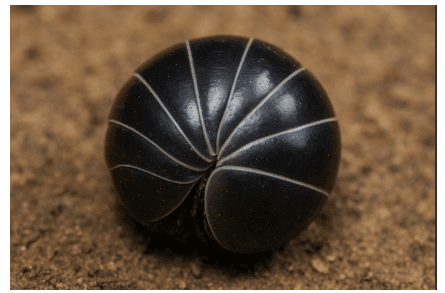
Ladybug (Generated with Artificial Intelligence.)
Branch | Arthropoda | ||||||||
|---|---|---|---|---|---|---|---|---|---|
Class | Malacostraca | ||||||||
Team(s) | Isopoda | ||||||||
Family | Armadillidiidae | ||||||||
Distribution(s) | Cosmopolitan | ||||||||
Lifestyle | Nocturnal | ||||||||
Diet(s) | Detritivore | ||||||||
Role in the Ecosystem | Decomposer | ||||||||
Pill bug, is a small and harmless terrestrial isopod. It derives its name from its ability to roll into a ball, resembling a string of prayer beads, when threatened. This organism, adapted to terrestrial life, is protected by a hard exoskeleton composed of chitin. When it perceives a threat, it curls its body into a spherical shape, employing a passive defense mechanism.
The pill bug is one of the most well-known species of terrestrial isopods belonging to the suborder Oniscidea within the order Isopoda. Fully adapted to terrestrial life, it possesses modified pleopodal gills for respiration. However, these structures do not eliminate the need for moisture; individuals are highly sensitive to water loss, and therefore, humidity plays a decisive role in their selection of microhabitats.
The body structure is divided into three main parts: the head (cephalon), the thorax (pereon), and the abdomen (pleon). Its exoskeleton is formed from a combination of chitin and calcium carbonate, providing both mechanical protection and physiological water retention. When threatened, it exhibits a behavior called conglobation, curling its body into a spherical shape for passive defense. Its feeding habit is detritivorous; it feeds on decaying plant material, fungal hyphae, and organic debris, making a significant contribution to the organic matter cycle in ecosystems.
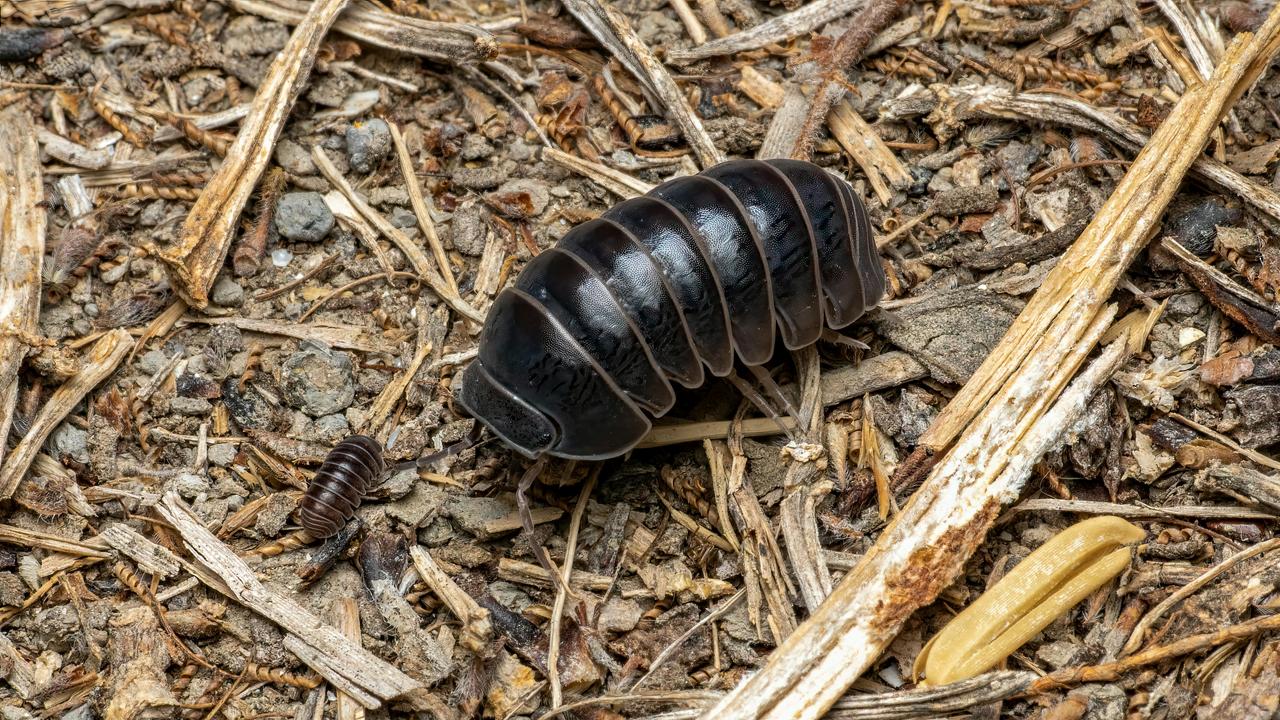
Pill Bug (pexels)
The pill bug and some other terrestrial isopod species have the ability to tightly curl their bodies into a spherical shape when they detect a threat. This defensive strategy is known as conglobation. The behavior provides physical protection against predators, as the soft ventral parts of the body are completely concealed within the hard exoskeleton. This reduces the risk of mechanical injury and temporarily limits water loss.
Conglobation is typically triggered by environmental stimuli such as sudden vibrations, touch, changes in light, or chemical cues. The duration of the behavior varies and persists until the threat disappears. For some predators, this response renders the prey inaccessible, while for others, it acts as a deterrent by reducing interest. Additionally, because this behavior is energetically inexpensive, it is a frequently used and effective passive defense mechanism among pill bugs.
Reproduction occurs through internal fertilization. Females incubate fertilized eggs in a brood pouch (marsupium) located on the ventral side. Embryonic development is completed within this pouch, and the young emerge as miniature versions of adults, exhibiting direct development. The postembryonic growth process involves multiple molts (ecdysis). The average lifespan of this species is 2 to 3 years, and its growth and reproductive rates are directly influenced by environmental factors such as temperature, humidity, and food availability.
The pill bug is a cosmopolitan species. Although its native range is the Mediterranean basin, human activities have led to its spread across various regions of Europe, Asia, North and South America, Australia, and Africa. It is most abundant in temperate climate zones but can also establish populations in subtropical regions where adequate moisture and shelter are available. Preferred habitats include forest floor litter, leaf litter layers, undersides of stones, decaying wood, and moist soil. In human settlements, it is commonly found in gardens, parks, greenhouses, and agricultural fields. Although adapted to terrestrial life, its sensitivity to water loss leads it to prefer high-humidity microhabitats. Consequently, habitat selection is largely determined by environmental factors such as humidity, temperature, and the presence of organic matter.
Due to its detritivorous feeding habits, the pill bug plays a vital role in the breakdown of organic matter, humus formation, and the return of nutrients to the soil. These functions contribute to maintaining the productivity of soil ecosystems. Additionally, it serves as a food source for many predatory species, occupying an important position in trophic interactions within ecosystems.
Its relationship with humans is generally beneficial or neutral. It is not classified as an agricultural pest; however, in areas with high humidity and dense populations, it may cause limited damage by feeding on young seedlings and shoots. Nevertheless, due to its contributions to organic waste recycling and its supportive role in soil health, it is regarded as a beneficial microfauna in garden and agricultural ecosystems.
Jacob T. Smigel, Allen G. Gibbs. "Conglobation in the pill bug, *Armadillidium vulgare*, as a water conservation mechanism." *Journal of Insect Science* 8, no. 1 (2008): 44. Accessed September 11, 2025. https://doi.org/10.1673/031.008.4401
Jessica Dittmer, Jérôme Lesobre, Bouziane Moumen, Didier Bouchon. "Host origin and tissue microhabitat shaping the microbiota of the terrestrial isopod *Armadillidium vulgare*." *FEMS Microbiology Ecology* 92, no. 5 (2016): 1-15. Accessed September 11, 2025. https://doi.org/10.1093/femsec/fiw063
Lawrence R. Lawlor. "Molting, growth and reproductive strategies in the terrestrial isopod, Armadillidium vulgare." *Ecology* 57, no. 6 (1976): 1179–1194. Accessed September 11, 2025. https://doi.org/10.2307/1935043
Pexels. “Armadillidium Vulgare'nin Doğal Yaşam Alanındaki Makro Görünümü JPG.” Pexels. Accessed September 11, 2025. https://www.pexels.com/tr-tr/fotograf/armadillidium-vulgare-nin-dogal-yasam-alanindaki-makro-gorunumu-33420808/

Ladybug (Generated with Artificial Intelligence.)
Branch | Arthropoda | ||||||||
|---|---|---|---|---|---|---|---|---|---|
Class | Malacostraca | ||||||||
Team(s) | Isopoda | ||||||||
Family | Armadillidiidae | ||||||||
Distribution(s) | Cosmopolitan | ||||||||
Lifestyle | Nocturnal | ||||||||
Diet(s) | Detritivore | ||||||||
Role in the Ecosystem | Decomposer | ||||||||
No Discussion Added Yet
Start discussion for "Pill Bug (Armadillidium vulgare)" article
Biological Characteristics
Global Curling (Conglobation) Behavior
Life Cycle
Habitats
Ecological Role