This article was automatically translated from the original Turkish version.
+1 More
Author(s) | Carlo Collodi | ||||||||
|---|---|---|---|---|---|---|---|---|---|
Translator(s) | Egemen Berköz | ||||||||
Publisher(s) | Türkiye İş Bankası Kültür Yayınları | ||||||||
Number of Pages | 200 | ||||||||
Genre | Novel | ||||||||
Publication Date | 2006 | ||||||||
Pinocchio, written by Italian author Carlo Collodi, is one of the classics of world children’s literature. First published in serialized form in a newspaper in 1881, the work was later released as a book. The adventures of Pinocchio, a puppet made of wood who desires to become a real child and whose nose grows longer whenever he lies, are told through a didactic and educational narrative. The book possesses a universal story structure that conveys important messages regarding personal development and moral values.
The book recounts the life journey of Pinocchio, a puppet crafted from a piece of wood by the carpenter Geppetto and brought to life through a miracle. Driven by a desire for freedom, Pinocchio runs away from home and encounters a series of misadventures. Through behaviors such as disobedience, irresponsibility, and dishonesty, the protagonist faces various consequences and gradually matures, ultimately transforming from a puppet into a real child. Along the course of the story, Pinocchio meets various characters including the Fox and the Cat, the Blue Fairy, and the Puppeteer who eats fire, and through these encounters he learns the difference between right and wrong, good and evil.
The central theme of the work is the internal and external transformation of a puppet on his path to becoming human. Pinocchio’s journey, which begins with a quest for freedom, leads him to embrace human values such as responsibility, love, honesty, and diligence. His transformation from puppet to child represents both a physical change and a spiritual maturation.
The main theme of Pinocchio is personal development and moral education. The work addresses the consequences of lying and irresponsibility while rewarding diligence and truthfulness. Presented within an educational framework, the book aims to teach children appropriate behavioral norms. Concepts such as honesty, loyalty, familial love, self-sacrifice, and conscience form the core ideas of the text.
Collodi’s narrative is simple, clear, and instructional. While using a language tailored for children, the author also embeds pedagogical messages intended to engage parents and educators. The narrative incorporates humor, exaggeration, and fantastical elements. Thanks to its didactic structure, the book successfully entertains children while imparting life lessons drawn from real experience.
Carlo Collodi, whose real name was Carlo Lorenzini, was born in 1826 in Florence, Italy. Before turning to children’s literature, Collodi wrote political articles as a journalist and author. The Adventures of Pinocchio is his most famous and enduring work. The author developed a distinctive narrative style by addressing moral education for children in literary form.
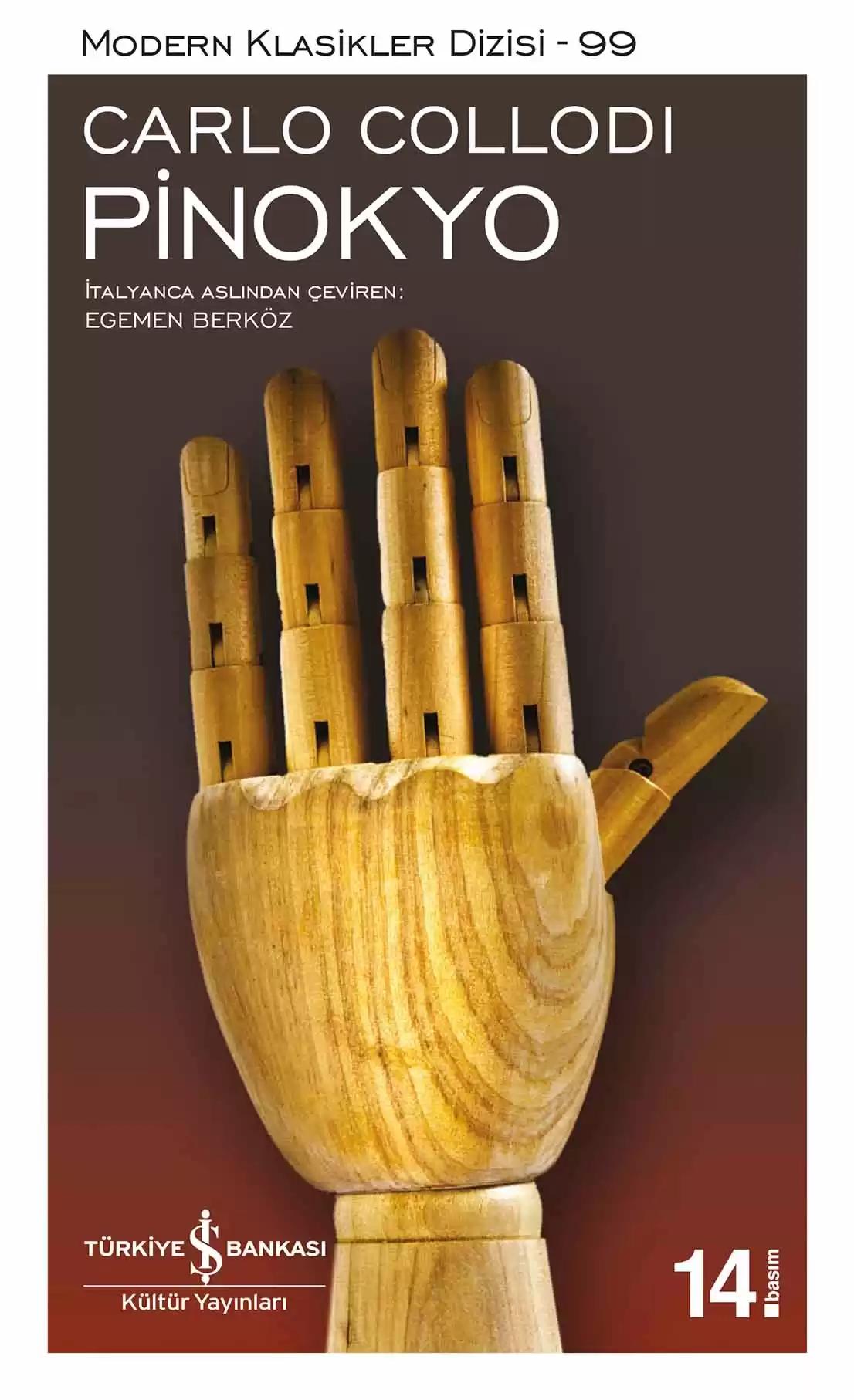
This text was published by İş Bankası Kültür Yayınları as part of the Hasan Âli Yücel Classics Series. The Turkish translation was done by Egemen Berköz. The book is included among classic works for children and has been prepared with careful attention to both pedagogical and aesthetic elements in terms of content and design.
Collodi, Carlo. Pinokyo. İstanbul: Türkiye İş Bankası Kültür Yayınları. Accessed July 19, 2025. https://www.iskultur.com.tr/pinokyo-3.aspx?srsltid=AfmBOopFldx3Atj0wZY0d_W8DCmpvazPupDRqfNvZw1TG9XFNO5JugBz.
Türkiye İş Bankası Kültür Yayınları. Pinokyo. Accessed July 19, 2025. https://www.iskultur.com.tr/pinokyo-3.aspx?srsltid=AfmBOopFldx3Atj0wZY0d_W8DCmpvazPupDRqfNvZw1TG9XFNO5JugBz

Author(s) | Carlo Collodi | ||||||||
|---|---|---|---|---|---|---|---|---|---|
Translator(s) | Egemen Berköz | ||||||||
Publisher(s) | Türkiye İş Bankası Kültür Yayınları | ||||||||
Number of Pages | 200 | ||||||||
Genre | Novel | ||||||||
Publication Date | 2006 | ||||||||
Content
Theme
Themes and Main Ideas
Narrative and Style
About the Author
Publisher and Translation Information