This article was automatically translated from the original Turkish version.
Scientific Name(s) | Charadrius melodus | ||||||||
|---|---|---|---|---|---|---|---|---|---|
Team(s) | Charadriiformes | ||||||||
Family | Charadriidae | ||||||||
Genus | Charadrius | ||||||||
Wingspan | Approximately 38 cm | ||||||||
Weight(s) | 40–65 grams | ||||||||
Habitat | Sandy beaches temporary wetlands mangrove roots mudflats lagoons alkaline lakes stony riverbanks | ||||||||
IUCN | Near Threatened (NT) | ||||||||
piping plover (Charadrius melodus) is a small, migratory shorebird endemic to North America. It typically nests on sandy beaches, stony coastlines, and along the shores of alkaline lakes and rivers in inland areas. It has three distinct geographic populations: the Great Lakes, the Northern Great Plains, and the Atlantic Coast.
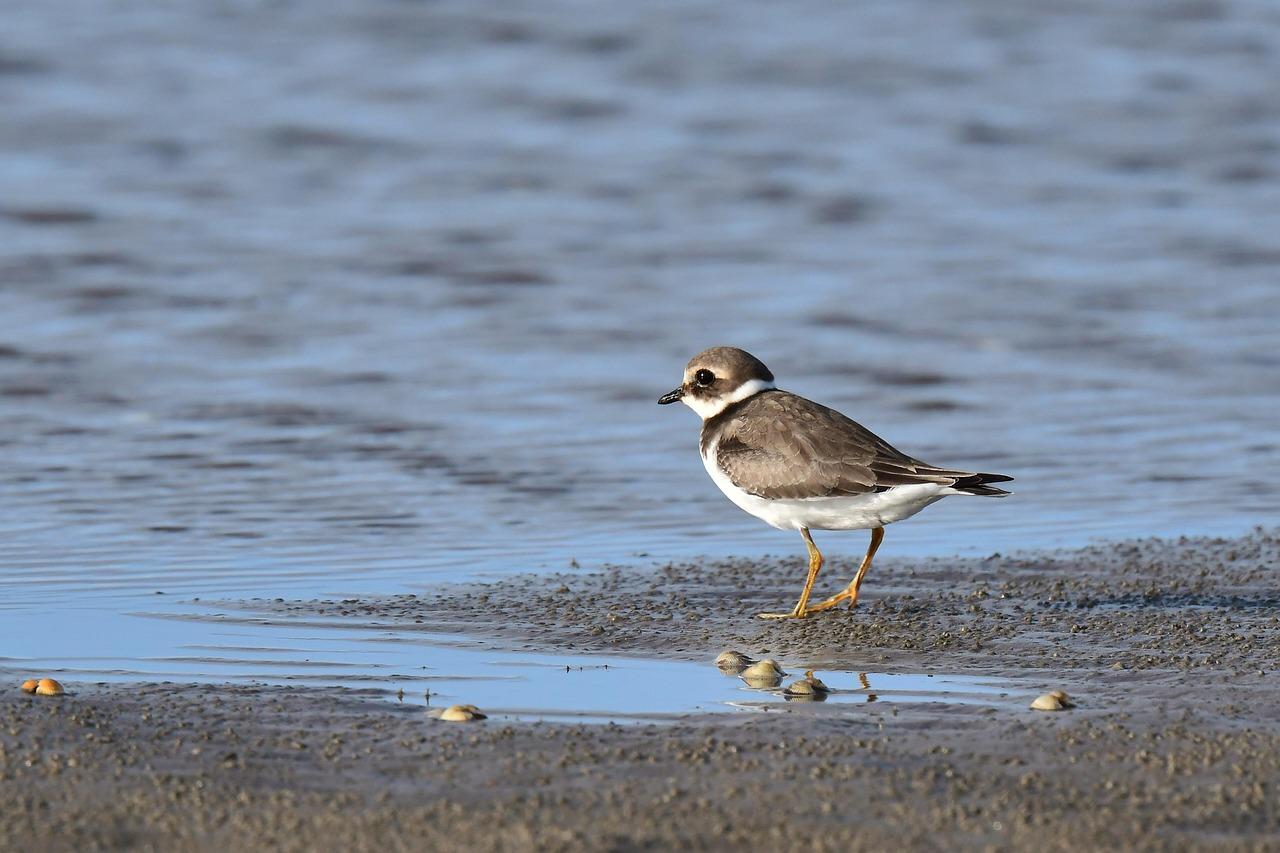
The piping plover is a bird measuring 17–18 cm in length with a wingspan of 38 cm and a weight of 40 to 65 grams. Its upperparts are covered in sandy gray-brown plumage while its underparts are white. During the breeding season, it displays a black forehead band and sometimes an incomplete black breast band. The legs are yellow-orange and the bill is orange with a black tip. In winter, the bill becomes entirely black. Females are generally paler in coloration.
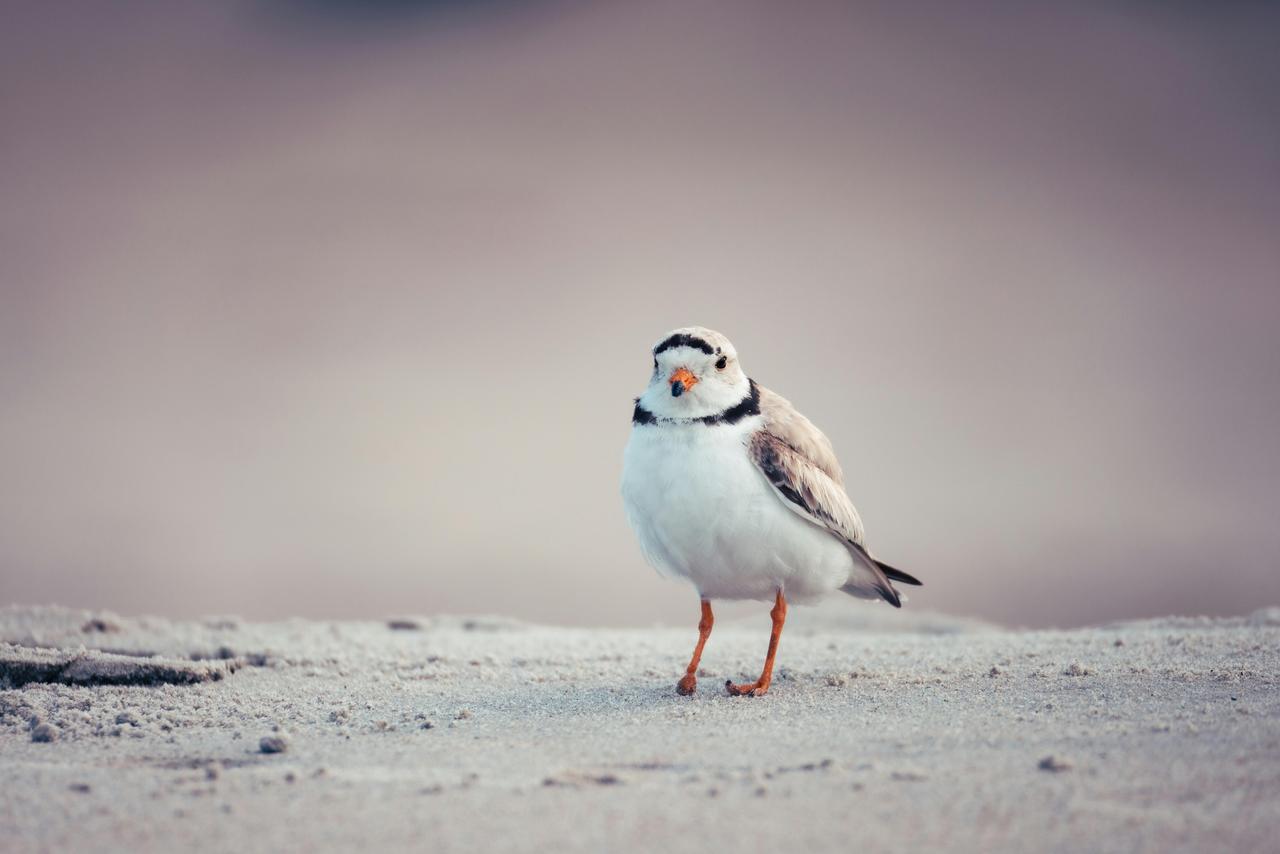
Piping Plover (Pexels)
The piping plover derives its name from its melodic, pipe-like call. Behaviorally, this species is shy and territorial, exhibiting feeding behavior characterized by short runs and sudden stops. It is usually observed alone or in small groups. During migration, it does not use specific stopover sites.
The breeding season typically occurs between April and August. Males create shallow depressions in the ground as part of nest-building behavior and perform courtship displays for females. The nest is lined with shell fragments, small pebbles, and sand. Females usually lay four eggs, which are incubated for 25 to 28 days. Chicks leave the nest within hours of hatching and begin foraging independently. They develop flight capabilities within approximately four to five weeks. Typically, only one brood is raised per year, though occasionally two broods may be reared. Adults tend to change mates annually.
Along coastal areas, it feeds on marine worms, crustaceans, insects, and mollusks. In inland areas, its diet consists mainly of terrestrial invertebrates, particularly certain insect species. While foraging, it runs rapidly and occasionally pecks at the sand to capture prey.
Piping plovers nest along the Atlantic Coast, the Great Lakes, and the Northern Great Plains during summer. Along coastal strips, they prefer flat, sparsely vegetated beaches. Inland, they favor the shores of alkaline lakes, stony dams, sandy flats, and reservoirs. During the winter, they can be found along the shoreline from North Carolina to Cuba and the Bahamas.
In addition, they utilize important microhabitats such as algal flats, mudflats, lagoons, mangrove roots, and temporary wetlands for feeding and shelter. On wintering grounds, they exhibit high site fidelity.
The piping plover is classified as "Threatened" under both the U.S. Endangered Species Act and the Massachusetts State Law. The Great Lakes population is classified as "Endangered." National-level protection began in 1985, with recovery plans updated in 1988, 1996, 2003, and 2015. Critical habitats have been designated in some areas, but no such classification has been made for the Atlantic Coast population.
Piping plovers typically live 5 to 6 years in the wild. The oldest recorded individual was 17 years old. Annual survival rates are around 78–80%. A slight male bias in sex ratios has been observed, particularly in the Great Lakes population.
BirdLife International. “Piping Plover (Charadrius melodus).” BirdLife Data Zone. Accessed July 8, 2025. https://datazone.birdlife.org/species/factsheet/piping-plover-charadrius-melodus
Massachusetts Government. “Piping Plover.” Mass.gov. Accessed July 8, 2025. https://www.mass.gov/info-details/piping-plover
Pexels. “Yumuşak Işıkta Sahilde Duran Borulu Yağmur Kuşu.” Pexels. Accessed July 8, 2025. https://www.pexels.com/tr-tr/fotograf/yumusak-isikta-sahilde-duran-borulu-yagmur-kusu-32610327/
Pixabay. "Halkalı Yağmurkuşu, Kuş, Hayvan." Pixabay. Accessed July 8, 2025. https://pixabay.com/tr/photos/halkal%C4%B1-ya%C4%9Fmurku%C5%9Fu-ku%C5%9F-hayvan-5563083/
U.S. Fish and Wildlife Service. “Piping Plover (Charadrius melodus).” U.S. Fish & Wildlife Service. Accessed July 8, 2025. https://www.fws.gov/species/piping-plover-charadrius-melodus

Scientific Name(s) | Charadrius melodus | ||||||||
|---|---|---|---|---|---|---|---|---|---|
Team(s) | Charadriiformes | ||||||||
Family | Charadriidae | ||||||||
Genus | Charadrius | ||||||||
Wingspan | Approximately 38 cm | ||||||||
Weight(s) | 40–65 grams | ||||||||
Habitat | Sandy beaches temporary wetlands mangrove roots mudflats lagoons alkaline lakes stony riverbanks | ||||||||
IUCN | Near Threatened (NT) | ||||||||
No Discussion Added Yet
Start discussion for "Pipe-bellied Plover (Charadrius melodus)" article
Physical Characteristics
Vocalizations and Behavior
Life Cycle and Reproduction
Diet
Habitat and Ecology
Geographic Distribution
Conservation Status
Threats
Lifespan and Demography