

This article was automatically translated from the original Turkish version.
+1 More
Density | Very high | ||||||||
|---|---|---|---|---|---|---|---|---|---|
Distance(s) | Approximately 11.5 light years from Earth | ||||||||
Size(s) | Larger than the Sun | ||||||||
Evolutionary State | A star approaching the end of the main sequence and transitioning into the subgiant phase | ||||||||
Temperature | Higher than the Sun | ||||||||
Star Type | A star between the main sequence and the subgiant branch | ||||||||
Constellation | Little Dog (Canis Minor) | ||||||||
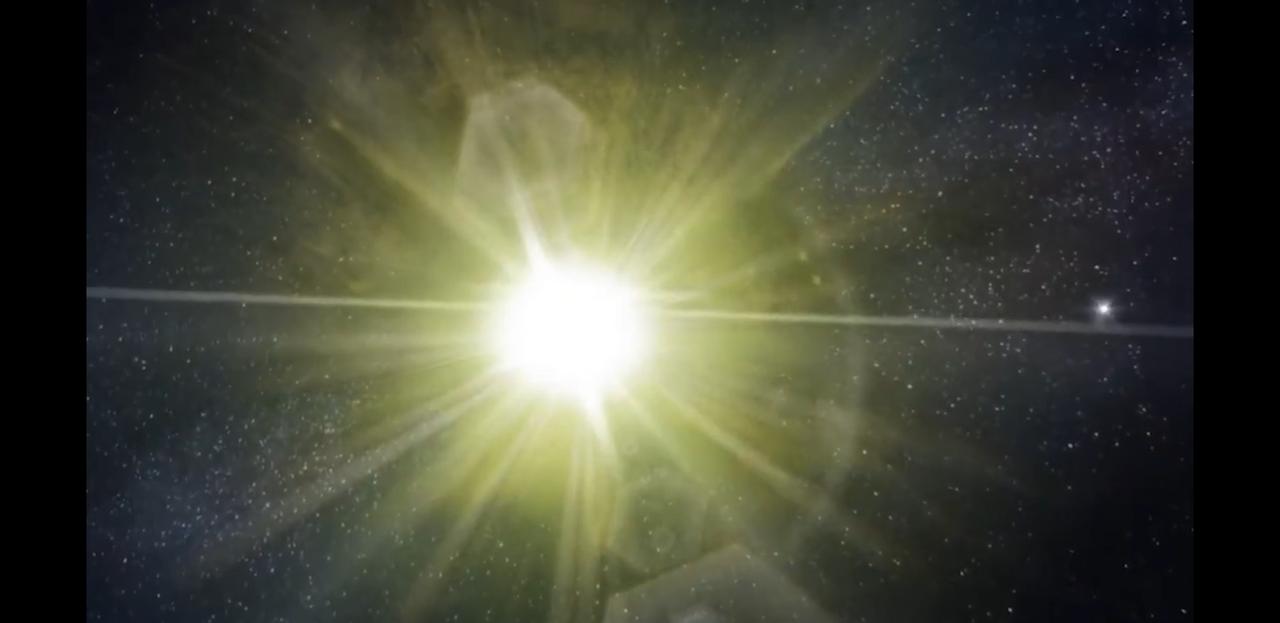
Procyon is a binary star system located in the constellation Canis Minor. It consists of the primary component Procyon A and its white dwarf companion Procyon B. Due to its proximity and brightness, the system has been the subject of detailed observational studies and serves as a fundamental reference object in fields such as astrometry stellar interior modeling and evolutionary age determination.
The historical context of Procyon is assessed through star catalogues from ancient Mesopotamian astronomy. Studies of the MUL.APIN texts demonstrate that lists of rising stars were systematically organized according to the positions of specific bright stars in the sky and that these data could be resolved using an astronomical dating method.【1】Within this framework Procyon is regarded as one of the bright stars that can be analyzed in the context of systematic stellar observations in the ancient Near East.
In Turkic-Islamic culture star nomenclature has been analyzed through astronomical terms found in works such as Kutadgu Bilig and Dîvânu Lugâti’t-Türk in the context of solar system studies. Comparative evaluation of these naming conventions reveals that some bright stars were known by multiple names and that semantic shifts occurred during the process of terminological transmission. In this context the name of Procyon is examined within the historical tradition of stellar nomenclature.
The Procyon system consists of two components orbiting around their common center of mass. High-precision astrometric measurements particularly those from the Hubble Space Telescope have been used to determine the orbital elements and dynamical masses of the components. These measurements have accurately revealed the mutual orbital motion of Procyon A and Procyon B and enabled the determination of the system’s fundamental physical parameters. Analyses based on Hubble data have determined the orbital period of the system to be approximately 40.84 years. The dynamical mass of Procyon A is calculated at approximately 1.478 ± 0.012 solar masses while that of Procyon B is approximately 0.592 ± 0.006 solar masses.【2】These results have been used in comparative evaluations with stellar evolution models.
The internal structure of Procyon A has been investigated by comparing theoretical stellar models with observational data. Particularly long-baseline interferometric observations (VLTI) have enabled high-precision measurements of the star’s angular diameter; these measurements combined with theoretical models have placed constraints on Procyon A’s radius and mass. The derived physical parameters have been used to model the star’s internal energy transport processes and evolutionary state. These models for Procyon A have been evaluated together with the evolutionary history of its white dwarf companion Procyon B to test the overall evolutionary consistency of the system. In this context the Procyon system is regarded as an important reference system for testing theoretical models of intermediate-mass stars’ internal structure and evolution.
Seismological and asteroseismological studies of Procyon A have shown that physical effects occurring in its surface layers do not fully align with theoretical models. These discrepancies known as “surface effects” produce systematic deviations between observed oscillation frequencies and predicted values. Such deviations have revealed the limitations of approximate methods used in modeling convective outer layers and necessitated a reevaluation of standard surface correction approaches for F-type stars.
Modeling challenges for Procyon B the white dwarf component of the system are addressed in a different context. Analyses of Procyon B’s mass-radius relationship and core composition have enabled testing the agreement between white dwarf evolution models and observational data. In particular comparisons between iron-core models and carbon-oxygen core models have been decisive in determining Procyon B’s internal structure. The combined evaluation of dynamical mass measurements with white dwarf cooling models has made it possible to test the overall consistency of theoretical models for the system.
The evolutionary history of the Procyon system has been examined by jointly assessing the position of the primary component Procyon A in stellar evolution models and the cooling age of its white dwarf companion Procyon B. Evolutionary models developed for Procyon A have been compared with interferometric radius measurements and dynamical mass values to test the star’s core structure and evolutionary phase.
Total age estimates for the system have been derived by considering Procyon B’s white dwarf cooling age alongside the evolutionary timescale of its progenitor star. The combined analysis of dynamical mass measurements and white dwarf interior models has provided independent yet complementary timescales for determining the system’s age. This integrated approach has been used to test the consistency of post-main-sequence evolution and white dwarf formation processes in binary systems.
The atmospheric and spectral properties of Procyon A have been evaluated through comparative analyses with Sun-like stars. Spectral observations and model atmosphere calculations have been used to determine the star’s effective temperature surface gravity and chemical abundance parameters. These parameters have provided essential inputs for testing the star’s evolutionary state and internal structure models.
Procyon B has been classified as a white dwarf and its spectral properties have been examined accordingly. Atmospheric composition and surface gravity parameters have been analyzed in conjunction with the white dwarf mass-radius relationship and compared with interior models. Thus the two components of the system are spectrally defined within distinct physical regimes.
Due to its proximity and brightness the Procyon system is regarded as a binary star system suitable for the application of high-precision observational techniques. Hubble Space Telescope astrometry ground-based interferometric observations and asteroseismological analyses have enabled the direct and indirect determination of system parameters.
These observations have been used to test fundamental astrophysical problems including stellar mass determination radius measurement interior structure modeling and the white dwarf mass-radius relation. In this regard the Procyon system is considered an exemplary system that enables comparative testing of stellar evolution theories and structural models.
Procyon A belongs to the F-type spectral class and its physical parameters have been determined through both astrometric and interferometric measurements. Fundamental quantities such as dynamical mass radius and effective temperature have been supported by observational data and compared with theoretical stellar models.
Procyon B has been classified as a white dwarf and its dynamical mass has been determined using high-precision astrometry. The mass and radius parameters have been evaluated in relation to theoretical expectations for white dwarf structure and integrated into the overall physical framework of the system. Thus the physical parameters of both components have been jointly analyzed to define the general structure of the Procyon system.
Bond, Howard E., Ronald L. Gilliland, Gail H. Schaefer, Pierre Demarque, Terrence M. Girard, Jay B. Holberg, Donald Gudehus, Brian D. Mason, Vera Kozhurina-Platais, Matthew R. Burleigh, Martin A. Barstow, and Edmund P. Nelan. “Hubble Space Telescope Astrometry of the Procyon System.” *The Astrophysical Journal* 813, no. 2 (2015). Accessed February 4, 2026. https://arxiv.org/abs/1510.00485
De Jong, Teije. 2007. “Astronomical Dating of the Rising Star List in MUL.APIN.” *Wiener Zeitschrift für die Kunde des Morgenlandes* 97: 107–120. Accessed January 31, 2026. https://www.researchgate.net/publication/274719981_Astronomical_Dating_of_the_Rising_Star_List_in_MULAPIN
Güneş, Hasan Ali. "Name Confusion in Astronomical Elements in Kutadgu Bilig and Divanu Lugatit Türk and a Solution Proposal." *Dil Araştırmaları* 18, no. 35 (2024): 259–276. Accessed January 31, 2026. https://www.academia.edu/125424532/Name_Confusion_in_Astronomical_Elements_in_Kutadgu_Bilig_and_Divanu_Lugatit_T%C3%BCrk_and_a_Solution_Proposal.
Kervella, Pierre, Frédéric Thévenin, Pascal Morel, Gabrielle Berthomieu, Janine Provost, Pascal Bordé, and Damien Ségransan. “Modeling of Alpha Cen and Procyon Using VLTI Observations.” *arXiv.* Accessed February 4, 2026. https://arxiv.org/abs/astro-ph/0312068
Leccia, S., H. Kjeldsen, A. Bonanno, R.U. Claudi, L. Paternò, and R. Ventura. “Seismological study of the solar-like star Procyon A.” *Memorie della Società Astronomica Italiana* 77, no. 1 (2006): 462. Accessed February 4, 2026. https://www.researchgate.net/publication/234409843_Seismological_study_of_the_solar-like_star_Procyon_A
Liebert, James, Gilles Fontaine, Patrick A. Young, Kurtis A. Williams, and David Arnett. “The Age and Stellar Parameters of the Procyon Binary System.” *The Astrophysical Journal* 769, no. 1 (2013): 7. Accessed February 4, 2026. https://arxiv.org/abs/1305.0587
Moedas, Nuno and Maria Pia Di Mauro. 2026. “Studying the Surface Effect in Procyon A as an F-Type Star.” *ArXiv*. Accessed January 31, 2026. https://arxiv.org/abs/2601.02840
Provencal, J. L. “Procyon B: Outside the Iron Box.” *The Astrophysical Journal* 568, no. 1 (2002): 324–334. Accessed February 9, 2026. https://www.researchgate.net/publication/231145429_Procyon_B_Outside_the_Iron_Box
galaxyaerosgh. “Procyon Star.” YouTube, 01:53. Accessed February 4, 2026. https://www.youtube.com/watch?v=2OmJfwsZS7w
[1]
De Jong, Teije, “Astronomical Dating of the Rising Star List in MUL.APIN,” Wiener Zeitschrift für die Kunde des Morgenlandes 97 (2007): syf 109, https://www.researchgate.net/publication/274719981_Astronomical_Dating_of_the_Rising_Star_List_in_MULAPIN.
[2]
Howard E. Bond Ronald L. Gilliland ve Gail H. Schaefer “Hubble Space Telescope Astrometry of the Procyon System” The Astrophysical Journal 813 no. 2 (2015): syf 2 https://arxiv.org/abs/1510.00485.

Density | Very high | ||||||||
|---|---|---|---|---|---|---|---|---|---|
Distance(s) | Approximately 11.5 light years from Earth | ||||||||
Size(s) | Larger than the Sun | ||||||||
Evolutionary State | A star approaching the end of the main sequence and transitioning into the subgiant phase | ||||||||
Temperature | Higher than the Sun | ||||||||
Star Type | A star between the main sequence and the subgiant branch | ||||||||
Constellation | Little Dog (Canis Minor) | ||||||||
Historical and Cultural Nomenclature
General Physical and Orbital Properties
Internal Structure and Stellar Modeling
Surface Effects and Modeling Challenges
Evolutionary History and Age Estimates
Chemical and Spectral Properties
Observational Significance and Role in Modern Astronomy
Spectral Classification and Physical Parameters